
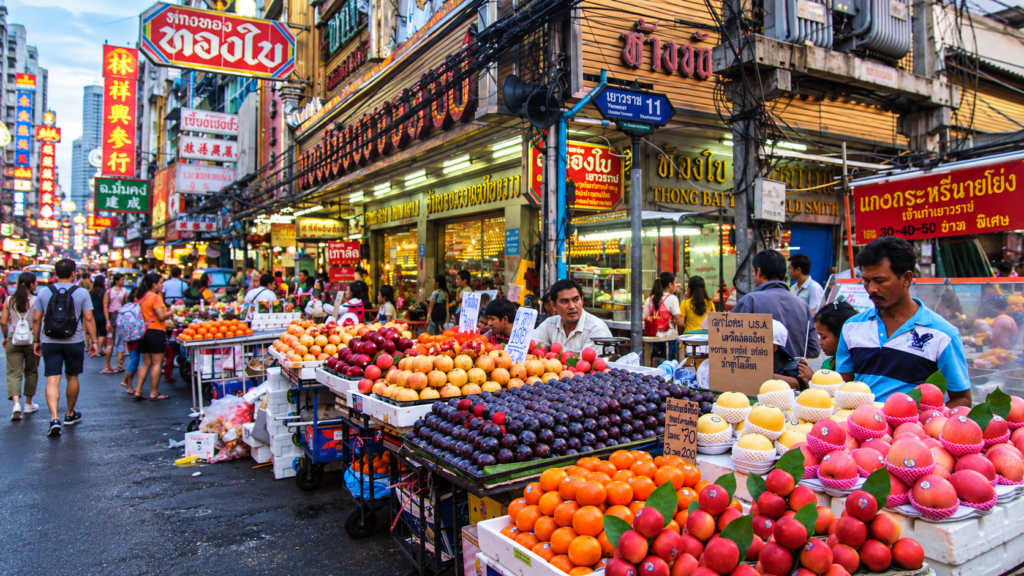
Knowing what to eat in Thailand becomes much more interesting once you look beyond the dishes most familiar outside the country. Pad Thai, green curry and tom yum are important parts of Thai cuisine, but they represent only a small portion of what travelers will encounter.
Food changes significantly between Bangkok and the Central Plains, the mountainous north, the northeastern region known as Isan and the tropical south. Each region has its own ingredients, cooking traditions and characteristic combinations of sour, salty, sweet, spicy, bitter and aromatic flavours.
Some of Thailand’s most memorable meals may come from a market stall, a family-run noodle shop, a food court or a roadside restaurant rather than an elaborate dining room.
This guide introduces the regional dishes, street foods, markets and everyday dining customs that can help travelers experience Thai food as part of the journey rather than simply something eaten between attractions.
What to Eat in Thailand: Start with the Regions
There is no single style of Thai cooking.
Thailand stretches from mountainous northern provinces to the Malay Peninsula, while the fertile Central Plains and dry northeastern plateau have developed very different agricultural and culinary traditions.
- Bangkok and Central Thailand: rice dishes, noodles, curries, river ingredients and an enormous variety of regional food from across the country.
- Northern Thailand: khao soi, northern sausages, chilli dips and dishes associated with Lanna culinary traditions.
- Isan: sticky rice, grilled meats, papaya salad, minced-meat salads and bold sour-spicy flavours.
- Southern Thailand: seafood, coconut, turmeric, intense curries and influences from Malay and Muslim communities.
The Tourism Authority of Thailand maintains an extensive collection of local food and dining experiences from different parts of the country, which can be useful when planning meals around a particular destination.
Bangkok and Central Thailand
Bangkok is one of the easiest places to explore the breadth of Thai cuisine because food traditions from every region of the country meet in the capital.
You can move from a neighbourhood noodle shop to an Isan restaurant, a southern curry counter, a Chinese-Thai market stall and a contemporary restaurant within the same day.
Central Thai cooking is closely connected with the fertile river plains around Bangkok and surrounding provinces. Rice, freshwater ingredients, herbs, vegetables and coconut milk appear in numerous dishes.
Tomyum Kung
Tomyum kung is a hot-and-sour prawn soup fragrant with ingredients such as lemongrass, galangal and makrut lime leaves.
Although now eaten throughout Thailand and known internationally, its cultural roots are associated with riverside communities in the Central Plains.
In 2024, UNESCO inscribed Tomyum Kung on its Representative List of the Intangible Cultural Heritage of Humanity, recognizing not simply the recipe but the traditional knowledge surrounding ingredients, preparation and community transmission.
You can read more in UNESCO’s Tomyum Kung heritage profile.
Pad Thai
Pad Thai remains worth trying despite its international familiarity.
Rice noodles are stir-fried with a balance of savoury, sour and sweet flavours, commonly accompanied by ingredients such as egg, tofu, bean sprouts, peanuts and shrimp or another protein.
Different vendors prepare it differently, so one plate should not be considered the definitive version.
Boat Noodles and Everyday Noodle Shops
Noodle shops are among the easiest places to experience everyday Thai eating.
Boat noodles are particularly associated with Bangkok and Central Thailand. Traditionally served in relatively small portions, they are known for a rich, strongly seasoned broth.
Elsewhere you will encounter countless combinations of rice noodles, egg noodles, broth, roasted meats, fish balls, vegetables and condiments.
Northern Thailand
Northern Thai food is one of the strongest reasons to spend time in Chiang Mai, Chiang Rai, Nan and surrounding provinces.
The cuisine reflects the region’s Lanna heritage as well as historical connections with neighbouring areas of Myanmar, Laos and southern China.
Khao Soi
Khao soi is perhaps the best-known northern dish: noodles served in a fragrant curry-like broth, usually finished with crispy noodles and accompanied by condiments such as pickled greens, shallots and lime.
Chicken and beef versions are common, although individual restaurants develop their own recipes and variations.
The Tourism Authority of Thailand regularly highlights khao soi among the characteristic foods of northern destinations including Chiang Mai, Chiang Rai and Nan.
Sai Oua
Sai oua is northern Thai sausage seasoned with herbs, spices and aromatics.
It is often sliced and eaten alongside other dishes rather than treated as a meal by itself.
Nam Prik and Northern Sharing Platters
Northern meals may include chilli dips such as nam prik ong or nam prik num, accompanied by vegetables, pork rinds and other small dishes.
These combinations are particularly useful for travelers because they provide an opportunity to taste several regional flavours at the same table.
Gaeng Hang Lay
Gaeng hang lay is a northern curry commonly prepared with pork and aromatic spices.
Its flavour profile differs noticeably from the coconut-heavy curries many international visitors associate with Thai food.
Isan and Northeastern Thailand
Isan cuisine comes from northeastern Thailand and has become enormously popular throughout the country.
Meals often combine sticky rice with grilled meats, salads, herbs and intensely seasoned dishes that balance sourness, chilli, salt and savoury flavours.
Som Tam
Som tam, or green papaya salad, is one of the region’s most recognizable foods.
Shredded unripe papaya is pounded with ingredients that may include chilli, lime, fish sauce, tomatoes, garlic and other seasonings.
There are numerous regional styles, so do not assume every version will taste the same.
Larb
Larb is a seasoned minced-meat salad commonly flavoured with lime, herbs, chilli and toasted rice powder.
It pairs particularly well with sticky rice and fresh vegetables.
Gai Yang and Sticky Rice
Grilled chicken known as gai yang, sticky rice and som tam form one of the classic combinations associated with northeastern food.
It is straightforward, inexpensive and an excellent introduction to Isan flavours for travelers who may find some of the region’s more fermented dishes unfamiliar at first.
Sticky rice is traditionally eaten with the fingers in many northeastern meals. Take a small portion, shape it lightly and use it to accompany the other dishes rather than treating it exactly like steamed jasmine rice.
Southern Thailand
Southern Thai cuisine can be dramatically different from food in Bangkok or Chiang Mai.
The long peninsula provides abundant seafood and tropical ingredients, while cultural connections with Malaysia and Muslim communities are reflected in some local dishes.
Curries can be intensely spicy, and turmeric, coconut, seafood, herbs and strong pastes appear frequently.
Gaeng Som
Southern-style gaeng som is a sour, spicy curry that may contain fish or seafood with vegetables.
Travelers expecting something mild because it is described simply as a soup or curry may be surprised by its intensity.
Gaeng Tai Pla
Gaeng tai pla is another strongly flavoured southern curry associated with fermented fish ingredients, vegetables and a generous amount of spice.
It is a good example of why regional Thai food should not be judged solely through the dishes most commonly served abroad.
Seafood
Phuket, Krabi, Surat Thani, Chumphon and other southern coastal destinations offer extensive seafood choices.
Grilled fish, crab, prawns, squid and shellfish may be prepared simply or incorporated into curries and stir-fries.
Ask about market price when ordering seafood priced by weight, and confirm the total before ordering particularly expensive items.
Street Food, Markets and Food Courts
Street food is one of the pleasures of traveling through Thailand, but it is only one part of the country’s everyday food culture.
Markets, small shophouse restaurants and shopping-centre food courts can be equally rewarding.
Morning Markets
Morning markets provide an opportunity to see ingredients and dishes that may disappear later in the day.
You may find rice dishes, grilled meats, curries packed to take away, fresh fruit, sweets and breakfast foods prepared for local customers rather than primarily for visitors.
Night Markets
Night markets combine food with shopping and social activity.
Some are heavily oriented toward visitors, while others serve neighbourhood communities. Either can be enjoyable, but the atmosphere and food selection may be very different.
Food Courts
Do not dismiss Thai food courts simply because they are located inside shopping centres.
Many provide affordable meals from numerous vendors and are particularly convenient for groups who want to try different dishes.
Thai Dishes You Will See Across the Country
Regional food should be a priority, but travelers will also encounter several dishes almost everywhere.
Pad Kra Pao
Pad kra pao is a stir-fry built around holy basil, chilli and a protein such as pork or chicken, commonly served over rice and frequently topped with a fried egg.
It is one of Thailand’s most practical everyday meals.
Green Curry
Thai green curry combines an aromatic curry paste with coconut milk and other ingredients that vary according to the cook and protein being used.
Despite the coconut milk, green curry can still be quite spicy.
Massaman Curry
Massaman curry has a rich, aromatic flavour profile and reflects historical culinary connections involving spices and Muslim food traditions.
It is often less aggressively spicy than many other Thai curries and may include potatoes, peanuts and slow-cooked meat.
Khao Man Gai
Khao man gai is Thailand’s version of Hainanese chicken rice.
Poached chicken is served with seasoned rice, sauce and usually a light broth. It is simple, widely available and useful when you want a break from heavily spiced dishes.
Rice, Noodles and the Thai Table
Rice is fundamental to Thai food, but the type and way it is served varies.
Fragrant jasmine rice is common with central and southern meals, while sticky rice plays a particularly important role in Isan and parts of northern Thailand.
Noodles appear in soups, stir-fries and dry dishes using numerous types of rice and wheat noodles.
At shared meals, several dishes are typically ordered for the table and eaten with rice rather than every diner ordering a completely separate starter and main course.
This is one of the best ways to experience Thai food because it allows you to balance spicy, mild, sour, fried and vegetable dishes during the same meal.
Fruit, Desserts and Drinks
Thailand’s tropical climate produces an extraordinary variety of fruit.
Mango, pineapple, papaya, rambutan, mangosteen, longan, dragon fruit and other seasonal fruits appear in markets throughout the country.
Mango Sticky Rice
Mango sticky rice combines ripe mango with sweetened sticky rice and coconut cream.
It is simple, rich and particularly good when mangoes are in season.
Coconut-Based Desserts
Coconut milk, coconut cream, palm sugar and rice appear in numerous Thai sweets.
Markets are excellent places to try small portions of desserts you may not recognize. Ask what something is rather than limiting yourself to the one dessert you already know.
Thai Iced Tea and Coffee
Sweet Thai iced tea is widely available, particularly in markets and casual restaurants.
Thailand also has a growing coffee culture, especially in Bangkok and the north, where coffee-growing regions have contributed to an increasingly sophisticated café scene.
Practical Dining Tips for Thailand
Do Not Assume Every Dish Is Extremely Spicy
Thai food uses chilli extensively, but heat levels vary enormously between dishes and regions.
Rather than asking for all food to be made completely non-spicy, ask the server which dishes are naturally milder and which ones are normally hot.
Condiments Are Part of the Meal
Noodle shops and casual restaurants may place chilli, vinegar, sugar, fish sauce or other condiments on the table.
Taste the food first before automatically adding everything. The condiments allow diners to adjust flavour rather than implying that the dish is unfinished.
Fork and Spoon Are Common
For many rice-based Thai meals, a spoon is the main eating utensil and the fork is used to help move food onto it.
Chopsticks are most commonly associated with noodle dishes rather than being the default utensil for every Thai meal.
Choose Busy Vendors
When eating at markets or street stalls, a vendor with steady turnover can be a useful sign that food is being prepared and replaced regularly.
Use the same basic judgment you would anywhere else: look for clean preparation areas, properly handled ingredients and food that is cooked thoroughly where appropriate.
Vegetarian and Vegan Travelers
Vegetables are abundant in Thai cooking, but a dish that looks vegetarian may still contain fish sauce, shrimp paste, oyster sauce or meat-based broth.
Travelers avoiding animal products should confirm ingredients rather than relying only on the visible vegetables in the dish.
Restaurants specifically serving Thai vegetarian food can make ordering considerably easier.
Experience Thailand Through Its Food
The best way to understand what to eat in Thailand is not to work through a checklist of famous dishes. Pay attention to where you are.
Eat khao soi in the north. Try sticky rice, grilled chicken and som tam in Isan. Explore powerful southern curries and fresh seafood near the coast. Spend a morning in a local market and an evening at a neighbourhood food stall.
In Bangkok, take advantage of the fact that cuisines from across Thailand are gathered in one city. And when you encounter something unfamiliar, ask what it is rather than immediately returning to a dish you already recognize.
Regional food tells you about climate, agriculture, trade, migration and community in a way that sightseeing alone cannot.
For broader trip planning, see our Thailand Travel Guide: What to Know Before You Go.
You can also explore more regional cuisine through our Food travel guides.