
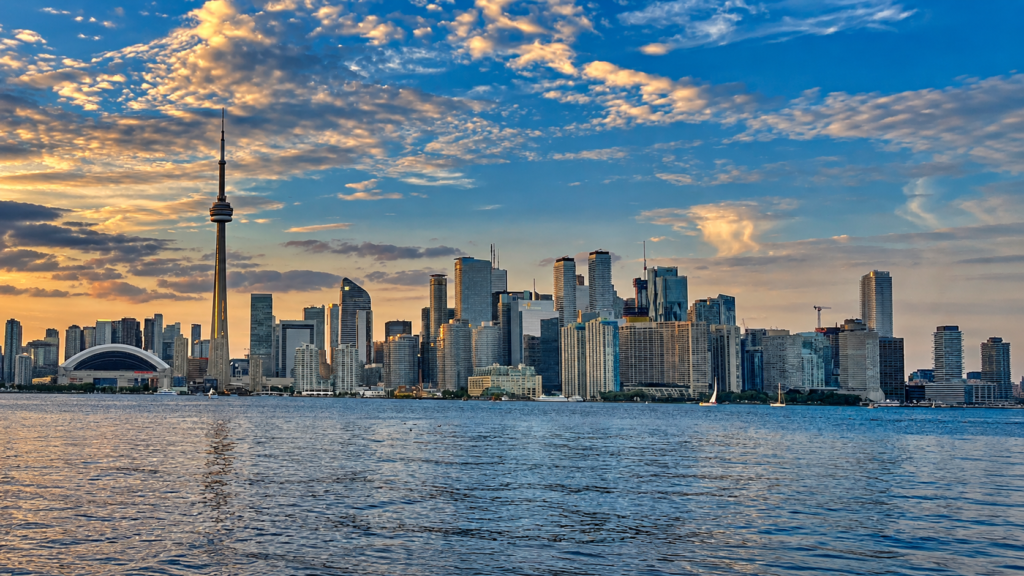
This Canada travel guide is designed to help you decide where to go, when to visit, and how to build a realistic first-time itinerary.
Canada is enormous, and that changes the way you should plan a trip. The country has 10 provinces and 3 territories, with major cities, national parks, mountain regions, Atlantic and Pacific coastlines, prairie landscapes, northern wilderness, and distinct cultural regions spread across a vast area.
The main planning mistake is treating Canada like a destination you can “cover” in one vacation. A better approach is to choose one region or travel corridor and experience it properly rather than spending much of the trip flying or driving between distant parts of the country.
Is Canada Right for Your Trip?
Canada is a strong choice for travelers who enjoy a combination of cities, nature, road trips, outdoor activities, food, culture, and large open landscapes.
Urban travelers can build trips around places such as Toronto, Montréal, Vancouver, Québec City, Ottawa, and Calgary, while nature-focused trips can centre on the Canadian Rockies, Pacific Coast, Atlantic Canada, national parks, or the North.
Canada also offers very different regional identities. Québec combines Montréal and Québec City with French language and culture, while British Columbia blends Pacific cities with mountains, forests, and coastline. Alberta is especially associated with the Canadian Rockies, including Banff and Jasper, while Atlantic provinces such as Nova Scotia offer coastal scenery and maritime culture.
For most first-time visitors, choosing one main region plus one nearby extension creates a much better trip than trying to combine eastern and western Canada in a short vacation.
Best Time to Visit Canada
There is no single best season to visit Canada because the country is so large and climates vary significantly by region. Southern cities can have warm summers and cold winters, while coastal, mountain, prairie, and northern areas follow very different seasonal patterns.
Summer is one of the easiest seasons for a first visit. It works especially well for road trips, national parks, hiking, lakes, coastal travel, and city sightseeing, although popular destinations can also be at their busiest.
Autumn is a strong choice for travelers interested in cooler temperatures, fall colours, city touring, and road trips through regions such as Ontario and Québec.
Winter creates a completely different Canada experience, with skiing, snow sports, winter festivals, frozen landscapes, and northern-lights travel becoming major attractions. Destination Canada specifically highlights winter celebrations, ice activities, and winter accommodations as seasonal experiences.
Spring can work well for city trips and quieter travel, although weather can be highly variable and some mountain or seasonal attractions may still be transitioning out of winter conditions.
For a first trip focused on cities, national parks, or a road trip, late spring through early autumn is generally the easiest period to plan around.
Where to Go in Canada
Because Canada is so large, it is more useful to choose a region than to build a national checklist.
Ontario and Québec work particularly well together for a first eastern Canada itinerary. Toronto and Ottawa can be combined with Montréal and Québec City, creating a route that mixes large cities, national history, food, culture, and historic districts. Destination Canada highlights Toronto and Ottawa as major Ontario destinations and Montréal and Québec City as key Québec experiences.
British Columbia is a strong choice for travelers who want cities and nature in the same trip. Vancouver combines an urban centre with Pacific coastline and mountains, while Victoria, Vancouver Island, Whistler, and the Okanagan can extend the trip.
Alberta and the Canadian Rockies are ideal for travelers prioritizing mountain scenery, hiking, lakes, wildlife, and road trips. Banff and Jasper are among the best-known destinations in the region.
Atlantic Canada suits travelers interested in coastal drives, seafood, fishing communities, maritime history, and a slower pace. Nova Scotia is a particularly accessible starting point, with Halifax and the Cabot Trail among its major draws.
Northern Canada offers a very different experience built around remote landscapes, Indigenous cultures, wildlife, and northern-lights travel, but it generally requires more specialized planning.
For a first trip, I would choose either Eastern Canada, Western Canada, the Rockies, or Atlantic Canada rather than trying to combine all four.
How Many Days Do You Need?
The amount of time you need depends much more on the region you choose than on Canada as a whole.
A practical starting point is:
- 7 days: one city plus nearby excursions, or one compact region
- 10 days: two or three destinations within the same travel corridor
- 14 days: a fuller regional road trip or a combination of several nearby cities and natural areas
For example, a 10-day eastern Canada trip could combine Toronto, Ottawa, Montréal, and Québec City. A western trip might focus on Vancouver and Vancouver Island, while a Rockies trip could centre on Calgary, Banff, Lake Louise, and Jasper.
What usually does not work well is trying to combine Toronto, Montréal, Vancouver, Banff, and the Atlantic provinces in one short trip. The distances are too large for that to feel relaxed.
The best first visit to Canada is usually a regional trip, not a national one.
Getting Around Canada
Canada’s size makes transportation planning especially important. The best way to get around depends heavily on the region you choose.
For an Ontario–Québec city itinerary, rail is one of the easiest options. VIA Rail’s busiest corridor connects cities including Québec City, Montréal, Ottawa, Toronto, and Windsor, making it practical to travel between several major eastern Canadian destinations without renting a car.
For Western Canada, the Rockies, Atlantic Canada, and many rural areas, a rental car often gives you much more flexibility. Distances can be substantial, so road-trip itineraries should allow realistic driving times rather than trying to cover too much ground in a single day.
Domestic flights become useful when combining distant regions. Traveling from Toronto to Vancouver, for example, is a completely different proposition from moving between Toronto and Montréal. VIA Rail’s transcontinental Toronto–Vancouver journey covers roughly 4,400 kilometres and takes about four days, which illustrates the scale involved.
Within major cities such as Toronto, Montréal, Vancouver, Ottawa, and Calgary, public transportation can handle much of the sightseeing, although the usefulness of a car increases quickly once you leave urban areas.
For most first trips, the simplest rule is: train or transit for compact city corridors, a car for regional road trips, and flights for very long distances.
Costs and Budgeting
Canada can be an expensive destination, particularly when accommodation, rental cars, domestic flights, and popular national-park areas are involved.
A practical way to control spending is to focus on three areas:
- Accommodation: book early for major cities, mountain destinations, and peak summer travel periods.
- Transportation: choose a region before booking. Trying to combine distant parts of Canada can add significant airfare or rental-car costs.
- Meals: mix restaurants with cafés, markets, bakeries, food halls, and casual local options.
Travelers should also budget separately for attraction admissions, national-park fees, parking, fuel, local transportation, airport transfers, and occasional taxis or ride services.
Road trips deserve particular attention because fuel, parking, rental fees, and long driving distances can add up quickly.
As with our other cornerstone guides, I would avoid giving a fixed “Canada costs C$X per day” figure here. Costs vary too much between Toronto, Montréal, the Rockies, Atlantic Canada, and more remote destinations, and exact numbers age quickly.
The biggest budgeting mistake is often trying to cover too much geography. Choosing one region can save both money and a substantial amount of travel time.
Food and Dining
Canada’s food culture varies considerably by region and reflects Indigenous traditions, immigration, agriculture, and access to three oceans. Destination Canada emphasizes that regional ingredients and local food traditions differ widely across the country.
Québec is associated with dishes such as poutine as well as French-influenced cuisine, bakeries, cheeses, and maple products. British Columbia places strong emphasis on Pacific seafood and locally sourced ingredients, while Atlantic Canada is particularly known for lobster, shellfish, and other seafood.
Prince Edward Island is closely associated with potatoes, seafood, farms, and local culinary trails, while wine-producing regions in Ontario and British Columbia add another dimension to Canadian food travel.
A few practical habits can improve the experience:
- Look for regional specialties rather than expecting one national Canadian menu.
- Visit markets, food halls, bakeries, and casual neighbourhood restaurants.
- Try local seafood, produce, cheeses, wines, or other specialties where they are produced.
- Leave room for Indigenous and multicultural food experiences as well as familiar Canadian dishes.
Canada’s food identity goes far beyond maple syrup and poutine. The country’s regional diversity is one of the reasons food can become an important part of the trip.
What to Know Before You Go
A little preparation matters more in Canada than in many smaller destinations because distances, weather, and entry requirements can vary considerably.
Entry requirements: What you need to enter Canada depends on your citizenship, how you are traveling, and the documents you hold. Many visa-exempt foreign nationals flying to Canada need an Electronic Travel Authorization (eTA), while others need a visitor visa. U.S. citizens do not need a visa or eTA when traveling with a valid U.S. passport.
Do not underestimate distances. Canada is large enough that destinations which look like part of the same trip can require substantial driving or a domestic flight. Build the itinerary around one region first, then add destinations only when the travel time makes sense.
Plan ahead for popular national parks. Parks Canada operates reservation systems for campgrounds and some transportation services, and high-demand destinations such as Banff can require advance planning. For example, access to Moraine Lake is by shuttle, tour bus, or commercial transit rather than private vehicle.
Expect sales taxes to vary by province. Canada uses GST or HST on many goods and services, and the applicable rate depends on the province. Hotel stays, restaurant meals, car rentals, and many attractions are taxable.
Pack for changing weather. Conditions can change quickly, particularly in mountain, coastal, and northern regions. Even summer road trips can involve large temperature differences between locations.
The main lesson is simple: choose the region first, then plan transportation, accommodation, and activities around the realities of that region.
Suggested First-Time Canada Itinerary
For a first trip of around 10 days, an eastern Canada route through Ontario and Québec is one of the easiest ways to experience several distinct destinations without requiring domestic flights.
Days 1–3: Toronto
Begin in Toronto and explore several neighbourhoods, the waterfront, major attractions, food, and cultural areas. If your schedule allows, Niagara Falls can be added as a day trip or overnight extension.
Days 4–5: Ottawa
Continue to Canada’s capital for national museums, Parliament Hill, the Rideau Canal area, and a more compact city experience.
Days 6–8: Montréal
Travel onward to Montréal for historic neighbourhoods, food, architecture, markets, museums, and a distinctly different cultural atmosphere.
Days 9–10: Québec City
Finish in Québec City, where the historic centre, fortified old city, architecture, and French-speaking culture provide a strong contrast with Toronto.
Destination Canada promotes several Ontario–Québec routes of roughly 7 to 10 days, including combinations of Toronto, Ottawa, Montréal, and Québec City.
If you have 14 days, add Niagara, Kingston, Mont-Tremblant, Charlevoix, or another nearby destination rather than flying across the country just to add Vancouver or Banff.
Travelers who are more interested in mountains than cities should build a completely different first trip around Calgary, Banff, Lake Louise, and Jasper instead.
The best Canada itinerary is not the one that covers the most provinces. It is the one that keeps the travel distances realistic.
Final Thoughts
Canada is best approached as a collection of distinct regions rather than a single destination that can be covered in one trip.
For a first visit, choose the part of the country that best matches your interests and build the itinerary around it. Ontario and Québec work particularly well for city-focused travel, British Columbia combines cities and Pacific scenery, Alberta offers the Canadian Rockies, and Atlantic Canada provides a very different coastal experience.
Use this Canada travel guide as a starting point, then adjust the route to match your time, interests, and travel style.
Explore more destination guides on TravelingInformed.