
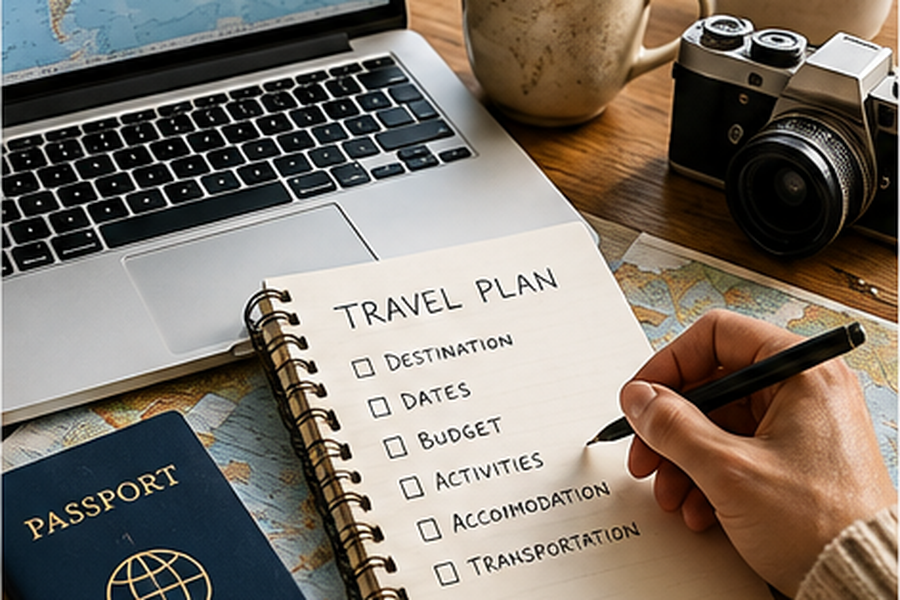
Planning a trip should be exciting, but it can quickly become overwhelming when you are comparing destinations, flights, hotels, itineraries and endless recommendations. The key is not to plan every detail. It is to make the important decisions in the right order.
A simple framework can help you organize the essentials, avoid unnecessary research and still leave enough flexibility to enjoy the trip once you arrive.
Start With the Decisions That Matter Most
Before comparing hotels or building a daily itinerary, decide the few things that will shape the entire trip: where you are going, when you are travelling, how long you will stay and roughly how much you want to spend.
These decisions create the boundaries for everything that follows. Once they are settled, many smaller choices become much easier.
Start by answering four basic questions:
- Where do you want to go?
- When can you realistically travel?
- How many days do you have?
- What is a comfortable overall budget?
You do not need exact numbers at this stage. A reasonable range is enough to prevent you from spending hours researching options that are not practical for your trip.
Choose the Destination Before Building the Itinerary
It is easy to start collecting attractions, restaurants and hotels before you have fully decided where you are going. That usually creates more confusion rather than less.
Choose the destination first, then research what makes sense within that destination. Consider the season, typical weather, travel time, transportation options and whether the destination suits the type of trip you actually want.
A destination that looks perfect on social media may not be the best choice if reaching it requires several connections, the weather is poor during your available dates or the cost is significantly higher than expected.
The best destination is not necessarily the most famous one. It is the one that fits your schedule, budget and travel priorities.
Set a Realistic Budget Early
You do not need to account for every coffee and museum ticket before booking your trip, but you should have a realistic idea of the major expenses.
Think about your budget in a few broad categories:
- Flights or other transportation to the destination
- Accommodation
- Local transportation
- Food and drinks
- Attractions and activities
- Travel insurance
- Shopping and personal spending
- A small reserve for unexpected costs
Flights and accommodation usually account for a large portion of the total cost, so researching those first gives you a useful indication of whether the trip is financially realistic.
Once those major expenses are understood, you can adjust the rest of the trip without constantly recalculating everything.
Book the Important Things First
Not every part of a trip needs to be booked months in advance. Concentrate first on the things that are expensive, limited or difficult to replace.
For most trips, that means securing transportation and accommodation before worrying about restaurant reservations or detailed sightseeing schedules.
You may also want to reserve popular attractions in advance if they routinely sell out or require timed entry.
A useful booking order is:
- Flights or long-distance transportation
- Accommodation
- Travel insurance
- Major transportation between cities
- High-demand attractions or tours
- Restaurants or optional activities
This approach protects the important parts of the trip without forcing you to organize every hour before you leave home.
Build Your Itinerary Around Areas, Not Long Lists
One of the easiest ways to over-plan is to create a long list of attractions and then try to fit all of them into a limited number of days.
A better approach is to group activities geographically. If several places you want to visit are located in the same neighbourhood or part of the city, plan to see them on the same day.
This reduces unnecessary transportation and makes the day feel much more relaxed.
For example, instead of planning five attractions simply because they rank highly online, choose one or two priorities in a particular area and then identify a few nearby options that you can visit if time and energy allow.
This gives your itinerary structure without turning it into a rigid schedule.
Choose One or Two Priorities Per Day
You do not need a full schedule from breakfast until bedtime.
For most sightseeing days, one or two major activities are enough. Everything else can be considered optional.
A simple day might include one important attraction in the morning, lunch in the same area and another activity later in the afternoon. The remaining time can be used for walking, shopping, stopping at a café or simply exploring.
This approach gives you room to discover things you did not know about before the trip.
It also prevents one delayed train, long lunch or unexpected closure from disrupting the entire day.
Do Not Research Every Possible Option
Travel planning can become exhausting because there is almost unlimited information available online. You can spend hours comparing hotels, restaurants and attractions that are all perfectly acceptable.
Give yourself reasonable limits.
For example, rather than comparing twenty hotels, identify four or five that meet your requirements for location, price and reviews. Once one clearly satisfies your needs, book it and move on.
The same principle applies to restaurants and activities. You rarely need to find the single best option in an entire city. You simply need several good choices that suit your plans.
More research does not always produce a better trip. At some point, it simply produces more decisions.
Pay Attention to Location
Location can have a greater effect on your trip than small differences in hotel price or amenities.
A less expensive hotel may not be a bargain if you spend significant time and money travelling back and forth every day.
When choosing accommodation, look at how easily you can reach the areas you expect to visit most often. Check walking distances, public transportation connections and how convenient the location will be at the beginning and end of each day.
Being well located can reduce transportation costs, simplify your itinerary and give you more time to actually enjoy the destination.
Leave Some Time Unplanned
A good itinerary includes empty space.
You may discover a neighbourhood you want to explore, hear about a restaurant from a local or simply decide that you would rather spend another hour somewhere you are enjoying.
If every part of the day is scheduled, those opportunities become difficult to accommodate.
Leaving several hours open occasionally — or even an entire afternoon on a longer trip — gives you flexibility when plans change.
It can also make the trip feel less like a checklist and more like an experience.
Keep Your Essential Information in One Place
Before departure, organize the information you will actually need while travelling.
This might include:
- Flight and transportation details
- Hotel addresses and confirmation numbers
- Travel insurance information
- Tickets and attraction reservations
- Passport or identification details stored securely
- Emergency contact information
- Copies of important travel documents
You can keep these in a travel app, cloud folder, email folder or another system that works for you. The important thing is being able to access them easily when needed.
It is also useful to keep some important information available offline in case you temporarily lose internet access.
Prepare for the First Day
You do not need every day of a trip fully organized, but it is worth planning your arrival day.
Know how you will get from the airport, train station or port to your accommodation. Check approximately how long the trip takes and whether you need cash, a transit ticket or a particular transportation app.
If you are arriving after a long flight, avoid scheduling too much for the first day. Getting settled, eating a good meal and taking a short walk may be enough.
A simple arrival plan can eliminate a surprising amount of stress.
Know What Can Wait Until You Arrive
Some decisions are easier to make once you are actually at the destination.
You may not know how tired you will be, what the weather will be like or which parts of the city you will enjoy most until you are there.
Unless something requires advance reservations, consider leaving lower-priority activities flexible.
This is particularly useful for restaurants, casual sightseeing and activities that depend heavily on weather.
Planning less in these areas does not mean being unprepared. It means keeping your options open.
Use a Simple Final Checklist
A few days before departure, stop researching the trip and switch to a practical checklist.
Confirm the essentials:
- Passport and required travel documents
- Flight or transportation reservations
- Accommodation bookings
- Travel insurance
- Payment cards and some backup access to money
- Phone, chargers and travel adapters
- Necessary medications
- Transportation from your arrival point
- Any tickets that must be downloaded in advance
Once these essentials are covered, you are probably more prepared than you think.
A Better Trip Does Not Require a Perfect Plan
The goal of travel planning is not to predict every moment of your trip. It is to remove the major uncertainties so you can enjoy yourself once you arrive.
Decide the important things early, organize the essentials, choose a few priorities and leave enough flexibility for the unexpected.
A well-planned trip should make travel feel easier — not turn the weeks before departure into another full-time job.
For more practical planning advice, explore our Travel Tips & Resources.