
This Italy travel guide is designed to help you narrow down where to go, when to visit, and how to build a realistic itinerary.
Italy is one of those destinations that can suit very different kinds of trips. You can spend your time exploring major art cities, moving through small towns and countryside, relaxing along the coast, or building a trip around food and regional culture. The challenge is not finding things to do—it is narrowing the country down into a realistic itinerary. Italy’s official tourism site highlights that same range, from cities and UNESCO sites to villages, beaches, mountains, food and wine.
Is Italy Right for Your Trip?
Italy is a strong choice if you want a trip that combines history, food, culture, scenery, and walkable cities. Rome, Florence, Venice, Naples, Tuscany, the Amalfi Coast, the Italian Lakes, and the islands all offer very different experiences, so the country works well for both first-time visitors and repeat trips. Italy’s official tourism site highlights this range across major cities, coastal destinations, countryside, mountains, islands, and smaller towns.
The main planning challenge is deciding how much to include. Italy rewards slower travel: trying to cover too many regions in one trip can mean spending a large share of your vacation checking out of hotels and moving between cities. For a first visit, two or three main bases usually create a better balance between sightseeing and actually experiencing each destination.
Best Time to Visit Italy
There is no single best month to visit Italy because the experience changes significantly by region and season. For many sightseeing-focused trips, spring and early autumn offer the easiest balance. Italy’s official tourism site specifically highlights spring for its favourable climate, while also recommending low and mid-season travel when possible because temperatures tend to be milder and major cities and attractions can be less crowded.
Summer works particularly well if beaches, islands, mountain areas, and long evenings are priorities, but it is also Italy’s hottest season. Popular cities and coastal destinations can be considerably busier, so accommodation and major attractions are worth planning well ahead.
Autumn is especially appealing for countryside trips, food and wine experiences, and travelers who prefer a slower pace after the main summer season. Italy’s tourism board highlights vineyards, villages, parks, countryside, and regional food experiences as major autumn draws.
Winter should not automatically be ruled out. It suits travelers interested in major cities, Christmas markets, spas, skiing, and the Alps, while some coastal and southern destinations can be noticeably quieter than in summer.
Practical choice: for a classic first trip built around Rome, Florence, Venice, and Tuscany, I would generally favour April–June or September–October over peak midsummer unless summer travel is specifically what you want.
Where to Go in Italy
Italy is easier to plan when you choose destinations based on the kind of trip you want rather than trying to cover the entire country. The country ranges from Alpine regions and lakes in the north to major art cities, countryside, Mediterranean coastlines, and islands farther south.
For a first visit, three destinations form the classic cultural route:
Rome — the strongest choice for ancient history, major monuments, neighbourhood exploration, and a broad introduction to Italian culture.
Florence — ideal for Renaissance art and architecture and an excellent base for exploring Tuscany. Italy’s official tourism site describes Florence as one of the country’s major art destinations and highlights the surrounding Tuscan countryside as part of the experience.
Venice — unlike anywhere else in Italy, with canals, historic architecture, and a compact centre that works particularly well as part of a rail-based itinerary.
Travelers who want more scenery and a slower pace can add Tuscany, where smaller towns, countryside, food, wine, and historic cities provide a very different experience from Italy’s largest tourist centres.
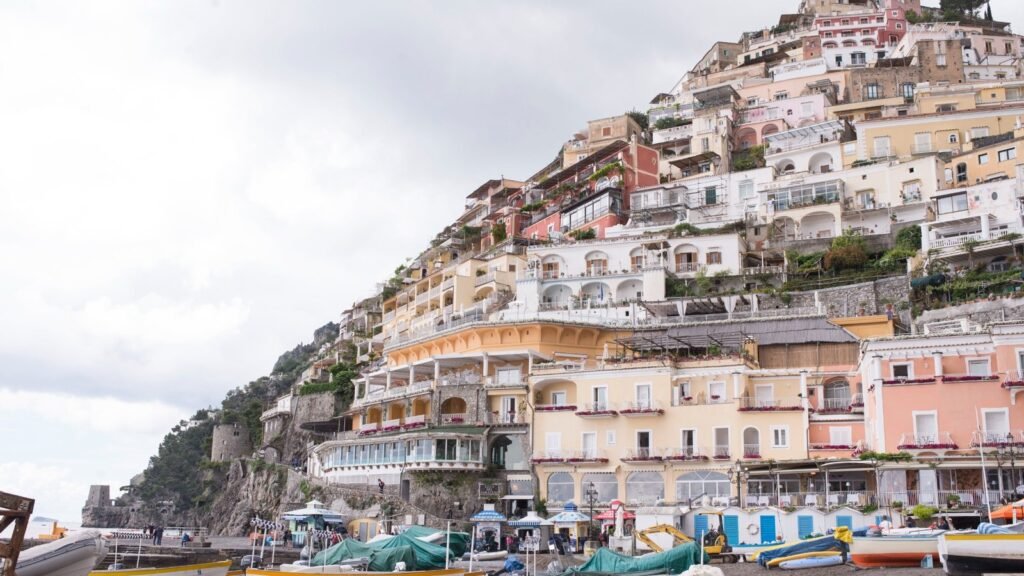
For southern Italy, Naples and the Amalfi Coast combine historic cities, food, archaeological sites, coastal villages, and dramatic Mediterranean scenery. The Amalfi Coast itself runs along the Gulf of Salerno and includes destinations such as Positano, Amalfi and Ravello.
How Many Days Do You Need?
For a first trip to Italy, 7 to 10 days is enough for a focused itinerary, while 10 to 14 days gives you more breathing room and makes it easier to combine major cities with a slower-paced region such as Tuscany, the Amalfi Coast, or the lakes.
A useful rule is to avoid changing hotels every day or two. Travel time between destinations may look short on a map, but station transfers, check-in and check-out, luggage, and local transportation all add friction. Fewer bases usually create a better trip.
- 7 days: Rome + Florence, or Rome + Naples/Amalfi Coast
- 10 days: Rome + Florence + Venice
- 14 days: Rome + Florence + Venice + one slower region such as Tuscany, the lakes, or the Amalfi Coast
The goal is not to see the most places. It is to choose an itinerary that gives you enough time to experience each stop without turning the trip into a logistics exercise.
Getting Around Italy
For most first-time visitors, trains are the easiest way to travel between major Italian cities. High-speed rail connects places such as Rome, Florence, Bologna, Milan, Naples, and Venice, making train travel a strong choice for city-based itineraries.
A rental car becomes more useful when your trip includes rural Tuscany, smaller villages, countryside stays, or areas with limited rail connections. In major historic cities, however, a car can become more trouble than it is worth because of congestion, parking, and restricted-traffic zones.
Within cities, walking and public transportation usually cover most sightseeing needs. Rome, Milan, Naples, and other major cities have metro, bus, and tram networks, while Venice is primarily explored on foot and by water transport.
For high-speed trains, booking ahead can help with price and seat availability, especially on popular routes and during busy periods. Regional trains are usually more flexible for shorter journeys between nearby towns and cities.
Costs and Budgeting
Italy can work for different budgets, but costs vary sharply depending on where you stay, when you travel, and how often you move between destinations. Major cities and famous coastal areas are usually the places where accommodation costs climb fastest, especially during peak periods.
A practical way to control spending is to focus on three areas:
- Accommodation: book earlier for Rome, Florence, Venice, the Amalfi Coast, and other high-demand destinations.
- Transportation: use high-speed rail for major-city routes and regional trains or local transit for shorter journeys.
- Meals: mix sit-down restaurants with bakeries, markets, cafés, and casual local options rather than treating every meal as a major dining event.
Travelers should also budget separately for museum tickets, major attractions, local transportation, city taxes, and occasional taxis rather than assuming the hotel and train costs represent the full trip.
For first-time visitors, the biggest budgeting mistake is often trying to fit too many destinations into one itinerary. Every additional hotel change can add transportation costs, luggage logistics, and time that might otherwise be spent enjoying the destination.
Food and Dining
Food in Italy is highly regional, so one of the best ways to approach dining is to eat according to where you are rather than searching for the same famous dishes everywhere. Italy’s official tourism board emphasizes that every region has its own specialties and food traditions.
In Rome, that might mean dishes associated with Lazio; in Naples, pizza and Campanian specialties; in Tuscany, simpler dishes built around local produce, bread, olive oil, meat, legumes, and wine. The point is not to work through a universal checklist of “Italian food,” but to experience the regional cuisine of each stop.
A few practical habits can improve the experience:
- Look for menus that emphasize regional dishes rather than an enormous list designed to satisfy every tourist.
- Consider markets, bakeries, cafés, and street food for some meals.
- Don’t assume the restaurant closest to a major attraction will offer the best value.
- Leave room in the itinerary for meals rather than treating lunch and dinner as something to squeeze between attractions.
Italy is one of the destinations where food can be part of the travel experience rather than simply a necessity between sightseeing stops.
Want to explore Italian cuisine in more depth? See our complete guide to what to eat in Italy, including regional specialties, dining customs, markets, coffee and tipping.
Culture and Local Customs
Italy’s culture varies considerably from one region to another, with different traditions, foods, dialects and ways of life shaping each destination.
Simple habits such as greeting people politely, dressing appropriately when visiting churches and religious sites, respecting residential neighbourhoods and allowing time to experience local piazzas, markets and everyday routines can make a trip feel more connected to the places you visit.
For a deeper look at traditions, etiquette and everyday life, read our Italian Culture for Travelers: Traditions, Customs and What to Know.
Coastlines and Seaside Destinations
Italy’s coastline offers very different experiences depending on the region, from the dramatic cliffs of the Amalfi Coast and colourful villages of Liguria to the beaches of Sardinia, Sicily and Puglia.
If the coast will be part of your itinerary, see our guide to the best coastal destinations in Italy for seaside towns, islands, beaches and practical planning advice.
What to Know Before You Go
A little preparation can prevent some of the most common problems travelers encounter in Italy.
Entry requirements: Italy is part of the Schengen area. Entry rules depend on your nationality, so check the official requirements before departure. For Canadian citizens, a tourist visa is not required for stays of up to 90 days in any 180-day period, and the passport must generally remain valid for at least three months beyond the planned departure from the Schengen area.
European border systems are changing. As of September 2026, the EU’s Entry/Exit System (EES) is operational and records biometric information for many non-EU travelers entering for short stays. ETIAS is not yet operating, and travelers should avoid websites claiming to sell ETIAS authorizations before the official system launches.
Driving requires extra preparation. Travelers from outside the EU may need an International Driving Permit, and many historic city centres contain ZTL restricted-traffic zones. Entering one without authorization can lead to fines, so rental-car travelers should pay close attention to signs and ask accommodations about local access rules.
Book major attractions ahead when possible. Famous museums, archaeological sites, and landmark attractions can have timed-entry systems or limited availability, particularly during busy travel periods.
Leave room for flexibility. Strikes, weather, crowds, transportation changes, and local events can affect even a carefully planned itinerary. Avoid scheduling every day so tightly that one delay disrupts the rest of the trip.
Suggested First-Time Italy Itinerary
For travelers with around 10 days, Rome, Florence, and Venice create one of the most practical first-time routes because all three are connected by high-speed rail and each offers a distinctly different experience.
Days 1–4: Rome
Start with Rome and give yourself enough time for the historic centre, major ancient sites, Vatican City, neighbourhood exploration, and at least one slower day rather than trying to see everything immediately.
Days 5–7: Florence
Travel north by high-speed train to Florence. Spend two days exploring the city and use the additional time for either a slower Florence day or a day trip into Tuscany.
Days 8–10: Venice
Continue by train to Venice. Two or three nights gives you time to experience the city beyond a quick day trip and to explore quieter neighbourhoods once the largest daytime crowds have left.
This route works because it limits the trip to three main hotel bases while still providing ancient history, Renaissance art, regional food, and one of Europe’s most distinctive cities.
If you have 14 days, resist the temptation to simply add more cities. Instead, consider adding several nights in Tuscany, the Italian Lakes, Naples and the Amalfi Coast, or another region that matches your interests.
The best first trip to Italy is not necessarily the itinerary with the most stops. It is the one that gives you enough time to remember the places you visited rather than only the transportation between them.
Final Thoughts
Italy is a destination where better planning usually means doing less, not more. The country offers enough variety for many different trips, so there is little advantage in trying to cover every famous city or region at once.
For a first visit, focus on a small number of destinations that fit your interests, give yourself enough time in each place, and leave some flexibility in the itinerary. Rome, Florence, and Venice make a strong introduction, but Tuscany, Naples, the Amalfi Coast, the lakes, the islands, and smaller towns can easily justify future trips of their own.
The goal of this guide is not to create one “perfect” Italy itinerary. It is to give you enough practical information to build a trip that fits your time, budget, and travel style.
Explore more destination guides on TravelingInformed.