
Trenitalia vs Italo: Which Is Better?
If you are traveling between major Italian cities such as Rome, Florence, Venice, Milan or Naples, you will probably encounter two high-speed train companies: Trenitalia and Italo.
The good news is that both are excellent options.
For most travelers, the better choice is not automatically one company or the other. It usually comes down to departure time, ticket price, fare flexibility and the station you need.
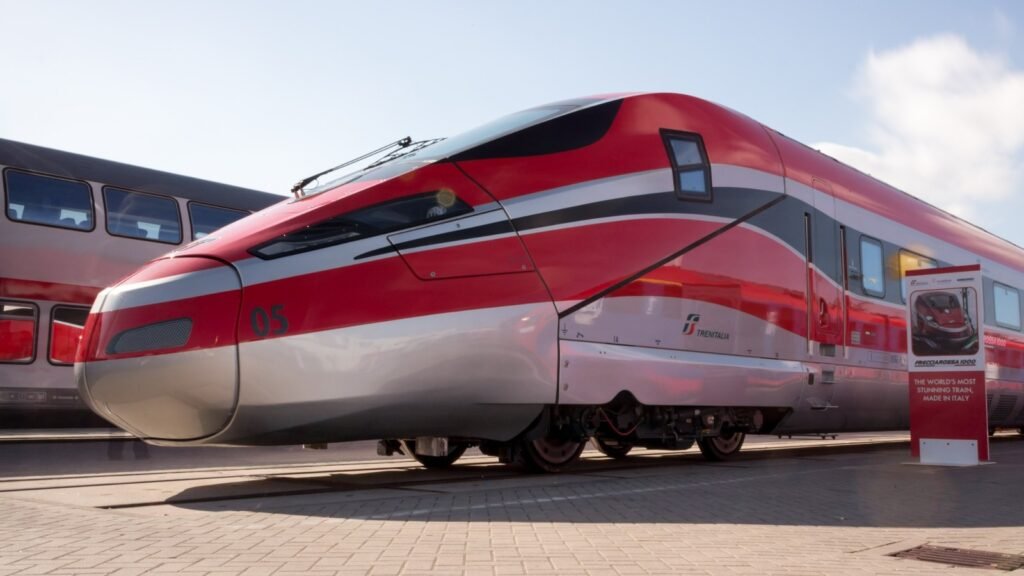
Trenitalia’s high-speed service is called Frecciarossa, while Italo operates its own privately run high-speed network. On routes where both companies compete, journey times can be very similar.
For example, both operators currently advertise Rome-to-Florence journeys of about 1 hour 30 minutes.
The simplest strategy is therefore to compare both before booking.
Trenitalia vs Italo at a Glance
For most first-time visitors to Italy, think of the two operators this way:
Choose Trenitalia if:
- you want the widest choice of train connections
- your itinerary includes smaller cities or regional trains
- you prefer keeping more of your Italian rail travel with one company
- a Frecciarossa departure fits your schedule better
Choose Italo if:
- it offers a better fare for your travel time
- its departure schedule works better
- you prefer its Smart, Prima Business or Club Executive service options
- you find a particularly attractive promotion
For journeys such as Rome → Florence → Venice, there is no reason to remain loyal to one operator for the entire trip.
You can take Trenitalia for one segment and Italo for another.
What Is Trenitalia?
Trenitalia is Italy’s national railway operator.
Its rail network includes several different types of trains, including:
- Frecciarossa high-speed trains
- Intercity trains
- regional trains
- overnight services
For tourists traveling between Italy’s major cities, Frecciarossa is usually the Trenitalia service you will compare against Italo.
Frecciarossa connects major destinations including Rome, Florence, Venice, Milan, Bologna, Naples and many other cities.
Trenitalia currently operates particularly frequent service on major corridors. For example, it advertises more than 100 daily Frecciarossa connections between Rome and Florence and more than 100 between Rome and Naples, although schedules vary by day and season.
This extensive network is one of Trenitalia’s biggest advantages.
What Is Italo?
Italo is a private high-speed rail operator that competes directly with Trenitalia on many of Italy’s busiest routes.
Italo currently says its network serves 50 major Italian cities and 57 stations.
Major destinations include:
- Rome
- Florence
- Venice
- Milan
- Naples
- Bologna
- Turin
- Verona
- Salerno
Unlike Trenitalia, Italo does not operate the country’s broad regional rail network.
Its focus is primarily on high-speed intercity travel.
For tourists moving between major cities, however, that is often exactly what is needed.
Which Company Has the Better Routes?
Trenitalia has the broader overall network.
That becomes particularly important if your itinerary goes beyond Italy’s major high-speed cities.
For example, Trenitalia also operates regional services that can help connect travelers with places such as Pisa, Lucca and other destinations throughout Tuscany.
Italo focuses much more heavily on major-city connections.
For a classic first trip involving:
Rome → Florence → Venice
both companies are worth checking.
For an itinerary involving smaller towns, regional connections or more complicated rail travel, Trenitalia will usually play a larger role.
Trenitalia vs Italo Travel Times
On routes where both companies operate high-speed service, the difference in journey time is often small.
Typical examples include:
Rome to Florence: around 1 hour 30 minutes
Rome to Naples: around 1 hour
Rome to Venice: approximately 4 hours
The precise journey depends on the particular train and how many stops it makes.
This is why you should compare the specific departure, rather than assuming one company is always faster.
A train leaving 30 minutes earlier can matter far more than a five- or ten-minute difference in scheduled journey time.
Trenitalia Service Classes
Frecciarossa trains offer several service levels.
Depending on the train, these include:
Standard
Standard is the most economical Frecciarossa service level.
It is perfectly adequate for most travelers and still includes the core advantages of high-speed rail.
Frecciarossa trains provide features such as power sockets, air conditioning, luggage storage and onboard travel information. Wi-Fi provides access to Trenitalia’s FrecciaPlay portal and internet services.
Premium
Premium provides additional comfort compared with Standard and can sometimes be worthwhile when the price difference is small.
Business
Business offers more space and additional comfort.
Certain Frecciarossa trains also offer features such as quiet areas or small private meeting spaces within Business service.
Executive
Executive is Frecciarossa’s highest service level.
It offers significantly more space and a much smaller cabin. Trenitalia describes the Executive area on some Frecciarossa trains as containing only 10 large leather seats.
For ordinary sightseeing trips, Standard or Premium will usually be sufficient.
Italo Travel Classes
Italo currently offers three main travel environments:
Smart
Smart is Italo’s most affordable class.
It includes reclining seats, power outlets and free onboard Wi-Fi.
For most tourists, Smart is perfectly comfortable for journeys of a few hours.
Prima Business
Prima Business offers wider seating, more legroom and additional onboard service.
Depending on the station and ticket, benefits can also include Fast Track access.
Club Executive
Club Executive is Italo’s premium option.
It includes larger leather seats, lounge access at participating stations, Fast Track services and enhanced onboard service.
There is also a private Club Salotto option on selected services for travelers wanting a more secluded compartment.
Which Has Better Seats?
There is no clear universal winner.
Both operators provide comfortable high-speed trains.
For most travelers, the difference between companies matters less than the service class you book.
Italo Smart and Frecciarossa Standard are both appropriate for ordinary tourist travel.
If you want additional room, compare:
Frecciarossa Business
with
Italo Prima Business
For luxury travel, compare:
Frecciarossa Executive
with
Italo Club Executive
Do not assume that upgrading is always expensive. Dynamic pricing can occasionally make a higher service level only slightly more expensive than the cheapest option.
Always compare the actual fare before booking.
Which Has Better Luggage Rules?
Both companies are generally convenient for travelers carrying normal vacation luggage.
Italo states that luggage transportation is included with the ticket and travelers can bring multiple pieces without an additional luggage fee. However, in Smart class, individual pieces larger than 75 × 53 × 30 cm are not permitted.
Frecciarossa trains provide overhead racks and dedicated luggage areas, with Trenitalia describing its trains as having ample luggage space.
Whichever company you choose, pack luggage that you can comfortably lift and move yourself.
Italian train stations can involve stairs, escalators, crowded platforms and relatively short boarding periods.
Trenitalia vs Italo Ticket Prices
There is no permanent winner on price.
Both companies use variable pricing, which means ticket prices can change depending on:
- travel date
- departure time
- demand
- service class
- how far in advance you book
- the flexibility of the fare
The best approach is simple:
Search both operators for the same route and date.
A traveler should not pay significantly more for one company simply because of brand preference.
If Italo has a convenient train for €30 and Trenitalia’s comparable departure costs €55, Italo may be the obvious choice.
On another day, the opposite might be true.
Understanding Trenitalia Fares
The service level and the fare type are two separate things.
Trenitalia’s main fare categories include:
- Base
- Economy
- Super Economy
There are also numerous promotions and discounted offers.
The important distinction is flexibility.
A cheaper ticket may have stricter rules about changing your train or requesting a refund.
Trenitalia’s Base fare provides the greatest standard flexibility, while Economy and Super Economy generally trade flexibility for a lower price. Trenitalia has also introduced an optional tiRimborso refund add-on for several discounted fares.
Always read the conditions before paying.
Understanding Italo Fares
Italo also separates your travel class from your fare rules.
Its current primary fares include:
- Low Cost
- Economy
- Flex
Low Cost emphasizes lower prices but has more restrictive change conditions.
Economy provides a middle ground between cost and flexibility.
Flex offers the greatest flexibility, including unlimited eligible time/date changes before departure and an 80% refund under the current fare conditions if the traveler cancels.
Again, the cheapest ticket is not automatically the best ticket.
If your plans might change, paying slightly more for flexibility can be worthwhile.
Should You Book Italy Trains in Advance?
For high-speed trains, usually yes.
Unlike many regional trains, Frecciarossa and Italo tickets are tied to a particular train and reserved seat.
Prices can increase as cheaper fare inventory sells out.
If you already know exactly when you will travel between major cities, booking ahead can:
- provide access to lower fares
- give you more departure choices
- provide better seat availability
- reduce planning during your trip
You do not necessarily need to purchase every train months in advance, but waiting until the last minute during busy travel periods can reduce both choice and value.
Where Should You Buy Tickets?
The safest approach is to book directly from the operator whenever practical.
For Trenitalia, use the official Trenitalia website or app.
For Italo, use the official Italo website or app.
Third-party booking sites can be convenient when comparing schedules, but booking directly makes it easier to manage ticket changes, refunds and service disruptions with the actual rail company.
Always double-check the train operator before paying.
Do You Need to Print Italian Train Tickets?
For most high-speed tickets purchased online, travelers can use the electronic ticket provided by the operator.
Keep the ticket or booking information available on your phone.
A useful precaution is to download the ticket or take a screenshot before leaving your hotel.
That way you are not dependent on mobile reception at the station.
Trenitalia or Italo for Rome to Florence?
For Rome to Florence, compare both.
This is one of Italy’s busiest high-speed corridors, with frequent service and travel times around 90 minutes. Trenitalia currently advertises more than 100 daily Rome–Florence Frecciarossa connections, while Italo also advertises a 1 hour 30 minute journey.
Choose the departure that offers the best combination of:
- convenient time
- fare
- flexibility
- service class
There is little reason to select one company automatically.
Trenitalia or Italo for Florence to Venice?
Again, compare both operators.
Pay particular attention to the arrival station.
If your hotel is in Venice’s historic center, you will normally want a train terminating at Venezia Santa Lucia, rather than stopping your journey at Venezia Mestre on the mainland.
The station matters more than the logo on the train.
Can You Take Trenitalia One Way and Italo the Next?
Absolutely.
There is no requirement to remain with one operator throughout your trip.
For example, your itinerary could easily be:
Rome → Florence: Italo
and
Florence → Venice: Trenitalia
or the reverse.
Treat every journey as a separate booking decision.
This is often the easiest way to get better departure times and prices.
Trenitalia vs Italo: Which Should You Choose?
For most travelers, there is no need to declare one operator the overall winner.
Trenitalia wins on network breadth and connection options.
Its combination of Frecciarossa, Intercity and regional services makes it particularly useful for travelers exploring beyond the major high-speed cities.
Italo is an excellent competitor on major high-speed routes.
Its modern trains, straightforward service classes and frequent promotions make it well worth checking whenever your route is served by both companies.
For a first trip through Rome, Florence and Venice, my recommendation is simple:
Search both Trenitalia and Italo for every high-speed journey and book whichever offers the best combination of schedule, price and ticket flexibility.
The difference between a convenient 9:00 a.m. train and an inconvenient 11:30 a.m. train will probably affect your vacation more than the difference between the two operators.
Final Thoughts
Italy’s high-speed rail system makes traveling between major cities remarkably straightforward.
Both Frecciarossa and Italo provide comfortable high-speed service, and competition between them gives travelers more choices.
Instead of asking whether Trenitalia or Italo is always better, ask four questions:
- Which train leaves at the best time?
- Which fare offers the right amount of flexibility?
- Which train arrives at the station I actually need?
- Which option offers the best value?
Answer those four questions for each journey and you will usually make the right choice.