
The United States is enormous, and its culture changes substantially from one region to another. Customs that feel completely normal in New York, New Orleans, Texas, California or Hawaii may look quite different somewhere else.
Understanding United States culture and local customs is therefore less about memorizing one national set of rules and more about recognizing regional differences. Travelers will encounter different accents, food traditions, sports loyalties, festivals, social habits and attitudes depending on where they go.
Most everyday interactions are informal and straightforward. A few practical customs — especially tipping, personal space, driving etiquette and respect for local communities — can make travel considerably easier.
United States Culture and Local Customs: What Travelers Should Expect
Americans are often relatively informal in everyday situations. First names are commonly used quickly, casual clothing is widespread and conversations between strangers are normal in many settings.
That does not mean every part of the country behaves the same way. Large cities may feel fast-paced and relatively anonymous, while smaller communities can be more conversational. Regional habits also vary significantly between the Northeast, South, Midwest, Southwest, West Coast, Alaska and Hawaii.
The safest approach is to pay attention to the people around you rather than relying too heavily on stereotypes about “American behavior.”
Courtesy still matters. Simple phrases such as “please,” “thank you,” “excuse me” and “have a good day” are common in everyday interactions with servers, hotel staff, shop employees and strangers.
Regional Differences Matter
The United States covers a vast geographic area, and regional identity can be surprisingly strong.
New England, the Deep South, Appalachia, Texas, the Southwest, California, the Pacific Northwest, Hawaii and other regions each have distinct histories and cultural traditions.
Even within individual states, attitudes and lifestyles can differ between major cities, suburbs, rural communities and coastal or mountain regions.
Travelers should avoid assuming that something they experience in one destination represents the entire country.
The South
Southern states are often associated with hospitality, strong food traditions, college sports, music and community gatherings. But Atlanta, New Orleans, rural Mississippi and coastal South Carolina are culturally very different places.
The Northeast
Large northeastern cities such as New York, Boston and Philadelphia may feel faster and more direct. Conversations can be brief without being unfriendly.
The West
Western states combine major urban centres with enormous areas of public land, national parks and outdoor recreation. Cultural life in Los Angeles or San Francisco is very different from that of rural Montana, Utah or Wyoming.
Conversation and Personal Space
Casual conversation with strangers is common in many parts of the United States.
Someone may ask where you are from, comment on the weather or start a conversation while waiting in line. This is often simply friendly small talk rather than an invitation to a long conversation.
Questions such as “How are you?” are also frequently used as greetings. A short positive response is usually enough.
Personal space expectations vary, but standing extremely close to strangers when there is plenty of room available can feel uncomfortable.
Physical greetings are usually informal. A handshake is appropriate in many situations, while friends may hug. Travelers should simply follow the other person’s lead rather than assuming physical contact is expected.
Tipping and Service Culture
Tipping is one of the American customs most likely to confuse international travelers.
According to Visit The USA, tipping is common throughout the United States. For sit-down restaurant service, 15 to 20 percent is a typical guideline, while some restaurants automatically add a gratuity or service charge, particularly for larger groups.
Before adding a tip, check the bill so you do not unintentionally tip twice.
At bars, customers commonly tip per drink or leave a percentage of the final tab.
Tipping expectations can also extend to taxis, rideshare drivers, hotel staff, tour guides, hair salons and certain other personal services.
Counter-service cafés and fast-casual restaurants increasingly display electronic tipping prompts. A suggested amount appearing on a payment screen does not necessarily mean the same tipping convention applies as it would in a full-service restaurant.
If you are unsure whether gratuity has already been included, ask rather than paying twice.
Restaurants, Cafés and Everyday Dining
American restaurants range from very casual to highly formal, but most everyday dining is relaxed.
At full-service restaurants, wait to be seated unless a sign specifically says to seat yourself. Servers usually bring the bill to the table rather than expecting customers to request it at a counter.
Water is commonly provided without charge in table-service restaurants, and free refills are common for some soft drinks and brewed coffee, although practices vary.
Portion sizes can be large. Asking for a container to take leftovers with you is completely normal.
Reservations are useful at popular restaurants, especially on Friday and Saturday evenings or in major tourist destinations.
For regional dishes and American food traditions, read our What to Eat in the United States: A Regional Food Guide for Travelers.
Waiting Your Turn and Public Courtesy
Americans generally expect people to wait their turn when a line forms.
This applies at airports, attractions, shops, cafés, ticket counters and public events. Cutting into an established line can create immediate irritation even when the queue is informal.
On elevators, trains and other crowded spaces, allow people to exit before entering.
Holding a door briefly for someone immediately behind you is also a common everyday courtesy.
Public behavior varies by location, but using headphones rather than playing music or video loudly from a phone is generally more considerate in shared spaces.
Driving and Road Etiquette
For many travelers, driving is the easiest way to explore the United States outside major cities.
Traffic laws vary by state, so do not assume every rule is identical nationwide.
Vehicles drive on the right side of the road. On multilane highways, slower traffic generally stays toward the right while faster-moving vehicles use lanes farther left.
Four-way stop intersections are common. When several vehicles arrive, drivers generally proceed in the order in which they arrived.
Distances can be deceptive. A road trip that looks manageable on a map may require many hours of driving, particularly in western states.
Parking regulations also vary sharply between cities. Read signs carefully rather than assuming an apparently empty curb is legal parking.
Sports and Tailgating Culture
Sports are a major part of social culture throughout the United States.
American football, basketball, baseball, ice hockey and college sports all have large followings, with regional loyalties often running extremely deep.
College football is particularly important in parts of the South and Midwest, while baseball remains closely associated with summer traditions across much of the country.
Tailgating
Before some football and other sporting events, fans gather in stadium parking areas for food, drinks and socializing. This tradition is known as tailgating.
For visitors, attending a game can provide cultural context that extends well beyond the sport itself.
You do not need to support a particular team to enjoy the atmosphere, but wearing the opposing team’s colors in the middle of an intense rivalry section may attract plenty of attention.
Festivals and Community Traditions
Festivals are one of the best ways to experience regional American culture.
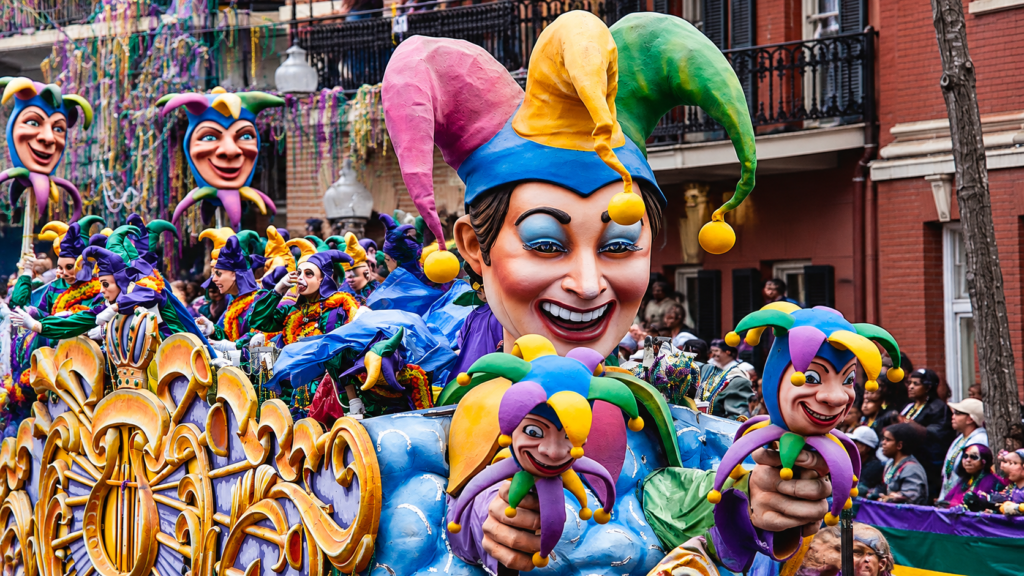
The Mardi Gras parade shown in this article’s featured image is a good example. New Orleans has developed its own elaborate carnival traditions involving parades, decorated floats, costumes, music and community organizations.
Mardi Gras is not representative of the entire country — and that is exactly why it works as an example of American culture. Regional traditions are often more meaningful than generic national stereotypes.
Other communities celebrate state fairs, food festivals, Indigenous gatherings, county fairs, music festivals, cultural parades and local heritage events.
If your travel dates overlap with a local festival, it is worth checking the event calendar before finalizing your itinerary.
Holidays and National Celebrations
Several holidays strongly influence travel patterns, business hours and public events.
Thanksgiving
Thanksgiving is celebrated on the fourth Thursday of November and is one of the country’s most important family holidays.
Travel can be extremely busy around the holiday, and many businesses close or operate limited hours on Thanksgiving Day.
Independence Day
July 4 is celebrated with fireworks, parades, concerts, barbecues and community events throughout the country.
Popular destinations can become crowded, especially around major fireworks displays.
Memorial Day and Labor Day
Memorial Day in late May and Labor Day in early September traditionally mark the beginning and end of the summer travel season for many Americans.
Holiday weekends can mean heavier road traffic and higher demand for hotels, campgrounds and beaches.
National Parks and Outdoor Etiquette
National parks and public lands are an important part of American travel culture.
The National Park Service advises visitors to remain on established trails where required, leave rocks, plants and artifacts where they find them, and keep a safe distance from wildlife.
Wild animals should never be approached or fed. Individual parks may establish specific minimum viewing distances, so check the regulations for the park you are visiting before setting out.
Reservations, entry systems and seasonal restrictions can also differ from park to park. Check official information before arriving rather than assuming access will be unrestricted.
Indigenous Cultures and Respectful Travel
The United States is home to many distinct Tribal Nations, each with its own history, government, traditions and contemporary communities.
Travelers should avoid discussing Native American culture as though it represents one single tradition.
Tribal museums, cultural centres and community-run tourism experiences can provide much better context than souvenirs or generalized tourist attractions.
Some ceremonies and cultural sites have restrictions on photography or visitor access. Follow posted rules and local guidance.
When visiting Tribal lands, remember that you are entering living communities rather than historical exhibits.
Photography and Privacy
Photography is generally easy in public tourist areas, but basic courtesy still applies.
Ask before taking close portraits of strangers, street performers, vendors or people participating in cultural activities.
Some museums, religious buildings, performances and Indigenous cultural sites restrict photography.
Even when photography is legally permitted, that does not mean every situation benefits from having a camera pointed at someone.
When in doubt, asking takes only a moment.
Common Mistakes Travelers Can Avoid
- Do not assume the entire country shares one culture. Regional differences are substantial.
- Do not forget to check restaurant bills for gratuity. A service charge may already be included.
- Do not underestimate driving distances. The United States is much larger than many visitors expect.
- Do not approach wildlife for photographs. Keep the distance required by the park or protected area.
- Do not assume every American communicates in the same way. Urban, rural and regional interaction styles vary considerably.
- Do not treat Indigenous communities as tourist displays. Follow local rules and cultural guidance.
- Do not build the entire trip around famous national stereotypes. Local festivals, markets, sports and neighborhood experiences usually reveal more.
Experiencing American Culture Beyond the Landmarks
The most memorable cultural experiences often happen outside the major attractions.
Attend a local sporting event. Walk through a farmers market. Visit a neighborhood restaurant. Stop at a small-town festival. Listen to live music in a city associated with a particular musical tradition. Spend time in communities rather than moving only between famous landmarks.
Understanding United States culture and local customs is not about trying to define more than 300 million people with one set of characteristics. It is about recognizing that the country is made up of overlapping regional, ethnic, cultural and local traditions.
For regional dishes and dining traditions, continue with our What to Eat in the United States: A Regional Food Guide for Travelers.
For beaches, islands and coastal road trips, explore our United States Coastlines: Atlantic, Pacific, Gulf and Island Shores.
For broader trip planning, visit our United States Travel Guide.
For more practical trip-planning information, explore our Travel Tips & Resources.