
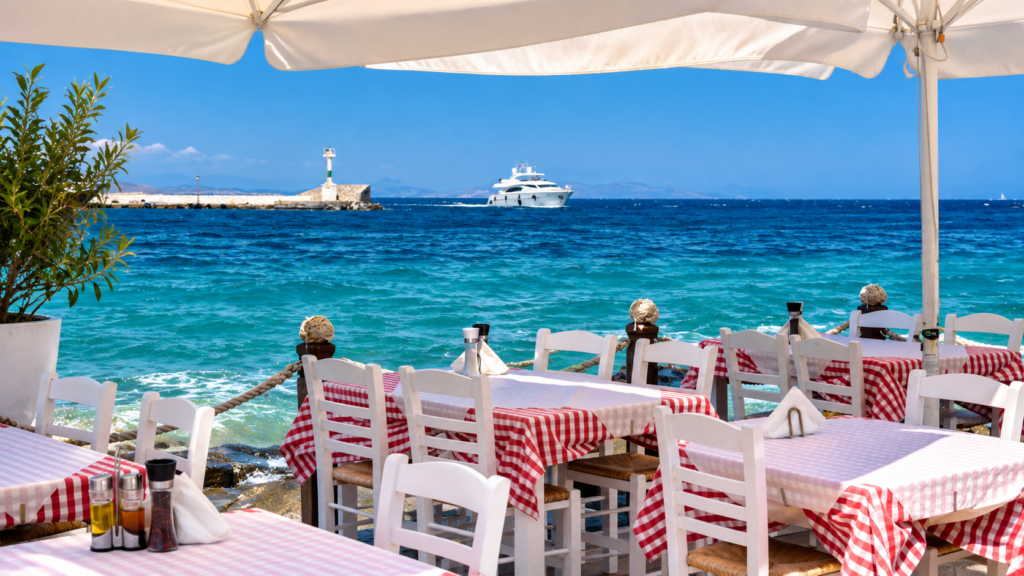
Knowing what to eat in Greece becomes much more interesting once you look beyond the handful of dishes most familiar outside the country. Moussaka, souvlaki, Greek salad and tzatziki are certainly part of the experience, but Greek cuisine changes substantially from one region and island to another.
Crete has its own cheeses, wild greens and rustic dishes. Thessaloniki reflects centuries of cultural exchange. Epirus is famous for pies, while the Peloponnese is closely connected with olives, citrus, vegetables and regional meats. The islands add seafood, cheeses, local wines and specialties shaped by relatively isolated communities.
Some of the best meals are also the simplest: grilled fish beside the sea, warm bread with olive oil, tomatoes and feta at a village taverna, a slice of spinach pie from a bakery or a table filled with small dishes shared over a long lunch.
This guide will help you understand the regional foods, everyday dishes and dining traditions that make eating one of the most rewarding parts of travelling through Greece.
Think Regionally
There is no single menu that represents all of Greece.
Mountain villages, fertile agricultural regions, major cities and hundreds of inhabited islands have developed different food traditions according to climate, local ingredients, trade and history.
Olive oil, oregano, thyme, rosemary, lemon, vegetables, grains, cheeses and fresh herbs provide common threads, but the way they are used changes considerably from place to place.
Greece’s official tourism organization describes the country’s geography as creating “worlds within worlds” of regional cuisine. Travelers can explore additional specialties through its guide to local flavours of Greek cuisine.
Learning what to eat in Greece therefore begins with asking what the region or island you are visiting is particularly known for.
Regional Food Highlights
Athens and Attica
Athens provides the easiest introduction to food from across Greece.
Traditional tavernas sit alongside modern restaurants, bakeries, markets, souvlaki shops and contemporary Greek dining rooms.
Look for dishes such as grilled meats, vegetable casseroles, stuffed vegetables, pies, seafood and seasonal specials rather than assuming every meal should revolve around internationally familiar classics.
Central markets and neighbourhood food shops are also useful for discovering olives, cheeses, herbs, cured meats, fruit and other products from around the country.
Athens is particularly good for comparison: you can taste Cretan food one day, island seafood the next and northern Greek specialties without leaving the city.
Thessaloniki and Macedonia
Thessaloniki has one of Greece’s strongest food identities.
The city’s culinary traditions reflect influences from the Balkans, Ottoman-era communities, Jewish heritage and refugees who arrived from Asia Minor.
Breakfast may begin with bougatsa, flaky pastry filled with custard, cheese or other ingredients.
Other foods to look for include grilled meats, stuffed vegetables, rich pastries and dishes using peppers from northern Greece.
Thessaloniki also has an active contemporary restaurant and café culture, making it a particularly strong destination for travelers who plan trips around food.
Epirus
The mountainous region of Epirus is closely associated with pies.
Traditional cooks developed an enormous variety using thin pastry or rustic dough filled with cheese, wild greens, vegetables, meat or combinations of local ingredients.
Spanakopita, spinach pie, is internationally familiar, but regional pie traditions extend far beyond one recipe.
Sheep and goat farming also contribute cheeses and meat dishes suited to the mountain environment.
In Ioannina and surrounding villages, look for local pies rather than assuming they will taste like versions served elsewhere in Greece.
Thessaly
Thessaly’s broad agricultural plains and mountain areas produce a cuisine with strong farming traditions.
Meat dishes, pies, cheeses, vegetables and legumes appear frequently.
Near mountain destinations, particularly during cooler weather, slow-cooked meat and substantial baked dishes can feel very different from the lighter meals many travelers associate with Greek islands.
The Peloponnese
The Peloponnese is one of Greece’s richest agricultural regions.
Olives and olive oil are fundamental, particularly around Kalamata and Messinia, while citrus, vegetables, grapes and herbs contribute to regional cooking.
Look for dishes using local pork, lamb, vegetables and handmade pasta alongside simple preparations that allow high-quality olive oil to remain at the centre of the meal.
The region is also home to major wine-producing areas, including Nemea, which is closely associated with the Agiorgitiko grape.
For travelers interested in olive oil, visiting a producer or mill can provide useful context for an ingredient that appears at almost every Greek table.
Crete
Crete has one of the most distinctive regional cuisines in Greece.
Olive oil, wild greens, legumes, vegetables, sheep and goat cheeses, herbs and relatively simple cooking techniques form the foundation of many traditional dishes.
Dakos combines a hard barley rusk with tomato, olive oil and cheese, creating a dish that is simple but deeply tied to Cretan ingredients.
You may also encounter kalitsounia, small pies filled with cheese or greens, and gamopilafo, a rice dish traditionally associated with weddings and celebrations.
In western Crete, look for dishes made with stamnagathi, a local wild green, as well as goat, snails and regional cheeses.
Tsikoudia, a grape-based spirit also known as raki in Crete, may be offered at the end of a meal as part of local hospitality.
The Cyclades
The Cyclades include some of Greece’s most famous islands, but their cuisines are not identical.
The dry landscape and historically limited resources encouraged cooks to make creative use of legumes, capers, tomatoes, cheeses, herbs and preserved foods.
Santorini is strongly associated with small intensely flavoured tomatoes, capers, white eggplant and fava, a smooth puree made from locally grown yellow split peas.
Tomato fritters known as tomatokeftedes are another Santorini specialty.
Sifnos is known for dishes including chickpea stew and melopita, a sweet cheese-and-honey pie.
Other Cycladic islands have their own cheeses, sausages, sweets and pasta traditions, making island-hopping a culinary experience as well as a scenic one.
The Ionian Islands
The Ionian Islands have culinary traditions shaped partly by centuries of Venetian influence.
Corfu is particularly well known for dishes such as pastitsada, meat cooked in a tomato-and-spice sauce and generally served with pasta.
Sofrito is another Corfiot specialty, traditionally made with thin slices of veal cooked with garlic, parsley and vinegar or wine.
On Lefkada, local specialties include lentils from Englouvi, air-dried salami, fish dishes and a surprisingly extensive tradition of handmade pies.
These western islands provide a useful contrast to the flavours associated with the Aegean.
The Dodecanese and Eastern Aegean
Islands in the eastern Aegean developed distinct cuisines influenced by local agriculture, maritime trade and their proximity to Asia Minor.
Rhodes and other Dodecanese islands feature combinations of grains, legumes, cheeses, seafood and meat dishes alongside local sweets.
On Karpathos, traditional dishes include handmade pasta known as makarounes.
Chios is especially famous for mastic, an aromatic resin harvested from mastic trees in the southern part of the island.
Mastic appears in sweets, ice cream, liqueurs and other products, and the traditional knowledge surrounding its cultivation has been recognized by UNESCO.
What to Eat in Greece: Foods You’ll See Across the Country
Regional specialties matter, but several dishes and styles of eating appear throughout Greece in numerous local variations.
Greek Salad
In Greece, the familiar Greek salad is generally called horiatiki, or village salad.
A traditional version typically combines tomatoes, cucumber, onion, olives, feta, olive oil and herbs or seasoning.
The quality depends heavily on the ingredients, which is why the dish can be particularly memorable during tomato season.
Souvlaki and Gyros
Souvlaki and gyros provide some of Greece’s easiest casual meals.
Souvlaki generally refers to small pieces of meat cooked on skewers, while gyros is meat cooked on a vertical rotisserie.
Both may be served on a plate or wrapped in pita with ingredients such as tomato, onion, sauce and sometimes fries.
They are useful when you want something quick and inexpensive between longer taverna meals.
Moussaka
Moussaka is one of Greece’s most internationally recognizable dishes.
Modern Greek versions typically layer eggplant with seasoned minced meat and a creamy béchamel topping before baking.
It is worth trying, but do not let its fame prevent you from exploring less familiar regional dishes.
Gemista
Gemista are vegetables — commonly tomatoes and peppers — stuffed with a seasoned rice mixture and baked.
Some versions contain meat while others are completely plant-based.
This is one of many Greek dishes demonstrating that traditional cuisine extends well beyond grilled meat and seafood.
Dolmades
Stuffed vine leaves appear in different forms throughout Greece.
They may contain rice, herbs and sometimes meat, and can be served warm or at room temperature depending on the preparation.
Beans and Legumes
Beans, chickpeas, lentils and split peas are deeply rooted in Greek cooking.
Fasolada, a bean soup made with vegetables and olive oil, is a particularly traditional example.
Chickpea dishes, lentil soups and island specialties built around legumes provide excellent options for travelers seeking meals without meat.
Meze and the Shared Greek Table
One of the most enjoyable ways to eat in Greece is to order several smaller dishes for the table rather than treating every meal as a separate starter and main course.
These shared dishes are often described as meze and may include dips, cheeses, vegetables, seafood, meat, olives and other small preparations.
Tzatziki
Tzatziki combines strained yogurt with cucumber, garlic and other seasonings.
It works as a dip, accompaniment to grilled food or part of a larger collection of shared dishes.
Melitzanosalata
Melitzanosalata is an eggplant preparation often served as part of a meze spread.
Recipes vary, but roasted eggplant, olive oil, garlic and lemon or vinegar commonly provide the foundation.
Feta and Other Greek Cheeses
Feta is Greece’s best-known cheese, but it is far from the country’s only one.
Depending on where you travel, look for cheeses such as graviera, kefalotyri, manouri, metsovone and numerous island specialties.
Ordering a local cheese rather than automatically choosing feta is an easy way to explore regional food traditions.
Seafood and Island Dining
Seafood is naturally important in many coastal and island communities, but Greek cuisine should not be reduced to seafood simply because you are near the sea.
Grilled whole fish, octopus, calamari, sardines, mussels and other seafood appear widely, particularly in seaside tavernas.
Availability and price can depend on season and catch, so ask what is fresh rather than assuming every fish on display was caught locally that morning.
Many island meals are equally rooted in vegetables, legumes, cheeses, meat and grains.
Greek Bakeries, Pies and Sweets
Greek bakeries are useful for breakfast, snacks and inexpensive meals throughout the day.
Spanakopita and Tiropita
Spanakopita is spinach pie, generally made with layers of pastry and a filling that may include feta or other cheese.
Tiropita is a cheese-filled pie and appears in numerous shapes and regional variations.
Both are convenient breakfast or lunch options when you do not want a full restaurant meal.
Baklava and Syrup Pastries
Baklava layers pastry, nuts and syrup, but Greece has many other syrup-based sweets as well.
Look for regional variations rather than assuming every bakery produces the same version.
Loukoumades
Loukoumades are small fried dough balls generally served warm with honey or syrup and often cinnamon or other toppings.
They make an especially good shared dessert.
Greek Yogurt and Honey
Thick strained yogurt served with honey and sometimes walnuts is one of the simplest Greek desserts or breakfasts.
The quality of the yogurt and honey matters far more than the complexity of the preparation.
Coffee, Wine and Traditional Drinks
Coffee plays an important role in everyday Greek social life.
Traditional Greek coffee is brewed finely ground and served unfiltered in a small cup.
Cold coffee is equally important in modern café culture. Frappé became a Greek classic, while freddo espresso and freddo cappuccino are now extremely common.
Wine
Greece has a long wine tradition and numerous native grape varieties.
Rather than looking only for internationally familiar grapes, ask for local wine from the region you are visiting.
Santorini is famous for Assyrtiko, Nemea for Agiorgitiko and northern Greece for varieties including Xinomavro.
Ouzo, Tsipouro and Tsikoudia
Ouzo is Greece’s best-known anise-flavoured spirit and is often enjoyed slowly with food rather than consumed simply as a shot.
Tsipouro is another grape-based spirit found particularly on the mainland, while Crete is strongly associated with tsikoudia.
Alcohol is entirely optional. Greek cafés, fresh juices, mineral water and coffee culture make it easy to enjoy the social side of dining without drinking.
The Mediterranean Diet Is More Than a Menu
The phrase “Mediterranean diet” is often used internationally as though it were simply a nutritional formula.
In Greece, its cultural meaning is broader.
UNESCO recognizes the Mediterranean diet as a collection of knowledge and traditions involving agriculture, fishing, preparation, cooking and — importantly — the sharing of meals.
Koroni in the Peloponnese is one of the Greek communities specifically associated with this UNESCO-recognized tradition.
The emphasis on seasonality, olive oil, vegetables, grains, legumes and shared meals helps explain why many traditional Greek dishes are relatively simple but heavily dependent on ingredient quality.
Practical Dining Tips for Greece
Tavernas Are Part of the Experience
A traditional taverna is often the best place for a relaxed regional meal.
Menus may include grilled meats, fish, vegetable dishes, salads, pies, stews and daily specials.
Do not assume the longest menu is the best. A smaller selection of dishes prepared well can be a better sign than pages of options designed for every possible tourist expectation.
Order for the Table
Greek meals work particularly well when several dishes are ordered for everyone to share.
A salad, cheese, vegetables, a few small dishes and one or two larger plates can provide more variety than each person ordering an isolated meal.
Ask About Daily Dishes
Some traditional restaurants prepare a limited number of cooked dishes each day.
Ask what is available rather than selecting only from the most familiar printed menu items.
Seasonal vegetables, slow-cooked dishes and regional specialties may be more interesting than the standard tourist favourites.
Do Not Rush the Meal
Meals in Greece are often social and unhurried.
Dinner may begin later than many North American travelers are accustomed to, particularly during summer.
Allow enough time to enjoy the table rather than scheduling the next activity immediately after you sit down.
Look Beyond Waterfront Restaurants
A table directly beside the sea can be wonderful, but location does not guarantee the best food.
On popular islands and resort coasts, restaurants a few streets inland may offer equally good or better regional cooking.
Pay attention to where local residents eat and whether the menu reflects the region you are visiting.
Vegetarian Travelers Have Plenty of Options
Traditional Greek cuisine includes an extensive range of vegetable, legume and grain-based dishes.
Gemista, fasolada, lentils, chickpeas, vegetable casseroles, salads, greens, fava, pies and numerous meze dishes can make eating well without meat relatively straightforward.
Vegans should confirm whether cheese, yogurt, egg or meat stock is used in dishes that otherwise appear plant-based.
Food Is Part of Understanding Greece
Greek cuisine becomes considerably more interesting when you stop looking for the same famous dishes everywhere.
Crete is not Santorini. Thessaloniki is not Corfu. Epirus is not Athens, and the Peloponnese has food traditions that reflect its own land, agriculture and history.
Understanding what to eat in Greece is ultimately about connecting food with the place where it was produced and the people who continue to prepare it.
Visit markets. Try local cheese. Order vegetables as well as grilled meat. Ask what is seasonal, taste the regional wine and leave room for a pastry or dessert you did not know existed before arriving.
For broader trip-planning information, see our Greece Travel Guide: What to Know Before You Go.
You can also explore more regional cuisine in our Food travel guides.