
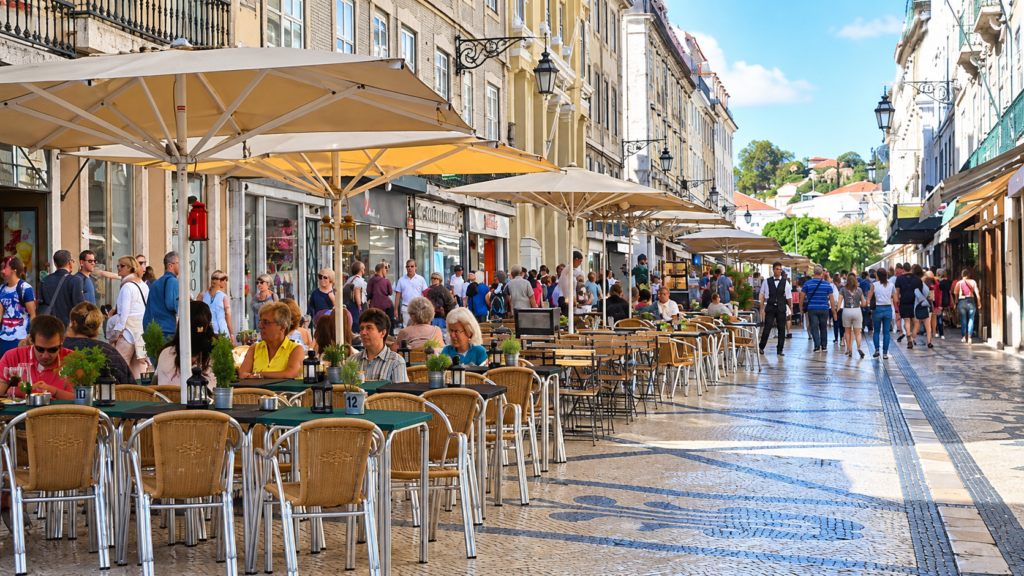
Knowing what to eat in Portugal is one of the most rewarding parts of planning a trip, because Portuguese cuisine extends far beyond pastel de nata, grilled sardines and bacalhau.
Regional specialties, local ingredients and cooking traditions vary considerably across the country. What you eat in Porto can be very different from what you find in Lisbon, the Alentejo, the Algarve or on the Atlantic islands of Madeira and the Azores.
This guide introduces some of Portugal’s most important regional foods, traditional dishes, pastries and practical dining customs for travelers who want to experience Portuguese food with more confidence.
Think Regionally
Portugal is a relatively small country, but its food changes noticeably from one region to another.
The Atlantic strongly influences cooking along the coast, where fresh fish and seafood are central to many meals. Inland regions rely more heavily on pork, lamb, bread, olive oil, cheeses, vegetables and aromatic herbs.
Instead of approaching Portuguese food with one universal list of dishes to try, pay attention to where you are travelling and what that particular region is known for.
A dish that feels ordinary in one part of Portugal may be a specialty worth seeking out somewhere else.
Travelers who want to explore regional specialties in greater detail can also consult Portugal’s official tourism information on food and wine.
Regional Food Highlights
Lisbon and the Surrounding Region
Lisbon is an excellent introduction to Portuguese food because traditional dishes from throughout the country can be found alongside specialties closely connected with the capital and surrounding coast.
Foods worth looking for include:
- Grilled sardines — particularly associated with Lisbon during the Popular Saints celebrations in June
- Bacalhau — salted cod prepared in numerous traditional styles
- Amêijoas à Bulhão Pato — clams commonly prepared with olive oil, garlic and coriander
- Choco frito — fried cuttlefish strongly associated with nearby Setúbal
- Pastel de nata — Portugal’s famous custard tart
Belém is especially famous for Pastéis de Belém, while nearby Sintra has its own traditional sweets including queijadas and travesseiros.
Lisbon also has traditional markets, neighbourhood restaurants, seafood restaurants and small tascas where travelers can move beyond the most obvious tourist dining areas.
Porto and Northern Portugal
Northern Portuguese cooking tends to be hearty, and Porto has several dishes that are closely connected with the identity of the city.
Look for:
- Francesinha — a substantial sandwich filled with meat, covered with cheese and served with a rich sauce
- Tripas à Moda do Porto — a traditional Porto tripe and bean dish
- Bacalhau à Gomes de Sá — a Porto-associated cod dish prepared with potatoes, onions and other simple ingredients
- Caldo verde — a traditional soup made with finely sliced greens and potatoes that originated in northern Portugal
- Cabrito assado — roast kid, found in various forms throughout northern Portugal
The north is also associated with cured meats, sausages, corn and rye breads, regional cheeses and substantial meat dishes.
If your trip includes Porto, the Douro Valley or smaller northern towns, do not assume that the same dishes will dominate every menu. The regional variations are part of the experience.
Central Portugal
Central Portugal combines mountain cooking, agricultural traditions, coastal seafood and some of the country’s best-known cheeses and meat dishes.
Regional foods include:
- Leitão da Bairrada — roast suckling pig strongly associated with the Bairrada region
- Queijo Serra da Estrela — the celebrated cheese produced in the Serra da Estrela area
- Chanfana — goat slowly cooked in red wine, particularly associated with mountainous areas
- Cabrito assado — roast kid, found across several parts of the region
- Regional sausages and cured meats — particularly common in inland areas
The region is a good reminder that Portuguese cuisine is not predominantly seafood. Travel inland and the cooking can become noticeably more focused on meats, cheeses, bread and slow-cooked dishes.
Alentejo
The Alentejo has one of Portugal’s most distinctive regional cuisines. Bread, pork and olive oil have traditionally played important roles, often combined with garlic, coriander and other aromatic herbs.
Look for:
- Açorda alentejana — a traditional bread-based dish made with ingredients such as garlic, coriander, olive oil and egg
- Migas — bread-based preparations commonly served alongside meat or other dishes
- Carne de porco à alentejana — a well-known combination of pork and clams
- Gaspacho alentejano — a cold soup particularly suited to hot weather
- Regional cheeses — including cheeses associated with areas such as Serpa, Évora and Nisa
The Alentejo is a particularly good region for travelers who enjoy simple ingredients transformed through traditional cooking rather than elaborate presentation.
Do not overlook small dishes and petiscos. A few modest plates shared with bread and local wine can be as representative of the region as a large restaurant meal.
The Algarve
Seafood is central to the Algarve’s coastal cuisine, although travelling inland reveals another side of the region’s food traditions.
Along the coast, look for:
- Cataplana — fish, seafood or other ingredients cooked in the distinctive covered vessel of the same name
- Grilled fish — often one of the simplest and best ways to experience local seafood
- Clams — prepared in several regional styles
- Octopus — particularly common in coastal communities
- Seafood rice and açorda — comforting dishes built around the region’s maritime ingredients
Inland Algarve cooking can include pork, sausages, beans, chickpeas, bread and other ingredients that are very different from the seafood-focused image many visitors associate with the region.
If you are staying at a beach resort, make an effort to eat away from the most tourist-oriented waterfront strips at least occasionally. The Algarve’s food culture is broader than resort dining.
Madeira
Madeira has a food culture shaped by its Atlantic location, subtropical climate and island traditions.
Some of the best-known Madeiran specialties include:
- Espetada — seasoned pieces of beef traditionally grilled on skewers
- Bolo do caco — a traditional bread often served warm with garlic butter
- Filete de espada — black scabbardfish, sometimes paired with Madeira banana
- Lapas grelhadas — grilled limpets
- Carne de vinha d’alhos — pork marinated with wine, garlic and seasonings
Madeira wine is internationally known, while poncha is another traditional drink travelers will encounter around the islands.
The combination of seafood, meat, tropical fruit and distinctive local breads makes Madeira feel noticeably different from mainland Portugal.
The Azores
The Azores have their own distinctive food traditions shaped by island agriculture, dairy farming, fishing and volcanic geography.
Foods and products worth discovering include:
- Cozido das Furnas — a meat and vegetable stew cooked using geothermal heat in the Furnas area of São Miguel
- São Jorge cheese — one of the archipelago’s best-known regional cheeses
- Fresh fish and seafood — naturally important across the islands
- Azorean pineapple — particularly associated with São Miguel
- Local tea — produced on São Miguel
Each island has its own specialties, so travelers visiting several islands should continue to look for local products rather than treating Azorean cuisine as one single menu.
What to Eat in Portugal: Foods You’ll See Across the Country
Bacalhau
Bacalhau — dried and salted cod — is one of the foods most closely associated with Portuguese cooking.
There is no single definitive bacalhau dish. Recipes vary according to region, restaurant and family tradition.
You may encounter it grilled, baked, shredded with potatoes and onions, combined with cream or prepared in fritters and other small dishes.
Instead of trying bacalhau once and deciding whether you like it, consider trying two different preparations. The cooking method can completely change the experience.
Fresh Grilled Fish
One of the simplest meals in Portugal can also be one of the most memorable: fresh fish grilled with little more than salt and served with vegetables, potatoes, rice or salad.
The available fish often depends on season, region and the day’s supply.
Rather than always ordering a familiar species, ask what is fresh or particularly good that day.
Sardines
Grilled sardines are closely associated with Portuguese summer dining and festivals, particularly in places such as Lisbon.
They are usually prepared simply, allowing the flavour of the fish and charcoal grilling to dominate.
Sardines are seasonal, so do not assume that they will be equally good or widely available at every time of year.
Octopus and Shellfish
Portugal’s long coastline makes octopus, clams, prawns and other shellfish important parts of the country’s food culture.
Octopus may be grilled, roasted, served in rice dishes or prepared as a salad, while clams frequently appear as starters, petiscos or part of larger seafood dishes.
The best choice often depends on where you are. Coastal regions provide the strongest reason to ask what has been sourced locally.
Soups
Soup is an important part of everyday Portuguese food and should not be overlooked simply because it is inexpensive or appears before the main dishes on a menu.
You may encounter vegetable soups, caldo verde, fish soups, bread-based soups and regional preparations that can be substantial enough to form a meal.
Petiscos
Petiscos are small Portuguese dishes designed for sharing or eating as snacks alongside drinks.
Depending on the restaurant and region, they might include cheeses, cured meats, seafood, octopus, clams, croquettes, vegetables or small portions of cooked dishes.
A petiscos-style meal is an excellent way for several travelers to sample more dishes without each ordering a full main course.
Pastries, Desserts and Coffee
Pastel de Nata
The pastel de nata is Portugal’s best-known pastry, but trying one should be the beginning rather than the end of exploring Portuguese sweets.
Quality varies, and a freshly baked tart from a good pastelaria can be very different from one that has been sitting in a tourist display case for hours.
Try them in more than one place before deciding which version you prefer.
Regional Sweets
Portugal has a strong tradition of pastries and desserts, including many sweets whose histories are connected with convents and monasteries.
Regional specialties vary considerably. Sintra, the Alentejo, central Portugal, Madeira and many other parts of the country all have sweets that may be difficult to find elsewhere in exactly the same form.
If a bakery or restaurant identifies something as a local specialty, it is usually worth asking what it is rather than automatically ordering another pastel de nata.
Coffee
Coffee is woven into everyday Portuguese life, and small cafés and pastelarias are useful places to experience it.
A small espresso is one of the most common choices. In Lisbon, you may hear it called a bica.
Stopping for coffee and a pastry can be as much a part of experiencing Portuguese food culture as booking a formal restaurant.
Wine and Regional Drinks
Portugal produces wine throughout the country, and regional food becomes more interesting when you also pay attention to what is produced nearby.
- Port — the fortified wine closely associated with Porto and the Douro Valley
- Douro wines — red and white table wines produced in the Douro region
- Vinho Verde — produced in northwestern Portugal in a range of styles
- Alentejo wines — widely available throughout the region and elsewhere in Portugal
- Madeira — the famous fortified wine of the Madeira Islands
You do not need extensive wine knowledge to enjoy regional pairings. Asking for a local glass that works with your meal can be an easy way to discover something you would not otherwise order.
Practical Dining Tips for Portugal
Understand the Couvert
Some Portuguese restaurants offer a couvert before the meal, which may include bread, olives, butter, cheese or other small items.
These items should not simply be assumed to be complimentary. Check the menu if you are uncertain about the price.
Portuguese consumer rules require restaurant price lists to include the price of a couvert when one exists, and food or drink that was neither requested nor used by the customer cannot simply be charged as though it had been ordered.
Portuguese Meal Times May Be Later Than Yours
Lunch is commonly eaten from around midday into the early afternoon, while dinner generally begins later than it does in some North American households.
Do not assume that every restaurant serves continuously throughout the afternoon. Smaller or more traditional establishments may close between lunch and dinner.
Look for the Dish of the Day
Restaurants and cafés may offer a prato do dia, or dish of the day.
It can be a practical way to eat a straightforward Portuguese meal without relying exclusively on restaurants aimed at visitors.
Do Not Judge a Restaurant Only by Its Appearance
Some memorable Portuguese meals are served in modest neighbourhood restaurants with simple interiors and short menus.
A polished dining room is not a guarantee of better regional cooking, and a plain-looking tasca should not automatically be dismissed.
Pay attention to what people around you are eating, whether the restaurant appears busy with local customers and whether the menu reflects the region you are visiting.
You Do Not Need to Chase Every Famous Restaurant
Popular restaurants, bakeries and food markets can be worthwhile, but waiting in a long queue for every famous dish can consume a surprising amount of travel time.
If one restaurant has an enormous line, look nearby for another well-regarded establishment serving the same regional specialty.
Portuguese food is too diverse to reduce an entire city to one restaurant.
Tipping
Restaurant service is included in the bill in Portugal. An additional tip is not compulsory, although leaving roughly 5 to 10 percent for good service is customary.
Do not feel obligated to follow North American tipping percentages when travelling in Portugal.
Dietary Restrictions Require Some Planning
Vegetarian and vegan restaurants are increasingly easy to find in larger cities and tourist destinations, but traditional Portuguese cooking makes extensive use of fish, seafood, pork, meat, eggs and dairy.
If you have a serious allergy, do not rely solely on the appearance or English description of a dish. Sauces, soups, stocks and prepared foods can contain ingredients that are not immediately obvious.
Carry a clearly written explanation of serious allergies in Portuguese and confirm ingredients directly with the restaurant whenever necessary.
Food Is Part of Understanding Portugal
Understanding what to eat in Portugal becomes much easier when you stop treating Portuguese cuisine as a checklist of famous dishes and start connecting food with geography.
Eat seafood near the Atlantic. Try hearty dishes in the north. Look for bread, pork, olive oil and herbs in the Alentejo. Explore cataplanas and seafood in the Algarve. Try island specialties when visiting Madeira or the Azores.
You do not need to schedule every meal before arriving. Leave room for markets, neighbourhood cafés, small restaurants and dishes you had never heard of before sitting down.
Be willing to order something regional instead of something familiar. Ask what is fresh. Try the local cheese. Stop for coffee and a pastry. Share a few petiscos rather than always ordering separate main courses.
Those small decisions often provide a better understanding of Portugal than simply working through a list of its most famous foods.
For broader trip-planning information, see our Portugal Travel Guide: What to Know Before You Go.
You can also explore more culinary experiences in our Food travel guides.