
Planning a first trip to Japan can be intimidating because Tokyo, Kyoto and Osaka each offer enough to fill an entire vacation. This 10 day Japan itinerary connects all three cities in a logical route, giving you a mix of modern neighborhoods, historic temples, traditional culture and some of Japan’s best-known food districts.
The itinerary starts with four nights in Tokyo, continues to Kyoto for three nights, and finishes with two nights in Osaka before departure. This 10 day Japan itinerary is designed to give first-time visitors enough time in each city without constantly changing hotels. Japan’s rail network makes the route relatively simple, and the Tokaido Shinkansen connects Tokyo, Kyoto and Osaka along the country’s classic “Golden Route.”
10 Day Japan Itinerary at a Glance
Days 1–4: Tokyo
Days 5–7: Kyoto
Days 8–9: Osaka
Day 10: Departure
This route works particularly well for a first visit because it moves in one direction rather than repeatedly changing cities. Tokyo provides the modern metropolitan experience, Kyoto introduces traditional Japan, and Osaka gives the trip a more relaxed finish centered around food, neighborhoods and nightlife.
Days 1–4: Tokyo
Four nights in Tokyo gives you enough time to experience several very different parts of the city without trying to cross Tokyo repeatedly in a single day.
Tokyo is enormous, so organize each day geographically. Grouping nearby neighborhoods together will save considerable time.
Day 1: Arrival and an Easy Introduction to Tokyo
Keep your arrival day deliberately light.
After checking into your hotel, explore the immediate neighborhood rather than scheduling a major attraction. Depending on where you are staying, spend the evening around Shinjuku, Shibuya, Ginza or Tokyo Station.
This is also a good time to become familiar with Japan’s railway system, purchase or load an IC transit card if needed, and find nearby convenience stores and restaurants.
Try not to plan an important timed attraction for your first evening. Flight delays and jet lag can quickly disrupt an ambitious arrival-day schedule.
Day 2: Asakusa, Sensoji and Eastern Tokyo
Start your first full day in Asakusa, one of Tokyo’s best areas for experiencing the contrast between traditional and modern Japan.
Walk through Kaminarimon Gate toward Sensoji Temple, then explore Nakamise shopping street and the surrounding lanes. JNTO describes Sensoji as Tokyo’s most famous temple and notes that most of Asakusa’s major sights are concentrated around it.
Afterward, walk toward the Sumida River. Depending on your interests, continue toward Tokyo Skytree or head south toward Ueno and Akihabara.
Avoid trying to cover both eastern and western Tokyo extensively on the same day. The distances are larger than they appear on a map.
Day 3: Shibuya, Harajuku and Shinjuku
Use your third day for western Tokyo.
Start around Meiji Shrine and Harajuku, then continue toward Shibuya.
Shibuya Crossing, the Hachiko statue and the surrounding shopping streets are easy to combine because they are concentrated around Shibuya Station. JNTO describes Shibuya as one of Tokyo’s major culture, nightlife and shopping hubs.
If you want an elevated city view, consider reserving Shibuya Sky in advance.
Spend the evening in Shinjuku, where you can explore the illuminated streets, restaurants and entertainment districts.
Day 4: Central Tokyo and a Flexible Afternoon
Use your final full Tokyo day for anything you missed.
One practical route is to explore Tsukiji Outer Market in the morning, continue toward Ginza, and then spend time around Tokyo Station and the Imperial Palace area.
Alternatively, use this as a flexible day for museums, shopping, teamLab, Odaiba or another neighborhood that particularly interests you.
Leaving one day partly flexible is useful because Tokyo often generates new ideas once you arrive.
Day 5: Tokyo to Kyoto
Check out of your Tokyo hotel and travel to Kyoto by Tokaido Shinkansen.
Smart EX, the official reservation system for the Tokaido Shinkansen, currently describes Tokyo-to-Kyoto travel as taking about two hours on the fastest services. Its reservation service is also available to users in Canada.
Try to travel during the morning so that you still have much of the afternoon available in Kyoto.
After checking into your hotel, keep your first Kyoto afternoon relatively relaxed. Explore Kyoto Station, walk along the Kamo River, visit Nishiki Market, or begin exploring the Gion area.
Kyoto feels very different from Tokyo, so avoid treating the travel day as wasted time.
Days 5–7: Kyoto
Kyoto deserves at least several nights on a first trip. Its most famous temples and districts are spread across different parts of the city, and transportation is slower than Tokyo’s dense railway network.
Plan your days geographically.
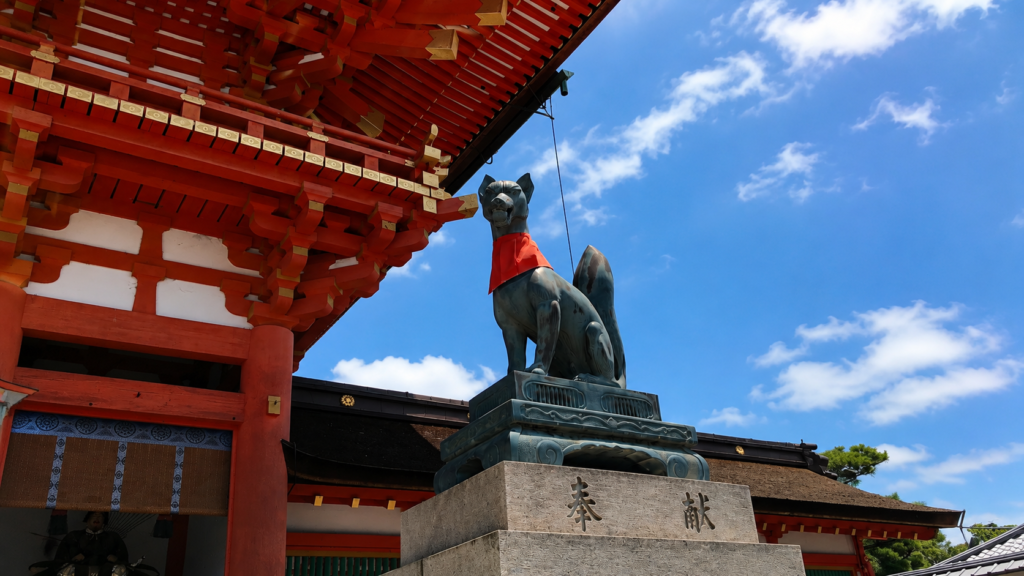
Day 6: Fushimi Inari and Eastern Kyoto
Start early at Fushimi Inari Taisha.
The shrine is famous for the thousands of vermilion torii gates that climb Mount Inari. JNTO notes that it is easily reached from Kyoto Station using the JR Nara Line to Inari Station.
You do not have to complete the entire mountain walk to appreciate the shrine, but allowing several hours gives you time to explore beyond the busiest lower sections.
Later, move toward eastern Kyoto.
A practical afternoon and evening route can include Kiyomizu-dera, the preserved streets around Ninenzaka and Sannenzaka, Yasaka Shrine and Gion.
This gives you one of the strongest introductions to traditional Kyoto.
Day 7: Arashiyama and Central Kyoto
Spend the morning in Arashiyama.
Visit the bamboo grove early if you want to experience it before the largest crowds arrive. Depending on your interests, continue to Tenryu-ji, the riverside area or nearby temples.
Return toward central Kyoto in the afternoon.
You could visit Nijo Castle, Kyoto Imperial Palace, Nishiki Market or simply spend additional time walking through quieter neighborhoods.
Do not try to visit every famous Kyoto temple. Choosing a smaller number and allowing time to experience them is usually more rewarding.
Day 8: Kyoto to Osaka
Travel from Kyoto to Osaka in the morning.
The two cities are close enough that this is a much easier travel day than Tokyo to Kyoto. Depending on your hotels and chosen rail service, the trip can be completed without consuming much of the day.
After checking into your Osaka hotel, spend the afternoon around Osaka Castle and the surrounding park. The current castle tower is a reconstruction, while the site remains one of Osaka’s major landmarks.
In the evening, head toward Dotonbori and Namba.
This is when Osaka’s atmosphere becomes most obvious: illuminated signs, restaurants, street food and busy pedestrian areas.
Day 9: Explore Osaka
Use your final full sightseeing day for Osaka.
Start in whichever district interests you most. Options include Kuromon Market, Shinsekai, Umeda, Tenjinbashisuji or additional time around Namba.
Osaka is a good city to leave partly unscheduled because eating and exploring neighborhoods are a significant part of the experience.
Rather than racing between landmarks, allow time to try local specialties such as okonomiyaki and takoyaki.
If you prefer another cultural excursion, Day 9 can also be used for a day trip to nearby Nara. For a first 10-day visit, however, staying in Osaka keeps the itinerary more relaxed.
Day 10: Departure
Your final day depends on where you are flying from.
If your flight departs from Kansai International Airport, finishing in Osaka is particularly convenient.
If you must return to Tokyo for an international flight, allow substantial time for the train journey and airport transfer. Whenever possible, booking an open-jaw itinerary—arriving in Tokyo and departing from Osaka—can reduce unnecessary backtracking.
Avoid booking an important attraction immediately before your departure.
Tokyo to Kyoto by Shinkansen
The Tokaido Shinkansen is the simplest way to travel between Tokyo and Kyoto.
For most visitors, the principal choice is between Nozomi, Hikari and Kodama services. Nozomi is generally the fastest because it makes fewer stops.
Smart EX is the official online reservation platform for the Tokaido, Sanyo and Kyushu Shinkansen and allows reservations before or after arriving in Japan.
Booking ahead can be particularly useful during busy travel periods or when you want specific seats.
Do You Need a Japan Rail Pass for This Itinerary?
Do not automatically buy a nationwide Japan Rail Pass just because you will be taking the Shinkansen.
The current standard price of a 7-day Ordinary Japan Rail Pass is ¥50,000. Pass holders who want to use Nozomi or Mizuho services must also purchase the applicable supplementary ticket.
For a straightforward Tokyo → Kyoto → Osaka itinerary, calculate the cost of individual long-distance tickets before purchasing a pass.
A Japan Rail Pass becomes more attractive when an itinerary contains substantially more long-distance JR travel.
For city transportation, an IC card such as Suica, PASMO or ICOCA is usually more practical than trying to use a national rail pass for every journey.
Where to Stay in Tokyo
For a first visit, convenience is more important than finding one supposedly perfect neighborhood.
Shinjuku works well for nightlife, transportation and a large range of hotels.
Shibuya suits travelers who want shopping, dining and a lively atmosphere.
Asakusa offers a more traditional feel and convenient access to eastern Tokyo.
Tokyo Station/Ginza can be especially convenient when you plan to take the Shinkansen to Kyoto.
Choose a hotel within comfortable walking distance of a train or subway station.
Where to Stay in Kyoto
Kyoto Station is extremely convenient for transportation, including the Shinkansen, JR lines and buses.
The Gion/Higashiyama area offers more traditional atmosphere and evening walking opportunities.
Central Kyoto around Kawaramachi provides easy access to restaurants, shopping and several transportation options.
The best location depends on whether you prioritize transportation convenience or historic atmosphere.
Where to Stay in Osaka
For first-time visitors, Namba is an excellent choice for restaurants, nightlife and easy access to Dotonbori.
Umeda/Osaka Station is particularly convenient for transportation and travelers making day trips.
Either can work well. Choose based primarily on your departure plans and the type of neighborhood you want at night.
Best Time for a 10 Day Japan Itinerary
Japan is a year-round destination, but the experience changes considerably by season.
Spring offers mild temperatures and cherry blossoms but can also bring heavy demand.
Autumn is popular for comfortable temperatures and fall foliage.
Summer can be hot and humid, while winter generally brings cooler weather and potentially lighter crowds in major cities.
JNTO identifies Golden Week in late April and early May, Obon in mid-August, and the New Year period as major domestic travel periods when transportation and accommodation tend to be more crowded.
If your dates overlap one of those periods, reserve major transportation and accommodations earlier.
Is 10 Days Enough for Tokyo, Kyoto and Osaka?
Yes.
Ten days is enough for a strong first introduction to all three cities if you resist adding too many additional overnight stops.
JNTO itself recommends roughly 10 days to two weeks for the Tokyo, Kyoto and Osaka Golden Route.
The key is not trying to see everything.
Four nights in Tokyo, three in Kyoto and two in Osaka provides enough time to experience the differences between the cities while keeping hotel changes manageable.
If you have extra days, adding time to Tokyo or Kyoto—or taking a day trip from one of your existing bases—will often produce a better trip than adding several additional hotel changes.
Final Thoughts
A first trip to Japan does not need to be complicated. A well-paced 10 day Japan itinerary can cover Tokyo, Kyoto and Osaka while still leaving room to explore each destination.
This 10 day Japan itinerary gives you three very different experiences: Tokyo’s scale and modern energy, Kyoto’s temples and traditional neighborhoods, and Osaka’s food-focused, more casual atmosphere.
The Tokyo → Kyoto → Osaka route is efficient, well connected and particularly suitable for travelers visiting Japan for the first time.
Reserve your major transportation when necessary, avoid overloading each day, and leave enough flexibility to explore places you discover after arriving.
That combination will usually produce a better first trip than trying to fit every famous destination in Japan into ten days.