
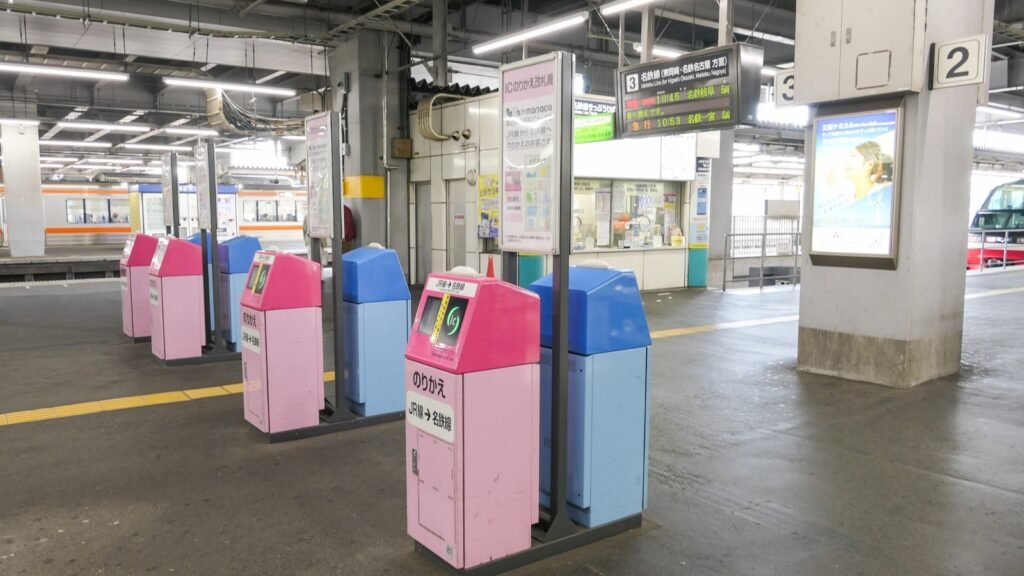
Japan’s transportation IC cards make getting around dramatically easier. Instead of buying a paper ticket for every subway, train or bus ride, you load money onto a card and tap through compatible ticket gates.
This Suica vs PASMO vs ICOCA comparison will help you choose the most practical card for your Japan itinerary.
The names can make the system seem more complicated than it really is.
The three cards first-time visitors encounter most often are Suica, PASMO and ICOCA.
For most tourists, there is no major functional reason to choose one over the others. The best card is usually whichever one is easiest to obtain when you arrive.
Suica vs PASMO vs ICOCA at a Glance
Here is the simple version:
Suica: Best known in Tokyo and issued by JR East.
PASMO: Also centered around Tokyo and issued through private railways, subways and bus operators.
ICOCA: Primarily associated with western Japan, including Osaka and Kyoto, and issued by JR West.
Because Japan’s major transportation IC cards participate in a nationwide mutual-use system, a Suica purchased in Tokyo can generally be used on compatible transportation in Kyoto and Osaka. Likewise, an ICOCA purchased in Osaka can generally be used on compatible trains and subways in Tokyo.
There are exceptions, but tourists normally do not need to buy a different IC card in every city.
What Is Suica?
Suica is JR East’s prepaid transportation IC card.
It is widely used in Tokyo and throughout JR East territory.
You load money onto the card, tap it when entering a compatible ticket gate and tap again when leaving. The correct fare is automatically deducted.
Suica can also be used for purchases at many:
- convenience stores
- vending machines
- restaurants
- station shops
- coin lockers
- other participating retailers
Standard Suica cards require a ¥500 deposit. JR East currently sells cards at several price points, with the deposit included in the purchase price.
What Is PASMO?
PASMO performs essentially the same function as Suica.
It is strongly associated with Tokyo-area private railways, subway operators and buses.
For an ordinary visitor using Tokyo transportation, the practical experience of tapping a PASMO versus a Suica is almost identical.
Standard PASMO cards also require a ¥500 deposit. PASMO says blank and personalized cards can be purchased at participating ticket machines and counters.
If you land in Tokyo and PASMO is more convenient to purchase than Suica, there is very little reason to avoid it.
What Is ICOCA?
ICOCA is JR West’s primary transportation IC card.
It is especially common in:
- Osaka
- Kyoto
- Kobe
- Hiroshima
- other parts of western Japan
A standard ICOCA currently costs ¥2,000, which includes a ¥500 refundable deposit and ¥1,500 available for use. Some machines offer additional initial-load amounts.
If your Japan trip begins at Kansai International Airport or in Osaka or Kyoto, ICOCA is often the most natural card to buy.
Can You Use Suica in Kyoto and Osaka?
Yes, on most major compatible transportation systems.
Suica participates in Japan’s nationwide IC-card interoperability network.
That means you can generally use a Suica purchased in Tokyo on participating transportation in:
- Kyoto
- Osaka
- Nagoya
- Fukuoka
- Sapporo
- and many other parts of Japan
You do not need to buy an ICOCA just because you arrive in Kyoto.
However, IC-card compatibility does not mean every railway in Japan accepts every card.
Always look for the nationwide IC-card symbol or one of the compatible card logos at the gate.
Can You Use ICOCA in Tokyo?
Yes.
An ICOCA purchased in western Japan can generally be used on compatible JR, subway and private railway services in Tokyo.
For a traveler doing:
Osaka → Kyoto → Tokyo
there is usually no reason to replace ICOCA with Suica when reaching Tokyo.
The card you already have will generally continue working.
Is PASMO the Same as Suica?
Functionally, for most tourists, they are extremely similar.
Both are widely accepted across Tokyo-area transportation and participate in the national mutual-use network.
The biggest difference is the issuing organization.
Suica is associated with JR East.
PASMO is associated with many private railway, subway and bus operators.
For ordinary sightseeing, this distinction rarely matters.
Do not spend an hour searching for Suica if a PASMO card is readily available.
What Is Welcome Suica?
Welcome Suica is JR East’s visitor-focused version of Suica.
It is designed for temporary visitors and has several important differences from a standard Suica.
Welcome Suica:
- does not require a ¥500 deposit
- is valid for 28 days from purchase
- can be topped up
- cannot have its remaining balance refunded
- can be kept as a souvenir
JR East currently sells Welcome Suica at locations including Narita Airport, Haneda Airport Terminal 3 and several major stations and JR East travel centers.
This can be convenient if your trip is shorter than 28 days and you are not concerned about receiving a refund for unused balance.
What Is TOURIST PASMO?
A major 2026 change is the introduction of TOURIST PASMO.
PASMO launched this new visitor card in May 2026 for international travelers.
TOURIST PASMO:
- is designed specifically for foreign visitors
- is valid for 28 days
- has no deposit
- does not provide refunds
- can be topped up and reused during its validity period
- works on compatible transportation and participating shops
It is currently sold at selected locations at Haneda and Narita airports.
This product effectively replaces the old PASMO PASSPORT concept, which ended in 2024.
Welcome Suica vs TOURIST PASMO
For a short-term visitor arriving in Tokyo, either can work.
Both are valid for 28 days.
Both avoid the standard ¥500 card deposit.
Neither allows you to recover unused stored value after expiration.
The better choice is probably whichever one is easiest to obtain at your arrival airport or station.
There is very little reason for the average traveler to acquire both.
Standard Suica vs Welcome Suica
A standard Suica may be better if:
- you want a card that remains valid beyond 28 days
- you expect to return to Japan
- you want the option of refunding the remaining balance
- you prefer a standard reusable card
Welcome Suica may be easier if:
- you are visiting for less than 28 days
- you are arriving at one of its visitor-oriented sales locations
- you do not care about refunding unused balance
A standard Suica remains valid for up to 10 years after its last use, whereas Welcome Suica expires after 28 days.
Should You Buy ICOCA If You Are Visiting Kyoto and Osaka?
If your trip begins in Kansai, yes, ICOCA is a very practical choice.
ICOCA is easy to purchase at JR West stations throughout its sales area and functions perfectly well for normal sightseeing transportation.
Once you have it, you can continue using it if your trip later moves to Tokyo.
There is no practical benefit to owning both ICOCA and Suica for a typical Tokyo–Kyoto–Osaka vacation.
Where Can You Use IC Cards?
IC cards can typically be used on participating:
- JR local trains
- subway systems
- private railways
- buses
- monorails
They can also be used as electronic money at many stores.
ICOCA, for example, can be used at participating stores that accept Suica, PASMO and several other interoperable cards.
Suica can similarly be used at many convenience stores, restaurants, vending machines and station retailers.
This shopping function is one reason IC cards become so useful during a Japan trip.
Can You Use an IC Card on the Shinkansen?
Do not assume that simply having enough money stored on your IC card means you can tap onto any Shinkansen.
Most Shinkansen travel still requires the appropriate Shinkansen ticket or reservation.
Some e-ticket systems allow a transportation IC card such as Suica or PASMO to be linked to a Shinkansen reservation. You then tap that linked card at the gate, but the reservation is still purchased separately.
Think of the IC card primarily as your everyday local transportation card, not as an unlimited Shinkansen pass.
Can You Travel Between IC-Card Regions?
This is an important limitation.
Although the cards are interoperable in many separate regions, you generally cannot use an IC card to make one continuous train journey across incompatible IC-card areas.
JR East specifically warns that Suica journeys generally need to begin and end within the same applicable area.
For long-distance travel between cities, buy the appropriate train ticket or Shinkansen reservation instead.
How Do You Add Money to an IC Card?
Physical IC cards can usually be topped up at:
- ticket machines
- fare-adjustment machines
- convenience stores
- certain ATMs or participating locations
Cash remains the most universally reliable way to recharge a physical card.
JR East states that physical Suica top-ups at its machines are made with cash.
JR West likewise says ordinary ICOCA top-ups at many machines are cash-based.
It is worth keeping some yen available even if you rely heavily on credit cards elsewhere in Japan.
How Much Money Should You Put on the Card?
Do not load a huge amount immediately.
For most sightseeing days, starting with approximately:
¥2,000–¥3,000
is reasonable.
You can easily recharge later.
This is particularly important with Welcome Suica and TOURIST PASMO because unused balances cannot be refunded.
Load what you expect to use rather than treating the card like a bank account.
Do You Need One IC Card Per Person?
Yes.
Each traveler generally needs their own card to pass through transportation gates.
You cannot normally tap one card repeatedly to pay for several people entering the same train system.
Children may qualify for child IC cards, which automatically deduct child fares, but identification may be required when purchasing them.
IC Card vs Japan Rail Pass
An IC card and a Japan Rail Pass solve completely different problems.
An IC card handles routine local transportation and small purchases.
The nationwide Japan Rail Pass covers eligible JR travel during a fixed validity period.
Even travelers who buy a Japan Rail Pass often still benefit from having an IC card because city transportation includes subway, bus and private railway services outside the JR network.
For most first-time visitors, an IC card is far more universally useful than a nationwide rail pass.
Which IC Card Should You Use in Tokyo?
Choose:
Suica or PASMO.
Either is excellent.
If Welcome Suica or TOURIST PASMO is easiest to purchase when you arrive and your stay is under 28 days, either visitor card is also perfectly reasonable.
Do not waste sightseeing time hunting for one particular brand.
Which IC Card Should You Use in Kyoto and Osaka?
Choose:
ICOCA
if you are purchasing your first card in Kansai.
But if you already have Suica or PASMO from Tokyo, keep using it.
There is no need to switch cards.
Which IC Card Is Best for a Tokyo, Kyoto and Osaka Trip?
For our 10 day Japan itinerary, the simplest strategy is:
If you arrive in Tokyo, buy Suica or PASMO and keep using it throughout the trip.
If you arrive in Osaka, buy ICOCA and keep using it throughout the trip.
One card is enough for most local transportation in all three cities.
That is much simpler than trying to optimize the brand of card for every destination.
Suica vs PASMO vs ICOCA: Final Verdict
For most international visitors, there is no meaningful winner.
All three cards perform the same essential job: making everyday transportation and small purchases easier.
The practical recommendation is:
Tokyo arrival: Suica or PASMO.
Osaka/Kyoto arrival: ICOCA.
Already have one of them: keep using it.
Do not buy several cards simply because you are visiting several cities.
The convenience comes from having one loaded IC card in your wallet and tapping your way through Japan without constantly stopping at ticket machines.