
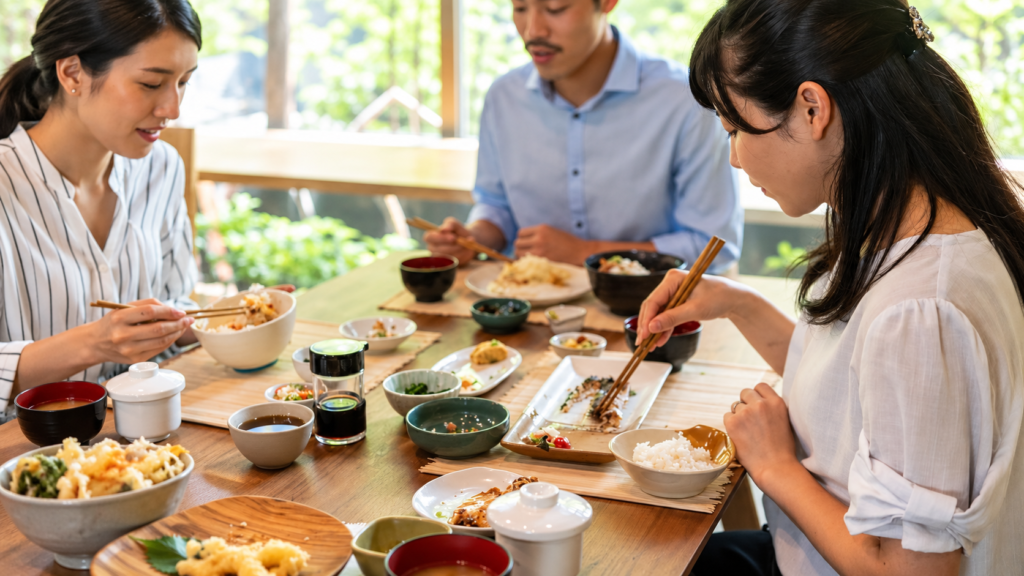
Food is one of the most rewarding parts of travelling in Japan, but Japanese cuisine extends far beyond sushi, ramen and the dishes that are best known internationally.
Regional specialties, seasonal ingredients and local dining traditions vary considerably across the country. What you eat in Tokyo can be very different from what you find in Osaka, Kyoto, Hokkaido or Fukuoka.
This guide introduces some of Japan’s most important regional foods, everyday dining customs and practical tips for travelers who want to experience Japanese food with more confidence.
Think Regionally
Japan has a strong tradition of regional cuisine. Many cities and prefectures are closely associated with particular dishes, ingredients or preparation styles.
Instead of searching only for a universal list of “Japanese foods to try,” pay attention to where you are travelling and what that region is known for.
Regional specialties can be found in restaurants, markets, department-store food halls, train stations and even convenience stores.
Regional Food Highlights
Tokyo
Tokyo offers an enormous range of Japanese food, from inexpensive counter-service restaurants to some of the country’s most refined dining experiences.
Foods closely associated with Tokyo include:
- Edomae sushi — the traditional Tokyo style of sushi
- Monjayaki — a savoury griddle dish particularly associated with Tokyo
- Tempura
- Soba
- Unagi — freshwater eel prepared in traditional styles
Tokyo is also an excellent city for comparing regional cuisines from throughout Japan because restaurants specializing in almost every part of the country can be found there.
Osaka
Osaka has a reputation as one of Japan’s great food cities and is particularly associated with casual, approachable dishes.
Popular foods include:
- Takoyaki — round batter-based snacks containing octopus
- Okonomiyaki — a savoury pancake-style dish cooked with a variety of ingredients
- Kushikatsu — skewered and fried meat, seafood or vegetables
Dotonbori is famous for food and nightlife, but travelers should also explore neighbourhoods away from the busiest tourist corridors for a broader range of dining experiences.
Kyoto
Kyoto’s food culture reflects the city’s long history, refined culinary traditions and relationship with seasonal ingredients.
Foods and dining styles associated with Kyoto include:
- Kaiseki — a carefully composed multi-course dining style
- Yudofu — simmered tofu, particularly associated with temple areas
- Obanzai — traditional Kyoto home-style dishes
- Kyoto vegetables
- Matcha-based sweets
A meal in Kyoto can range from a simple bowl of noodles to a highly formal multi-course experience.
Hokkaido
Hokkaido is particularly well known for seafood, dairy products, potatoes and agricultural ingredients produced in Japan’s northern climate.
Foods to look for include:
- Fresh seafood and seafood bowls
- Miso ramen, particularly associated with Sapporo
- Soup curry
- Crab
- Scallops
- Hokkaido dairy products and desserts
For seafood-focused travelers, Hokkaido can be one of Japan’s most rewarding regions.
Fukuoka and Hakata
Fukuoka is particularly famous for Hakata-style tonkotsu ramen, made with a rich pork-bone broth and thin noodles.
The city is also known for yatai, small outdoor food stalls that operate in selected areas, particularly in the evening.
Other specialties associated with Fukuoka include mentaiko, a seasoned pollock roe preparation.
Hiroshima
Hiroshima has its own distinctive style of okonomiyaki.
Unlike versions where ingredients are mixed together, Hiroshima-style okonomiyaki is generally built in layers and commonly includes noodles.
The region is also well known for oysters, particularly when they are in season.
Nagoya
Nagoya has several distinctive local specialties that make it worth exploring from a food perspective.
Look for dishes such as:
- Hitsumabushi — grilled eel served over rice and eaten in several stages
- Miso katsu — breaded pork cutlet served with a rich miso-based sauce
- Tebasaki — seasoned chicken wings
- Kishimen — broad, flat noodles
Okinawa
Okinawan cuisine reflects the islands’ distinct history, climate and cultural influences.
Common specialties include:
- Goya champuru — a stir-fried dish featuring bitter melon
- Okinawa soba
- Pork dishes
- Sea grapes known as umi budo
Travelers visiting Okinawa should expect a food culture that feels noticeably different from mainland Japan.
Essential Japanese Foods
Sushi
Sushi is one of Japan’s best-known foods, but the experience can range from inexpensive conveyor-belt restaurants to highly specialized sushi counters.
You do not need to book an expensive restaurant to enjoy good sushi.
Conveyor-belt sushi restaurants can be approachable for travelers and often provide visual ordering systems or tablet menus.
At more traditional sushi counters, observing the pace and behaviour of other diners can help you understand how the restaurant operates.
Ramen
Ramen varies significantly by region and restaurant.
Broths may be based on miso, soy sauce, salt, pork bones or combinations of ingredients, while noodle thickness and toppings also differ.
Well-known regional styles include:
- Sapporo miso ramen
- Hakata tonkotsu ramen
- Tokyo-style shoyu ramen
- Kitakata ramen
Many ramen shops are casual and designed for relatively quick meals.
Udon and Soba
Udon and soba provide useful alternatives when you want a simpler meal.
Udon noodles are generally thick and wheat-based, while soba is traditionally made primarily from buckwheat.
Both may be served hot or cold depending on the dish and season.
Regional variations are common, so the same type of noodle can be prepared differently depending on where you travel.
Tempura
Tempura consists of seafood, vegetables or other ingredients lightly battered and fried.
It can appear as part of a casual meal, on top of rice or noodles, or as the focus of a more specialized restaurant.
High-quality tempura should feel light rather than excessively heavy or oily.
Tonkatsu
Tonkatsu is a breaded and fried pork cutlet commonly served with shredded cabbage, rice, soup and sauce.
It is widely available and can be an approachable choice for travelers who want something straightforward and filling.
Yakitori
Yakitori restaurants specialize in skewered grilled chicken, often using many different parts of the bird.
Small portions make it easy to try several skewers during one meal.
Yakitori is often associated with casual evening dining and can pair naturally with drinks in an izakaya-style setting.
Izakaya Dining
An izakaya is a casual drinking and dining establishment where groups typically order several small dishes to share.
The experience can be one of the easiest ways for travelers to try a variety of Japanese foods during one meal.
Menus may include sashimi, grilled foods, fried dishes, vegetables, noodles and seasonal specialties.
Some izakaya may add a small seating charge or automatically serve an appetizer known as otoshi. Travelers should understand that this may be part of the establishment’s normal pricing structure rather than an unordered mistake.
Japanese Curry
Japanese curry is generally thicker and milder than many South Asian curries and is commonly served with rice.
Variations may include breaded pork or chicken cutlets, vegetables or other toppings.
Curry restaurants can provide an inexpensive and convenient meal while travelling.
Donburi
Donburi refers broadly to rice-bowl dishes topped with meat, seafood, eggs or other ingredients.
Examples include:
- Gyudon — beef over rice
- Katsudon — pork cutlet with egg and onions
- Oyakodon — chicken and egg
- Kaisendon — seafood over rice
These dishes are often practical options when you want a quick meal without sacrificing local flavour.
Everyday Food and Where to Find It
Convenience Stores
Japanese convenience stores can be surprisingly useful for travelers.
They commonly sell rice balls, sandwiches, noodles, salads, desserts, drinks and prepared meals.
They should not replace exploring restaurants and regional cuisine, but they can be particularly convenient for breakfast, train journeys, late arrivals or inexpensive snacks.
Department Store Food Halls
The basement food halls found in many Japanese department stores are known as depachika.
They can contain an extraordinary range of prepared foods, regional specialties, sweets, bakery items and beautifully packaged gifts.
They are worth visiting even if you are not planning a full meal.
Train Stations Are Food Destinations Too
Major railway stations often contain extensive restaurant areas and food shops.
Travelers may also encounter ekiben, boxed meals designed specifically for train journeys.
Trying an ekiben on a longer rail trip can be both convenient and part of the travel experience.
Markets
Markets can be excellent places to experience seafood, produce, prepared foods and local specialties.
Well-known examples include markets in Tokyo, Kyoto, Osaka and other cities, although some famous markets are now heavily visited by tourists.
Observe local rules regarding where food may be eaten and avoid blocking narrow market aisles while stopping for photographs or snacks.
Breakfast in Japan
A traditional Japanese breakfast can include rice, miso soup, grilled fish, pickles and other small dishes.
Hotels may offer Japanese breakfast, Western breakfast or both.
Travelers who normally eat lightly in the morning can also find coffee shops, bakeries and convenience stores offering simpler options.
Ordering, Etiquette and Paying
Ordering Food
Ordering systems vary considerably.
You may encounter:
- Traditional printed menus
- Menus with photographs
- Tablet ordering
- QR-code menus
- Ticket vending machines
- Counter ordering
Do not worry if the process is unfamiliar at first. Observe what other customers are doing and take a moment to understand the system before ordering.
Ticket Vending Machines
Some ramen, curry and casual restaurants use vending machines near the entrance.
You select and pay for your meal at the machine, receive a ticket and give that ticket to the staff.
Newer machines may offer English-language menus, but not every establishment will.
Using Chopsticks
Travelers do not need perfect chopstick technique, but a few basic etiquette points are useful.
Avoid sticking chopsticks vertically into a bowl of rice, as this resembles a funeral-related custom.
Also avoid passing food directly from one pair of chopsticks to another.
When unsure, placing your chopsticks on the provided rest or across the edge of the dish is usually preferable to playing with them or pointing with them.
Slurping Noodles
Slurping noodles is common and generally socially acceptable in Japan.
You are not required to do it, but you also should not be surprised when other diners do.
Eating While Walking
Travelers sometimes hear that eating while walking is universally forbidden in Japan. The reality is more nuanced.
Customs vary depending on the location and type of food.
In some markets or festival areas, designated eating spaces may be provided. In other locations, it is more appropriate to finish your food near where you purchased it rather than walking through crowded streets while eating.
Observe signage and local behaviour rather than relying on one absolute rule.
Tipping in Japan
Tipping is generally not expected in ordinary Japanese restaurants.
Attempting to leave additional cash can sometimes create confusion.
Pay the amount shown on the bill unless the establishment clearly indicates another arrangement.
Paying the Bill
At some restaurants, you pay at the table. At others, you take the bill to a cashier near the entrance.
Observe how the restaurant operates or follow staff directions.
Cash remains useful, although card and electronic-payment acceptance has expanded significantly.
Do Not Assume Every Restaurant Accepts Cards
Japan has become increasingly card-friendly, particularly in major cities and larger businesses, but some small restaurants and traditional establishments may still prefer or require cash.
Carry a reasonable amount of Japanese yen so that one payment method does not determine where you can eat.
Restaurants, Reservations and Dietary Needs
Restaurant Queues
Popular restaurants may attract significant queues.
A long line does not necessarily mean the restaurant is the only worthwhile option nearby.
If waiting an hour will disrupt your plans, consider another well-reviewed restaurant offering the same regional specialty.
Japan has an enormous number of excellent places to eat, and chasing only the most famous establishments can consume valuable travel time.
Reservations
Reservations can be useful for high-end restaurants, popular restaurants and special meals where you would be disappointed to miss the experience.
Some establishments may be difficult to reserve without Japanese-language assistance or a local phone number.
Hotels and reputable reservation platforms may sometimes help, depending on the restaurant.
Allergies and Dietary Restrictions
Travelers with serious food allergies should prepare carefully before travelling.
Ingredients such as soy, fish, shellfish, sesame and wheat can appear in sauces, broths and seasonings even when they are not obvious from the appearance of the dish.
Carry clear written information in Japanese describing serious allergies and confirm ingredients directly with staff whenever possible.
Do not assume that removing one visible ingredient makes a dish safe if cross-contact or broth ingredients are a concern.
Vegetarian and Vegan Travel
Vegetarian and vegan dining is possible in Japan, particularly in major cities, but travelers should be aware that fish-based broth or seasoning may appear in dishes that otherwise look vegetarian.
Dedicated vegetarian, vegan and Buddhist-style restaurants can simplify the experience.
Researching several options near your accommodation before arriving can reduce daily planning.
Shojin Ryori
Shojin ryori is a traditional style of Buddhist temple cuisine, generally based on plant ingredients.
It can provide both a distinctive cultural experience and an interesting introduction to Japanese vegetable-focused cooking.
Seasonality, Sweets and Street Food
Seasonality Matters
Japanese cuisine places considerable importance on seasonal ingredients.
Menus may change throughout the year, and certain seafood, vegetables, sweets and regional dishes may be particularly associated with specific seasons.
Rather than arriving with a fixed checklist, pay attention to what restaurants are emphasizing during your visit.
Japanese Sweets
Traditional Japanese sweets, or wagashi, often reflect the season in their shapes, colours and ingredients.
Matcha, red bean, rice flour and seasonal fruits are commonly encountered.
Kyoto is particularly well known for traditional sweets, but they can be found throughout Japan.
Street Food and Festivals
Street food is particularly visible around festivals, markets, tourist districts and shrine or temple areas.
Common foods may include takoyaki, grilled seafood, sweets and various regional snacks.
Follow local rules regarding eating areas and waste disposal, since rubbish bins may be less common than some travelers expect.
Food Is Part of Understanding Japan
Do Not Judge Japanese Food Only by Famous Dishes
A trip focused only on sushi, ramen and tempura misses much of what makes Japanese food interesting.
Simple set meals, grilled fish, regional noodles, rice bowls, local vegetables, bakeries and convenience foods can all contribute to understanding everyday eating in Japan.
Try One Regional Specialty in Every Destination
A simple way to make food part of your itinerary is to identify one or two specialties associated with each city or region you visit.
You do not need every meal planned in advance.
Instead, know what the area is famous for and leave enough flexibility to try it when the opportunity arises.
Food Is Part of Understanding Japan
Japanese food reflects geography, seasonality, regional identity and everyday social customs.
Try sushi in Tokyo, street-style favourites in Osaka, traditional cuisine in Kyoto, seafood in Hokkaido and ramen in Fukuoka — but also leave room for the small restaurants and unexpected dishes you discover along the way.
The goal is not to complete a checklist of famous Japanese foods. It is to experience how the food changes as you travel through the country.
For broader planning information, see our Japan Travel Guide.
You can also explore more destination-focused articles in our Food travel guides.