
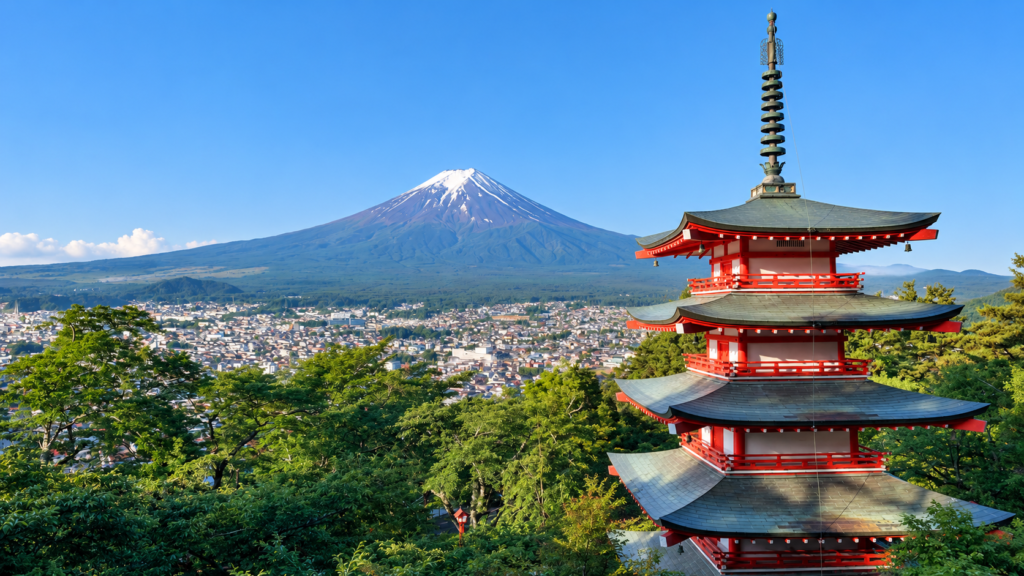
This Japan travel guide is designed to help you decide where to go, when to visit, and how to build a realistic first-time itinerary.
Japan can feel surprisingly varied for a relatively compact country. You can move between enormous modern cities, historic temple districts, mountain towns, hot-spring resorts, rural landscapes, subtropical islands, and some of the world’s most efficient transportation networks.
The challenge for a first trip is usually not finding enough to do. It is deciding how much of Japan to include without spending too much of the trip moving between destinations. A well-planned itinerary can combine modern Japan, traditional culture, regional food, and quieter experiences without trying to cover the entire country at once.
Is Japan Right for Your Trip?
Japan is particularly well suited to travelers who enjoy a combination of cities, history, food, culture, technology, and efficient public transportation. Tokyo and Osaka offer large-city energy, while Kyoto and Nara provide a very different experience built around temples, shrines, gardens, and historic neighbourhoods.
It also works well for travelers who want to go beyond major cities. Japan stretches from snowy Hokkaido in the north to subtropical Okinawa in the south, with mountain regions, coastal areas, hot-spring towns, islands, and national parks in between. Japan’s official tourism organization highlights this geographic range across ten major regions.
The biggest adjustment for many first-time visitors is the amount of choice. Trying to combine Tokyo, Kyoto, Osaka, Hiroshima, Mount Fuji, Hokkaido, and several smaller towns in one short vacation can quickly turn a good itinerary into a transportation schedule.
For most first trips, choosing two or three main bases and exploring outward from them creates a much better balance.
Best Time to Visit Japan
There is no single best season to visit Japan. The country has four distinct seasons, and the experience changes considerably depending on both the time of year and the region.
Spring is one of Japan’s most popular travel periods. Mild temperatures and cherry blossoms make it particularly attractive for sightseeing, but the most famous blossom periods can also bring heavier crowds and higher travel costs. Cherry blossom timing varies by location because Japan stretches a long distance from south to north.
Summer brings festivals, fireworks, beaches, and mountain activities, but much of Japan becomes hot and humid. Travelers should also be aware that August and September can be affected by typhoons.
Autumn is another excellent period for general sightseeing. Temperatures cool after summer, and autumn foliage gradually moves south through the country. October and November are particularly appealing in many parts of central Japan.
Winter works especially well for travelers interested in skiing, snow scenery, hot springs, and generally quieter sightseeing in some major cities. Hokkaido and mountainous areas receive substantial snowfall, while southern Japan remains considerably milder.
For a classic first trip built around Tokyo, Kyoto, and Osaka, spring and autumn are generally the easiest seasons to recommend, provided you are comfortable with the popularity of those periods.
Where to Go in Japan
For a first visit, it helps to think of Japan as a series of regions rather than trying to see every famous destination at once. The country ranges from Hokkaido in the north to Okinawa in the subtropical south, with major cities, mountain regions, historic towns, islands, and national parks in between.
Tokyo is the natural starting point for many international visitors. It combines modern districts such as Shibuya and Shinjuku with traditional areas such as Asakusa, along with museums, shopping, neighbourhood restaurants, gardens, and easy day-trip possibilities.Italy is easier to plan when you choose destinations based on the kind of trip you want rather than trying to cover the entire country. The country ranges from Alpine regions and lakes in the north to major art cities, countryside, Mediterranean coastlines, and islands farther south.
Kyoto provides one of the strongest contrasts with Tokyo. The former capital is known for historic streets, temples, shrines, gardens, traditional inns, and regional cuisine. It is also well connected to Tokyo and other major cities by Shinkansen.
Osaka is a good addition for travelers who want a livelier, food-focused city experience. Its location also makes it useful as a base for exploring the wider Kansai region, including Kyoto and Nara. JNTO specifically groups Kyoto, Nara, and Osaka as a practical regional combination.
Hiroshima adds an important historical dimension to a longer itinerary and can be combined with nearby Miyajima.
Beyond the classic route, Japan offers entirely different trips. Hokkaido appeals to travelers interested in nature, skiing, and cooler climates; Kyushu combines cities, volcanic landscapes, and hot springs; and Okinawa offers a subtropical island experience far removed from Tokyo or Kyoto.
For a first visit, however, there is no need to cover all of them. Tokyo + Kyoto + Osaka provides one of the most manageable introductions to the country.
How Many Days Do You Need?
Japan rewards having enough time to slow down because even an efficient rail system cannot eliminate the time involved in changing hotels, navigating stations, and settling into each destination.
For a trip of one week or less, Japan’s official tourism organization recommends concentrating on a single base such as Tokyo or Osaka and using nearby destinations for day trips.
With 10 days to two weeks, a first-time traveler can comfortably combine Tokyo, Kyoto, and Osaka without constantly moving. JNTO describes this as part of Japan’s classic “Golden Route.”
A practical starting point is:
- 7 days: Tokyo + nearby day trips, or Osaka/Kyoto + Kansai
- 10 days: Tokyo + Kyoto + Osaka
- 14 days: Tokyo + Kyoto + Osaka + Hiroshima, Hakone, or another regional stop
If you have two weeks, adding one or two carefully chosen destinations usually produces a better trip than trying to visit a new city every day.
The goal is not to cover the most ground. It is to give yourself enough time to actually experience each place.
Getting Around Japan
For most first-time visitors, trains are the easiest way to travel between Japan’s major cities. The Shinkansen high-speed network links Tokyo with destinations including Kyoto, Osaka, Hiroshima, Kanazawa, Sendai, and many other cities.
Within cities, local trains, subways, and buses usually handle most sightseeing. A rechargeable IC card such as Suica, PASMO, or ICOCA can make local travel much easier because compatible cards can be used across many transportation systems and for some small purchases.
A rental car is usually unnecessary for a first-time Tokyo–Kyoto–Osaka itinerary, but it can become useful in rural areas, mountain regions, or destinations with limited public transportation.
Japan’s stations can be large and complex, so leave extra time for transfers, especially when traveling with luggage. For long-distance trains, booking ahead can also make the trip smoother when you want reserved seats or are traveling during busy periods.
For most first trips, the simplest approach is to use rail between major cities and public transportation within them.
Costs and Budgeting
Japan has a reputation for being expensive, but the actual cost of a trip depends heavily on accommodation, transportation choices, dining style, and how frequently you move between cities. Japan’s official tourism organization notes that budget accommodation, transportation passes, and sightseeing discounts can make the country more affordable with some advance planning.
A practical way to control spending is to focus on three areas:
- Accommodation: book early in Tokyo, Kyoto, Osaka, and other popular destinations, especially during peak travel periods.
- Transportation: compare individual rail tickets with any passes you are considering rather than assuming a rail pass will always save money.
- Meals: Japan offers everything from high-end dining to casual noodle shops, department-store food halls, convenience stores, and inexpensive local restaurants.
Travelers should also budget separately for attraction tickets, local transportation, luggage forwarding, airport transfers, and occasional taxis.
Food and Dining
Food is one of the strongest reasons to travel around Japan because cuisine changes noticeably from region to region. Japan’s official tourism organization highlights local specialties across the country, with individual prefectures and cities often associated with particular dishes or ingredients.
Tokyo offers almost every style of Japanese cuisine, while Osaka is especially associated with casual dishes such as okonomiyaki and takoyaki. Hokkaido is known for seafood and dairy products, while different parts of Kyushu, Kansai, and other regions have their own specialties.
A few practical habits can make dining easier:
- Look for regional specialties wherever you are staying.
- Don’t assume every good meal requires a formal restaurant.
- Try noodle shops, izakaya, department-store food halls, markets, and casual local restaurants.
- Check menus in advance if you have dietary restrictions, because ingredients and preparation methods may not always be obvious.
Japan’s food culture goes far beyond sushi and ramen. Traditional washoku, regional cuisine, street food, noodles, grilled dishes, and modern Japanese interpretations of Western food all form part of the experience.
Want to explore Japanese cuisine in more depth? See our complete guide to what to eat in Japan, including regional specialties, sushi, ramen, izakaya dining, markets and food etiquette.
Culture and Local Customs
Japan has a distinctive culture shaped by long-standing traditions, everyday etiquette and modern life. Travelers will encounter customs around temples and shrines, public transportation, dining, onsen, seasonal celebrations and respectful behaviour in shared spaces.
For a deeper look at traditions and etiquette, read our Japanese Culture for Travelers: Traditions, Customs and What to Know.
Coastlines and Island Destinations
Japan’s coastline ranges from the subtropical islands and beaches of Okinawa to the Izu Peninsula, Seto Inland Sea, rugged northern shores and smaller island communities throughout the country.
If coastal scenery, beaches or island travel will be part of your trip, see our Best Coastal Destinations in Japan: Beaches, Islands and Seaside Towns.
What to Know Before You Go
A little preparation can make a first trip to Japan much easier.
Entry requirements: Travelers should check the rules that apply to their passport before departure. For Canadians traveling on a regular passport, a tourist visa is currently not required for stays of up to 90 days, and the passport must be valid for the expected duration of the stay. Entry rules can change, so verify them again before traveling.
Carry some cash. Credit cards and electronic payments are widely accepted in major cities, but Japan still has smaller businesses, rural establishments, and some transportation services where cash may be necessary.
Tipping is generally not expected. In restaurants, hotels, taxis, and most other everyday services, travelers normally pay the amount shown on the bill rather than adding a tip.
Learn a few basic etiquette rules. Keeping conversations quiet on public transportation, removing shoes when appropriate, and being considerate of others can make interactions smoother. Visitors are not expected to know every cultural rule, but basic awareness goes a long way.
Think about luggage before long-distance train travel. Some Shinkansen services require advance reservations for oversized baggage, and luggage-forwarding services can be useful when moving between cities.
The practical lesson is simple: Japan is easy to travel through once you understand a few of the systems in advance.
Suggested First-Time Japan Itinerary
For travelers with around 10 days, Tokyo, Kyoto, and Osaka create a practical first-time route that combines modern city life, traditional culture, food, and efficient rail travel.
Days 1–4: Tokyo
Begin in Tokyo and give yourself time to explore several different neighbourhoods rather than treating the city as one large attraction. Areas such as Shibuya, Shinjuku, Asakusa, and central Tokyo can feel very different from one another. One of these days can also be used for a day trip if you want a break from the city.
Days 5–7: Kyoto
Travel to Kyoto by Shinkansen and spend several days exploring temples, shrines, historic neighbourhoods, gardens, and local food. Kyoto also works well as a base for a day trip to Nara.
Days 8–10: Osaka
Continue to Osaka for a livelier, food-focused finish to the trip. Explore areas such as Umeda, Namba, Dotonbori, and Shinsekai, or use one of the days for another Kansai excursion.
Japan’s official tourism organization specifically promotes Tokyo, Kyoto, Osaka, and Hiroshima as part of the classic first-time Golden Route, with a longer version extending over roughly two weeks.
If you have 14 days, consider adding Hiroshima, Hakone, Kanazawa, or another destination that fits your interests instead of simply adding more major cities.
The best itinerary is not the one that covers the most ground. It is the one that gives you enough time to experience each destination without spending the entire trip moving between hotels.
Final Thoughts
Japan can look complicated before you arrive, but it becomes much easier once the basic transportation, payment, and etiquette systems start to make sense.
For a first trip, focus on a small number of destinations, give yourself enough time in each place, and resist the temptation to see the entire country at once. Tokyo, Kyoto, and Osaka provide a strong introduction, while destinations such as Hiroshima, Hokkaido, Kyushu, the Japanese Alps, and Okinawa can easily justify future trips of their own.
Use this Japan travel guide as a starting point, then adjust the route to match your time, interests, and travel style.
Explore more destination guides on TravelingInformed.