
Japan is an island nation with an enormous variety of coastal landscapes, from subtropical beaches and coral-fringed islands to rugged peninsulas, fishing towns and dramatic northern shorelines.
The best coastal destinations in Japan range from the subtropical islands of Okinawa to rugged peninsulas, fishing towns and scenic northern shores.
For many travelers, Japan’s coast is overshadowed by cities such as Tokyo, Kyoto and Osaka. But adding a seaside destination can provide a very different perspective on the country.
The best coastal destination in Japan depends on the type of trip you want. Some areas are ideal for swimming and beaches, while others are better for scenery, hiking, island hopping, seafood, historic towns or simply slowing down beside the water.
This guide introduces some of Japan’s most rewarding coastal regions and practical considerations for planning a seaside trip.
Okinawa and Japan’s Southern Islands
Okinawa Main Island
Okinawa is one of Japan’s most recognizable beach destinations and offers a climate and landscape that feel noticeably different from much of the mainland.
The main island combines beaches, coastal viewpoints, cultural attractions and urban areas. Travelers can base themselves around Naha for convenience or stay farther north for easier access to beaches and a quieter atmosphere.
Beach conditions vary considerably around the island. Some stretches of coast are associated with resorts and swimming, while others are better for scenery, reefs or coastal walks.
A rental car can make exploring outside Naha considerably easier, although travelers should consider parking and driving logistics before choosing accommodation.
Ishigaki
Ishigaki is part of the Yaeyama Islands and can serve as both a destination in its own right and a base for visiting nearby islands.
The island is known for clear water, beaches, tropical scenery and marine activities.
Travelers who want a relaxed island trip can combine beach time with viewpoints, small communities and boat excursions.
Ishigaki also provides ferry connections to several smaller islands, making it useful for travelers interested in island hopping.
Miyakojima
Miyakojima is particularly attractive for travelers whose priority is beaches and clear water.
The relatively flat landscape and bridges connecting several islands make it possible to explore different beaches and coastal areas during the same stay.
Some visitors rent a car to move easily between beaches, viewpoints and accommodation.
Rather than trying to visit every beach, choose several that match the type of experience you want and leave time to enjoy them properly.
Smaller Okinawan Islands
Okinawa Prefecture includes many smaller islands that can provide a quieter experience than the main island.
Depending on your itinerary, options may include places such as Taketomi, Iriomote, Zamami and other islands reached by ferry or short flights.
Transportation, accommodation and seasonal services can be more limited on smaller islands, so planning ahead is particularly important.
The Izu Peninsula and Coast Near Tokyo
Izu Peninsula
The Izu Peninsula is one of the most practical coastal escapes for travelers spending time in Tokyo.
The peninsula extends south into the Pacific and includes beaches, cliffs, hot springs, fishing communities and coastal scenery.
Different parts of Izu provide different experiences. Some areas are oriented toward beach holidays, while others are better known for onsen, scenic drives or coastal walks.
Travelers who have enough time can stay overnight rather than treating the peninsula as a rushed day trip.
Shimoda
Shimoda, near the southern end of the Izu Peninsula, combines a small coastal town with access to several beaches.
It can work particularly well for travelers who want a seaside break without travelling to Japan’s more distant southern islands.
The surrounding coastline includes sandy beaches as well as rocky and scenic areas.
Rail connections make Shimoda possible without a car, although having a vehicle can increase flexibility if you want to explore more remote sections of the peninsula.
Atami
Atami is another accessible coastal destination from Tokyo and is particularly associated with hot springs and seaside accommodation.
Its appeal is different from a tropical beach destination. Travelers often visit for the combination of ocean views, onsen and a convenient short escape from the city.
Atami can also be useful for travelers who want to experience a traditional Japanese inn or hot-spring stay while remaining relatively close to Tokyo.
Kamakura and the Shonan Coast
Kamakura is best known for temples, shrines and historical attractions, but its location beside the sea gives it a distinctly coastal atmosphere.
The surrounding Shonan area includes beaches and seaside communities stretching along Sagami Bay.
This is a good example of a Japanese coastal destination where beaches are only one part of the experience.
Travelers can combine cultural sightseeing, local rail journeys and time near the water without making the trip entirely beach-focused.
Setouchi and the Inland Sea
Seto Inland Sea
The Seto Inland Sea lies between Honshu, Shikoku and Kyushu and contains hundreds of islands.
The landscape is generally calmer and more sheltered than Japan’s open Pacific coast, creating a distinctive combination of islands, ports, bridges and coastal communities.
For travelers interested in slow travel, cycling, ferries and small islands, the Setouchi region can be especially rewarding.
Naoshima
Naoshima is internationally known for contemporary art, architecture and museums set within an island landscape.
Its appeal is not primarily as a conventional beach destination. Instead, the combination of art, small communities, ferries and coastal scenery creates a very different island experience.
Travelers interested in design and culture may find Naoshima one of Japan’s most distinctive coastal destinations.
Shimanami Kaido
The Shimanami Kaido connects islands in the Seto Inland Sea through a series of bridges between Honshu and Shikoku.
It is particularly famous as a cycling route, but travelers do not need to cycle the entire distance to appreciate the region.
Island stops, viewpoints and coastal communities allow the route to be experienced at different speeds.
If cycling is central to your trip, consider your fitness, luggage arrangements and the amount of time you want to spend exploring rather than simply covering distance.
Miyajima
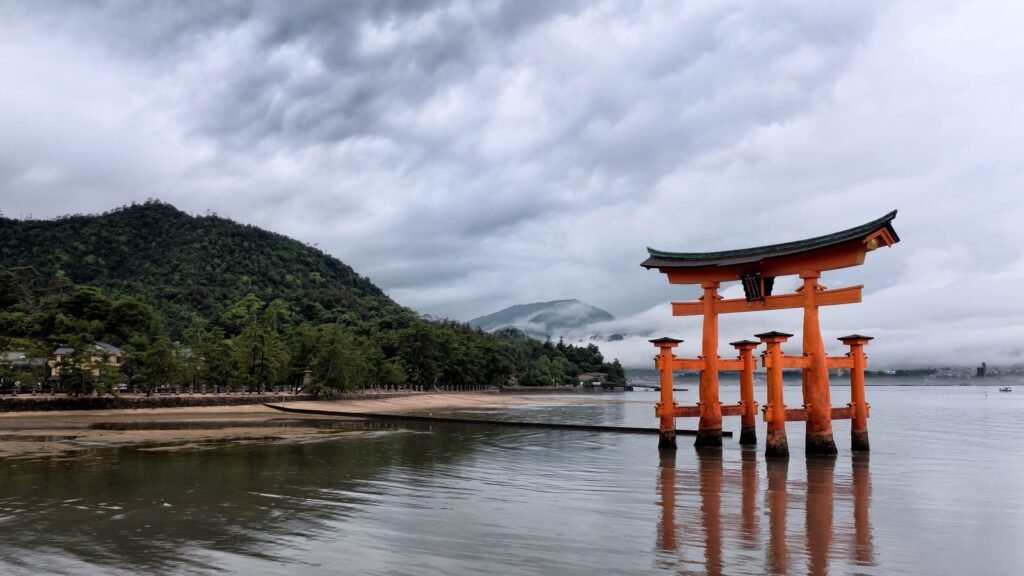
Miyajima, officially known as Itsukushima, is best known for Itsukushima Shrine and its famous torii gate beside the water.
Although most visitors come for cultural and historic reasons, the island setting is an essential part of the experience.
Staying later in the day or overnight can provide a quieter perspective after many day visitors have returned to the mainland.
Wakayama, the Kii Peninsula and Western Japan
Wakayama Coast
Wakayama Prefecture combines mountains, pilgrimage routes and a substantial coastline south of Osaka.
The region can appeal to travelers who want to combine coastal scenery with onsen, temples and more rural parts of Japan.
Transportation can require more planning than in major urban areas, particularly if you want to explore smaller coastal communities.
Shirahama
Shirahama is one of the better-known seaside resorts in the Kansai region.
It combines a sandy beach with hot springs and coastal rock formations.
For travelers visiting Osaka or Kyoto, it can offer a relatively practical way to add a beach or seaside resort experience without travelling to Okinawa.
Kii Peninsula
The wider Kii Peninsula offers rugged coastline alongside forests, mountains and important pilgrimage routes.
Travelers who enjoy road trips may find the peninsula particularly rewarding because the journey between destinations can be part of the experience.
However, distances and transportation times can be longer than they first appear on a map, so avoid trying to cover too much territory in a short trip.
Northern and Rugged Coastal Japan
Hokkaido
Hokkaido provides a completely different coastal experience from Okinawa.
Rather than tropical beaches, travelers encounter cooler temperatures, rugged shorelines, fishing communities and landscapes shaped by Japan’s northern climate.
Hokkaido can be particularly rewarding for travelers interested in seafood, scenic drives, nature and less densely developed coastal areas.
Shiretoko Peninsula
The Shiretoko Peninsula in eastern Hokkaido is known for dramatic natural landscapes and relatively remote coastline.
This is not a traditional beach destination. Its appeal lies in wilderness, wildlife, mountains and the meeting of land and sea.
Travelers considering Shiretoko should research transportation, seasonal access and weather carefully because conditions can differ considerably from more urban parts of Japan.
Sanriku Coast
The Sanriku Coast of northeastern Honshu is characterized by dramatic cliffs, bays and fishing communities.
Its scenery and regional character offer a very different experience from Japan’s major resort beaches.
Travelers interested in hiking, coastal landscapes and quieter destinations may find this area especially appealing.
As with other less heavily visited regions, check current local transportation and access when planning your route.
Islands Beyond Okinawa
Yakushima
Yakushima, south of Kyushu, is better known for ancient forests and hiking than for a conventional beach holiday.
However, its island setting, rugged coastline and subtropical environment make it an interesting choice for travelers who want nature rather than resort-style coastal travel.
Weather can change quickly, and hiking conditions should be taken seriously.
Amami Oshima
Amami Oshima lies between mainland Kyushu and Okinawa and combines subtropical scenery, beaches and distinctive island culture.
It can appeal to travelers who want a quieter island experience while still having access to coastal activities and natural landscapes.
A rental car can be useful for exploring different parts of the island.
Goto Islands
The Goto Islands, west of Kyushu, offer beaches, fishing communities, churches and a slower island atmosphere.
They receive fewer international visitors than many of Japan’s best-known destinations, which can appeal to travelers interested in quieter coastal travel.
Because ferry and flight connections influence how the islands fit into an itinerary, transportation planning is particularly important.
Planning a Coastal Trip in Japan
Choose the Coast Based on the Experience You Want
Japan’s coastal destinations suit very different styles of travel.
If you want:
- Tropical beaches and clear water: consider Okinawa, Miyakojima or the Yaeyama Islands
- A coastal escape near Tokyo: consider the Izu Peninsula, Shimoda, Atami or Kamakura
- Island hopping and slower travel: explore the Seto Inland Sea
- Art and island culture: consider Naoshima and other Setouchi islands
- Cycling: consider the Shimanami Kaido
- Nature and hiking: consider Yakushima, Shiretoko or the Sanriku Coast
- A beach combined with onsen: consider Shirahama or parts of the Izu Peninsula
- Quieter subtropical islands: consider Amami Oshima or some of Okinawa’s smaller islands
Japan Is Not Only a Summer Beach Destination
The best season depends heavily on the region.
Southern islands can have very different swimming seasons and weather patterns from Hokkaido or northeastern Japan.
Summer can bring hot weather and excellent beach conditions in many locations, but it can also bring humidity, crowds and seasonal storms.
Spring and autumn may be ideal for coastal sightseeing, cycling and walking even when swimming is not the main activity.
Always research the specific destination rather than assuming the entire Japanese coastline follows the same seasonal pattern.
Typhoon Season Requires Flexibility
Coastal and island travel can be affected by tropical storms and typhoons, particularly during warmer months.
Flights and ferries may be delayed or cancelled when conditions deteriorate.
If your itinerary includes an island shortly before an international flight, consider leaving enough flexibility that weather disruption does not put your departure at risk.
Ferries Are Part of the Experience
Ferries are essential for reaching many Japanese islands and can also be one of the most enjoyable parts of coastal travel.
Schedules vary by route and season, and weather can affect operations.
Check current schedules before travelling and avoid assuming that the last ferry will operate late into the evening.
Consider Whether You Need a Car
Some Japanese coastal destinations are easy to explore by rail, while others are significantly easier with a rental car.
Places such as Kamakura, Atami and parts of the Izu Peninsula can work well without driving.
More rural regions and islands may provide much greater flexibility with a car.
Before renting, consider parking, road conditions, international driving requirements and whether your accommodation is located near public transportation.
Do Not Underestimate Travel Times
Japan’s transportation system is excellent, but that does not mean every coastal destination is close to a major city.
Island ferries, local trains, buses and rural roads can make relatively short distances take longer than expected.
Plan coastal trips around realistic travel times rather than trying to add too many destinations to one itinerary.
Beach Etiquette, Food and Responsible Travel
Not Every Japanese Beach Is a Resort Beach
Japan’s coastline includes sandy beaches, rocky shores, fishing harbours, cliffs and small coves.
Being beside the ocean does not automatically mean a destination offers easy swimming or a traditional beach holiday.
Look at the actual shoreline and available facilities before booking accommodation specifically for beach access.
Swimming Seasons and Lifeguards Vary
Some beaches have defined swimming seasons during which lifeguards, changing facilities or other services are available.
Conditions outside those periods may be different even if the beach itself remains physically accessible.
Pay attention to signs, currents, weather and local warnings rather than assuming that calm-looking water is always safe for swimming.
Marine Life Requires Awareness
Depending on the region and season, swimmers may encounter jellyfish or other marine life.
Local beaches often provide warnings when particular conditions are a concern.
Follow posted advice and local guidance rather than relying solely on general information about Japanese beaches.
Coastal Food Is Highly Regional
One of the pleasures of travelling around Japan’s coast is the opportunity to experience regional seafood and local ingredients.
Fishing ports, markets and small coastal towns can offer dishes that reflect what is available locally and seasonally.
Hokkaido seafood will be very different from the food culture of Okinawa, Kyushu or the Seto Inland Sea.
For a broader introduction to regional Japanese cuisine, see our guide to what to eat in Japan.
Respect Small Communities
Many attractive coastal destinations are also working fishing towns and residential communities.
Avoid blocking roads, private entrances, harbour operations or residential areas while taking photographs.
Follow local rules regarding parking, beaches, rubbish and access to private property.
The quieter a destination is, the more important it can be to remember that visitors are sharing the space with people who live there year-round.
Stay Longer Rather Than Collecting Islands
Island hopping can be appealing, but repeatedly packing, checking out, travelling to ports and waiting for ferries can consume a large part of the trip.
Choosing fewer destinations and staying longer often produces a more relaxed experience.
It also gives you flexibility if weather changes or transportation is disrupted.
Which of the Best Coastal Destinations in Japan Is Right for You?
There is no single best coastal destination in Japan.
Okinawa is the obvious choice for many travelers seeking tropical beaches, while the Izu Peninsula provides one of the easiest seaside escapes from Tokyo. Setouchi offers islands, art and cycling, Wakayama combines coast with onsen and rural travel, and northern Japan provides dramatic landscapes far removed from a conventional beach holiday.
The best choice depends on whether your priority is swimming, scenery, hiking, seafood, island life, cultural experiences or simply spending a few quieter days away from Japan’s major cities.
Do not feel that you need to cross the country to find the “best” coastline. Choosing a coastal region that fits naturally into the rest of your itinerary will usually produce a more enjoyable trip.
For broader planning information, see our Japan Travel Guide.
You can also explore more seaside destinations in our Coastlines travel guides.