
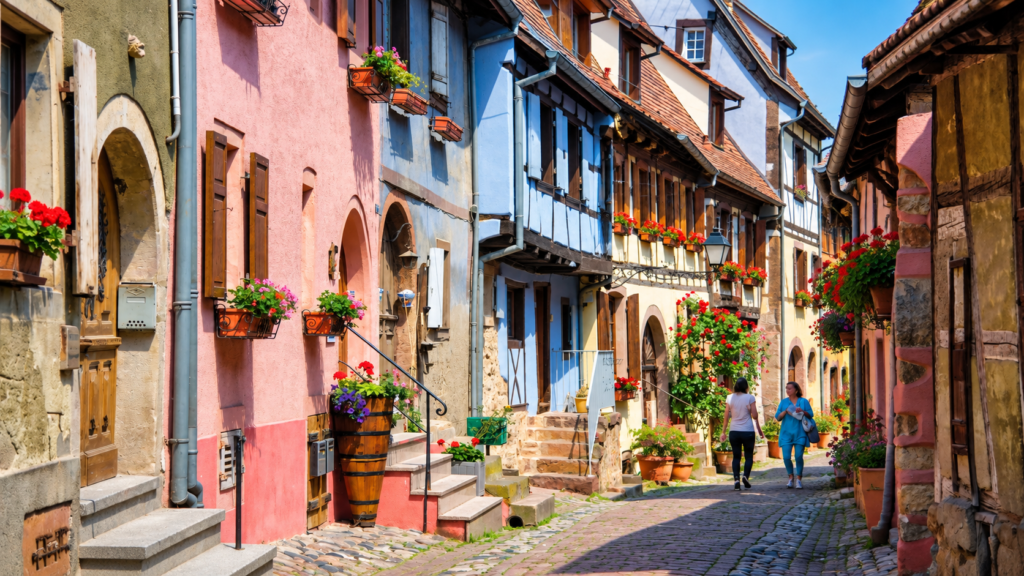
France culture and local customs can feel familiar to travelers because French food, fashion, art and language have such a strong international presence. But everyday life in France is more regional, nuanced and varied than many visitors expect.
Paris may shape much of the world’s image of France, but Brittany, Provence, Alsace, Normandy, the Basque Country, Corsica and other regions have distinct histories, traditions, foods, accents and cultural identities.
Understanding those differences — along with a few basic expectations around greetings, cafés, meals, shops and public behaviour — can make travel in France noticeably easier.
You do not need to memorize an elaborate set of rules. Courtesy, observation and a willingness to adapt to local rhythms will take you much farther.
France Culture and Local Customs Vary by Region
France has a strong national identity, but regional identity remains important.
The landscapes, architecture, food, language and traditions of Brittany can feel very different from Provence. Alsace reflects centuries of interaction along the German border, while the French Basque Country and Corsica maintain particularly recognizable cultural identities of their own.
Learning about France culture and local customs before your trip helps you notice these differences rather than treating the country as one uniform culture centred on Paris.
Paris Is Not the Whole of France
Paris is one of Europe’s major cultural capitals, but the pace and atmosphere of the capital are not representative of every French city or town.
Smaller cities may move more slowly. Rural areas can have more limited business hours. Coastal communities may follow seasonal rhythms, while wine regions, Alpine towns and Mediterranean destinations all have different patterns of daily life.
The more of France you explore, the more useful it becomes to think regionally rather than asking what “the French” do as if everyone lives the same way.
Regional Languages Are Part of France
French is the official national language, but France also has a significant regional-language heritage.
Languages traditionally associated with metropolitan France include Breton, Basque, Corsican, Catalan, Alsatian, Occitan and several others. France’s Ministry of Culture provides a broader overview of the country’s recognized regional languages.
You may notice bilingual place names, regional-language signs or cultural events that reflect these identities, particularly in areas such as Brittany, Corsica, Alsace and the Basque Country.
Travelers do not need to learn regional languages, but recognizing that they exist provides useful cultural context and shows respect for local identity.
Greetings and Everyday Courtesy
One of the simplest ways to improve everyday interactions in France is to greet people before making a request.
Entering a bakery, shop, café or small business and immediately asking a question without saying hello can sound abrupt even when no offence is intended.
- Bonjour — hello or good day
- Bonsoir — good evening
- S’il vous plaît — please
- Merci — thank you
- Excusez-moi — excuse me
- Au revoir — goodbye
A simple bonjour before asking whether someone speaks English can change the tone of an interaction completely.
Use Monsieur or Madame When Appropriate
French interactions can initially seem slightly more formal than visitors from some English-speaking countries expect.
Using bonjour monsieur or bonjour madame is common in service interactions and is an easy way to begin politely.
You do not need to exaggerate formality. The important point is acknowledging the person before moving directly into your request.
Do Not Worry About Perfect French
Travelers sometimes avoid speaking French because they are concerned about pronunciation or making grammatical mistakes.
A few basic phrases are still worthwhile. Making an effort communicates courtesy even if the conversation quickly switches to English.
In major cities and tourist destinations, you will often encounter people who speak English, but this should not be assumed everywhere.
Cafés, Meals and the Rhythm of Daily Life
Cafés and restaurants are not simply places to consume food quickly. They are also social spaces where people meet, talk, read, watch the street and spend time together.
France’s official tourism material continues to emphasize long lunches, fixed mealtimes and the pleasure of lingering rather than rushing through every part of the day.
Sitting at a Café Is an Activity
You do not need an elaborate plan every hour of your trip.
Sitting at a café with coffee, watching a neighbourhood and allowing time to pass can be part of experiencing a French city rather than time taken away from sightseeing.
This is particularly useful when you are trying to understand how a neighbourhood changes between morning, lunch and early evening.
Meals Can Be More Structured
Outside highly touristed districts, restaurants may operate defined lunch and dinner services rather than serving full meals continuously throughout the afternoon.
That can surprise travelers accustomed to eating whenever it suits their schedule.
Check restaurant hours before planning a late lunch, particularly in smaller communities.
Meals themselves may also be treated as occasions to slow down rather than something to finish as quickly as possible.
The social importance of the shared French meal is significant enough that UNESCO inscribed the gastronomic meal of the French on its Representative List of the Intangible Cultural Heritage of Humanity in 2010. UNESCO describes it as a social practice centred on gathering, taste and shared occasions rather than simply a collection of recipes.
For a deeper look at regional dishes and dining traditions, see our guide to what to eat in France.
Markets, Shops and Everyday Neighbourhood Life
Local markets remain useful places to experience French communities beyond major monuments.
Depending on the region and season, market stalls may sell fruit, vegetables, cheese, bread, charcuterie, seafood, flowers and prepared foods.
Markets also reveal regional differences quickly. Products displayed in Brittany may look very different from those in Provence, Alsace or the Alps.
Respect the Rhythm of Small Shops
Opening hours in France can differ from the continuous retail schedules common in North America.
Some independent businesses close during part of the afternoon, close one or more days each week or change schedules seasonally.
Do not assume that a shop, restaurant or attraction will be open simply because it is the middle of the day.
Checking hours in advance is particularly important in villages and smaller towns.
Ask Before Handling Market Produce
Market etiquette varies from vendor to vendor.
Rather than automatically picking up fruit, vegetables or specialty products, watch what local customers do or ask the vendor first.
Some sellers prefer to select and bag produce themselves.
Public Spaces and Social Behaviour
French cities are built around public spaces: squares, parks, riverbanks, café terraces, markets and pedestrian streets.
Using these spaces well often means paying attention to the people who live there rather than treating them only as backgrounds for photographs.
Keep Residential Areas Residential
Some of France’s most attractive historic neighbourhoods are also places where people live.
Keep noise reasonable, avoid blocking entrances and remember that a beautiful doorway, balcony or narrow street may belong to someone’s home.
This becomes particularly important in heavily visited places where residents deal with tourism every day.
Be Aware of Personal Space
Busy metros, markets and city pavements naturally become crowded, but avoid standing in doorways, stopping suddenly at the top of escalators or blocking narrow passages while checking directions.
Moving slightly aside before looking at your phone is a small courtesy that matters in dense urban areas.
Keep Voices Moderate Indoors
Restaurants, museums and public transportation do not usually require silence, but very loud conversation can stand out.
Observe the room and match the general volume rather than assuming every social space has the same atmosphere.
Art, Heritage and Cultural Traditions
France’s cultural identity extends far beyond its best-known museums.
Architecture, crafts, regional music, food traditions, gardens, churches, festivals and everyday neighbourhoods all contribute to the country’s cultural landscape.
Look Beyond the Famous Museums
The Louvre, Musée d’Orsay and major Paris institutions deserve their reputations, but regional museums can reveal just as much about the places you are visiting.
Smaller museums may focus on local artists, archaeology, decorative arts, maritime history, wine, textiles, industrial heritage or regional traditions.
Including one or two local cultural institutions can provide context that famous landmarks alone cannot.
Historic Buildings Are Often Living Places
Churches, cathedrals and other religious buildings may be major tourist attractions, but many remain active places of worship.
Dress and behaviour expectations vary, but quiet voices, respectful clothing and avoiding unnecessary disruption during services are sensible practices.
Photography restrictions should also be followed even when other visitors appear to ignore them.
Festivals and Seasonal Traditions
Festivals provide one of the clearest ways to see regional culture in practice.
France hosts celebrations built around music, film, photography, food, wine, local history, religious traditions and seasonal events throughout the year.
National Celebrations
France’s national day on 14 July is marked around the country with ceremonies, public celebrations, concerts, fireworks and local events.
The atmosphere and scale vary enormously from Paris to smaller towns, so the experience can feel distinctly local even though the occasion is national.
Regional Festivals
Regional calendars may include harvest festivals, wine events, religious processions, maritime celebrations, village fairs and cultural festivals connected with local music or traditions.
Rather than trying to find the largest festival in France, check what is happening in the particular region you are visiting.
A smaller local event may provide a more meaningful connection with the destination than adding another famous attraction to your itinerary.
Practical Etiquette for Travelers
Always Start With a Greeting
If there is one habit worth adopting immediately, it is saying bonjour or bonsoir before asking for something.
Use it when entering small shops, bakeries and ticket counters and when approaching someone for assistance.
Do Not Assume Service Means Informality
Shopkeepers, restaurant staff and hotel employees may interact professionally without the highly conversational service style common in parts of North America.
That difference should not automatically be interpreted as unfriendliness.
Judge the interaction by whether the person is helpful and professional rather than by how much casual conversation takes place.
Ask Before Photographing People
Street markets, cafés and neighbourhoods can be visually appealing, but people are not part of the scenery.
If an identifiable person will be the primary subject of your photograph, asking first is the respectful approach.
Allow Time for the French Pace
Trying to force every day into a tightly timed sequence can work against the experience.
A meal may take longer than expected. A small shop may be closed. You may spend more time at a market or café than you planned.
Leave some space in the itinerary rather than treating these differences as delays that need to be corrected.
Travel With Curiosity, Not Stereotypes
France has accumulated an unusually large collection of travel stereotypes: everyone is fashionable, Parisians are rude, meals are always formal, people refuse to speak English, and life everywhere revolves around wine, cafés and long lunches.
Real life is far more varied.
A rushed commuter in Paris, a market vendor in Provence, a restaurant owner in Brittany and a resident of a Corsican village are not interchangeable representatives of a single national personality.
Observe first. Allow individuals and regions to define themselves rather than trying to fit every experience into something you have heard about France before arriving.
Experience France Beyond the Landmarks
France’s most famous landmarks deserve attention, but culture is often easier to understand between the headline attractions.
It appears in the morning queue at a bakery, the produce at a village market, a café terrace after work, a regional festival, a local cheese shop, an evening walk through a neighbourhood and the different languages and accents heard as you move around the country.
Understanding France culture and local customs is less about learning a rigid etiquette manual and more about recognizing regional identity, greeting people politely and paying attention to the rhythm of the place you are visiting.
Learn a few French phrases. Give meals enough time. Explore beyond central tourist districts. Visit regional markets and cultural institutions, and remember that the strongest travel experiences often come from observing ordinary life rather than trying to collect every famous attraction.
For broader trip-planning information, see our France Travel Guide: What to Know Before You Go.
You can also explore more destinations through our Culture travel guides.