
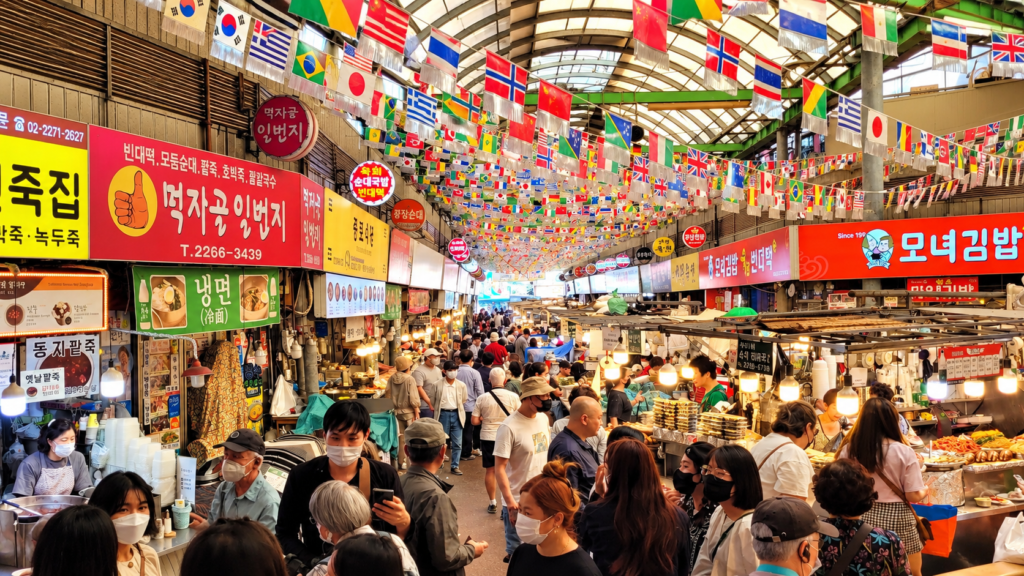
Knowing what to eat in South Korea becomes much easier once you stop thinking of Korean food as a short list of barbecue, kimchi and bibimbap. Those foods matter, but the country’s cuisine changes noticeably from one region to another.
Busan is known for pork-and-rice soup, Jeonju for bibimbap, Chuncheon for dakgalbi, Andong for jjimdak and Jeju for black pork. Coastal regions bring seafood into the foreground, while inland areas have their own traditions built around beef, noodles, vegetables, fermented sauces and seasonal ingredients.
Some of Korea’s most memorable meals are also surprisingly informal: noodles in a small restaurant, fried chicken with beer, a bowl of stew shared at the table, gimbap from a neighbourhood shop or tteokbokki from a market stall.
This guide will help you understand the regional specialties, everyday dishes and dining customs that make Korean food such an important part of travelling through the country.
Think Regionally
Korean cuisine has strong national traditions, but local ingredients and regional history produce considerable variety.
A meal in Jeonju may focus on bibimbap and a generous assortment of side dishes. Busan brings pork soup and coastal food traditions. Gangwon Province is associated with dishes such as buckwheat noodles, soft tofu and beef from Hoengseong, while Jeju adds black pork and island seafood.
Korea Tourism Organization currently highlights 33 regional foods and seasonal specialties around the country, reinforcing how important local cuisine is to Korean travel. You can explore its K-Local Food Trip 33 for additional regional ideas.
Learning what to eat in South Korea therefore starts with asking what the city or province you are visiting does particularly well.
Regional Food Highlights
Seoul
Seoul is the easiest place to encounter food from almost every region of Korea.
Traditional markets, neighbourhood restaurants, barbecue houses, noodle shops, cafés and contemporary dining all coexist, making the capital an excellent introduction to Korean food.
Look for dishes such as seolleongtang, a milky ox-bone soup; gomtang, a clear or lightly coloured beef soup; kalguksu, knife-cut noodles; mandu dumplings; and a wide variety of barbecue.
Markets such as Gwangjang are useful for trying several foods in one place, including mung-bean pancakes, gimbap-style rolls, dumplings and other snacks.
Do not limit yourself to famous markets, however. Small restaurants away from major tourist areas can provide equally memorable meals.
Suwon and Gyeonggi Province
Suwon is particularly associated with large grilled beef ribs known as wanggalbi.
The city’s galbi tradition makes it a worthwhile food stop even for travelers who have already eaten Korean barbecue in Seoul.
Nearby Uijeongbu is strongly associated with budae jjigae, a spicy stew containing ingredients such as sausage, ham, noodles, vegetables and Korean seasonings.
The dish developed in the period after the Korean War and today has a firmly established place in Korean comfort food.
Incheon
Incheon provides one of Korea’s most interesting examples of how migration and port-city history can influence local food.
The city is closely associated with jjajangmyeon, noodles covered with a dark black-bean sauce. The dish developed through Chinese-Korean culinary traditions and is now eaten throughout the country.
Incheon is also highlighted for ganjang gejang, raw crab marinated in soy sauce.
The crab is intensely savoury and is generally eaten with rice, which absorbs the seasoned sauce and rich crab flavour.
Jeonju and North Jeolla
Jeonju is one of South Korea’s strongest food destinations.
The city is particularly famous for Jeonju bibimbap, a bowl of rice topped with vegetables and other ingredients that are mixed together before eating.
Bibimbap appears throughout Korea, but trying it in Jeonju gives the dish a regional context that is missing when it is treated only as a generic Korean meal.
Jeolla cuisine is also known for generous tables filled with numerous banchan, or side dishes.
A meal here can feel less like one main dish surrounded by extras and more like an entire collection of tastes, textures and fermented foods arriving together.
Gwangju and South Jeolla
Gwangju and the surrounding Jeolla region have a particularly strong reputation for food.
Local specialties include tteokgalbi, seasoned minced meat formed into patties and grilled, as well as a broad range of vegetable dishes, seafood and elaborate Korean table settings.
Travel toward Yeosu, Mokpo and the southern coast and seafood becomes increasingly important.
Korea Tourism Organization highlights dishes such as soy-sauce-marinated crab in Yeosu and other specialties built around the seafood harvested along the southern coast.
Busan
Busan combines one of Korea’s largest cities with a powerful coastal food identity.
One of its signature dishes is dwaeji gukbap, pork-and-rice soup. The broth, pork and rice create a simple but deeply satisfying meal that is particularly associated with Busan and the surrounding region.
Busan is also an obvious place to explore seafood. Markets and restaurants serve fish, shellfish and other marine products in preparations ranging from grilled and cooked dishes to Korean-style raw fish.
Another local specialty worth looking for is milmyeon, wheat noodles usually served cold and particularly welcome during hot weather.
Daegu
Daegu has developed several distinctive food traditions, and fried chicken is one of the city’s best-known contemporary specialties.
Korean fried chicken may be served plain and exceptionally crisp or coated in sauces ranging from sweet and spicy to soy-and-garlic based.
Ordering fried chicken with beer is popularly known as chimaek, a combination of the Korean words for chicken and beer.
Daegu is a particularly appropriate place to experience this part of modern Korean food culture.
Andong
Andong is strongly associated with jjimdak, chicken braised in a savoury soy-based sauce with vegetables and glass noodles.
The dish is rich, slightly sweet and designed for sharing.
Andong is also known for traditional soju, giving travelers an opportunity to compare older regional drinking traditions with the clear commercial soju found almost everywhere in Korea.
Chuncheon and Gangwon Province
Chuncheon is famous for dakgalbi, spicy stir-fried chicken cooked with vegetables and often rice cakes on a large pan at the table.
After most of the chicken has been eaten, restaurants may use the remaining seasoning to fry rice directly on the cooking surface.
Gangwon Province has other important specialties as well.
Gangneung is associated with Chodang sundubu, exceptionally soft tofu often served in a simple soup, while Hoengseong is famous for high-quality Korean beef known as hanwoo.
Buckwheat dishes also appear frequently in this mountainous region.
Jeju Island
Jeju has one of South Korea’s most distinct regional food identities.
The island is particularly associated with Jeju black pork, which is commonly grilled at the table in thick slices.
Seafood naturally plays a major role as well. Abalone, fish and other marine products appear frequently, reflecting Jeju’s island geography.
Jeju’s food culture is also connected with the island’s haenyeo, women divers whose traditional knowledge and diving culture have been recognized by UNESCO.
If you spend several days on Jeju, make regional meals part of the itinerary rather than treating the island’s food as identical to Seoul.
What to Eat in South Korea: Foods You’ll See Across the Country
Regional specialties are important, but several foods and eating styles appear across much of South Korea.
Kimchi
Kimchi is not one single dish.
The term refers to fermented vegetable preparations made in many styles, with napa cabbage kimchi being the version most familiar internationally.
Radish, cucumber and numerous other vegetables can also be prepared as kimchi, and flavour changes according to region, season, ingredients and household tradition.
The traditional practice of making and sharing kimchi, known as kimjang, was inscribed by UNESCO on its Representative List of the Intangible Cultural Heritage of Humanity in 2013.
Banchan
Banchan are the small side dishes placed around a Korean meal.
Kimchi is the most familiar example, but you may also receive seasoned vegetables, pickles, tofu, fish cakes, potatoes, seaweed or other preparations.
The selection varies according to the restaurant and main dish.
At many restaurants, additional portions of basic side dishes are available without an extra charge.
Korean Barbecue
Korean barbecue is a style of eating rather than one specific dish.
Common choices include beef galbi, bulgogi and pork belly known as samgyeopsal.
Meat is generally grilled at the table and eaten with combinations of lettuce, perilla leaves, garlic, sauces, kimchi and other side dishes.
Some restaurants expect diners to cook the meat themselves, while staff handle most of the grilling at others. Watch what happens at neighbouring tables or simply follow the staff member’s lead.
Soups and Stews
Soups and stews are fundamental to Korean meals and range from mild to intensely spicy.
Doenjang jjigae is based on fermented soybean paste, while kimchi jjigae combines aged kimchi with ingredients that may include pork or tofu.
Sundubu jjigae features soft tofu in a bubbling broth, often with seafood, meat or vegetables.
For travelers who assume all Korean food is grilled meat, these dishes quickly demonstrate otherwise.
Bibimbap
Bibimbap combines rice with vegetables and other toppings, typically mixed together immediately before eating.
Versions vary widely. Some are served in ordinary bowls, while dolsot bibimbap arrives in a heated stone bowl that crisps the rice around the edges.
Although available throughout Korea, Jeonju remains particularly associated with the dish.
Street Food and Bunsik
Street food and casual bunsik restaurants provide some of the easiest and most affordable ways to try Korean flavours.
Korea Tourism Organization groups many familiar everyday foods within bunsik culture, including tteokbokki, gimbap, fried foods, fish cakes and sundae. :contentReference[oaicite:1]{index=1}
Tteokbokki
Tteokbokki consists of chewy rice cakes cooked in a sauce that is often spicy, sweet and based on gochujang.
It is commonly served alongside fish cakes, boiled eggs or fried snacks.
Gimbap
Gimbap consists of rice and fillings rolled in dried seaweed and sliced into rounds.
Fillings vary considerably and may include vegetables, egg, tuna, meat or other ingredients.
It is inexpensive, portable and useful for train journeys, hikes or quick meals.
Eomuk
Eomuk, or fish cake, is particularly common at markets and street-food stalls.
It may be served on skewers in hot broth, making it especially appealing during colder weather.
Hotteok and Seasonal Snacks
Hotteok are filled griddle cakes, often containing a sweet mixture of sugar, cinnamon and nuts.
Cold weather also brings snacks such as bungeoppang, fish-shaped pastries usually filled with sweet red bean paste or other fillings.
Fermentation Is Central to Korean Food
Korean cuisine relies heavily on fermented ingredients that create much of its characteristic depth of flavour.
Gochujang is fermented red-chili paste, doenjang is fermented soybean paste and ganjang is soy sauce.
Collectively, traditional fermented sauces are known as jang.
UNESCO inscribed the knowledge, beliefs and practices related to Korean jang making on its Representative List of the Intangible Cultural Heritage of Humanity in 2024, reflecting the importance these sauces have within Korean food culture. :contentReference[oaicite:2]{index=2}
You do not need to recognize every fermented ingredient individually, but understanding their role makes Korean soups, stews, marinades and dipping sauces much easier to appreciate.
Desserts, Cafés and Traditional Drinks
Modern café culture is extremely visible throughout South Korea.
Seoul and other cities contain everything from small independent coffee shops to elaborate cafés built around architecture, desserts or highly specific themes.
Bingsu
Bingsu is shaved ice topped with ingredients that may include sweetened red beans, fruit, condensed milk, rice cakes or more contemporary additions.
It is particularly popular during hot weather and is often large enough to share.
Traditional Sweets
Korean traditional sweets include various forms of tteok, or rice cakes, as well as yakgwa, a sweet fried pastry traditionally made with ingredients such as honey and sesame oil.
You may encounter traditional sweets in markets, tea houses and specialty shops as well as in contemporary cafés that reinterpret them.
Makgeolli and Soju
Makgeolli is an opaque fermented rice beverage with a lightly sweet and tangy character.
Soju is Korea’s most familiar distilled alcoholic drink, although strength and production methods vary considerably between mass-market and traditional regional versions.
Alcohol is optional, of course. Traditional teas, coffee and a growing range of alcohol-free drinks make it easy to experience Korean dining culture without drinking.
Practical Dining Tips for South Korea
Tipping Is Not Expected
Restaurants in South Korea do not generally use a North American tipping system.
Korea Tourism Organization explicitly advises that tipping is not required or expected. Pay the stated price rather than automatically adding a percentage to the bill. :contentReference[oaicite:3]{index=3}
Side Dishes Are Part of the Meal
Do not assume every small dish placed on the table will appear as a separate charge.
Basic banchan are normally part of the meal, and many restaurants will provide additional portions without charge.
Increasingly, restaurants have self-service stations where diners refill water and side dishes themselves.
Use the Table Call Button
Many Korean restaurants place a call button directly on the table.
Pressing it when you need assistance is normal. You do not need to wait for a server to circulate repeatedly as you might in a North American restaurant.
Ordering Systems Vary
Some restaurants use tablet menus, touchscreen kiosks or QR-code ordering, while others remain completely traditional.
English menus are common in major tourist districts but should not be assumed everywhere.
A translation app can be extremely useful in smaller restaurants.
Some Restaurants Specialize in One Dish
Do not be surprised to find a restaurant built almost entirely around one specialty.
A place may serve primarily galbi, pork soup, noodles, dumplings or one type of stew.
This narrow focus is often a reason to go rather than a limitation.
Meals Are Often Shared
Korean barbecue, hot pots, large stews and many other dishes are designed to be shared.
Some restaurants may require a minimum order for certain dishes or expect each diner to order a portion.
If you are travelling alone, noodle shops, soup restaurants, gimbap shops, cafés and casual counters are often particularly convenient.
Markets Are Worth Exploring
Traditional markets are excellent places to understand Korean food beyond restaurants.
You may encounter vegetables, seafood, dried foods, kimchi, rice cakes, prepared dishes, pancakes, noodles and street snacks within the same market.
Take time to look around before buying from the first stall. Different vendors may specialize in completely different foods.
Food Is Part of Understanding South Korea
The strongest Korean food experiences come from looking beyond the handful of dishes that have become internationally famous.
Barbecue and kimchi are important, but so are Busan’s pork soup, Chuncheon’s dakgalbi, Andong’s braised chicken, Gangneung’s soft tofu, Jeonju bibimbap and Jeju black pork.
Understanding what to eat in South Korea is ultimately about connecting food with the places where it developed.
Visit markets. Try regional dishes. Order a stew you have never seen before. Pay attention to the banchan that arrive automatically, and leave room for both traditional sweets and Korea’s remarkably creative café culture.
For broader trip-planning information, see our South Korea Travel Guide: What to Know Before You Go.
You can also explore more regional cuisine in our Food travel guides.