
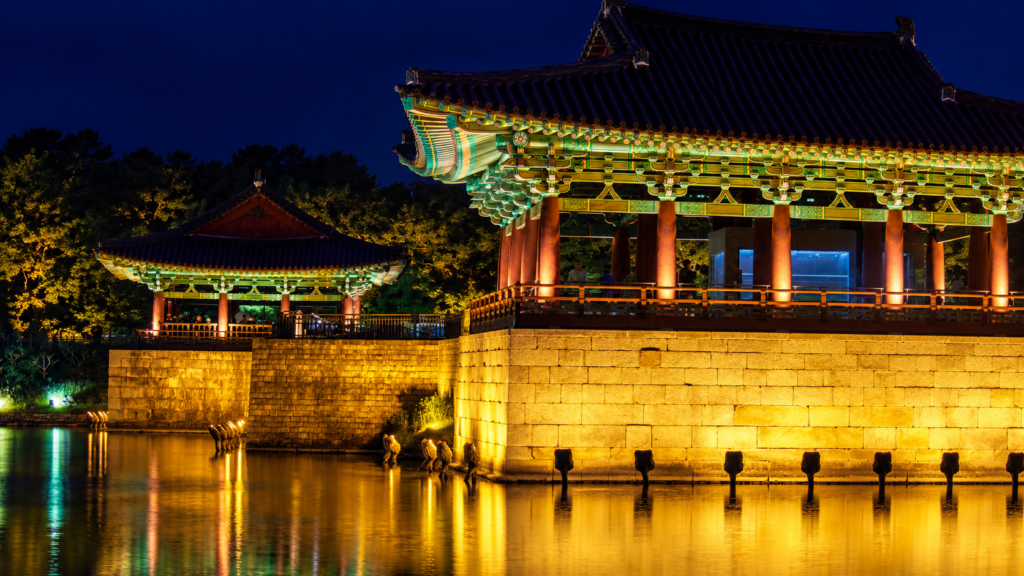
South Korea culture and local customs combine centuries-old traditions with one of Asia’s most modern urban societies. Historic palaces, Buddhist temples and traditional markets exist alongside high-speed trains, late-night cafés, K-pop, contemporary design and some of the world’s most connected cities.
For travelers, the country is generally straightforward to navigate, but several everyday customs can make interactions smoother. Removing shoes indoors, understanding basic greetings, showing consideration on public transportation and knowing what to expect at traditional sites can help you feel more comfortable from the beginning of your trip.
You do not need to master Korean etiquette or understand every social rule before arriving. Visitors are not expected to behave exactly like locals. Courtesy, observation and a willingness to adapt are far more important than performing every custom perfectly.
This guide focuses on the traditions and everyday habits travelers are most likely to encounter while exploring South Korea.
South Korea Culture and Local Customs Vary by Region
South Korea is geographically compact, but regional identities remain important.
Seoul dominates international perceptions of the country, yet Busan, Jeju Island, Jeonju, Gyeongju, Gangwon Province and the southern provinces all have their own histories, foods, dialects, landscapes and cultural traditions.
Learning about South Korea culture and local customs before travelling makes those regional differences easier to recognize rather than treating the entire country as an extension of Seoul.
Seoul Is Not the Whole of South Korea
Seoul is fast-moving, densely populated and intensely modern, but it also contains royal palaces, traditional neighbourhoods, markets and historic religious sites.
Busan has a stronger maritime identity and a noticeably different urban atmosphere. Jeonju is closely associated with traditional architecture and food culture, while Gyeongju preserves major sites connected with the ancient Silla kingdom.
Jeju Island has traditions shaped by its island geography and distinctive history, including the culture of the haenyeo, women divers whose practices were recognized by UNESCO in 2016.
Regional food is another useful way to understand these differences. See our guide to what to eat in South Korea for more detail.
Greetings and Everyday Courtesy
Korean social interactions can initially appear more formal than those in many Western countries.
Age, professional position and familiarity can influence language and behaviour, although international visitors are not expected to understand the complex system of Korean speech levels.
A polite attitude matters more than perfect Korean.
- Annyeonghaseyo — hello
- Gamsahamnida — thank you
- Joesonghamnida — I’m sorry
- Jeogiyo — excuse me or a polite way to get someone’s attention
Even if the rest of the conversation takes place in English or through a translation app, using a simple Korean greeting is generally appreciated.
Bowing
A small bow is commonly used when greeting, thanking or acknowledging another person.
Visitors do not need to reproduce formal Korean bows or worry about the precise angle. A slight bow of the head or upper body is enough in ordinary travel situations.
Using Two Hands
You may notice people using two hands when giving or receiving money, business cards, gifts or other items, particularly in more formal situations.
Visitors can follow the same practice when it feels natural. It communicates attentiveness and respect without requiring any detailed knowledge of Korean etiquette.
Shoes and Indoor Spaces
Removing shoes before entering certain indoor spaces is one of the customs travelers are most likely to encounter directly.
Shoes are normally removed when entering a private home and may also need to be removed at traditional accommodation, some restaurants, temple buildings and other spaces where people sit or sleep on the floor.
Korea Tourism Organization specifically advises travelers that shoes often need to be removed before entering homes and certain indoor environments.
Watch the entrance. Shoe racks, slippers, raised flooring or other guests removing their footwear will usually make the expectation clear.
Traditional Floor Seating
Some traditional restaurants and accommodations still use floor seating, although chairs and Western-style beds are now common throughout the country.
If floor seating is uncomfortable for you, check photographs or ask about seating arrangements before making a reservation.
There is no cultural benefit in forcing yourself through an uncomfortable meal simply to prove that you can sit cross-legged.
Public Transportation Etiquette
South Korea’s subway and rail systems are efficient, but major urban networks can become extremely crowded.
Queue where indicated, allow passengers to exit before boarding and move away from train doors when space permits.
Priority seats are designated for elderly passengers, pregnant passengers, people with disabilities and others who may need them.
Keep Noise Reasonable
Korean trains are not completely silent, but extremely loud conversations, speakerphone calls and audio played without headphones can be disruptive.
Observe the general atmosphere of the carriage and match the behaviour around you.
Manage Bags in Crowded Areas
Large backpacks and suitcases can become difficult during rush hour.
Keep bags close to your body, avoid blocking doors and use luggage storage when available on longer-distance trains.
If your schedule is flexible, avoiding the busiest commuter periods can make travel substantially more comfortable.
Palaces, Hanok Villages and Historic Sites
South Korea’s historic palaces and traditional neighbourhoods provide an important counterpoint to its modern cityscapes.
Seoul’s royal palaces, Jeonju Hanok Village, Gyeongju’s historic sites and numerous preserved temples give travelers opportunities to experience architecture and traditions from different periods of Korean history.
Respect Heritage Sites
National heritage sites are both attractions and protected cultural resources.
Korea Tourism Organization’s current visitor guidance asks guests to remain out of restricted areas, avoid damaging historic structures, keep noise reasonable and follow the instructions of site staff.
These are simple rules, but they matter in heavily visited places where large numbers of travelers move through sensitive historic spaces every day.
Wearing Hanbok
Renting hanbok, traditional Korean clothing, has become a popular visitor experience around Seoul’s royal palaces and other historic attractions.
Several major palaces offer free admission to visitors wearing qualifying hanbok, and rental shops around palace districts provide clothing in a wide range of styles.
Treat the clothing respectfully rather than using it purely as a costume for humorous photographs.
If you choose to wear hanbok, ask the rental shop how garments should be worn and handled. Korea Tourism Organization also publishes current guidance for visitors wearing hanbok at royal heritage sites.
Buddhist Temples and Templestay
Buddhist temples remain active religious communities as well as major cultural attractions.
Visitors are generally welcome, but quiet behaviour around prayer halls and religious ceremonies is appropriate.
Photography rules vary, so follow posted restrictions rather than assuming every temple interior can be photographed.
Temple Etiquette
You may see worshippers bow, place their palms together or participate in rituals that are unfamiliar to you.
You are not required to imitate religious practices simply because you are visiting the temple.
If you participate in a formal Templestay program, staff normally explain the basic etiquette involved. Korea Tourism Organization describes introductory Templestay programs where participants learn gestures such as hapjang, placing the palms together as a sign of respect.
Observe, listen and participate only when you understand what is expected.
Jjimjilbang and Korean Bathhouse Culture
A jjimjilbang is a Korean bathhouse and sauna complex that may include hot baths, saunas, relaxation areas, food and other facilities.
Large complexes can remain social spaces where families and friends spend several hours relaxing rather than simply places to take a quick bath.
Bathing Areas Are Different From Shared Areas
The wet bathing areas are normally separated by gender. Guests wash thoroughly before entering communal baths, and swimwear is generally not worn in these areas.
Shared sauna and relaxation areas are different. Facilities typically provide clothing to wear in the mixed common areas.
Procedures vary by establishment, so follow the instructions provided when you enter rather than assuming every jjimjilbang operates exactly the same way.
Dining Culture and Shared Meals
Eating in South Korea is often a social experience.
Barbecue, hot pots, stews and many other dishes are placed in the centre of the table and shared rather than ordered as completely separate individual meals.
Small side dishes known as banchan also create a shared table rather than a single plate for each diner.
Chopsticks and Spoons
Korean table settings commonly include metal chopsticks and a spoon.
Rice and soup are generally eaten with the spoon, while chopsticks are used for many side dishes and other foods.
Avoid leaving chopsticks standing vertically in a bowl of rice because the image is associated with ancestral and funeral rituals.
Tipping Is Not Expected
South Korea does not generally use a North American tipping system.
Restaurants, taxis and routine services normally charge the stated price without requiring an additional percentage.
For more dining advice and regional dishes, see our South Korea food guide.
Markets, Shopping and Everyday Transactions
Traditional markets remain important parts of urban and neighbourhood life even in highly modern Korean cities.
Markets may combine produce, seafood, clothing, household goods and prepared food within the same complex.
Card payments are widespread in South Korea, but carrying some cash remains useful for smaller stalls, traditional markets and certain independent businesses.
Observe Before Photographing Vendors
Markets are attractive photography locations, but vendors are working rather than performing for tourists.
If a person will be the clear subject of a close photograph, ask first or indicate your intention before taking the picture.
Photographing the general market environment from a respectful distance is different from placing a camera directly in someone’s face while they are working.
K-Pop, Cafés and Contemporary Korean Culture
Modern Korean culture is not separate from the travel experience.
K-pop, television dramas, cinema, beauty products, fashion, gaming and design have become internationally visible, particularly among younger travelers.
Seoul neighbourhoods such as Hongdae, Seongsu and Gangnam offer very different windows into contemporary urban culture, while Busan, Daegu and other cities have their own creative districts and nightlife.
Café Culture Is Part of Everyday Life
South Korea has an extraordinarily developed café culture.
Cafés range from tiny neighbourhood coffee shops to large architect-designed spaces built around views, gardens, bakeries, art or highly specific themes.
Spending time in a café can be part of understanding contemporary Korean social life rather than simply a break between attractions.
Festivals, Holidays and Seasonal Traditions
South Korea’s cultural calendar reflects both traditional holidays and modern festivals.
Seollal, the Lunar New Year, and Chuseok, the autumn harvest holiday, are among the country’s most important traditional holidays.
Families may travel to spend time together, and transportation demand can increase substantially around major holiday periods.
Traditional Culture Is Still Living Culture
Traditional Korean culture is not confined to museums.
UNESCO currently lists numerous Korean traditions as intangible cultural heritage, including kimjang, mask dance drama, nongak community music and dance, the Jeju haenyeo culture, traditional wrestling and the Yeondeunghoe lantern festival.
You can explore these traditions through UNESCO’s Republic of Korea intangible cultural heritage listings.
If your trip coincides with a local festival, it can provide useful cultural context that a normal sightseeing itinerary cannot reproduce.
Photography and Respect for Everyday Life
South Korea is highly photographed and social-media friendly, but normal privacy considerations still apply.
Ask before taking close photographs of identifiable individuals, particularly vendors, religious participants, performers outside organized events and people in residential neighbourhoods.
At museums, palaces and temples, observe posted photography restrictions.
A place being popular on social media does not make every doorway, alley or private property an unrestricted photography location.
Practical Etiquette for Travelers
Observe Before Acting
If you are uncertain about a procedure, watch what people around you are doing.
This works particularly well at restaurants, temples, transit stations, traditional accommodation and bathhouses.
Do Not Worry About Small Mistakes
Travelers occasionally encounter etiquette guides that make South Korea sound governed by an enormous list of strict social rules.
That can make visitors unnecessarily anxious.
If you misunderstand a custom, respond politely and adjust. Most ordinary travel situations do not require detailed knowledge of Korean social hierarchy.
Learn a Few Korean Words
English signage is common in major transportation systems and heavily visited attractions, but English ability varies among individuals and destinations.
A translation app can be extremely useful in smaller restaurants, markets and rural areas.
Learning a few Korean greetings makes everyday interactions easier even when the conversation cannot continue in Korean.
Travel With Curiosity, Not Stereotypes
International interest in Korean entertainment has created a new collection of stereotypes about the country.
South Korea is not simply K-pop, beauty products, technology, barbecue and television dramas, just as historic palaces and traditional clothing do not represent the whole of contemporary Korean life.
A Seoul office worker, a Jeju farmer, a Busan fish-market vendor, a university student in Daegu and a temple resident do not represent one interchangeable Korean personality.
Use cultural guidance to understand context rather than to predict how every individual will behave.
Experience South Korea Beyond the Famous Sights
Some of the most revealing cultural experiences happen between major attractions.
They appear in a neighbourhood market, a crowded subway platform, an evening barbecue meal, a mountain temple, a café filled with students or a family spending several hours together at a jjimjilbang.
Understanding South Korea culture and local customs is less about memorizing rules and more about noticing how people share space, show courtesy and balance tradition with a remarkably modern way of life.
Learn a few Korean phrases. Remove your shoes when appropriate. Be considerate on public transportation. Respect historic and religious sites, and allow enough time to experience ordinary neighbourhood life as well as major landmarks.
For broader trip-planning information, see our South Korea Travel Guide: What to Know Before You Go.
You can also explore more destinations through our Culture travel guides.