
The United States has an extraordinary variety of coastal landscapes. From rocky Atlantic headlands and barrier islands to warm southern beaches, Pacific cliffs, glacier-carved fjords and volcanic Hawaiian shores, the country’s coast changes dramatically from region to region.
Exploring United States coastlines can mean walking beside granite headlands in Maine, driving California’s Pacific highways, kayaking between mangrove islands in Florida, watching waves break against Washington’s wild beaches or standing beside volcanic rock in Hawaii.
The distances are enormous, so the strongest coastal trips usually focus on one region rather than trying to connect opposite sides of the country in a single itinerary.
United States Coastlines: What Travelers Should Expect
There is no single American coastal experience.
The Atlantic coast includes historic cities, fishing communities, beaches and long barrier islands. The southern coastline becomes warmer and more subtropical, while the Pacific is increasingly rugged and mountainous as you travel north.
Alaska introduces glaciers, fjords and immense wilderness, while Hawaii offers volcanic landscapes, tropical beaches and island communities with their own distinctive cultural traditions.
Weather and ocean conditions also vary enormously. A calm Hawaiian beach and an exposed section of the Pacific Northwest require completely different expectations and preparation.
New England and the Northeast
New England provides one of the most recognizable coastal landscapes in the eastern United States.
Rocky shores, historic harbours, fishing communities, islands and seafood traditions define much of Maine and coastal New England.
Maine and Acadia National Park
Maine is particularly appealing to travelers who want coastal scenery combined with hiking and small towns.
Acadia National Park protects some of the highest rocky headlands on the Atlantic coast of the United States, along with forests, islands, beaches and cultural landscapes.
Mount Desert Island provides easy access to coastal viewpoints, trails and small communities such as Bar Harbor.
Acadia can become busy during summer and autumn, so parking and vehicle reservations should be checked before arrival.
Cape Cod
Farther south, Cape Cod presents a softer coastal landscape of beaches, dunes, salt marshes and historic communities.
Cape Cod National Seashore protects roughly 40 miles of Atlantic-facing shoreline, including beaches, dunes, ponds and wetlands.
The Cape works well for travelers who want beaches, cycling, small towns and coastal scenery within relatively easy reach of Boston.
Mid-Atlantic Coast
The Mid-Atlantic coast is more developed than many parts of New England, but travelers can still find long beaches, protected islands and historic coastal communities.
New Jersey and Delaware
The Jersey Shore includes everything from lively boardwalk towns to quieter stretches of beach and protected coastal habitat.
Delaware’s coast is smaller but offers broad sandy beaches and communities such as Rehoboth Beach and Lewes.
Summer weekends can be extremely busy throughout this region, so accommodation and parking are worth planning in advance.
Assateague Island
Along the Maryland and Virginia coast, Assateague Island National Seashore protects a barrier-island environment of beaches, dunes, marshes and maritime habitat.
The island is also famous for its wild horses. Visitors should observe wildlife from the required distance rather than approaching animals for photographs.
Southeast and Florida
The southeastern coastline changes from barrier islands and surf beaches in the Carolinas to subtropical ecosystems and turquoise water in southern Florida.
North Carolina’s Outer Banks
The Outer Banks form a long chain of barrier islands facing the Atlantic Ocean.
Cape Hatteras National Seashore protects a dynamic landscape shaped by waves, currents, storms and moving barrier islands.
Lighthouses, beaches, fishing communities and open stretches of sand make the Outer Banks particularly good for travelers who enjoy coastal driving and relaxed beach towns.
Florida’s Atlantic Coast
Florida’s Atlantic coastline ranges from resort cities and surfing beaches to quieter coastal communities.
Miami and South Florida provide an urban beach experience, while farther north, areas such as the Space Coast and northeast Florida offer a different pace.
Travelers should always pay attention to local surf warnings, currents and seasonal weather conditions.
The Florida Keys and Everglades
Southern Florida becomes increasingly tropical.
The Florida Keys offer island scenery, boating, snorkeling and a road trip that culminates in Key West.
Nearby Everglades National Park protects vast wetlands, mangrove estuaries and coastal waters extending toward Florida Bay. Much of the Ten Thousand Islands region is accessible primarily by boat. :chatgpt-content-reference{index=”1″}
The Gulf Coast
The U.S. Gulf Coast stretches from Florida through Alabama, Mississippi and Louisiana to Texas.
Its landscapes include barrier islands, white-sand beaches, wetlands, estuaries and major port cities.
Florida Panhandle and Gulf Islands
Northwestern Florida and neighboring sections of Alabama and Mississippi are known for pale sandy beaches and relatively warm water.
Gulf Islands National Seashore protects barrier islands and coastal areas in both Florida and Mississippi, with opportunities for swimming, camping, boating and wildlife viewing.
Louisiana
Louisiana’s coast is less about conventional beach travel and more about wetlands, bayous, fishing communities and the cultural relationship between land and water.
New Orleans provides an urban starting point, but travelers interested in Louisiana’s coastal culture should consider exploring beyond the city.
Texas Coast
Texas has a long coastline with beach towns, barrier islands and wildlife areas.
South Padre Island is among the best-known resort destinations, while other parts of the coast offer quieter beaches, fishing and birding.
Storm season and extreme summer heat should be considered when planning coastal travel in this region.
California Coast
California contains some of the most famous coastal scenery in the United States.
The character of the shoreline changes dramatically between Southern California, Big Sur and the cooler northern coast.
Southern California
Los Angeles, Orange County and San Diego are associated with broad beaches, surfing, beach communities and a mild coastal climate.
Travelers can move easily between city attractions and the coast, although traffic can make relatively short distances take much longer than expected.
Big Sur
Big Sur is one of America’s classic coastal road-trip landscapes.
Mountains fall steeply toward the Pacific, with viewpoints, bridges, beaches and hiking areas spread along California Highway 1.
Road closures can occur after storms, landslides or construction work, so current highway conditions should always be checked before building an itinerary around the route.
Point Reyes
North of San Francisco, Point Reyes National Seashore protects windswept beaches, coastal grasslands, marshes and dramatic headlands.
The region feels much wilder than the nearby Bay Area and works well for hiking, wildlife watching and scenic drives. :chatgpt-content-reference{index=”3″}
Pacific Northwest
Travel north into Oregon and Washington and the Pacific coast becomes greener, cooler and increasingly dramatic.
Oregon Coast
Oregon’s shoreline combines broad beaches, headlands, dunes and distinctive sea stacks.
Coastal towns provide convenient bases, but the strongest experiences often come from stopping frequently at viewpoints, beaches and short hiking trails rather than rushing along the highway.
Olympic National Park
Washington’s Olympic National Park protects more than 70 miles of wild Pacific coastline in addition to mountains and temperate rainforest. :chatgpt-content-reference{index=”4″}
Beaches such as Ruby Beach are known for sea stacks, driftwood and exposed rocky shoreline.
Tides matter here. Some coastal routes and headlands can become impassable as the water rises, so travelers should check tide information before walking long stretches of beach.
Alaska’s Coast
Alaska introduces a completely different scale to United States coastlines.
Glaciers, fjords, islands and remote coastal communities dominate much of the landscape, while road access is limited compared with the lower 48 states.
Kenai Fjords
Kenai Fjords National Park contains more than 400 miles of rugged coastline shaped by glaciers, tides and tectonic forces. Nearly 40 glaciers flow from the Harding Icefield. :chatgpt-content-reference{index=”5″}
Boat trips from Seward provide one of the easiest ways for travelers to experience the fjords, marine wildlife and tidewater glaciers. Kayaking is another option for experienced visitors. :chatgpt-content-reference{index=”6″}
This is a region where conditions, transportation and weather should be taken seriously rather than improvised.
Hawaii and Island Shores
Hawaii gives the United States an entirely different kind of coastline.
Volcanic rock, coral beaches, surf breaks, tropical vegetation and strong Native Hawaiian cultural connections shape the islands.
Oʻahu and Haleʻiwa
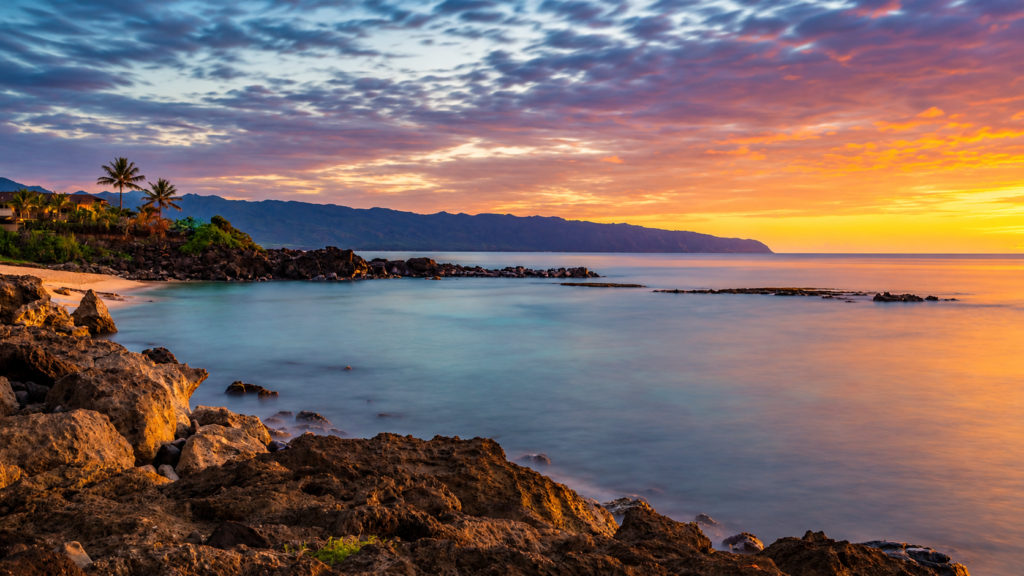
The featured image for this article was taken in Haleʻiwa on Oʻahu’s North Shore.
The area is internationally known for surfing, but the coast also includes quieter beaches, rocky shoreline, small communities and dramatic sunsets.
Ocean conditions can change quickly, especially during winter surf season, so visitors should follow local warnings and lifeguard guidance.
Hawaiʻi Island
On the Island of Hawaiʻi, volcanic landscapes reach directly toward the sea.
Hawaiʻi Volcanoes National Park extends from sea level to the summits of Kīlauea and Mauna Loa and includes rocky coastline, rainforest and important Native Hawaiian cultural landscapes. :chatgpt-content-reference{index=”7″}
Visitors should always respect closures and volcanic-hazard warnings rather than attempting to reach restricted areas.
Coastal Road Trips
Driving is one of the best ways to explore many American coastal regions.
California Highway 1, the Oregon Coast, sections of New England, the Florida Keys and the Outer Banks all lend themselves to road trips.
But distance alone can be misleading. Scenic stops, traffic, ferries, weather and road closures can dramatically extend travel times.
Build fewer stops into each day than a mapping app might suggest. Coastal trips are usually more enjoyable when there is enough time to stop at beaches, viewpoints and small communities along the way.
Beaches, Wildlife and Marine Experiences
The U.S. coast offers much more than swimming.
Depending on the region, travelers may encounter whale watching, kayaking, tide pools, seabird colonies, surfing, fishing, snorkeling or marine wildlife tours.
Wildlife should always be viewed at a responsible distance. Protected areas may establish specific rules for seals, nesting birds, sea turtles, bears or other species.
Tides and currents also deserve respect. A beach that appears calm can still have dangerous rip currents, cold water or rapidly rising tides.
Use local conditions and official warnings rather than assuming that every beach operates like a resort swimming area.
When to Visit the U.S. Coast
There is no single best season for the entire American coastline.
New England is most accessible from late spring through early autumn, while summer brings the greatest visitor numbers.
California can be visited year-round, though coastal weather varies considerably between southern and northern parts of the state.
The Pacific Northwest is usually easiest in summer, while winter storms create a very different coastal atmosphere.
Alaska’s primary visitor season is summer, when transportation and tour services are most widely available.
Hawaii is a year-round destination, but surf, rainfall and ocean conditions vary by island, coast and season.
Florida and the Gulf Coast require special attention to heat, humidity and tropical-storm season.
Choosing the Right U.S. Coast
The best region depends on what you want from the trip.
- Choose New England for rocky headlands, seafood, historic towns and classic Atlantic scenery.
- Choose the Mid-Atlantic for accessible beaches, barrier islands and trips that combine cities with the coast.
- Choose Florida and the Southeast for warm weather, long beaches, islands and subtropical landscapes.
- Choose the Gulf Coast for barrier islands, wetlands, fishing culture and warmer water.
- Choose California for dramatic Pacific road trips, surf towns and iconic coastal scenery.
- Choose the Pacific Northwest for forests, sea stacks, wild beaches and cooler weather.
- Choose Alaska for fjords, glaciers, wildlife and large-scale wilderness.
- Choose Hawaii for volcanic shores, tropical beaches, surfing and island culture.
The variety of United States coastlines makes it impossible to reduce the country to one coastal experience. Maine, Florida, California, Alaska and Hawaii feel almost like different worlds.
For regional dishes and American food traditions, read our What to Eat in the United States: A Regional Food Guide for Travelers.
For etiquette, festivals and everyday traditions, see our United States Culture and Local Customs: What Travelers Should Know.
For broader trip planning, visit our United States Travel Guide.
You can also browse additional seaside destinations through our Coastlines travel guides.