
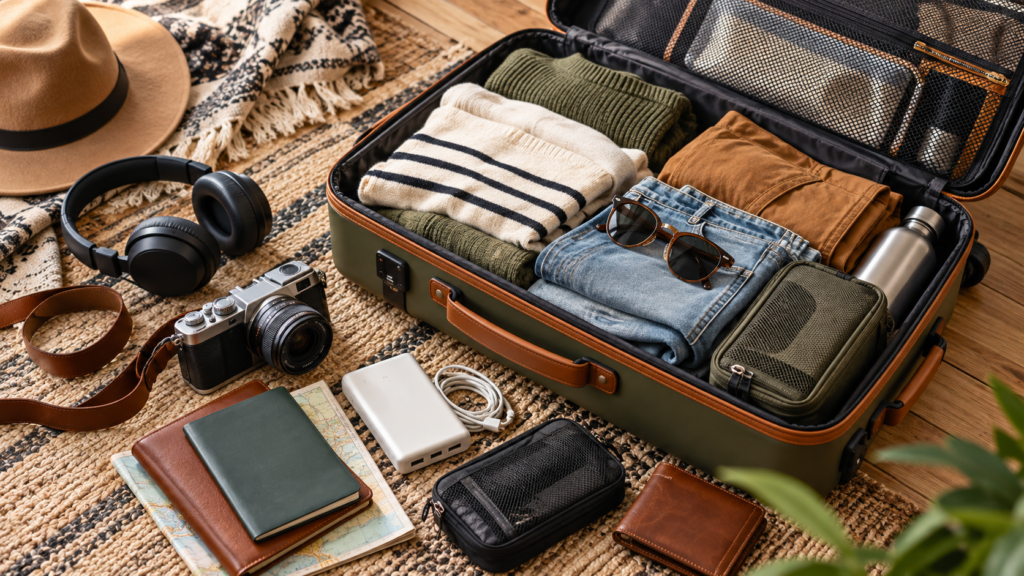
Travel gear can make a trip easier or get in the way, depending on how thoughtfully it is chosen. The right gear disappears into the background and simply works, while too much of it adds weight, cost, and things to manage. Good travel gear choices come from understanding what you actually need, not from acquiring everything a packing list suggests.
This guide covers the gear decisions that matter most: luggage, day bags, packing organizers, comfort items, security gear, power and tech accessories, and gear for specific weather or destinations. Each section focuses on the principles behind a good choice, so you can apply them to whatever you already own or are considering buying.
Specific products change quickly, and what suits one traveler may not suit another. Use this guide to think through what you need rather than as a shopping list, and check current reviews and your own trip details before buying anything new.
Decide What Gear You Actually Need
Before buying anything, think about the trips you actually take, not an idealized version of travel. A weekend city trip, a long backpacking trip, and a business trip each call for different gear, and gear bought for one type of trip often sits unused on another.
Start from your real travel pattern and build gear around it gradually. It is easier, and usually cheaper, to add a specific piece of gear once you notice a genuine gap than to buy a complete kit up front based on guesses about what you might need.
Choose the Right Luggage
Luggage is one of the few pieces of travel gear that affects nearly every trip, so it is worth choosing carefully. Consider how you travel most often: checked bags suit longer trips or when you are not watching weight closely, while carry-on-sized luggage suits shorter trips and avoids baggage handling and waiting at the carousel.
Wheels, build quality, and a size that fits common carry-on limits all matter more than brand name. Before buying, check the actual dimensions and weight limits for the airlines and trip types you use most, since allowances vary and change.
Pick a Practical Day Bag
A day bag carries what you need while out exploring, so it should be comfortable over several hours and sized for what you realistically carry, not what you might carry on a rare occasion. Consider how you will use it: a daypack, a crossbody bag, and a small backpack each suit different styles of movement and security preferences.
Look for comfortable straps, enough organization to find things quickly, and a size that does not tempt you to overpack it. A day bag that is slightly too small encourages better daily packing discipline than one with room to spare.
Use Packing Organizers Strategically
Packing cubes, compression bags, and similar organizers can make a bag easier to pack and unpack, especially for longer trips or when sharing luggage. They work best when used with a system, such as separating categories of items or days of clothing, rather than as a way to simply cram in more.
Organizers add some weight and cost, so they are most worth it if you travel often or struggle to stay organized in a single open bag. If you are unsure whether they will help, try them with items you already own before buying a dedicated set.
Choose Comfortable Travel Accessories
Comfort items, such as a neck pillow, compression socks, or an eye mask, matter most on longer journeys and can meaningfully improve how you feel on arrival. Choose items based on your own travel discomforts, since what bothers one traveler, like neck strain or dry air, may not bother another.
These items are easy to over-accumulate, since each one solves a narrow problem. Keep a short list of the comfort gear that has actually helped you before, and resist adding more unless you have a specific, repeated discomfort to solve.
Think About Security Without Overpacking
A few simple security items cover most common travel risks: a bag with a secure closure, a way to carry valuables close to your body, and a basic cable lock for luggage. These address realistic risks like pickpocketing or opportunistic theft more effectively than specialized anti-theft gear.
Elaborate security gear, such as slash-proof bags or hidden compartments throughout a bag, is rarely necessary for most travelers and can add weight and cost without a clear benefit. Simple habits, covered in the safety and insurance guide, often matter more than specialized gear.
Bring the Right Power and Charging Gear
A reliable way to charge your devices is one of the more universally useful pieces of travel gear. A multi-port charger and the right plug adapters for your destination cover most charging needs without carrying a separate charger for every device.
A portable power bank is worth carrying if you rely on your phone for navigation, translation, or boarding passes and do not want to search for outlets during a travel day. Check the destination's plug type and voltage before you go, since requirements vary by country.
Decide Which Tech Accessories Are Worth Carrying
Beyond charging gear, a small set of tech accessories can be genuinely useful: headphones, a basic phone tripod or stabilizer if you take photos seriously, and offline-capable apps set up in advance. For a broader look at which travel technology is worth using, see the travel technology guide.
Most travelers need far less tech gear than product lists suggest. Before adding a new gadget to your bag, consider whether your phone already does the job well enough, since a single capable device often replaces several specialized ones.
Prepare for Weather and Destination Conditions
Gear needs change significantly with climate and activity. A trip involving hiking, cold weather, or heavy rain calls for specific gear, such as layered clothing, a packable rain shell, or sturdy footwear, that a city trip in mild weather does not.
Research the expected conditions for your specific dates and destination before packing, rather than relying on general assumptions about a region or season. Conditions can vary significantly by location and time of year, so check current forecasts and seasonal norms close to departure.
Buy Quality Where It Matters
Not every item needs to be premium, but a few categories reward spending more: luggage that will be used repeatedly, footwear that will be worn for long days, and anything that would be costly or disruptive to replace while traveling. Cheaper versions of these items often fail at inconvenient times.
For items used rarely or for a single trip, a budget option is usually fine. Matching your spending to how often and how hard an item will be used is a more useful rule than assuming either the cheapest or most expensive option is always right.
Avoid Common Travel Gear Mistakes
The most common travel gear mistake is buying for a hypothetical trip rather than the trips you actually take, which leads to gear that sits unused at home. Overpacking organizational gear, buying specialized items for problems you do not actually have, and choosing gear based on marketing rather than your own travel pattern are close behind.
A short trial period helps avoid these mistakes: use new gear on one trip before assuming it belongs in your regular kit, and be willing to retire items that do not earn their place after a fair test. For more on packing decisions overall, see the packing guide.
Final Travel Gear Checklist
Before you buy new gear or pack for a trip, use this short checklist to review your choices.
☐ Gear needs matched to your actual travel pattern
☐ Luggage sized and suited to this specific trip
☐ Day bag comfortable and sized for daily use
☐ Packing organizers used with a clear system, if at all
☐ Comfort items limited to problems you have actually had
☐ Power adapters and charging gear checked for the destination
☐ Weather and activity-specific gear reviewed for this trip
☐ New gear trialed before being added to your regular kit
Good travel gear earns its place through repeated use, not through how complete a kit looks before you leave. Build your gear gradually around the trips you actually take, and you will end up with a kit that is lighter, more useful, and easier to manage than one assembled all at once. For more on getting to the airport and beyond, see the flights and transportation guide.