
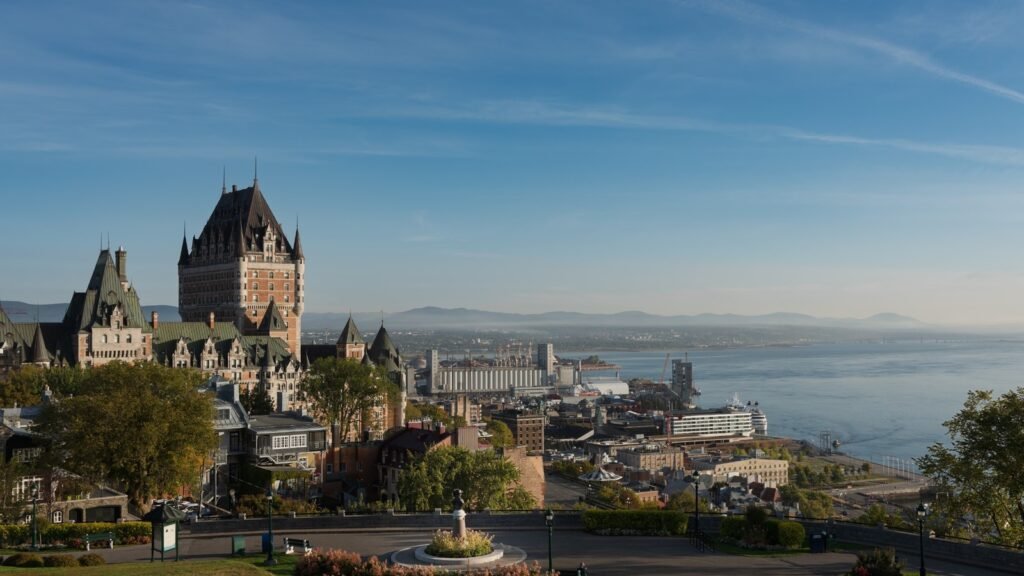
Canada culture and local customs are shaped by geography, Indigenous traditions, English- and French-speaking communities, immigration and strong regional identities. The country is enormous, and everyday life in Montreal, Toronto, Halifax, Vancouver, Calgary or a northern community can feel noticeably different.
Travelers often arrive with familiar ideas about Canadian politeness, hockey, winter and multicultural cities. Some of those impressions contain elements of truth, but they can quickly become stereotypes if they are treated as universal.
Canada is better understood as a collection of regions and communities connected by shared institutions but shaped by different histories, languages and cultural traditions.
You do not need to memorize a complicated list of etiquette rules before visiting. Courtesy, respect for personal space, awareness of local language and consideration for the communities and landscapes you are visiting will take you a long way.
Canada Culture and Local Customs: Understanding the Basics
Canadian social interactions are generally informal, but that does not mean courtesy is unimportant.
First names are commonly used in everyday situations, personal space is usually respected and brief greetings such as “hello,” “hi,” “good morning” and “thank you” are normal parts of routine interactions.
Waiting your turn matters. Queues at shops, attractions, transit stops and service counters are generally respected, and cutting ahead of others can be viewed as rude.
Canada is also culturally diverse enough that there is no single correct style of social interaction. Customs can vary by region, age, community and setting.
Indigenous Cultures and Respectful Travel
Indigenous cultures are fundamental to understanding Canada, but travelers should avoid treating Indigenous Peoples as one cultural group.
First Nations, Inuit and Métis peoples include many distinct nations and communities with their own languages, histories, territories, artistic traditions, ceremonies and relationships with the land.
The most meaningful way to learn about these cultures is through Indigenous-led experiences where community members decide how their history and traditions are shared.
These experiences may include cultural centres, walking tours, storytelling, art, food, wildlife excursions, workshops, performances and guided visits to traditional territories.
Destination Indigenous, operated by the Indigenous Tourism Association of Canada, provides a useful directory of Indigenous culture and heritage experiences across Canada.
Pow Wows and Cultural Events
Some Indigenous communities host pow wows and other cultural gatherings that welcome visitors.
If you attend, remember that the event may include ceremonial as well as social elements. Listen to the master of ceremonies, follow photography instructions and do not assume that every song, dance or activity may be photographed.
When in doubt, ask rather than treating the event as a performance staged only for tourists.
English, French and Language in Canada
English and French are Canada’s two official languages, but that does not mean every Canadian speaks both.
English is the dominant everyday language in most provinces and territories, while French is central to life in Quebec and important in Francophone and Acadian communities elsewhere in the country.
You will encounter French prominently in Quebec and in parts of New Brunswick, Ontario and other regions with established Francophone communities.
Canada is also home to numerous Indigenous languages and to communities where languages brought through immigration remain part of everyday life.
The Government of Canada provides an overview of the country’s official and Indigenous languages.
A Little French Can Help in Quebec
Visitors to Quebec’s major tourism areas can often travel successfully in English, but beginning an interaction with a simple bonjour is a respectful gesture.
Do not assume that everyone you meet wants to switch immediately to English. Allow the person you are speaking with to guide the conversation.
Greetings and Everyday Courtesy
A handshake remains common in more formal introductions, although many everyday interactions are considerably more casual.
Canadians frequently use “please,” “thank you,” “sorry” and “excuse me,” but visitors should not interpret this as a rigid social code.
Holding a door briefly for someone approaching behind you is common courtesy. So is allowing passengers to exit an elevator or transit vehicle before boarding.
Personal space is generally respected. Standing extremely close to a stranger during a conversation can feel uncomfortable unless crowded conditions make it unavoidable.
People may make brief conversation with strangers in shops, elevators or waiting areas, but this varies greatly by city and individual.
Regional Identity Matters
One of the easiest ways to misunderstand Canada is to assume the country feels culturally identical from coast to coast.
Quebec
Quebec has a strong French-language identity expressed through food, music, literature, festivals, architecture and everyday public life.
Montreal is highly international, while Quebec City and smaller towns can provide a more visibly Francophone experience.
Atlantic Canada
Newfoundland and Labrador, Nova Scotia, New Brunswick and Prince Edward Island have distinct cultural traditions shaped by coastal communities, Indigenous histories, Acadian culture, fishing, music and migration.
Even within Atlantic Canada, Newfoundland culture differs considerably from Acadian communities in New Brunswick or island life on Prince Edward Island.
The Prairies
Manitoba, Saskatchewan and Alberta combine Indigenous cultures with agricultural traditions and the influence of generations of immigrants from Europe and around the world.
Ranching, farming, rodeo traditions, Ukrainian heritage and growing multicultural cities all contribute to the region’s identity.
British Columbia
British Columbia’s identity is closely connected with the Pacific coast, mountains, outdoor recreation and the cultural diversity of cities such as Vancouver.
Indigenous cultures are highly visible in many parts of the province, including through art, museums, cultural centres and Indigenous-owned tourism experiences.
Northern Canada
Yukon, the Northwest Territories and Nunavut should not be treated simply as remote extensions of southern Canada.
Indigenous cultures, northern geography, small communities and long seasonal changes strongly shape life in the territories.
Travelers should be particularly careful not to treat northern communities as exotic attractions. Local guides and community-based tourism provide better context for understanding life in the North.
Multicultural Cities and Neighbourhoods
Immigration has profoundly shaped contemporary Canadian culture, particularly in major cities.
Toronto, Vancouver, Montreal, Calgary, Edmonton and other urban centres contain neighbourhoods, restaurants, places of worship, festivals and businesses connected with communities from around the world.
This diversity should not be treated as separate from Canadian culture. It is one of the ways modern Canadian culture is continuously changing.
A trip through Toronto’s neighbourhoods, Richmond’s Asian food scene, Montreal’s markets or Vancouver’s cultural districts can reveal as much about contemporary Canada as a museum or historical attraction.
Destination Canada itself highlights the country’s cultural diversity as an important part of travel experiences across regions such as Ontario and central Canada.
Food, Social Life and Tipping
Restaurants, cafés, breweries, markets and neighbourhood food businesses are important social spaces throughout Canada.
Dining customs are generally informal. At casual restaurants, there may be little expectation to dress up, while higher-end restaurants may have their own standards.
Tipping is customary at full-service restaurants and for several personal services. Electronic payment terminals often present suggested percentages, but the amount remains the customer’s decision unless a service charge has already been added.
Always check the bill before adding another tip, particularly for large groups where gratuity may already be included.
If you want to explore the country’s regional cuisine in more depth, see our What to Eat in Canada: A Regional Food Guide for Travelers.
Festivals, Sports and Seasonal Life
Canada’s seasons strongly influence public life.
Summer brings outdoor festivals, patios, concerts, farmers’ markets and community events, while winter creates an entirely different rhythm built around snow sports, skating, indoor gatherings and seasonal celebrations.
Hockey has an important place in Canadian popular culture, but it is not the only sport that matters. Basketball, baseball, football, soccer, lacrosse, skiing and many other sports have strong regional and community followings.
Attending a local sporting event can be an enjoyable way to experience everyday culture without needing detailed knowledge of the game beforehand.
Music and cultural festivals are equally regional. Montreal, Toronto, Calgary, Quebec City, Winnipeg, Halifax, Vancouver and smaller communities all host events that reflect local histories and populations.
Nature and Outdoor Etiquette
Canada’s landscapes are a major part of its identity, but wilderness areas should not be approached as amusement parks.
National and provincial parks may have rules concerning wildlife, camping, fires, trails, food storage, drones and access to sensitive environments.
Never feed wildlife or approach animals simply to improve a photograph. Bears, elk, moose and other animals can be dangerous even when they appear calm.
Use established trails where required, pack out your waste and follow seasonal closures.
In remote areas, preparation is part of respectful travel. Weather can change rapidly, cellular coverage may disappear and emergency services may be far away.
Photography and Respectful Travel
Canada provides almost unlimited opportunities for photography, but the usual rules of courtesy still apply.
Ask before photographing individuals at close range, particularly during Indigenous cultural events, religious ceremonies or private community gatherings.
Some museums, galleries, heritage sites and cultural centres have restrictions on photography of particular objects or exhibitions.
Private homes, farms and Indigenous cultural sites should never be entered simply because they appear interesting or picturesque.
Drone use may also be restricted in parks, urban areas and other locations. Check the rules for the specific site before flying.
Practical Cultural Etiquette for Travelers
- Wait your turn in queues and allow passengers to exit before boarding.
- Use basic greetings and courtesy in shops, hotels and restaurants.
- Begin interactions with bonjour when appropriate in French-speaking areas.
- Respect Indigenous cultural protocols and follow instructions at community events.
- Ask before taking close photographs of people.
- Check whether gratuity has already been included before adding a tip.
- Respect personal space in everyday conversations.
- Follow wildlife, trail and conservation rules in parks and natural areas.
- Remember that customs and cultural identities vary greatly between regions.
Experience Canadian Culture Beyond the Major Attractions
Understanding Canada culture and local customs before you arrive can make everyday interactions easier and help you appreciate how much the country varies from region to region.
Spend time at a neighbourhood market. Attend a community festival. Visit an Indigenous-owned cultural centre. Sit in a Montreal café, explore a fishing town in Atlantic Canada or attend a local hockey game on a winter evening.
Travel slowly enough to notice how language, food and social life change as you move from one province or territory to another.
Understanding Canada culture and local customs is ultimately about recognizing the country’s diversity rather than trying to reduce it to a few national stereotypes.
For broader trip planning, see our Canada Travel Guide: What to Know Before You Go.
You can also explore more destinations through our Culture travel guides.