
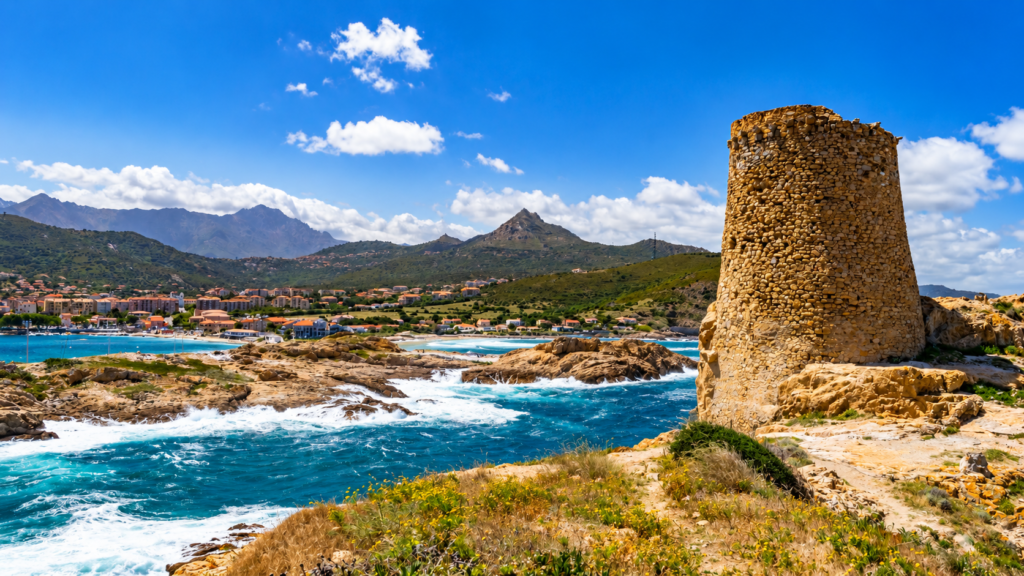
France coastlines and island destinations range from the high chalk cliffs of Normandy and windswept shores of Brittany to immense Atlantic beaches, Mediterranean resort towns and the mountainous island of Corsica.
The experience changes considerably from one region to another. Northern and western France are shaped by strong tides, Atlantic weather, fishing ports and rugged coastal landscapes. Travel south and the scenery gradually shifts toward pine-backed beaches, surf towns and eventually the warmer Mediterranean shores of Provence and the Côte d’Azur.
France’s islands add another layer. Some, such as Île de Ré and Noirmoutier, sit close to the Atlantic mainland and work well for cycling and slower coastal travel. Others, including Porquerolles and the Lérins Islands, provide Mediterranean day trips and short escapes. Corsica is large enough to be a destination in its own right.
This guide will help you compare France’s major coastal regions and islands so you can choose the places that fit the kind of trip you actually want.
France Coastlines and Island Destinations: Where to Start
There is no single French coast that works for every traveler.
The first decision is whether you want dramatic scenery, broad sandy beaches, historic seaside towns, surfing, Mediterranean swimming, island landscapes or a combination of several.
- Cliffs, historic ports and dramatic tides: Normandy
- Wild coastline, fishing towns and coastal walking: Brittany
- Long beaches, cycling islands and surf: Atlantic Coast
- Basque culture with beaches and food: Biarritz and Saint-Jean-de-Luz
- Mediterranean cities, coves and island excursions: Provence and the Côte d’Azur
- Mountains, beaches and a major island road trip: Corsica
France’s official tourism site maintains additional information on coastal destinations throughout France, which can be useful when planning around particular towns, beaches and seasons.
Northern France and Normandy
Northern France is often overlooked by travelers who associate the French coast primarily with the Mediterranean.
The English Channel coast offers large beaches, dunes, chalk cliffs, historic resorts and landscapes where weather and tides are a major part of the experience.
The Opal Coast and Le Touquet
The Côte d’Opale in northern France combines broad sandy beaches, dunes and seaside towns.
Le Touquet-Paris-Plage is one of the region’s best-known resorts, with a long beach, distinctive early-20th-century architecture, shops, restaurants and access to nearby natural areas.
This coast works well for travelers who enjoy long beach walks and sea air without needing warm Mediterranean water.
Étretat and the Alabaster Coast
Normandy’s Côte d’Albâtre is known for towering white chalk cliffs facing the English Channel.
Étretat is the most famous stop, where natural arches and dramatic cliff formations create one of France’s most recognizable coastal landscapes.
The town itself is compact, but the experience improves considerably when you walk above the cliffs rather than seeing the formations only from beach level.
Weather can change quickly, and exposed cliff paths deserve appropriate footwear and caution near edges.
Honfleur, Deauville and Trouville
Farther west, Normandy’s Côte Fleurie combines seaside resorts with historic harbour towns.
Honfleur is centred on its picturesque old harbour and narrow streets, while Deauville is associated with grand hotels, elegant villas, its famous boardwalk and a polished resort atmosphere.
Neighbouring Trouville-sur-Mer feels somewhat more connected to its fishing-port origins and provides another attractive base on the same stretch of coast.
These towns work particularly well when you want restaurants, architecture and coastal atmosphere rather than a trip focused only on swimming.
D-Day Beaches
Normandy’s landing beaches occupy a very different place in the coastal landscape.
Utah, Omaha, Gold, Juno and Sword beaches are connected with the Allied landings of June 1944 and are surrounded by museums, memorials, military cemeteries and preserved historic sites.
These are not simply scenic beach stops. Give them enough time to understand the history rather than treating them as a quick coastal photo opportunity.
Mont-Saint-Michel Bay
At Normandy’s western edge, Mont-Saint-Michel rises from an enormous tidal bay and creates one of the most distinctive coastal scenes in Europe.
The tides dramatically change the appearance of the landscape, exposing large expanses of sand before water returns around the mount.
If you want to cross sections of the bay on foot, use an organized guide. Tides, channels and quicksand make independent exploration away from established access routes unsafe.
Brittany: Rugged Shores, Fishing Ports and Islands
Brittany projects into the Atlantic at France’s northwestern corner and has one of the country’s most complex coastlines.
Rocky headlands, sandy coves, fishing ports, lighthouses, islands and strong tides make it particularly rewarding for road trips and coastal walking.
Saint-Malo and Dinard
Saint-Malo is surrounded by substantial stone walls and has a strong maritime identity.
Walking the ramparts gives you views over beaches, islands and the surrounding coast, while the old town provides restaurants and historic streets inside the walls.
Across the water, Dinard offers a contrasting Belle Époque resort atmosphere with villas, beaches and coastal promenades.
Pink Granite Coast
Northern Brittany’s Côte de Granit Rose is named for the unusual pink-toned granite formations that line sections of the shore.
The area around Perros-Guirec and Ploumanac’h is particularly rewarding for walking, with huge rounded rocks, coves and coastal paths overlooking the sea.
This is a landscape destination first. Allow enough time to walk sections of the coast rather than simply driving between viewpoints.
Western Brittany and the GR34
The GR34 coastal trail follows much of Brittany’s shore and provides access to cliffs, beaches, headlands and fishing communities.
You do not need to walk the entire route. Short sections can easily be incorporated into a road trip.
Finistère in particular feels exposed to the Atlantic, with windswept points, lighthouses and a coastline shaped by powerful weather.
Gulf of Morbihan and Belle-Île-en-Mer
Southern Brittany becomes more sheltered around the Gulf of Morbihan, where islands and peninsulas create a completely different coastal environment.
Nearby Belle-Île-en-Mer is Brittany’s largest island and combines small ports, beaches, cliffs and walking routes.
This is a good part of Brittany for travelers who want island scenery without leaving northern France for a Mediterranean destination.
Atlantic Coast: Islands, Dunes and Surf Towns
South of Brittany, France’s Atlantic Coast stretches through the Pays de la Loire and Nouvelle-Aquitaine toward the Spanish border.
The landscape changes repeatedly: salt marshes, islands, historic ports, pine forests, dunes, enormous sandy beaches and surf breaks all appear along the route.
Noirmoutier and Île d’Yeu
Off the Vendée coast, Noirmoutier and Île d’Yeu offer two different island experiences.
Noirmoutier is known for salt marshes, beaches, cycling routes and low-lying landscapes. Île d’Yeu has a more rugged coastline with cliffs, coves and small harbours.
Both encourage slower travel and work well when cycling, walking and beaches matter more than major sightseeing.
La Rochelle and Île de Ré
La Rochelle provides one of the Atlantic coast’s strongest combinations of historic city and seaside access.
Its old harbour, medieval towers and arcaded streets provide plenty to explore before crossing toward nearby Île de Ré.
Île de Ré is particularly well suited to cycling. Villages, salt marshes, beaches and relatively flat terrain make it easy to experience the island without spending the entire day in a car.
Summer traffic can be heavy, so cycling becomes not only enjoyable but practical.
Île d’Oléron
South of Île de Ré, Oléron is larger and generally feels more spread out.
Beaches, oyster-farming areas, forests and small communities make it a strong option for travelers who want several days of relaxed Atlantic exploration.
A car can be useful here, although cycling remains popular in flatter sections of the island.
Arcachon Bay and the Dune du Pilat
Southwest of Bordeaux, the Bay of Arcachon combines seaside communities, oyster villages, beaches and one of the Atlantic coast’s most striking landscapes.
The Dune du Pilat rises dramatically above the ocean and surrounding pine forest.
Arcachon itself works as a base for boat trips and coastal exploration, while nearby communities provide opportunities to experience the oyster culture associated with the bay.
Landes, Hossegor and the Surf Coast
Continue south and the Atlantic coast becomes dominated by long sandy beaches backed by dunes and pine forests.
Hossegor and surrounding communities are strongly associated with surfing, and powerful Atlantic conditions attract experienced surfers from around the world.
These beaches can look deceptively simple from shore. Currents and surf conditions demand respect, so swim in supervised areas and follow local warnings.
Biarritz and Saint-Jean-de-Luz
The French Basque coast combines Atlantic beaches with a strong regional cultural identity.
Biarritz developed as an elegant seaside resort and later became closely associated with European surf culture.
Saint-Jean-de-Luz offers a smaller historic centre and a sheltered bay, providing a different atmosphere only a short distance away.
This is one of the most rewarding French coastal regions when food, culture and beaches all matter equally.
Mediterranean France: Provence and the Côte d’Azur
France’s Mediterranean coast feels completely different from the Atlantic.
The light, vegetation, water temperature, architecture and pace of resort life change as you move through Provence toward the Côte d’Azur.
Marseille and the Calanques
Marseille combines a major Mediterranean city with one of southern France’s most dramatic natural coastal areas.
The Calanques between Marseille and Cassis are steep limestone inlets where cliffs drop into intensely blue water.
You can experience the area by hiking, boat or kayak depending on conditions and seasonal restrictions.
Summer access may be controlled because of heat and wildfire risk, so check official conditions rather than assuming trails will always be open.
Cassis
Cassis provides a much smaller coastal base east of Marseille.
The harbour, surrounding cliffs and access to nearby calanques make it attractive for travelers who want scenery without staying in a large city.
Parking can become difficult during busy periods, making train-and-bus combinations or organized transportation worth considering.
Hyères, Porquerolles and Port-Cros
Off the coast near Hyères, the Îles d’Hyères provide some of the Mediterranean’s most appealing island excursions.
Porquerolles combines beaches, vineyards, eucalyptus and pine landscapes with walking and cycling routes.
Port-Cros has a more protected natural character and is part of one of France’s national parks.
These islands are particularly enjoyable when you are willing to leave the car behind and explore more slowly.
Saint-Tropez
Saint-Tropez is internationally associated with yachts, luxury hotels and nightlife, but the old town, harbour and surrounding coastal landscape offer more than that reputation suggests.
Nearby beaches extend along the Saint-Tropez peninsula, while inland villages and vineyards provide alternatives to spending the entire visit around the harbour.
Road traffic can become extremely heavy during peak summer periods, so location and transportation planning matter here more than distance on a map may suggest.
Cannes and the Lérins Islands
Cannes is famous for its film festival and waterfront Croisette, but its nearby islands provide an easy contrast to the urban resort atmosphere.
Sainte-Marguerite and Saint-Honorat form the main Lérins Islands offshore from Cannes.
Walking paths, rocky coves, historic sites and a generally quieter environment make them useful day trips when you want a break from the mainland.
Nice, Antibes and Menton
Nice is one of the easiest Mediterranean bases for travelers who want both city life and immediate coastal access.
The Promenade des Anglais follows the Bay of Angels beside the city’s long pebble shoreline.
Antibes adds an old town, marina and peninsula scenery, while Menton near the Italian border has a more intimate scale, colourful architecture and a distinctly Mediterranean setting.
Rail connections along this part of the Côte d’Azur make it possible to explore several coastal communities without renting a car.
Corsica: France’s Major Mediterranean Island
Corsica is not simply a beach extension of mainland France.
The island combines more than 1,000 kilometres of coastline with mountains, forests, villages and a strong cultural identity. Distances can also be deceptive because mountain roads often make travel considerably slower than a map suggests.
Ajaccio and the Western Coast
Ajaccio provides a practical starting point with beaches, restaurants, museums and access to the western side of the island.
North of the city, the coastline around the Gulf of Porto becomes increasingly dramatic.
The Calanques de Piana are known for red granite formations that rise above the sea, while nearby Scandola protects an exceptional coastal and marine environment.
Calvi and the Northwest
Calvi combines a substantial bay with a historic citadel overlooking the waterfront.
The surrounding Balagne region adds villages, beaches and mountain scenery, making this one of Corsica’s strongest areas for travelers who want several different experiences from a single base.
Cap Corse
North of Bastia, the Cap Corse peninsula extends into the Mediterranean with fishing ports, beaches, hillside villages and Genoese watchtowers.
A road trip around the peninsula can be spectacular, but narrow and winding roads reward a slower schedule.
Bonifacio and Southern Corsica
Bonifacio occupies a remarkable position above pale limestone cliffs at the island’s southern tip.
The historic upper town, harbour and boat trips beneath the cliffs make it one of Corsica’s most distinctive coastal destinations.
Farther northeast, the Porto-Vecchio area provides access to famous beaches such as Palombaggia and Santa Giulia.
These beaches can become extremely busy in summer, so early starts or shoulder-season travel can make a noticeable difference.
Practical Coastal Travel Tips
Atlantic and Mediterranean Conditions Are Different
Do not approach every French beach with the same expectations.
The Atlantic and English Channel coasts can experience significant tides, waves and currents. The Mediterranean is generally calmer but can still experience strong winds and sudden changes in conditions.
Always follow local flags, lifeguard instructions and posted warnings.
Understand the Tides
Tides play an especially important role in Normandy and Brittany.
A beach, causeway or rocky area that is easily accessible at low tide may look completely different several hours later.
Check local tide information before walking far across exposed sand, exploring tidal islands or leaving belongings close to the waterline.
You Do Not Always Need a Car
A rental car is extremely useful for Brittany, rural Normandy, Corsica and less-connected sections of the Atlantic coast.
It is less important along parts of the Côte d’Azur, where trains connect cities including Cannes, Antibes, Nice, Monaco and Menton.
Choose transportation according to the region rather than assuming every coastal trip requires driving.
Reserve Island Transportation During Busy Periods
Island ferries and boat services vary by route and season.
For Corsica, transporting a rental car or your own vehicle by ferry requires more planning than taking a short passenger boat to an island such as Porquerolles or Sainte-Marguerite.
During peak summer weeks, popular departures can sell out or become extremely busy.
Summer Changes the Coast
July and August bring the greatest demand to many French coastal destinations.
Parking, accommodation and restaurants may require more planning, particularly in Corsica, the Côte d’Azur and popular Atlantic islands.
Late spring and early autumn can be excellent for walking, sightseeing and road trips, although water temperatures, ferry frequency and seasonal businesses vary considerably by region.
Stay Longer in Fewer Places
France has far too much coastline to experience effectively by changing hotels every night.
Choose a few bases and explore surrounding towns, islands and beaches from them.
This is particularly important in Corsica and Brittany, where winding roads and indirect routes can make journeys longer than expected.
Connect the Coast With Regional Food
French coastal travel becomes more interesting when food is treated as part of the geography.
Normandy brings dairy products, cider and seafood. Brittany adds oysters, crêpes and salted butter. The Atlantic coast is closely connected with oyster farming and fishing, while Provence and the Côte d’Azur introduce olive oil, Mediterranean vegetables and southern seafood traditions.
Corsica adds its own cheeses, charcuterie, chestnut products and wines.
For more regional ideas, see our guide to what to eat in France.
You may also want to read our France culture and local customs guide to better understand the regional identities behind these coastal destinations.
Which French Coast or Island Fits Your Trip?
Understanding France coastlines and island destinations is easier when you match the region to your priorities rather than searching for one universal “best” coast.
Normandy works particularly well for history, dramatic cliffs, elegant seaside towns and tidal landscapes.
Brittany suits travelers who enjoy rugged scenery, walking, fishing villages, lighthouses and road trips.
The Atlantic Coast is a strong choice for long beaches, surfing, cycling, islands and relaxed seaside communities.
The French Basque Coast combines beaches with distinctive food and regional culture.
Provence and the Côte d’Azur provide Mediterranean water, established seaside towns, cultural attractions and easy island excursions.
Corsica deserves consideration as a complete destination rather than a short beach add-on, particularly if you want mountains, beaches, road trips and a strong island identity in the same journey.
The strongest coastal trips usually come from slowing down enough to experience both the landscape and the communities that developed around it.
For broader trip-planning information, see our France Travel Guide: What to Know Before You Go.
You can also explore more seaside destinations in our Coastlines travel guides.