
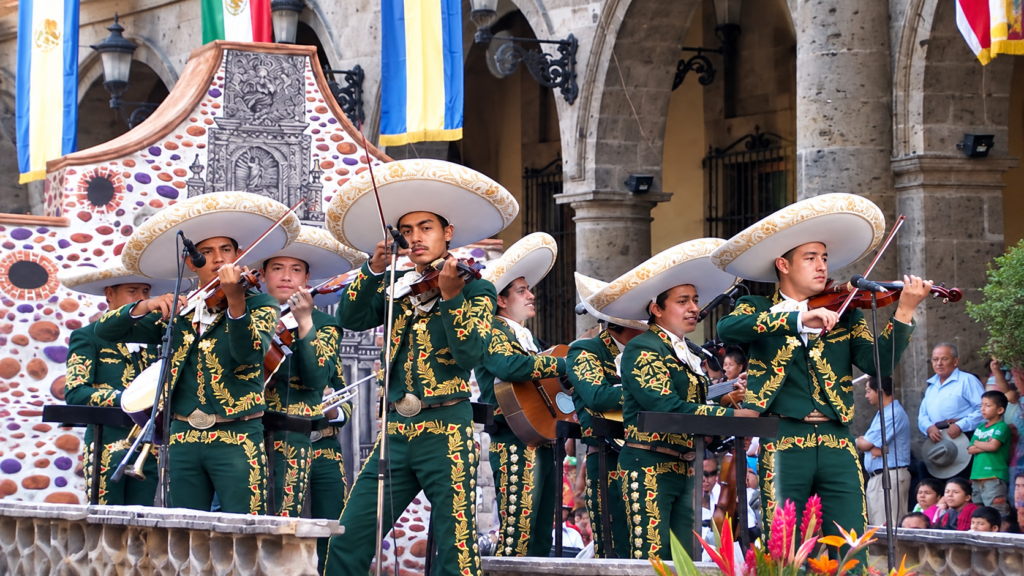
Mexico is a country of enormous cultural variety. Customs can change considerably between Mexico City, Guadalajara, Oaxaca, Yucatán, northern Mexico, Indigenous communities and coastal regions, so travelers should be cautious about treating any single tradition as universally Mexican.
At the same time, a few habits can make travel noticeably easier. Polite greetings matter, family and community remain important parts of social life, food is often closely connected to regional identity, and religious and cultural traditions continue to shape festivals and everyday life.
Understanding Mexico culture and local customs does not mean memorizing a complicated set of rules. A few words of Spanish, respectful behaviour and a willingness to observe how local people interact will take you a long way.
Mexico Culture and Local Customs: What Travelers Should Know
Mexico’s culture reflects Indigenous civilizations, Spanish colonial history, regional traditions, migration and centuries of cultural exchange.
That diversity is visible in language, architecture, music, food, religious practices, clothing, festivals and everyday social customs.
Travelers should therefore think of Mexican culture as regional rather than uniform. Traditions that are central to life in Oaxaca may be less prominent in Monterrey, while customs in Yucatán can differ noticeably from those in central Mexico.
The most useful approach is to be polite, remain curious and avoid assuming that customs seen in one destination apply everywhere else.
Greetings, Personal Space and Everyday Courtesy
A simple greeting is an important part of polite interaction in Mexico.
When entering a small shop, restaurant, hotel desk or other personal interaction, beginning with buenos días, buenas tardes or buenas noches can make the exchange feel much more courteous.
Por favor and gracias are equally useful and worth using frequently.
Handshakes are common in more formal situations. Friends and relatives may greet one another with hugs or a cheek kiss, but travelers do not need to initiate this. Follow the lead of the person you are meeting.
Titles such as señor and señora can also be useful when speaking respectfully with someone you do not know.
Language and Communication
Spanish is the language travelers will encounter most frequently, but Mexico is linguistically far more diverse than this suggests.
Mexico’s National Institute of Indigenous Languages recognizes 68 Indigenous language groups and hundreds of linguistic variants. Languages including Nahuatl, Maya, Mixtec, Zapotec, Tseltal and Tsotsil continue to be spoken by communities across the country.
English is common in many major tourist areas, international hotels and tourism businesses, but it should not be assumed everywhere.
Learning a few Spanish phrases is worthwhile:
- Buenos días – Good morning
- Buenas tardes – Good afternoon
- Por favor – Please
- Gracias – Thank you
- Disculpe – Excuse me
- ¿Cuánto cuesta? – How much does it cost?
- La cuenta, por favor – The bill, please
Even imperfect Spanish is often useful because it signals an effort to communicate respectfully.
Family, Social Life and Time
Family gatherings, meals and community events are important parts of social life for many Mexicans, although lifestyles vary greatly between individuals and regions.
Meals can be social occasions rather than simply functional stops during the day. In restaurants, travelers may notice that people often remain at the table talking after eating rather than leaving immediately.
Social schedules can sometimes feel less rushed than travelers from more time-conscious cultures expect, but this should not be interpreted as a universal disregard for punctuality.
Flights, buses, tours, reservations and professional appointments should still be treated as scheduled commitments. If you have a fixed departure time, arrive accordingly.
When invited into someone’s home, following the host’s lead is usually the simplest rule. A small gift such as flowers, sweets or something from your home region can be a thoughtful gesture, although it is not obligatory.
Dining Customs and Tipping
Eating is one of the best ways to experience Mexican regional culture, and dining customs are generally straightforward for travelers.
At a restaurant, you may need to ask for the bill rather than expecting it to appear immediately. Saying la cuenta, por favor is sufficient.
Tipping is common in restaurants and tourism-related services, but it is important to distinguish customary practice from a legal requirement.
Mexico’s Federal Consumer Protection Agency, Profeco, states that tipping is voluntary. Restaurants and other businesses cannot require a particular tip or add one without the customer’s consent.
Always check the bill before adding a gratuity so that you understand exactly what has been charged.
For regional dishes, markets and foods worth trying around the country, continue with our What to Eat in Mexico: A Regional Food Guide for Travelers.
Markets, Shopping and Bargaining
Traditional markets are excellent places to experience local food, crafts and everyday life, but shopping customs vary according to the type of market.
Prices in supermarkets, established stores and most formal shops are fixed.
Some artisan markets and informal stalls may allow polite negotiation, particularly when buying several items, but bargaining should not automatically be treated as a contest to obtain the lowest possible price.
Handmade textiles, pottery, carvings and other crafts may represent hours or days of skilled work. If a price seems reasonable for an item you value, paying it directly can be the more respectful choice.
Ask before photographing vendors or artisans at close range, especially when the person rather than the merchandise is the primary subject of your photograph.
Religion, Churches and Sacred Spaces
Churches, cathedrals, shrines and religious festivals are prominent parts of Mexico’s cultural landscape.
Many historic churches are both architectural attractions and active places of worship. Visitors should remember that people may be attending Mass, praying, participating in baptisms, weddings or funerals while tourists are visiting.
Dress reasonably, keep voices low and avoid walking directly through ceremonies or worshippers who are praying.
Mexico’s Secretaría de Cultura advises visitors to respect places of worship, remain quiet around worshippers and avoid flash photography where photography is permitted because intense light can damage artworks.
Photography restrictions differ by site. Look for signs or ask before taking pictures.
Mariachi and Mexico’s Musical Traditions
Mariachi is one of Mexico’s most internationally recognizable musical traditions, but it is much more than entertainment created for tourists.
UNESCO inscribed Mariachi, string music, song and trumpet on the Representative List of the Intangible Cultural Heritage of Humanity in 2011.
UNESCO describes mariachi as a fundamental element of Mexican culture. Traditional ensembles use string instruments, while modern groups commonly include violins, trumpets, vihuela and guitarrón.
The tradition is particularly associated with western Mexico and Jalisco, although mariachi is now performed throughout Mexico and internationally.
Mariachi musicians perform at festivals, restaurants, plazas, weddings, family celebrations and other public and private occasions.
If musicians are performing commercially and you request a particular song, ask the price before the performance begins so everyone understands the arrangement.
Día de los Muertos
Día de los Muertos, or Day of the Dead, is among Mexico’s best-known traditions, but travelers should understand its meaning before treating it simply as a colourful festival.
UNESCO’s Indigenous festivity dedicated to the dead describes the tradition as a period when families commemorate the temporary return of deceased relatives and loved ones.
Observances occur around the end of October and beginning of November and may include family altars, flowers, candles, food and cemetery visits.
Traditions differ significantly between communities. Some celebrations are public and welcoming to visitors, while other observances are personal or family-centred.
Do not touch offerings or objects on an altar unless invited to do so. In cemeteries, avoid intrusive close-up photography of grieving or commemorating families without permission.
Approaching the tradition as a living cultural practice rather than simply a photographic opportunity produces a much more meaningful experience.
Festivals, Holidays and Public Celebrations
Mexico’s calendar is filled with civic, religious, regional and community celebrations.
Independence celebrations peak around the evening of September 15 and September 16. Christmas traditions extend through December and into January, while Semana Santa can bring major religious processions and holiday travel around Easter.
Other festivals are intensely regional.
Guadalajara is closely associated with mariachi and charrería, Oaxaca is known for the Guelaguetza, Veracruz has major carnival traditions, and towns throughout the country celebrate patron saints and local anniversaries in different ways.
Festivals can affect hotel availability, traffic, transportation and opening hours, so travelers visiting during a major celebration should plan ahead.
At the same time, local festivities can provide some of the most memorable cultural experiences of a trip.
Indigenous Cultures and Regional Identity
Mexico’s Indigenous communities are not a single cultural group.
The country contains a remarkable range of peoples, languages, traditions and regional identities, including Maya, Nahua, Zapotec, Mixtec, Purépecha, Otomí, Totonac and many others.
Mexico’s National Institute of Indigenous Languages reports 68 Indigenous language groups with 364 linguistic variants.
Travelers may encounter Indigenous languages, traditional clothing, crafts, ceremonies and food traditions, particularly in states such as Oaxaca, Chiapas, Yucatán, Puebla, Guerrero and Veracruz.
These traditions should not be treated as performances that exist solely for tourism. Many are expressions of living communities and identities.
When visiting Indigenous communities, follow locally established rules for photography, ceremonies, sacred areas and community spaces. If a guide asks visitors not to enter or photograph somewhere, respect the restriction.
Photography and Respectful Travel
Photography is one area where a little awareness makes a substantial difference.
Mexico’s Secretaría de Relaciones Exteriores recommends requesting permission before photographing people and respecting restrictions at places such as religious sites and other sensitive locations.
For ordinary landscapes, streets and monuments, photography is usually straightforward. The situation changes when a specific person becomes the subject.
A market vendor, Indigenous resident, musician, child or worshipper should not automatically be treated as a tourist attraction simply because the setting is visually interesting.
A friendly gesture or a simple ¿Puedo tomar una foto? — “May I take a photo?” — can avoid misunderstandings.
Also pay attention to rules concerning tripods, drones and professional photography, which may differ from ordinary handheld tourist photography.
Public Behaviour and Everyday Etiquette
Travelers generally do not need to radically change their behaviour in Mexico, but courtesy matters.
Avoid assuming that everyone working in tourism speaks English. Begin politely and ask rather than demand.
Do not make jokes about stereotypes, drug violence or immigration when speaking with people you have just met. Mexico is culturally and geographically complex, and reducing the country to a few international headlines can come across as dismissive.
Similarly, avoid comparing every Mexican custom with how something is done “back home.” Asking how something works locally is usually more productive.
Queues, transportation etiquette and levels of formality may vary by city and situation. Watch what other people are doing and adapt when appropriate.
Regional Differences Across Mexico
One of the most important things travelers can understand about Mexico culture and local customs is that the country does not have one uniform social personality.
Exploring Mexico culture and local customs region by region reveals how diverse the country really is.
Mexico City is one of the world’s largest metropolitan areas and has its own fast-moving urban culture. Guadalajara has strong connections with traditions associated with Jalisco, including mariachi and charrería. Oaxaca contains extraordinary Indigenous and regional diversity. Yucatán has distinctive Maya influences, food and linguistic traditions.
Northern cities such as Monterrey have histories and cultural influences that differ again, while coastal regions have been shaped by port activity, tourism and maritime traditions.
Even vocabulary, food and social habits can change as you move between states.
Rather than arriving with a fixed idea of what Mexico is supposed to look or feel like, allow each destination to reveal its own character.
How to Be a Respectful Traveler in Mexico
Most cultural etiquette in Mexico comes down to the same habits that make travel work almost anywhere: greet people, ask permission, listen carefully and remember that you are visiting places where people live and work.
- Use a greeting before asking a question or making a request.
- Learn a few basic Spanish phrases.
- Ask permission before taking close-up photographs of people.
- Respect churches, cemeteries, ceremonies and sacred spaces.
- Remember that Indigenous cultures are living communities, not tourist displays.
- Check restaurant bills and remember that tips are voluntary.
- Do not assume bargaining is appropriate everywhere.
- Observe local customs rather than expecting every region to behave the same way.
- Be especially considerate during religious or family celebrations.
Learning about Mexico culture and local customs becomes much more rewarding when travelers move beyond stereotypes. Mariachi in Guadalajara, Maya traditions in Yucatán, markets in Oaxaca, neighbourhood life in Mexico City and regional celebrations across the country all reveal different parts of Mexican identity.
Understanding those differences is the key to appreciating Mexico culture and local customs rather than reducing them to a checklist of tourist experiences.
For regional dishes and dining traditions, continue with our What to Eat in Mexico: A Regional Food Guide for Travelers.
For beaches, islands and coastal destinations, explore our Mexico Coastlines: Pacific, Caribbean and Gulf Shores.
For broader trip planning, visit our Mexico Travel Guide.
For more practical trip-planning information, explore our Travel Tips & Resources.