
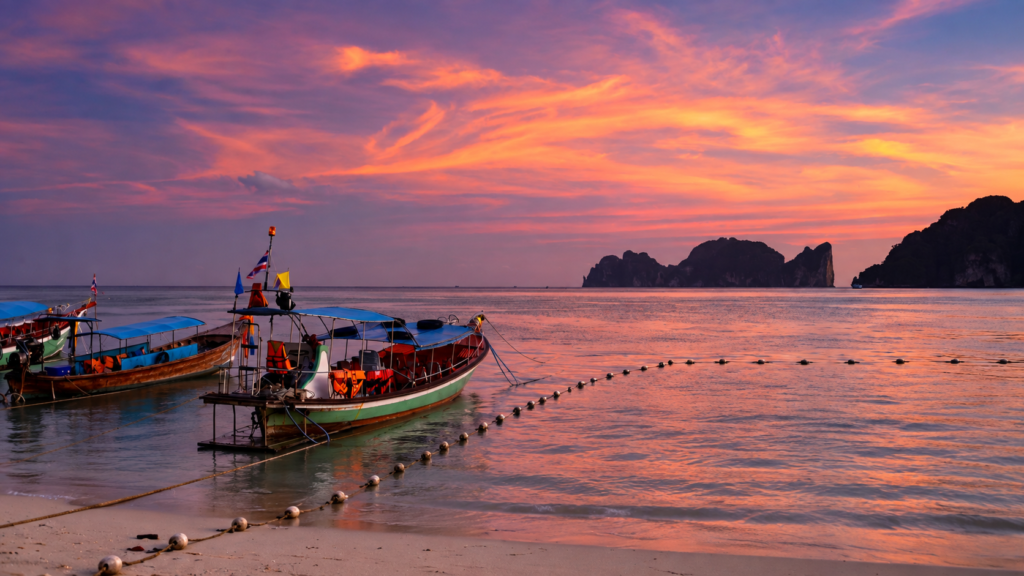
Thailand coastlines and island destinations range from dramatic limestone cliffs and turquoise bays to long sandy beaches, coral reefs, fishing communities and tropical islands covered in forest.
The country’s two major coastal regions also offer noticeably different experiences. The Andaman Sea side includes Phuket, Krabi, Koh Phi Phi and Koh Lanta, while the Gulf of Thailand is home to islands such as Koh Samui, Koh Phangan and Koh Tao.
Some destinations provide extensive resorts, restaurants and nightlife. Others are better suited to diving, kayaking, quiet beaches or slower island travel. Weather patterns also vary between the two coasts, which means choosing where to go can depend as much on the time of year as on the scenery.
This guide will help you compare Thailand’s major coastal regions, islands and beach destinations so you can choose the part of the country that best matches the kind of seaside trip you want.
Thailand Coastlines and Island Destinations: Where to Start
Thailand has enough coastline and islands that trying to see everything in one trip usually creates more transportation than relaxation.
- Large island with beaches and extensive services: Phuket.
- Limestone cliffs and spectacular island scenery: Krabi and Koh Phi Phi.
- Relaxed island with long beaches: Koh Lanta.
- Resorts, restaurants and broad activity choices: Koh Samui.
- Beaches combined with nightlife and quieter areas: Koh Phangan.
- Scuba diving and snorkelling: Koh Tao.
- Forested islands and quieter beaches: Koh Chang, Koh Mak and Koh Kood.
- Mainland beach escape: Hua Hin, Cha-am and other coastal towns.
The Tourism Authority of Thailand provides destination information for the country’s southern beaches and islands, which is useful when comparing regions and planning connections.
The Andaman Coast
Thailand’s Andaman coast faces west toward the Indian Ocean and contains some of the country’s most recognizable tropical scenery.
Towering limestone formations, clear water, islands, sea caves and sheltered beaches make Phuket, Phang Nga and Krabi particularly popular with first-time visitors.
Phuket
Phuket is Thailand’s largest island and one of its most developed beach destinations.
Patong is known for nightlife and a highly developed tourism scene, while Kata, Karon, Kamala, Nai Yang and other beaches provide different combinations of resorts, restaurants and atmosphere.
The northern part of the island generally feels quieter than the busiest southern and western resort zones.
Phuket is also useful as a transportation hub. Its airport and extensive tour infrastructure make it relatively easy to combine the island with Phang Nga Bay, the Phi Phi Islands, Krabi or smaller Andaman destinations.
Do not spend the entire visit thinking of Phuket only as a beach resort. Phuket Old Town adds historic architecture, markets, restaurants and cultural heritage to the experience.
Phang Nga and the Similan Islands
North of Phuket, Phang Nga combines mainland coast, forested landscapes and offshore islands.
Phang Nga Bay is particularly famous for steep limestone formations rising from sheltered water. Boat and kayak trips explore coastal landscapes that feel very different from a conventional beach day.
Farther offshore, the Similan Islands are internationally known for clear water, coral reefs and diving. Access is managed seasonally to protect the marine environment, so travelers should verify current national-park opening dates before planning a trip.
Krabi and Railay
Krabi provides one of the strongest combinations of beach scenery, limestone cliffs and island excursions in southern Thailand.
Ao Nang is the area’s main tourism base, with accommodation, restaurants and boat connections to surrounding beaches and islands.
Railay is surrounded by dramatic limestone formations and is reached by boat rather than ordinary road access. The cliffs have also made the area internationally known for rock climbing.
Koh Phi Phi
The Phi Phi Islands offer some of Thailand’s most dramatic scenery, where steep limestone cliffs surround brilliant blue-green water.
Koh Phi Phi Don is the inhabited centre of the islands, while smaller surrounding islands and bays are visited on boat excursions.
The scenery attracts large numbers of visitors, so travelers expecting complete solitude should choose accommodation and excursions carefully.
Snorkelling and diving are major activities, but sensitive marine areas should be treated as protected environments rather than simply tourist attractions.
Koh Lanta
Koh Lanta offers a noticeably different atmosphere from Phuket or central Koh Phi Phi.
The island has a long western coastline with several beaches and enough restaurants, accommodation and services to make travel straightforward without feeling as intensely developed as Thailand’s busiest resorts.
Koh Lanta works particularly well for travelers looking for longer beach stays, families, couples and visitors who want access to diving or snorkelling without centring the trip on nightlife.
Smaller islands farther south provide increasingly quiet coastal experiences, although transportation and services become more seasonal.
The Gulf of Thailand
The Gulf of Thailand offers a second major island region with its own weather patterns, landscapes and travel routes.
Koh Samui, Koh Phangan and Koh Tao form a popular island group in Surat Thani province and can be combined relatively easily by ferry.
Koh Samui
Koh Samui provides the broadest range of services in the Gulf islands.
Chaweng and Lamai are among its best-known beaches, while other parts of the island provide quieter resorts, smaller communities and a slower atmosphere.
The island also has restaurants, spas, markets, waterfalls, temples and numerous activities, making it suitable for travelers who want a beach holiday without giving up extensive amenities.
Nearby Mu Ko Ang Thong Marine National Park provides a very different landscape of forested islands, cliffs and sheltered water and is commonly visited on boat and kayaking trips.
Koh Phangan
Koh Phangan is internationally associated with the Full Moon Party, but treating the entire island as a nightlife destination misses much of its character.
Other parts of the island contain quieter beaches, wellness retreats, villages and forested interior landscapes.
Travelers who are not interested in major party events can still enjoy Koh Phangan by choosing their location and travel dates carefully.
Koh Tao
Koh Tao is particularly well known for scuba diving and snorkelling.
Its small size, numerous bays and extensive dive industry attract both beginning divers and experienced visitors.
Non-divers can explore beaches, viewpoints and nearby Koh Nang Yuan, but much of the island’s tourism identity remains closely connected with the surrounding sea.
Marine environments are fragile. Avoid touching coral or wildlife while snorkelling and diving, and choose operators that demonstrate responsible practices.
Thailand’s Eastern Gulf Islands
Travelers looking beyond the famous southern islands should also consider Thailand’s eastern Gulf coast near Cambodia.
Koh Chang is the largest and most developed island in this region, with forested mountains, waterfalls, villages and numerous beaches.
Nearby Koh Mak is smaller and generally quieter, while Koh Kood is known for clear water, beaches and a more relaxed resort environment.
These islands can appeal to travelers who want tropical scenery without automatically following the Phuket-Krabi-Samui route.
Because weather and transportation patterns can differ from southern Thailand, check seasonal ferry schedules before building a multi-island itinerary.
Mainland Beaches and Seaside Towns
An island is not required for a good Thai beach trip.
Hua Hin and Cha-am
Hua Hin and neighbouring Cha-am are relatively convenient coastal destinations from Bangkok.
Hua Hin combines a long beach with restaurants, markets, accommodation and an established seaside-town atmosphere.
It is a practical option for travelers who want several days by the sea without adding domestic flights or complicated island transfers.
Chumphon and Khanom
Less internationally famous mainland destinations can provide a quieter coastal experience.
Chumphon also serves as an important gateway toward Koh Tao, while areas farther south contain long beaches and smaller communities that receive fewer international visitors.
Mainland travel can work especially well for travelers who prefer road or rail journeys over repeated ferry transfers.
Marine Parks and Protected Islands
Some of Thailand’s most spectacular coastal scenery lies within national parks and marine protected areas.
The Similan Islands, Mu Ko Lanta, Mu Ko Ang Thong and other protected areas contain coral reefs, islands, forest, beaches and marine habitats that require more careful management than ordinary resort zones.
Closures may occur seasonally or temporarily because of weather, conservation needs or safety conditions.
Never assume that an island or famous beach shown in an older travel guide will automatically be open when you arrive. Check current national-park and transportation information shortly before your trip.
Follow rules concerning swimming areas, coral reefs, wildlife, waste and restricted zones. Taking coral, shells or other natural materials from protected locations can damage ecosystems even when each individual souvenir seems insignificant.
Weather and the Best Coast for Your Travel Dates
Thailand’s beach weather cannot be summarized by one nationwide dry season.
The Andaman Sea and Gulf of Thailand experience different rainfall and wind patterns, which is one reason an island that works well during one part of the year may not be the best choice several months later.
The Andaman coast is generally most popular during the drier months toward the end and beginning of the year, while Gulf islands can follow a somewhat different seasonal pattern.
Weather still varies from year to year, and tropical rain does not necessarily mean an entire day will be lost.
More important for island-hopping is the effect that rough seas can have on ferries, small boats, diving trips and marine-park access.
Check conditions for the specific coast you plan to visit rather than relying on a general forecast for Thailand.
Swimming, Snorkelling and Diving
Beautiful tropical water does not mean conditions are always safe.
Pay attention to warning flags, local advice, currents, waves and weather conditions. A calm-looking beach can change quickly during rough weather.
For snorkelling, avoid standing on coral and do not chase, feed or handle marine life.
Scuba divers should use established operators and verify that instructors and guides hold appropriate certification.
Koh Tao, the Similan Islands, areas around Koh Lanta and numerous other islands provide excellent underwater experiences, but healthy reefs depend on responsible visitor behavior.
Island-Hopping and Transportation
The easiest Thai island itineraries usually stay within one geographic region.
Phuket, Krabi, Koh Phi Phi and Koh Lanta can form a logical Andaman route, while Koh Samui, Koh Phangan and Koh Tao naturally fit together in the Gulf.
Trying to combine both coasts during a short trip can consume considerable time in transfers.
Ferry routes and frequency vary seasonally, particularly between smaller islands. Weather can also cause delays or cancellations.
If an international flight depends on a boat arriving on schedule, build in extra time rather than planning the connection too tightly.
Phuket and Koh Samui have airports, while many smaller islands require a combination of road and ferry travel. This difference can significantly affect how practical a destination is for a short trip.
Choosing the Right Thailand Coast or Island
The most famous destination is not automatically the right one.
Choose Phuket if you want extensive infrastructure and easy air access. Krabi works particularly well for dramatic limestone scenery and boat excursions, while Koh Lanta suits travelers who want a more relaxed island base.
Koh Samui offers a wide variety of resorts and activities. Koh Phangan combines nightlife with quieter beach areas, and Koh Tao is particularly appealing to divers and snorkellers.
The eastern Gulf islands are worth considering for travelers looking for forested landscapes and a route that feels different from the most heavily promoted southern destinations.
Mainland beaches such as Hua Hin can also make more sense when simplicity and easy transportation matter more than the idea of staying on an island.
Experience Thailand Beyond the Beach
The sea may bring you to Thailand’s coast, but the most memorable trips usually include more than swimming and sunbathing.
Visit a morning market. Walk through an old town or fishing community. Take a boat through limestone scenery. Eat southern food near the coast and notice how it differs from dishes in Bangkok or Chiang Mai.
Leave enough time to experience an island rather than treating every destination as another stop on a checklist.
For regional dishes, seafood, street markets and dining advice, read our What to Eat in Thailand: A Regional Food Guide for Travelers.
For etiquette, festivals and everyday traditions, see our Thailand Culture and Local Customs: What Travelers Should Know.
For broader trip planning, visit our Thailand Travel Guide: What to Know Before You Go.
You can also browse additional seaside destinations through our Coastlines travel guides.
The variety of Thailand coastlines and island destinations means there is little reason to rush through several regions simply to collect island names. Choose the coast that works with your travel dates and interests, then give yourself enough time to experience its beaches, communities, food and marine landscapes.