
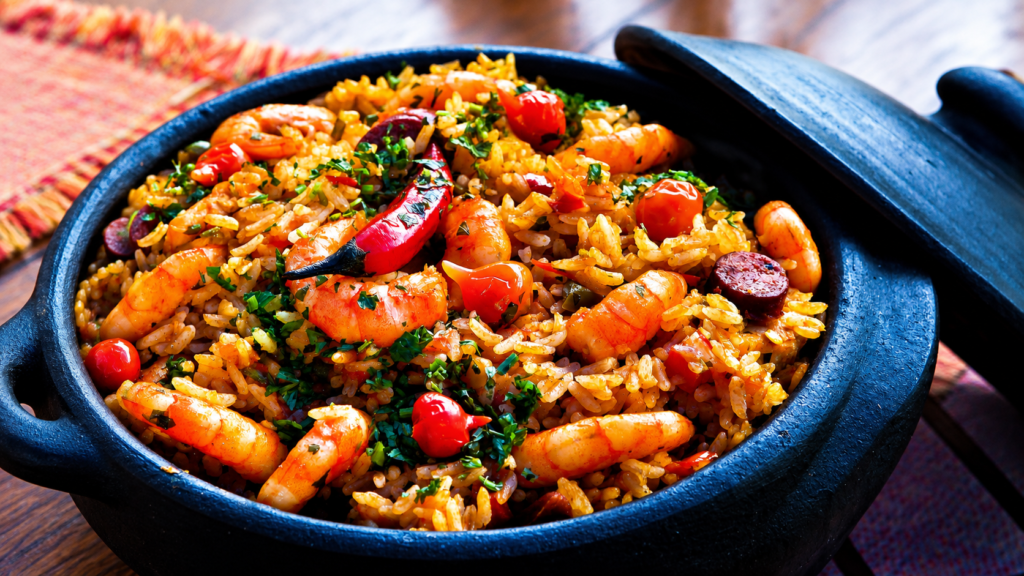
Knowing what to eat in Spain means looking beyond paella, tapas and sangria. Spanish cuisine is highly regional, with ingredients, dishes and eating traditions changing considerably as you travel across the country.
What you eat in Madrid can be very different from what you find in Valencia, Galicia, Andalusia, Catalonia, Asturias or the Basque Country. Coastal regions draw heavily on fish and seafood, while inland areas are known for roasts, stews, cured meats, cheeses and other regional specialties.
This guide introduces some of Spain’s most important regional foods, everyday dishes and dining customs so travelers can approach Spanish food with more confidence and understand where particular specialties belong.
Think Regionally
One of the most useful things to understand about Spanish food is that there is no single cuisine that represents the entire country.
Spain’s geography, climate, agriculture and regional histories have created strong local food traditions. Rice dishes dominate parts of Valencia, seafood is fundamental in Galicia, pintxos are closely associated with the Basque Country, olive oil shapes Andalusian cooking and hearty bean dishes are important in the north.
Instead of arriving with one universal checklist of Spanish dishes, ask what the city or region you are visiting is particularly known for.
That approach usually leads to a much more interesting meal than repeatedly ordering the same famous dishes in every destination.
Travelers who want to explore individual regional cuisines in greater detail can also consult Spain’s official tourism guide to regional cuisine.
Regional Food Highlights
Madrid and Central Spain
Madrid draws food traditions from throughout Spain, but the capital also has several dishes and eating habits closely associated with the city.
Foods worth looking for include:
- Cocido madrileño — a substantial chickpea-based stew traditionally served with meat and vegetables
- Callos a la madrileña — Madrid-style tripe stew
- Bocadillo de calamares — a simple fried calamari sandwich strongly associated with central Madrid
- Tortilla española — potato and egg omelette found throughout Spain and widely served in Madrid bars
- Churros and porras — fried dough commonly eaten with coffee or thick hot chocolate
Madrid is also one of the easiest places to sample food from other Spanish regions because restaurants specializing in Basque, Galician, Andalusian, Catalan and other regional cuisines can be found throughout the city.
Catalonia and Barcelona
Catalan cuisine reflects both Mediterranean and inland influences, and the food changes noticeably between Barcelona, the Costa Brava, Tarragona and the mountain regions.
Look for foods such as:
- Pa amb tomàquet — bread rubbed with tomato and typically finished with olive oil and salt
- Escalivada — roasted vegetables such as peppers, aubergine and onions
- Botifarra — Catalan sausage served in several forms
- Suquet de peix — a traditional fish and seafood stew associated with coastal Catalonia
- Calçots — a type of spring onion traditionally grilled and particularly associated with seasonal gatherings in Catalonia
- Crema catalana — a custard dessert with a caramelized sugar topping
Barcelona has an enormous restaurant scene, but do not assume that everything marketed as “Spanish food” in the busiest visitor areas represents Catalan cuisine.
Seek out regional dishes and seasonal specialties rather than using tapas alone as your definition of eating in Barcelona.
Valencia
Valencia is one of Spain’s great rice regions and the birthplace of paella.
Traditional Valencian paella is not simply a generic combination of rice and seafood. One classic preparation uses rice with chicken, rabbit, green beans and garrofó, a local bean, although other regional rice dishes use seafood and many different ingredients.
Foods and drinks worth seeking out include:
- Paella Valenciana
- Arroz a banda — rice traditionally cooked with fish stock
- Fideuà — a dish related to paella but made with noodles rather than rice
- All i pebre — a traditional Valencian preparation particularly associated with eel
- Horchata de chufa — a sweet drink made from tiger nuts
If paella matters to you, Valencia is the place to take it seriously. Look for restaurants that specialize in rice rather than assuming that every restaurant displaying photographs of paella offers the same experience.
The Basque Country
The Basque Country has one of Spain’s strongest food identities, combining seafood, mountain ingredients, traditional cooking and an influential modern restaurant culture.
Pintxos are particularly important to the visitor experience.
These small bites are displayed or prepared in bars and can range from simple combinations on bread to elaborate miniature dishes.
Other foods to look for include:
- Bacalao al pil-pil — cod prepared with olive oil, garlic and a characteristic emulsified sauce
- Marmitako — a fishermen’s stew traditionally made with tuna, potatoes and vegetables
- Kokotxas — a delicacy prepared from the fleshy underside of hake or cod
- Txuletón — a large grilled beef chop
- Txakoli — a regional wine often associated with coastal Basque areas
In San Sebastián and Bilbao, moving between several pintxos bars rather than staying in one place all evening can be part of the experience.
Do not feel that you need to order every attractive pintxo in the first bar you enter. Have one or two, then continue exploring.
Galicia
Galicia’s Atlantic coastline makes seafood one of the region’s defining culinary strengths, although Galician cooking also includes substantial meat dishes, cheeses, vegetables and pastries.
Foods worth trying include:
- Pulpo á feira — octopus traditionally served with olive oil, paprika and salt
- Empanada gallega — baked pastry filled with combinations that may include fish, seafood or meat
- Pimientos de Padrón — small green peppers traditionally fried in olive oil and salted
- Fresh shellfish — including mussels, scallops, clams, crabs and other Atlantic seafood
- Lacón con grelos — pork shoulder served with turnip greens
- Tarta de Santiago — an almond cake closely associated with Santiago de Compostela and Galicia
Galicia is an excellent example of why Spanish food should be approached regionally. A seafood meal in a Galician coastal town can feel completely different from eating rice in Valencia or pintxos in San Sebastián.
Andalusia
Andalusian food reflects a long agricultural history, extensive olive production and coastlines on both the Atlantic and Mediterranean.
Popular regional foods include:
- Gazpacho — a chilled tomato-based soup particularly associated with warm weather
- Salmorejo — a thicker cold tomato preparation strongly associated with Córdoba
- Ajoblanco — a chilled soup made with almonds and garlic
- Pescaíto frito — small fish or pieces of seafood lightly coated and fried, especially common in coastal Andalusia
- Jamón ibérico — particularly important in areas of Huelva and other parts of western Spain
- Sherry — fortified wines associated with Jerez and the surrounding area
Seville, Málaga, Cádiz, Granada and Córdoba all offer different versions of Andalusian food culture. Do not expect one tapas experience to represent the entire region.
Asturias and Northern Spain
Asturias combines mountains, green countryside and the Bay of Biscay, resulting in a cuisine built around beans, cheeses, meat, fish, seafood and cider.
Look for:
- Fabada asturiana — a rich white-bean stew traditionally prepared with pork products
- Cabrales — one of Asturias’ best-known cheeses
- Cachopo — two pieces of beef typically filled with ham and cheese, breaded and fried
- Chorizo a la sidra — chorizo cooked with cider
- Asturian cider — traditionally poured from a height in cider houses known as sidrerías
Neighbouring Cantabria also has strong traditions involving seafood, anchovies, cheeses, meat and substantial mountain cooking.
This northern food culture is a useful contrast to the tomato, olive oil and rice dishes many travelers associate first with Spain.
Castilla y León
Travel inland and the emphasis shifts again.
Castilla y León is particularly associated with roast meats, cured products and hearty traditional cooking.
Specialties include:
- Cochinillo asado — roast suckling pig, famously associated with Segovia
- Lechazo asado — roast young lamb
- Cecina — cured meat, particularly associated with León
- Morcilla de Burgos — a regional blood sausage
- Regional cheeses, pulses and cured meats
The region also contains important wine areas including Ribera del Duero, Rueda, Toro and Bierzo.
What to Eat in Spain: Foods You Will See Across the Country
Tortilla Española
The Spanish potato omelette is one of the country’s most familiar everyday foods.
It is generally made with eggs and potatoes, often with onion, although the presence of onion remains a matter of personal preference and lively debate.
You may encounter tortilla as a tapa, a larger portion, a sandwich filling or a simple meal.
Jamón
Cured ham is an important part of Spanish food culture, but not all jamón is the same.
You will encounter different classifications, production regions and levels of quality.
Rather than automatically ordering the most expensive option, ask what the establishment recommends if you want to compare different styles.
Croquetas
Croquetas are found throughout Spain and can contain many different fillings.
Common versions include ham, chicken, cod, mushrooms and cheese, although restaurants frequently create their own variations.
A good croqueta should be crisp outside and creamy inside rather than dry or heavy.
Patatas Bravas
Patatas bravas consist of fried potatoes served with a sauce whose style can vary significantly between regions and restaurants.
They are particularly common in tapas bars and are useful for sharing.
Do not expect every plate of bravas to taste the same. The sauce can be one of the most distinctive parts of a bar’s version.
Olives, Cheese and Cured Meats
Some of the easiest Spanish foods to enjoy require very little cooking.
Olives, regional cheeses, cured meats and good bread can form part of a tapas meal, an aperitif or a simple snack.
Pay attention to where products come from rather than thinking of “Spanish cheese” or “Spanish ham” as single categories.
Tapas, Markets and Everyday Eating
Tapas Are a Style of Eating, Not One Dish
Tapas can refer to small portions of many different foods rather than one particular type of recipe.
A tapa might be olives, tortilla, ham, croquetas, seafood, cheese, vegetables or a small portion of a more elaborate cooked dish.
Local customs vary. In some places tapas are ordered from a menu, while other bars may have dishes displayed or offer different portion sizes.
Observe how the establishment works rather than assuming every tapas bar follows one universal system.
Pintxos Are Closely Associated With the Basque Country
Pintxos are particularly connected with Basque food culture and are often displayed along bar counters.
Some are simple combinations served on bread, while others are individually prepared miniature dishes.
If you are visiting San Sebastián or Bilbao, spending an evening moving between several pintxos bars can be a useful way to experience the local food scene without committing to one long meal.
Markets Are Worth Visiting
Food markets can provide an excellent introduction to regional ingredients.
You may see fish and shellfish, fruit, vegetables, cheeses, cured meats, olives, bread and prepared foods that help explain what appears later on restaurant menus.
Some famous markets now cater heavily to visitors, while others remain primarily working neighbourhood markets.
Both can be interesting, but do not assume that the most photographed market automatically offers the most representative experience.
Try the Menú del Día
Many Spanish restaurants offer a menú del día, particularly at lunchtime.
The format and price vary, but it commonly provides a fixed selection of courses for a set price.
It can be a useful way to eat a substantial meal and try everyday dishes rather than relying entirely on restaurants designed around famous tourist foods.
Sweets, Coffee and Regional Drinks
Churros
Churros are widely available, particularly in cafés and specialist churrerías.
They may be eaten for breakfast, as a snack or late at night, and are often served with thick hot chocolate for dipping.
Madrid is especially well known for churros and their thicker relatives, porras.
Regional Desserts Matter
Spain has far more dessert variety than one national list can capture.
Look for local specialties such as crema catalana in Catalonia, tarta de Santiago in Galicia, ensaimadas in Mallorca and numerous convent sweets, almond desserts and pastries throughout the country.
If a bakery identifies something as a regional specialty, try that before automatically choosing something familiar.
Coffee
Coffee is part of everyday Spanish café culture and is generally ordered in relatively simple forms.
- Café solo — espresso
- Cortado — espresso with a small amount of milk
- Café con leche — coffee with a larger proportion of milk
You do not need to seek out a famous café every time. An ordinary neighbourhood bar can be just as useful for experiencing daily routines.
Wine Changes With the Region
Spain has a wide range of regional wines, and drinking locally can add another layer to a meal.
- Rioja — one of Spain’s best-known wine regions
- Ribera del Duero — particularly associated with red wines
- Rías Baixas — Galician wine region particularly known for Albariño
- Cava — Spanish sparkling wine strongly associated with Catalonia
- Sherry — fortified wine produced around Jerez in Andalusia
Asturias also has a distinctive cider culture, while vermouth is commonly enjoyed as an aperitif in many parts of Spain.
You do not need detailed wine knowledge. Asking for a local glass that suits what you are eating can be an easy way to discover something new.
Practical Dining Tips for Spain
Expect Later Meal Times
Spain generally eats later than many North American travelers are accustomed to.
Spain’s official tourism authority says restaurants commonly serve lunch from roughly 13:00 to 16:00 and dinner from about 20:00 to 23:30.
You do not need to completely change your habits, particularly in major tourist areas, but knowing the local rhythm can give you more restaurant choices.
Do Not Expect Every Kitchen to Serve Continuously
Large cities and heavily visited destinations often provide food throughout much of the day, but smaller or more traditional restaurants may operate around defined lunch and dinner services.
Check current hours when there is a particular restaurant you want to visit rather than assuming that arriving at 5:00 p.m. will guarantee a full dinner menu.
Tipping Is Not Compulsory
Spain’s official tourism authority states that tipping is not obligatory because service is included, although leaving an additional amount for good service is common.
It suggests roughly 5 to 10 percent as a customary range when a traveler chooses to tip.
Do not feel obligated to import North American tipping percentages into every Spanish bar, café or restaurant.
Do Not Assume Paella Is Always a Seafood Dish
Visitors often think of paella as rice covered with seafood, but Valencian rice traditions are considerably broader.
Traditional Paella Valenciana commonly includes chicken, rabbit, green beans and garrofó rather than seafood.
Other rice dishes may feature seafood, fish, vegetables or different meats.
Instead of deciding which version is “the real paella” everywhere in Spain, pay attention to the specific dish and region.
Share Several Dishes
Spanish dining lends itself well to sharing.
Ordering several tapas or larger raciones allows a table to sample more foods than everyone ordering one separate main course.
This can be particularly useful when traveling with several people who want to explore unfamiliar dishes.
Look Beyond Restaurants Beside Major Attractions
A restaurant near a major landmark is not automatically poor, and a restaurant on a quiet side street is not automatically excellent.
Look at the menu itself.
A manageable menu, regional dishes, seasonal ingredients, clear pricing and a dining room used by both residents and visitors can all be useful signs.
Walking a few streets away from the busiest tourist corridor can also dramatically increase your options.
Do Not Chase Every Famous Restaurant
Spain has many famous restaurants, markets and bars, and some absolutely deserve their reputations.
But building every day around queues and reservations can turn eating into another sightseeing checklist.
If a famous tapas bar has an enormous line, there may be several excellent alternatives nearby serving similar regional food.
Save reservations for places that genuinely matter to you and leave some meals open to discovery.
Dietary Restrictions Require Some Preparation
Vegetarian and vegan options are increasingly available in major Spanish cities, but traditional dishes may contain meat, fish, seafood, eggs, dairy or animal-based stocks even when those ingredients are not immediately obvious.
Travelers with serious food allergies should carry a clearly written explanation in Spanish and confirm ingredients directly with restaurant staff.
Do not assume that simply removing one visible ingredient makes a dish safe when stocks, sauces, fryers or cross-contact are a concern.
Food Is Part of Understanding Spain
Understanding what to eat in Spain becomes much easier when you stop treating Spanish food as a short list of famous national dishes.
Try rice in Valencia, pintxos in the Basque Country, seafood in Galicia, cold soups and fried fish in Andalusia, Catalan specialties in Barcelona and hearty stews in Asturias or central Spain.
Visit markets. Stop at neighbourhood bars. Try the cheese produced nearby. Ask what is seasonal. Order a local wine. Share several dishes rather than always choosing something familiar.
Most importantly, leave room for meals you did not plan.
The restaurant you discover on a side street, the regional specialty you had never heard of and the simple plate recommended by someone behind the bar can become as memorable as the famous dish you travelled expecting to eat.
Spain’s food culture is too diverse to experience through one universal checklist. Pay attention to where you are, and let the region guide what you order.
For broader trip-planning information, see our Spain Travel Guide: What to Know Before You Go.
You can also explore more culinary experiences in our Food travel guides.