
Mexico’s coastline is far more varied than the resort beaches shown in travel advertisements.
Stretching along the Pacific Ocean, Gulf of California, Gulf of Mexico and Caribbean Sea, Mexico coastlines include desert-backed coves, surf beaches, coral reefs, mangroves, offshore islands, fishing towns and some of North America’s best-known beach destinations.
The experience changes dramatically depending on where you travel. Baja California feels dry, rugged and expansive. Oaxaca combines powerful Pacific surf with smaller sheltered bays. The Riviera Maya offers turquoise Caribbean water and white sand, while the Gulf Coast has port cities, wetlands and long stretches of less internationally visited shoreline.
The key is to choose the coast that fits the kind of trip you actually want rather than assuming every Mexican beach destination offers the same experience.
Mexico Coastlines: What Travelers Should Expect
Mexico’s tourism authorities describe more than 11,000 kilometres of national coastline extending across the Pacific, Sea of Cortez, Gulf of Mexico and Caribbean.
That geography creates enormous differences in beaches, water conditions, climate and marine ecosystems.
Some destinations are highly developed, with large resorts, restaurants and organized beach services. Others consist of small towns, fishing communities or stretches of coastline where tourism infrastructure is relatively limited.
Swimming conditions also vary substantially. A beach that looks beautiful may have strong waves, currents or shore break, particularly along exposed sections of the Pacific coast.
Pay attention to local warnings, beach flags and lifeguard instructions rather than assuming calm-looking water is safe.
Baja California’s Pacific Coast
The Baja California Peninsula begins at Mexico’s northwestern border and extends south between the Pacific Ocean and Gulf of California.
On the Pacific side, the scenery combines dry mountains, desert landscapes, rocky headlands and long beaches.
Rosarito and Ensenada
Rosarito and Ensenada are among the easiest Baja destinations to reach from Southern California. They combine Pacific beaches with restaurants, seafood, wineries and coastal road-trip scenery.
Mexico’s official tourism portal highlights Baja California’s combination of beaches, islands, desert landscapes and Pacific and Sea of Cortez environments. You can explore the region through Visit Mexico’s Baja California guide.
Further south
As you travel farther down the peninsula, settlements become more widely spaced and the landscape feels increasingly remote.
Road trips can be spectacular, but distances are substantial. Fuel, accommodation and road conditions should be considered carefully when planning journeys outside the major tourism centres.
Sea of Cortez and Baja California Sur
The Gulf of California, commonly called the Sea of Cortez, separates the Baja Peninsula from mainland Mexico.
Its combination of islands, desert mountains and marine environments creates some of Mexico’s most dramatic coastal scenery.
La Paz
La Paz offers a more relaxed waterfront atmosphere than many of Mexico’s major resort destinations. The city’s malecón runs along the bay, while beaches and islands are accessible farther along the coast.
Loreto
Loreto combines a historic town with islands, mountains and the protected waters of the Gulf of California.
Kayaking, snorkeling, diving, boating and wildlife excursions are common reasons to visit this side of Baja California Sur.
Conditions and wildlife encounters vary seasonally, so use licensed operators and check current environmental regulations before planning marine activities.
Los Cabos: Where Desert Meets the Sea
At the southern end of the Baja California Peninsula, Los Cabos brings together desert landscapes, beaches and dramatic rock formations.
Cabo San Lucas is the more energetic tourism centre, while San José del Cabo has a historic centre and a somewhat quieter atmosphere.
Pacific versus Sea of Cortez beaches
The area’s beaches face different bodies of water, and conditions can vary significantly.
Some exposed Pacific beaches have strong surf and currents and are better suited to walking and scenery than swimming. More sheltered beaches on the Sea of Cortez side may offer better conditions for snorkeling, kayaking or swimming.
The Los Cabos municipal tourism office describes approximately 192 kilometres of coastline and recommends checking individual beaches because conditions and activities vary by location. Los Cabos Tourism provides information on local beaches and activities.
Riviera Nayarit and Jalisco
Mexico’s central Pacific coast combines major resort areas with smaller surf towns, fishing communities and mountainous tropical scenery.
Puerto Vallarta
Puerto Vallarta sits on Bahía de Banderas, where mountains rise behind the coast. The city combines beaches with a walkable central area, restaurants, nightlife and an active waterfront.
It works particularly well for travelers who want both a traditional city atmosphere and easy access to beach activities.
Riviera Nayarit
North of Puerto Vallarta, the coast of Nayarit includes destinations such as Nuevo Nayarit, Bucerías, Sayulita and San Pancho.
Sayulita is particularly associated with surfing and a lively tourism scene, while smaller communities can offer a more relaxed coastal experience.
This stretch of coast is useful for travelers who want to move between several towns rather than staying inside a single resort.
Guerrero and Acapulco
Guerrero has a long tourism history on Mexico’s Pacific coast.
Acapulco
Acapulco became one of Mexico’s most internationally famous resort cities during the twentieth century. Its large bay, steep surrounding hills and cliff-diving tradition remain defining features of the destination.
Travel conditions can change, so check current Government of Canada travel advice and local conditions when planning any trip to Guerrero.
Ixtapa and Zihuatanejo
Farther northwest, Ixtapa and Zihuatanejo offer two contrasting coastal experiences close to one another.
Ixtapa was developed as a planned tourism destination, while neighbouring Zihuatanejo grew from a fishing community and retains a more traditional town centre and sheltered bay.
Oaxaca Coast: Puerto Escondido, Mazunte and Huatulco
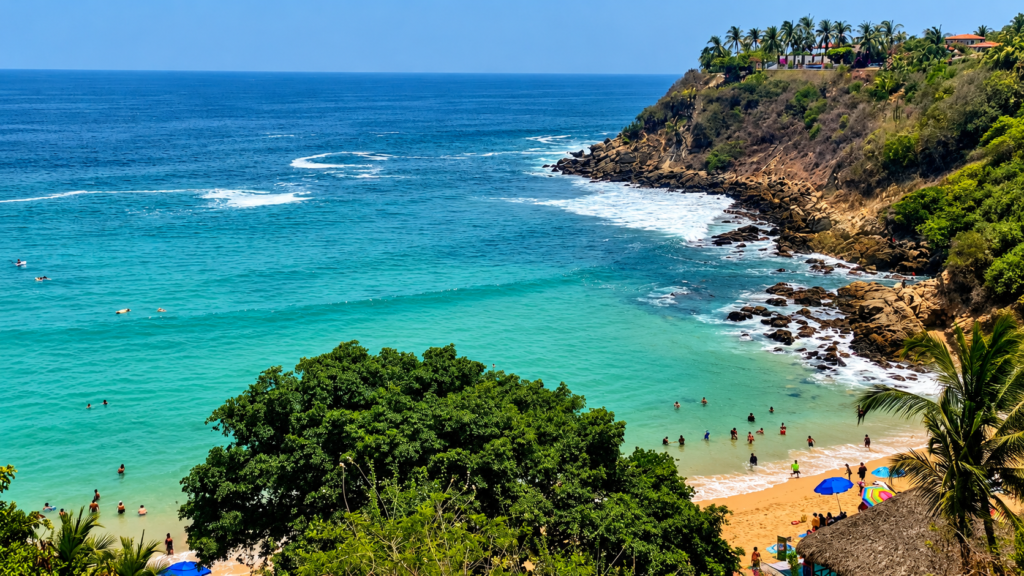
Oaxaca’s Pacific coast is one of Mexico’s most varied beach regions and the setting for our featured image at Playa Carrizalillo.
Among the most scenic Mexico coastlines, Oaxaca stands out for its combination of surf beaches, sheltered coves and smaller coastal communities.
Puerto Escondido
Puerto Escondido combines major surf beaches with smaller coves.
Zicatela is internationally known for powerful surf, while beaches such as Carrizalillo provide a very different landscape with a smaller bay surrounded by cliffs and vegetation.
Mazunte and Zipolite
Farther east, Mazunte and Zipolite have developed distinctive small-town beach cultures.
Mazunte is associated with marine conservation and the Mexican Turtle Center, while Zipolite is widely known for its long open beach and clothing-optional tradition.
Huatulco
Huatulco is built around a series of bays rather than one continuous beach. Its mixture of developed resort areas, smaller beaches and protected landscapes gives travelers considerable variety.
Oaxaca’s state tourism department identifies Huatulco, Puerto Ángel, Zipolite, Mazunte, Puerto Escondido, Zicatela and the Chacahua lagoons as part of its official coastal tourism route. Oaxaca Tourism’s coastal route provides additional information.
Gulf Coast: Veracruz and Beyond
Mexico’s Gulf Coast receives considerably less international beach tourism than the Caribbean and Pacific resort regions, but it offers a very different coastal experience.
Veracruz
Veracruz is shaped by its history as one of Mexico’s most important ports.
The city combines a waterfront promenade, historic centre, seafood culture and access to Gulf beaches.
The surrounding state includes reefs, dunes, wetlands and smaller coastal communities rather than a continuous chain of resort towns.
Tamaulipas and Tabasco
Farther north and south, Mexico’s Gulf shoreline includes broad beaches, lagoons, estuaries and mangrove environments.
These areas generally receive fewer international leisure visitors, and infrastructure can vary substantially.
As with Guerrero, check current travel advisories before planning travel to less familiar coastal regions.
Yucatán’s Gulf Coast
The northern Yucatán Peninsula faces the Gulf of Mexico rather than the Caribbean, creating a noticeably different atmosphere from Cancún or Tulum.
Progreso
Progreso is the principal beach destination near Mérida and a popular day trip from the city.
Its waterfront has restaurants, a malecón and a long pier, and the water is generally shallower and less intensely turquoise than on the Caribbean side of the peninsula.
Celestún and Río Lagartos
Elsewhere along the Yucatán coast, wetlands, mangroves and wildlife become as important as beaches.
Nature reserves around Celestún and Río Lagartos are particularly associated with birdlife and lagoon ecosystems.
Use authorized guides where required and avoid approaching wildlife simply to obtain photographs.
Mexican Caribbean: Cancún to Tulum
Quintana Roo contains Mexico’s best-known Caribbean coastline.
White sand, turquoise water, coral reefs, cenotes and Maya archaeological sites have made the region one of the country’s largest tourism destinations.
Cancún
Cancún offers large resorts, extensive tourism infrastructure and easy air connections. Its Hotel Zone provides long stretches of Caribbean-facing beach, although wave conditions vary.
Riviera Maya
South of Cancún, the Riviera Maya includes Puerto Morelos, Playa del Carmen and Tulum.
Development ranges from major resorts to smaller hotels, restaurants and beach clubs.
Tulum
Tulum is unusual because Maya ruins sit directly above the Caribbean coast. The surrounding area combines beaches, cenotes, archaeological sites and substantial tourism development.
Visit Mexico highlights Quintana Roo’s Caribbean destinations, including Cancún, Playa del Carmen, Tulum, Isla Mujeres and other coastal communities. You can explore the region through Visit Mexico’s Quintana Roo guide.
Islands, Reefs and Marine Wildlife
Mexico’s coastal experience extends well beyond mainland beaches.
Cozumel
Cozumel is one of Mexico’s major diving and snorkeling destinations. Coral reefs lie offshore, and the island receives both overnight visitors and large numbers of cruise passengers.
Isla Mujeres and Holbox
Isla Mujeres lies just off Cancún and is easily reached by ferry.
Holbox, farther northwest, has a lower-rise atmosphere and sandy streets in parts of the island, although tourism has grown substantially.
Marine wildlife
Different Mexican coasts offer opportunities to observe whales, sea turtles, whale sharks, dolphins, sea lions and numerous seabirds.
Wildlife encounters are seasonal and regulated in many areas. Choose authorized operators, maintain required distances and avoid businesses that pressure or handle wildlife for photographs.
Mexico’s coastal protected areas are important ecosystems, not simply tourism attractions.
When to Visit Mexico’s Coasts
There is no single best month for all Mexico coastlines.
Climate varies significantly between Baja California, the tropical Pacific, Gulf Coast and Caribbean.
Pacific and Baja
Winter can be particularly pleasant in many Pacific destinations because temperatures are generally milder and rainfall is lower.
Summer and early autumn can bring heavier rain, heat and tropical storms in southern Pacific regions.
Caribbean and Gulf
The Caribbean and Gulf coasts are warm for much of the year, but summer and early autumn are hotter, more humid and within Atlantic hurricane season.
Sargassum seaweed can also affect Caribbean beaches at certain times. Conditions vary substantially by location and week, so check recent local reports rather than relying on annual averages.
Wildlife seasons
If whale watching, turtle nesting or other wildlife experiences are central to your trip, plan around the relevant season for that specific destination.
Weather and wildlife patterns can change from year to year, so verify conditions shortly before traveling.
Choosing the Right Mexico Coast
The best Mexican coastline depends on the experience you want rather than which destination is most famous.
Because Mexico coastlines vary so widely, choosing the right region depends on whether your priority is swimming, surfing, wildlife, snorkeling, road trips or resort amenities.
- Baja California: rugged scenery, road trips, seafood and Pacific landscapes.
- Sea of Cortez: desert-meets-sea scenery, islands and marine activities.
- Los Cabos: resorts, dramatic rock formations and easy tourism infrastructure.
- Puerto Vallarta and Riviera Nayarit: beaches combined with towns, restaurants and nightlife.
- Oaxaca: surfing, smaller beach communities and spectacular Pacific scenery.
- Gulf Coast: ports, wetlands, seafood and less internationally visited shoreline.
- Yucatán Gulf Coast: quieter beaches, wildlife and easy access from Mérida.
- Mexican Caribbean: turquoise water, white sand, reefs, islands and extensive resort infrastructure.
For travelers who want dramatic Pacific scenery, the Oaxaca coast around Puerto Escondido is especially rewarding. For snorkeling and Caribbean water, Quintana Roo and Cozumel are stronger choices. Baja and the Sea of Cortez appeal to travelers looking for desert landscapes and marine wildlife.
The diversity of Mexico coastlines is what makes the country so interesting. A trip can move from rocky desert shores and powerful Pacific surf to tropical bays, mangrove lagoons and clear Caribbean water without ever leaving Mexico.
For regional dishes and dining traditions, continue with our What to Eat in Mexico: A Regional Food Guide for Travelers.
For etiquette, festivals and everyday traditions, see our Mexico Culture and Local Customs: What Travelers Should Know.
For broader trip planning, visit our Mexico Travel Guide.
You can also explore more seaside destinations through our Coastlines travel guides.