
South Korea is compact, fast and easy to get around, which makes it tempting to cram in everything from palaces and temples to islands and mountains. A first trip works better when you pair the capital with a couple of places that feel completely different. This 10 day South Korea itinerary spends four days in Seoul, two in the historic city of Gyeongju and four in the port city of Busan.
You’ll find a day-by-day plan, realistic travel times, booking advice and notes on where to stay. It follows the first-time route suggested in our South Korea travel guide, with the detail you need to plan it. Entry rules, train schedules, ticket prices and opening hours change, so confirm anything important with the official sources linked below.
10 Day South Korea Itinerary at a Glance
- Days 1–4: Seoul. Royal palaces, traditional neighborhoods, markets, a day trip or a river evening, and plenty of food.
- Days 5–6: Gyeongju. A fast train south to the old capital of the Silla kingdom, with tombs, temples and a lit-up pond at night.
- Days 7–10: Busan. A short hop to the coast for beaches, seafood markets, hillside villages and a temple by the sea.
Each stop has its own pace. Seoul is huge, modern and endlessly busy. Gyeongju is quiet and historic, a good place to slow down. Busan is a big coastal city with the sea always nearby. You change hotels twice, ride the train twice, and move from north to south in a straight line.
Before You Go: Entry Rules
Many visitors from visa-exempt countries can currently enter without applying for the Korea Electronic Travel Authorization, known as K-ETA. Reports say the temporary exemption has been extended through the end of 2026, but it depends on your nationality, so check the official K-ETA site before you book. Separately, foreign visitors are expected to complete an electronic arrival card, and sources say it can be submitted up to three days before arrival on the official e-Arrival Card site. Use only the official sites, make sure your passport has enough validity, and check the current rules for your own country before you travel.
Days 1–4: Seoul
Seoul is a big city, but it’s easy to navigate. The subway covers most of it, and a rechargeable transit card makes buses and trains simple. Group your sightseeing by neighborhood instead of crossing the city several times a day.
Day 1: Gyeongbokgung and Bukchon
Start with Gyeongbokgung, the largest of the royal palaces. Several sources say it is closed on Tuesdays, and hours change by season, so check before you go. Walk on to the traditional hanok neighborhoods of Bukchon and Insadong in the afternoon, where tea houses and small shops line the lanes. For general planning information, see VisitKorea.
Day 2: Changdeokgung and the Secret Garden
Changdeokgung is a UNESCO-listed palace, and sources say it is closed on Mondays. Its rear garden, known as the Secret Garden or Huwon, can only be visited on a guided tour with limited places, and reports say online reservations open about six days ahead. Book early if it matters to you. In the evening, head to a night market or a street food district.
Day 3: Namsan, Markets or the DMZ
Choose one big theme for the day. You can ride up to Namsan Tower for city views and then explore Myeongdong, or you can join a guided tour of the Demilitarized Zone along the North Korean border. DMZ tours usually need to be booked in advance and require your passport, so check the current rules with the operator before you commit.
Day 4: Markets, Cafés and the Han River
Spend your last Seoul day at a traditional market such as Gwangjang for street food, then explore a trendy district like Hongdae or Seongsu. Finish with an evening along the Han River. Pack tonight, because tomorrow you take the train south.
Seoul to Gyeongju by Train
Korail runs KTX high-speed trains from Seoul Station toward Gyeongju, and sources put the trip at around two hours, though times vary by service. Be aware that the KTX station is outside the historic center, roughly 8 kilometers from the town. Local buses and taxis connect it to the center, and the ride takes roughly fifteen to thirty minutes, so check the station name on your ticket. Book ahead for the best seats, especially on weekends and holidays.
Days 5–6: Gyeongju
Gyeongju was the capital of the Silla kingdom for roughly a thousand years, and it’s often described as a museum without walls. The center is small and flat, so you can explore it on foot or by bicycle.
Day 5: Tombs, Palace Ruins and Wolji Pond
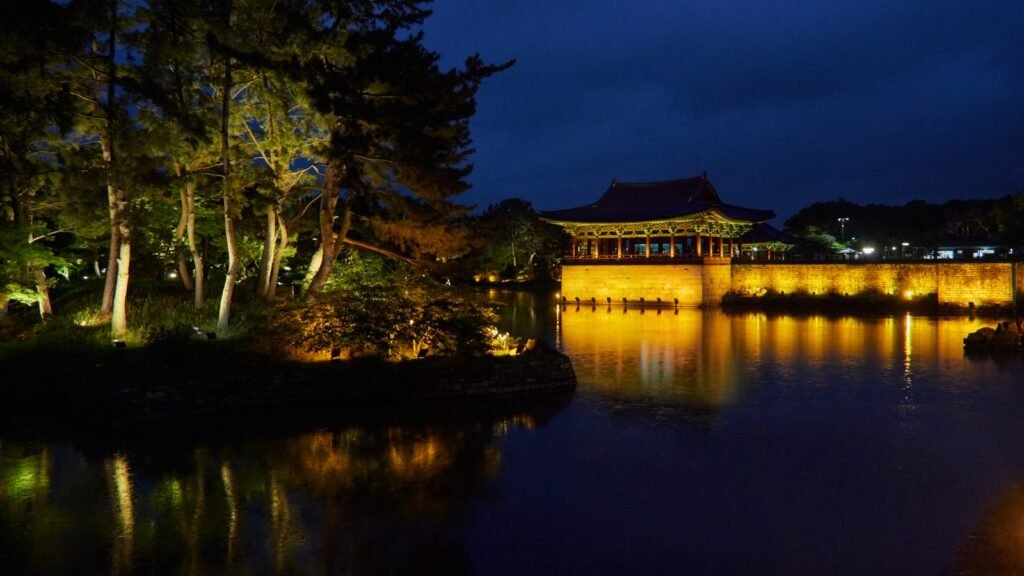
Spend the day among the grassy royal tombs of the Daereungwon area, the Cheomseongdae observatory and the cafés of the Hwangnidan-gil neighborhood. Return in the evening for Donggung Palace and Wolji Pond, which are lit up after dark and are especially beautiful then.
Day 6: Bulguksa and Seokguram
Take a city bus up to Bulguksa, the famous temple on the slopes of Mount Toham, and to the nearby Seokguram Grotto. Sources disagree on the current admission fees and opening hours, with some saying entry is free and others listing a charge, so check the latest information before you go. Seokguram involves a short uphill walk from the car park. Plan for the afternoon train or bus on to Busan, or stay another night if you want a slower day.
Gyeongju to Busan by Train
This is the shortest leg of the trip. The KTX between Gyeongju and Busan takes roughly half an hour according to most sources, with slower trains taking about an hour and arriving in the center of Gyeongju. Check the Korail timetable for your date, and make sure you know which station your train uses.
Days 7–10: Busan
Busan is South Korea’s second-largest city, spread along the coast beneath green hills. It has beaches, seafood, temples and colorful neighborhoods, and it feels much more relaxed than Seoul. For planning details, see the official Busan tourism site.
Day 7: Arrive and Walk the Beach
After the train, drop your bags and head to the beach at Haeundae, the most famous in the city. Have dinner nearby and enjoy the evening air, and keep the first day easy.
Day 8: Gamcheon and Jagalchi
Visit Gamcheon Culture Village, a hillside neighborhood of pastel houses and art installations, in the morning when it’s quieter. Then head to Jagalchi Market, Korea’s best-known seafood market, for a fresh lunch. Sources say the market is open from around 5 AM to 10 PM but closes on certain Tuesdays each month, so check before you go.
Day 9: Haedong Yonggungsa and Gwangalli
Haedong Yonggungsa is a temple built right on the rocky coast, and it is especially beautiful at sunrise. Reports say it opens very early, so go first thing, before the crowds and the heat. Spend the afternoon at Gwangalli Beach, which has a view of the lit-up Gwangan Bridge in the evening.
Day 10: A Slow Final Day and Departure
Keep your last morning relaxed, with a walk along the water and a long breakfast. If you fly out of Busan, leave a generous buffer for the airport. If you need to return to Seoul for an international flight, the high-speed train takes a few hours, so plan to leave early or travel the day before.
South Korea Travel Tips
- Get a transit card. A rechargeable card works on subways and buses in most cities and saves time at ticket machines.
- Book trains and tours early. Seats on popular KTX services, the Secret Garden tour and DMZ tours can sell out.
- Check closing days. Palaces and markets close on different days, and Korean public holidays can change opening hours.
- Carry a card and some cash. Cards are widely accepted, but small stalls and markets may prefer cash.
- Dress respectfully at temples. Keep voices low, and follow the posted rules for photos and shoes.
Where to Stay on This South Korea Itinerary
Seoul
Stay near a subway station in a central area such as Jongno, Myeongdong or Hongdae, depending on whether you want palaces, shopping or nightlife. Staying near a main line saves a lot of time.
Gyeongju
The area around Hwangnidan-gil puts you within walking distance of the tombs, cafés and restaurants. Some travelers prefer a traditional hanok stay for one night.
Busan
Haeundae suits a beach stay with lots of hotels, while the area around Seomyeon and Busan Station is better connected for transport. Gwangalli is a good middle option with sea views.
Best Time for This 10 Day South Korea Itinerary
Spring, for the blossoms, and autumn, for the foliage, are the most popular and comfortable seasons, with mild weather and clear skies. Summer is hot and humid with a rainy season, and winters can be very cold, especially in Seoul. Cherry blossom and autumn colors bring crowds, so book accommodation and trains early.
Is 10 Days Enough for Seoul, Gyeongju and Busan?
Ten days is enough for a rewarding first trip, as long as you accept that you are choosing highlights. Four days in Seoul, two in Gyeongju and four in Busan gives you the capital, the old kingdom and the coast without rushing. If you have extra time, add it to Seoul or add Jeju Island, instead of adding more stops on the mainland.
Want to plan around food, culture or the coast? Our guides to what to eat in South Korea, Korean culture and local customs and South Korea’s coastlines and islands will help you decide where to spend extra time.
Final Thoughts on This 10 Day South Korea Itinerary
A good South Korea trip isn’t the one that covers the most places. It’s the one that gives each region enough time to feel different. Complete your entry steps, book your trains and any palace or DMZ tours early, check closing days before you go and keep an afternoon free in each stop. For more on choosing regions, seasons and costs, read the full South Korea travel guide.