
This Brazil travel guide is designed to help you decide where to go, when to visit, and how to build a realistic first-time itinerary.
Brazil is the largest country in South America and one of the most varied. A single trip can include city beaches below granite peaks in Rio de Janeiro, one of the world’s great waterfalls at Iguaçu, a historic and Afro-Brazilian cultural center in Salvador, rainforest in the Amazon and thousands of kilometers of Atlantic coast. The official Visit Brasil tourism site promotes this mix of beaches, nature, music and food.
The main planning challenges are distance, entry rules and safety. Brazil is huge, so domestic flights are essential, and the national language is Portuguese, not Spanish. Some nationalities need a visa, crime levels are high in many cities, and conditions vary a lot between neighborhoods. For a first visit, a short list of well-chosen bases works better than trying to cover the country.
Is Brazil Right for Your Trip?
This Brazil travel guide is a good fit if you want a first trip that balances beaches, culture and nature. Brazil is a strong choice for travelers who want beaches, big-city energy, nature, music and food in one trip, and who are happy to plan carefully around entry rules, distances and safety advice.
Rio de Janeiro is the usual first stop, with Copacabana and Ipanema beaches, Sugarloaf Mountain and Christ the Redeemer. Iguaçu Falls on the border with Argentina is Brazil’s best-known natural wonder. Salvador is the heart of Afro-Brazilian culture, with a historic center that is a UNESCO World Heritage site since 1985. Beyond these, São Paulo, Paraty and Ilha Grande, Florianópolis, the Northeast beaches, Fernando de Noronha, Lençóis Maranhenses and the Amazon suit travelers with more time.
Brazil may not be the right fit if you want a trip with no safety planning at all. Canadian advice says to exercise a high degree of caution because of high crime and regular gang-related violence in urban areas. Most visitors stay in established tourist areas, take sensible precautions and have a good trip, and the sections below explain what that looks like in practice.
Best Time to Visit Brazil
Brazil is so large that the best time depends on the region. This Brazil travel guide looks at the seasons by area.
Rio and the southeast have a hot, humid summer from roughly December to March, and Canadian advice puts the rainy season in the south and southeast at about October to April. The cooler, drier months from about May to September are popular for sightseeing, although the sea is cooler. Carnival takes place in the days before Ash Wednesday, usually in February or early March. In 2027 Ash Wednesday falls on 10 February, so book flights and hotels well ahead if you want to be there.
Iguaçu Falls can be visited all year, but the flow depends on rainfall. The official Iguaçu National Park site says the walkway can be closed as a precaution when the river is in flood, so keep some flexibility in your plans.
Salvador and the Northeast have their rainy season from about April to July according to Canadian advice, so many travelers prefer the drier months from about September to March for the beaches. The Amazon has a rainy season from roughly January to July in the north, and wildfires are common from about May to September in parts of the Amazon, the Cerrado and the Pantanal.
Plan around hazards. Canadian advice says El Niño conditions are present and are expected to strengthen through 2027, which may increase droughts, floods and severe storms. It also says landslides are becoming more common with heavy rain and that power outages are frequent in major cities, especially in the rainy season. Check the forecast and local advice close to your dates, and consider travel insurance that covers disruption.
Where to Go in Brazil
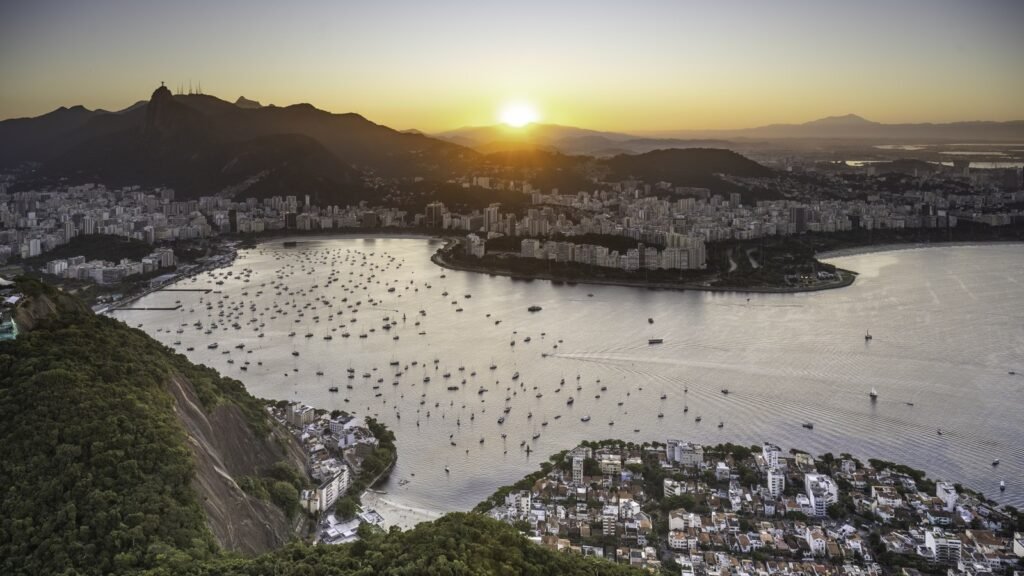
Rio de Janeiro is a beach city set among steep green mountains, and its setting is recognized as a UNESCO World Heritage cultural landscape. The classic sights are Christ the Redeemer on Corcovado, the cable car to Sugarloaf Mountain, the beaches of Copacabana and Ipanema, and the colorful Selarón steps. Rio is also where most of the safety warnings apply, so read the safety section below before you go.
Iguaçu Falls is a huge system of waterfalls on the border between Brazil and Argentina. Iguaçu National Park on the Brazilian side has been a UNESCO World Heritage site since 1986, and its trails and walkways bring you close to the falls and the Devil’s Throat.
Foz do Iguaçu, the nearest city, is also where Brazil, Argentina and Paraguay meet. Canadian advice lists the area within 20 kilometers of the Paraguay border as one to avoid for non-essential travel, and it does not mention the falls by name, so read the current wording before you book, use official transport, and plan any border crossing carefully.
Salvador was Brazil’s first capital and is the center of Afro-Brazilian culture, with colonial churches, the Pelourinho district, music, capoeira and distinctive food. Canadian advice lists Salvador among the cities with high crime rates, so use the same precautions as in Rio and take extra care at night.
São Paulo is Brazil’s biggest city and a major business and cultural center, with excellent restaurants and museums but fewer classic sights. Canadian advice names several central areas, including Avenida Paulista, the historical downtown and Luz station, as places where violent crime often occurs, so most first-time visitors use it as a short stop or a connection.
Paraty and Ilha Grande lie along the green coast between Rio and São Paulo. The colonial town of Paraty and the car-free island of Ilha Grande are together a UNESCO World Heritage site since 2019, and they make a popular coastal add-on to Rio. Florianópolis in the south is a surfing and beach island with dozens of beaches.
The Northeast and Fernando de Noronha. The Northeast coast has warm water, dunes, reef pools and beach towns from Bahia up to Ceará, and Lençóis Maranhenses has freshwater lagoons between white dunes. Fernando de Noronha is a remote Atlantic archipelago and a UNESCO World Heritage site with visitor limits and a daily environmental fee, so check the island administration’s site before you plan.
The Amazon and the Pantanal. These are better as separate trips than as add-ons. Canadian advice says pirates have attacked lodges along the Amazon River, so use only reputable operators. Malaria is present in much of the Amazon region, so ask a travel clinic about prevention well before you go.
Areas to avoid. Canadian advice says to avoid non-essential travel within 20 kilometers of the borders with Bolivia (excluding Pantanal National Park), Colombia, French Guiana, Guyana, Paraguay, Peru and Suriname, and within 50 kilometers of the border with Venezuela. It also says to avoid all travel to the Rio de Janeiro favela complexes of Complexo da Maré and Complexo da Penha. Check the current advice before choosing any route away from the main tourist circuit.
How Many Days Do You Need?
7 days is enough for Rio and one other stop, but it will be rushed. 10 days works well for Rio, Iguaçu Falls and Salvador, with flights between each. 14 days lets you add Paraty and Ilha Grande, Florianópolis, a Northeast beach stop or a couple of days of rest by the coast.
Because distances are so large, adding a base usually costs more time than it seems. Brazil rewards a route with a few bases, a flight between each, and enough time in every stop to see it properly.
Getting Around Brazil
Getting around is the hardest part of planning, so this Brazil travel guide recommends a few bases linked by flights. Domestic flights are the practical way to cover long distances. A flight between Rio and Foz do Iguaçu takes about two hours, while the same trip by road is a very long journey. Book early for better fares and check baggage rules on budget fares. Connections are common on routes between Iguaçu and the Northeast, so leave a generous buffer on days when you have a tight onward flight.
Taxis and ride-hailing. Canadian advice says assaults and scams occur in unofficial taxis. Use officially marked taxis, which in Rio are yellow with a blue stripe, or reputable ride-hailing apps, and check the driver and license plate before you get in. It also warns about express kidnappings in the Rio de Janeiro Metropolitan Region, so avoid any unofficial ride.
Buses and the metro. Canadian advice says pickpocketing is common on public transport and recommends avoiding buses in Rio. Use reputable inter-city bus companies if you travel by road. The metro is generally easier than buses in big cities, but keep your phone and bag close.
Driving. Canadian advice says fatal accidents are frequent and drunk driving is common. Most visitors are better off with flights, taxis and organized tours than with a rental car, and any driving should be during daylight, with a navigation app that does not route you through a favela.
Costs and Budgeting
Brazil’s currency is the real (BRL). Costs vary widely, and Rio and the main beach resorts can be expensive, especially during Carnival and over the New Year. Domestic flights are often the biggest single cost on a multi-stop trip, followed by hotels in the most popular areas.
Cash and cards. Cards are widely accepted in cities but less so in rural areas, where ATMs can be scarce, according to Canadian advice. It also warns about card cloning and fake card readers, so cover your PIN, use ATMs in banks or other secure places and consider turning off the tap-to-pay function.
Tipping and service charges. Many restaurants add a service charge of about 10 percent, which is usually optional, so check the bill before adding a tip. Pay-by-weight lunch buffets, known as comida por quilo, are a good-value way to eat.
Food and Dining
Food is a big part of any Brazil trip, and it changes a lot between regions. For a full breakdown by region, see our guide to what to eat in Brazil.
Feijoada, a rich black bean stew with pork, is often called the national dish. Pão de queijo is a chewy cheese bread that is easy to find with coffee. In Bahia, moqueca, a seafood stew made with coconut milk and palm oil, and acarajé, a fried black-eyed pea fritter, are classics. Drinks include caipirinha, made from cachaça, lime and sugar, guaraná soda, and fresh fruit juices.
Eat where locals eat, choose busy places and be selective with raw salads and ice if you have a sensitive stomach. Canadian advice also warns that drinks can be spiked and that methanol-adulterated alcohol has caused deaths, so order drinks in sealed bottles or cans where possible and avoid spirits of uncertain origin.
What to Know Before You Go
Use this Brazil travel guide as a checklist for your preparation, then confirm each item with the official sources linked below.
Entry requirements. Canadian advice says a visa is required for tourist stays in Brazil and links to the official Brazil eVisa portal, which describes itself as the only official place for eligible travelers to apply for an eVisa. Visa requirements for travelers from Canada, the United States and Australia were reintroduced in 2025, so check the portal for your nationality, and treat fees, validity and processing times as things that change.
Your passport must be valid for the entire stay, and airlines may apply stricter rules. Officials may ask for a return or onward ticket and proof of funds. Stays over 90 days need an extension from the Brazilian Federal Police before your authorized stay ends.
Health. Proof of yellow fever vaccination is not required to enter Brazil, but the CDC’s Brazil travel health page recommends the vaccine for travel to many states, including Rio de Janeiro and São Paulo, and for visits to Iguaçu Falls. Dengue is present, Zika and Oropouche risks are also noted, and malaria is a risk in parts of the Amazon region, but not in the cities of Rio and São Paulo or at Iguaçu Falls, according to the CDC. Use insect repellent, check which vaccines suit your route, and see a travel clinic well before you leave.
Safety. Canada’s current advice is to exercise a high degree of caution because of high crime rates and regular gang-related violence in urban areas. It says tourists are mostly affected by theft but can also become victims of violent crime, and that robberies can happen anywhere, including popular areas of Rio such as Lapa, Santa Teresa and Copacabana beach. Avoid going out after dark in unfamiliar areas, do not resist an attack, and keep phones, jewelry and cameras out of sight.
Favelas. Canadian advice says favelas are controlled by gangs and are not safe, even with a local guide, so skip favela tours and set your navigation app to avoid them. Drinks and nightlife. Drink spiking is rising, especially in Rio and São Paulo, and incidents are most likely in bars, restaurants, hotels, nightclubs and public beaches. Read the full Government of Canada travel advice for Brazil before you book.
Beaches. Some beaches are unsupervised, rip currents are common and urban beaches are often polluted, so obey warning flags and swim where lifeguards are present. Canadian advice also mentions sharks, especially near Recife.
Practical details. Portuguese is the main language, and English is more common in tourism businesses than elsewhere. Brazil uses 127 or 220 volts depending on the region, and the standard plug is Type N, so check your devices and bring an adapter if needed. Smoking and vaping are not allowed in enclosed public spaces, and bringing e-cigarettes into the country is illegal.
Suggested First-Time Brazil Itinerary
For travelers with around 10 days, Rio de Janeiro, Iguaçu Falls and Salvador create a practical first-time route that combines beaches, nature and culture. For a full day-by-day plan, see our 10 day Brazil itinerary.
Days 1–4: Rio de Janeiro. Arrive, take in Christ the Redeemer and Sugarloaf Mountain, spend time on the beaches, and explore the historic center.
Days 5–6: Iguaçu Falls. Fly to Foz do Iguaçu and spend a day on the Brazilian side of the falls.
Days 7–9: Salvador. Fly to Salvador for the historic center, Afro-Brazilian culture, food and beaches, then depart on day 10.
If you have 14 days, add Paraty and Ilha Grande or a Northeast beach stop rather than adding more distant cities. With only 7 days, focus on Rio and one other stop.
The best Brazil itinerary is not the one that covers the most places. It is the one that gives you enough time in each stop and leaves room for the beach.
Brazil Travel FAQ
Do I need a visa to visit Brazil?
Canadian travel advice says a visa is required for tourist stays in Brazil, and requirements for travelers from Canada, the United States and Australia were reintroduced in 2025. Apply through the official eVisa portal and check the rules for your nationality before you book.
What is the best time to visit Brazil?
It depends on the region. Rio and the southeast are cooler and drier from about May to September, with a hot, humid summer from December to March. Salvador and the Northeast beaches are generally best from about September to March. Carnival falls in February or early March, so book well ahead.
How many days do you need in Brazil?
Ten days works well for Rio de Janeiro, Iguaçu Falls and Salvador, with flights between each. Seven days is enough for Rio and one other stop, and fourteen days lets you add Paraty and Ilha Grande or a Northeast beach stop.
Is Brazil safe for tourists?
Canada’s advice is to exercise a high degree of caution because of high crime rates and regular gang-related violence in urban areas, with some regional advisories. Most visitors stay in established tourist areas, use official taxis or ride-hailing apps and keep phones and valuables out of sight. Read the full advisory before you go.
Do I need a yellow fever vaccine for Brazil?
Proof of yellow fever vaccination is not required to enter Brazil, but the CDC recommends the vaccine for travel to many states, including Rio de Janeiro and São Paulo, and for visits to Iguaçu Falls. Speak to a travel clinic well before you leave.
Final Thoughts on This Brazil Travel Guide
Brazil offers enough variety that a first trip should be treated as an introduction rather than an attempt to see the whole country.
For a first visit, choose two or three bases, check the visa rules for your nationality early, read the current government advice, and use official transport and reputable operators. The Amazon, the Pantanal and the Northeast coast can fill a longer trip.
Use this Brazil travel guide as a starting point, then adjust the route to match your time, interests and comfort level with planning.
If you’re comparing destinations in South America, you may also want to read our Peru travel guide and Colombia travel guide.
Explore more destination guides on TravelingInformed.