
Knowing what to eat in Colombia is one of the best ways to understand the country. Most travelers have heard of coffee, and many know the arepa, but Colombian cooking is far wider than that. It runs from a potato and chicken soup served in the cold mountain air of Bogotá to coconut rice and fried fish on the Caribbean coast.
Food changes with altitude and geography. The Andean highlands lean on potatoes, corn, soups and slow-cooked meat, the Caribbean coast adds coconut, seafood and plantain, and the Pacific coast has its own Afro-Colombian cooking built around fish and coconut. Because the country has several climates, the fruit is just as varied as the main dishes.
Some of the best meals come from a simple lunch counter, a bakery, a market or a family-run restaurant. This guide explains the main regional dishes, what to try at breakfast and lunch, how to order, and a few practical food tips. It works best alongside our Colombia travel guide, which covers routes, seasons and entry rules.
What to Eat in Colombia: Start with the Regions
The easiest way to think about what to eat in Colombia is to divide the country into regions. The Andean highlands around Bogotá and Boyacá, Antioquia and the coffee region around Medellín, the Caribbean coast around Cartagena and Santa Marta, and the Pacific coast each have recognizable dishes, and the same name can change from one place to another.
Rather than hunting for the one “best” version of a dish, order what the local menu is proudest of. A restaurant in Bogotá will do a better ajiaco than one on the coast, and a beachside kitchen will do a better whole fried fish than one in the mountains.
Bogotá and the Andean Highlands
Ajiaco
Ajiaco is Bogotá’s signature soup. It is traditionally made with chicken, three varieties of potato, corn on the cob and an herb called guascas, which gives it its distinctive flavor. It usually arrives with capers, avocado and cream to add at the table, and it is especially welcome on a cool, damp afternoon.
Sancocho
Sancocho is found across Colombia, but each region makes it differently. Depending on where you are, it may contain potatoes, cassava, plantain, corn, carrots and tomatoes. In Cali, the local version is sancocho de gallina, a chicken soup with plantain, corn, cilantro and yuca. On the Pacific coast, you may find a version made with fish.
Chocolate Santafereño and Onces
In Bogotá, hot chocolate is often served with a piece of soft white cheese, which is added to the cup just before serving and melts into the chocolate. It is usually paired with almojábanas or pan de queso, which are soft, cheesy breads, as part of the late-afternoon snack known as onces. It sounds unusual, but it is a classic Bogotá habit and worth trying once.
Aguapanela
Aguapanela is a drink made from panela, which is unrefined sugarcane. It is often served hot in the mountains and cold in warm weather, usually with a little lemon, and you may also see it served with a slice of fresh cheese on the side.
Medellín, Antioquia and the Coffee Region
Bandeja Paisa
Bandeja paisa is the best-known platter in Colombia and a symbol of the Antioquia region. A traditional version includes rice, beans, fried pork belly, ground beef, sausage, a fried egg, black pudding, avocado, grilled plantain and an arepa. It is very filling, so many travelers share one, or save it for a late lunch.
Arepas
Arepas are grilled or fried corn cakes, and they appear at breakfast, as a snack, or alongside dinner. They can be plain, topped with cheese, or filled with eggs, chicken or meat. On the Caribbean coast, look for arepa de huevo, a fried corn cake with an egg cooked inside it.
Coffee and Tinto
Colombia is one of the world’s best-known coffee producers, and the Eje Cafetero (the Coffee Region) is the heart of it. Many visitors base themselves in Salento and tour a working farm. A good farm visit follows the coffee from the cherry to the cup, so choose one that offers more than a quick walk-through. In daily life, a small black coffee called a tinto is the everyday order. Cafés in the major cities also serve espresso drinks made with Colombian beans.
The Caribbean Coast
Food on the Caribbean coast is built around the sea, coconut and plantain. In and around Cartagena and Santa Marta, a typical plate is a whole fried fish with coconut rice and crisp fried plantain slices called patacones. Seafood stews and grilled fish are common too, and menus often mention dishes such as cazuela de mariscos, a seafood stew, and posta negra cartagenera, a slow-cooked beef dish associated with Cartagena.
Because of the heat, the coast is also the place for cold fruit juices, fresh coconut water and ice cream. If you are staying near the beach, ask what was caught that day.
The Pacific Coast
The Pacific coast is far less visited, but its cooking is distinctive. Afro-Colombian kitchens there are known for coconut-based fish stews called encocados, for tapao chocoano, and for versions of sancocho made with snapper. Most visitors who eat this food do so at an eco-lodge in places such as Nuquí or Bahía Solano, where the menu is built from the day’s fish, coconut and plantain.
More Dishes You Will See Across Colombia
Empanadas and Tamales
Empanadas are fried or baked pastries filled with meat, potato or cheese, and they make a cheap and filling snack. Tamales are steamed corn parcels with a filling, and the recipe changes from region to region.
Lechona
Lechona is a roast pork dish especially associated with the Tolima region. If you see it on a menu or at a festival stall, it is worth trying.
Buñuelos, Almojábanas and Pan de Queso
Bakeries sell cheese-based breads and fried dough snacks that suit breakfast or a quick stop. They are inexpensive, usually warm, and a good way to try Colombian flavors without ordering a full meal.
Fruit, Juices and Drinks
Colombia’s fruit is one of its great surprises, because altitude and climate create a wide range. Common juices include lulo, a tart fruit that is popular in Colombia, guanábana (soursop), often blended with milk, and maracuyá (passion fruit). From the Pacific coast comes borojó, a very sweet rainforest fruit. Ask for your juice “en agua” (with water) or “en leche” (with milk), and check whether sugar has been added if you prefer it plain.
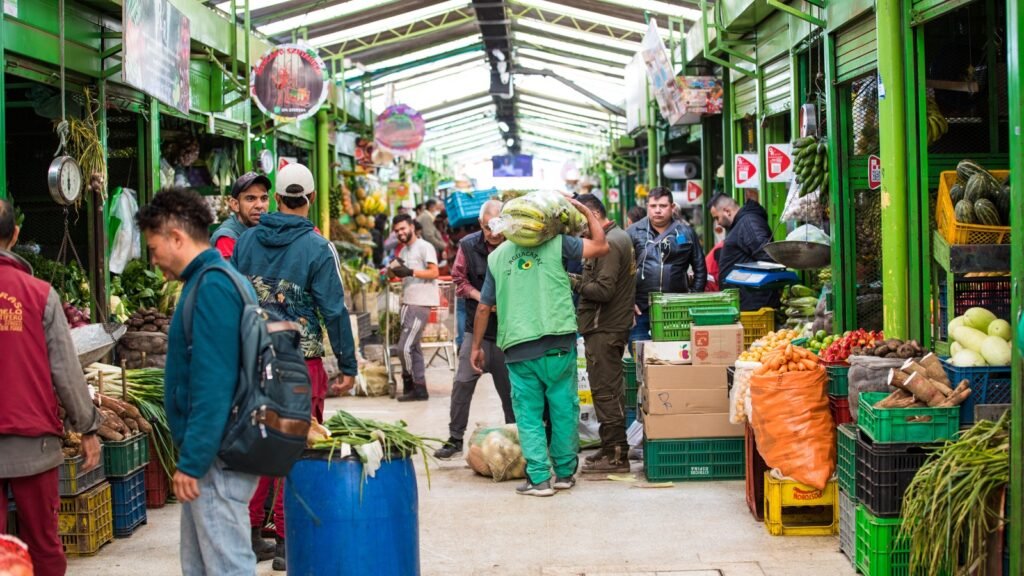
A visit to a market is the best way to see the full range. Bogotá’s Paloquemao market is a large and popular market for produce, meat, fish, dairy and flowers. Go early in the morning, when it is busiest, and use a taxi or ride-hailing app to get there.
Lunch, Menus and How to Order
Lunch is the main meal of the day in Colombia, usually eaten from midday to about 2 pm. Many restaurants serve a set lunch called the menú del día, almuerzo corriente or corrientazo, which typically includes a soup, a main plate of protein with rice and a side, and a juice. It is usually the best value on the menu, and it is the meal most locals eat. Prices vary by city and neighborhood and have risen in recent years, so check the board outside.
At sit-down restaurants, a service charge of about 10 percent is often added to the bill as a voluntary tip (propina). You can ask for it to be removed if service was poor. In most places you ask for the bill by saying “la cuenta, por favor.” Many cafés and bakeries serve food all day, which makes it easy to eat when you are hungry rather than on a fixed schedule.
Practical Dining Tips for Colombia
Choose Busy Places
A busy stall or restaurant with fast turnover is usually a safer choice than an empty one. Look for places where locals are queuing, and be selective with raw salads and unpeeled fruit if you have a sensitive stomach.
Water and Ice
Tap water in Bogotá is officially potable, and many locals drink it, although it can taste of chlorine. Water quality can depend on your building, and it varies elsewhere, so many travelers choose filtered or bottled water, especially outside the big cities.
Watch Your Drink
The Government of Canada travel advice for Colombia warns about scopolamine, a drug that can leave a person incapacitated and is used in robberies. It advises not leaving drinks or food unattended and being wary of offers from strangers. Keep this in mind in bars and nightlife areas, and never accept drinks or food from people you do not know.
Vegetarian and Vegan Travelers
Colombian cooking is meat-heavy, so vegetarians need to plan, but it is manageable. Patacones, arepas, fruit, and cheese-based snacks are often meat-free, although you should ask how they were cooked. Bogotá, Medellín and Cartagena have vegetarian and vegan restaurants, and some places offer vegetarian versions of the set lunch. Remote areas have fewer options, so bring snacks.
Allergies
If you have a food allergy, learn the Spanish words for your allergen and write it down. Cheese, nuts, shellfish and eggs appear in many everyday dishes, and cross-contact can be hard to avoid in small kitchens.
Experience Colombia Through Its Food
The best way to eat in Colombia is to match your meals to where you are. Start with ajiaco and hot chocolate with cheese in Bogotá, try a bandeja paisa and a coffee farm near Medellín and the Coffee Region, then finish with fried fish, coconut rice and fresh juices on the coast. For planning help, the official Colombia tourism site is a good starting point, and our Colombia travel guide explains how to put these places into a trip.
For more on the culture behind the food, read our guide to Colombia culture and local customs. You can also browse more articles in our Food category.