
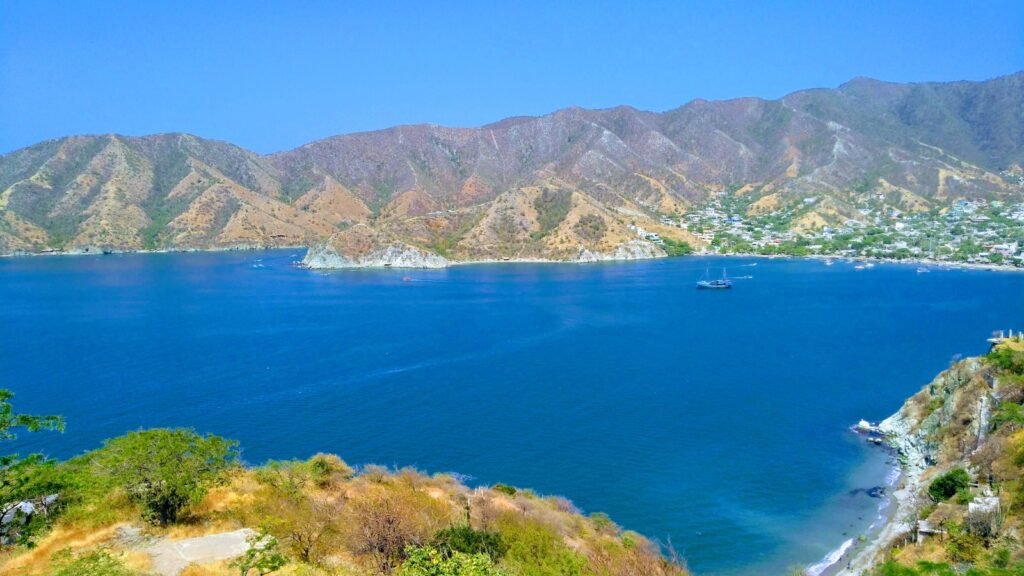
Colombia coastlines are one of the country’s biggest surprises. Colombia is the only country in South America with a coast on both the Caribbean Sea and the Pacific Ocean, and the two shores could hardly be more different. The Caribbean side offers a walled colonial port, island day trips, jungle-backed beaches and a desert peninsula, while the Pacific side is remote, green, wet and known for whale watching.
Colombia also has Caribbean islands far out to sea, including San Andrés and Providencia, which feel more like the western Caribbean than mainland South America. Beaches here are not all alike, and some are not suitable for swimming, so it pays to choose carefully.
This guide explains the main Colombia coastlines, the best-known beach and island areas, how weather and park closures affect planning, and which stretches need extra safety checks. It works best alongside our Colombia travel guide, which covers routes, seasons and entry rules.
Colombia Coastlines: Where to Start
For most first-time visitors, the Caribbean coast is the place to begin. Cartagena, Santa Marta and the islands near them are the easiest to reach, with the most hotels, tours and flights. San Andrés and Providencia suit travelers who want a dedicated island trip. The Pacific coast is more remote and best for travelers who want whales, jungle and eco-lodges and who are comfortable with extra planning.
The coast you choose depends on the time of year, how many days you have and how comfortable you are with boats, small planes and variable weather.
The Caribbean Coast
Cartagena and the Rosario Islands
Cartagena is a historic walled port, and it is the main base for beach trips on this part of the coast. Boats leave from the city’s docks for the Rosario Islands, a protected group of coral islands that is a popular day trip. Travel sources describe the boat ride as roughly 40 minutes, and tours range from simple boat transfers to full-day trips with lunch. Book through your hotel or a reputable operator.
Barú and Playa Blanca
Playa Blanca on the Barú peninsula, southwest of Cartagena, is known for its white sand and warm, shallow water. It can be reached by boat, by road or on a tour, and it is crowded during the day, so arriving early helps. Expect vendors and busy stretches of beach.
San Bernardo Islands
The San Bernardo archipelago is farther from Cartagena than the Rosario Islands, with boat trips taking about two hours each way. It suits travelers who want quieter water and a longer day, or an overnight stay.
Santa Marta, Taganga and Palomino
Santa Marta is a historic port city on the Caribbean coast, with the Sierra Nevada rising behind it, and it is the gateway to Tayrona National Park. Taganga, a small fishing village nearby, has boats to nearby beaches. Farther along the coast, Palomino is a laid-back beach town with the mountains behind it. Check current transport links and conditions before you go.
Tayrona National Park
Tayrona is one of Colombia’s best-known parks, with jungle trails leading to sandy coves. The most popular walk leads to Cabo San Juan, and the beaches of La Piscina and Playa Cristal are commonly recommended for swimming. Other beaches, such as Arrecifes, have strong currents and are not safe for swimming, so read the signs.
The park has scheduled closures of about two weeks several times a year. In 2026 these were February 1–15, June 1–15 and October 19 to November 2, set by Colombia’s national parks authority. Road access can also be affected, because Canadian advice notes that parts of Route 90, which is used to reach Tayrona, have been closed by roadblocks in the past.
La Guajira, Cabo de la Vela and Punta Gallinas
La Guajira is a desert peninsula in the far north, where dunes meet the sea. Most visitors reach Cabo de la Vela and Punta Gallinas on multi-day 4×4 tours, often staying in Wayuu lodgings and sleeping in hammocks. The trip is long, infrastructure is limited and conditions change, so use a reputable operator, ask about current security, and check your own government’s advice before booking.
Capurganá and Sapzurro
These small villages near the Panama border are reached only by boat or by a short flight to the nearby town of Acandí. Travel sources recommend Necoclí as the better departure port, with a crossing of roughly an hour and a half, but fares and schedules change, so confirm locally.
Government advice for this area needs careful reading. The Government of Canada travel advice for Colombia lists Capurganá, Nuquí and Bahía Solano as exceptions to its warning to avoid all travel to Chocó, but it places those towns under a warning to avoid non-essential travel, and it separately tells travelers to avoid areas within 100 kilometers of the Panama border. The UK government’s Colombia travel advice also warns about armed-group activity near the border in Chocó. Check the current advice before deciding, and if you do go, bring cash, because there are few ATMs.
San Andrés and Providencia
San Andrés and Providencia lie far off Colombia’s mainland coast in the western Caribbean. San Andrés is the larger and easier island, known for its “sea of seven colors,” which comes from sheltered water over a coral reef. Johnny Cay, a small protected islet a short boat ride away, is a popular day trip and gets crowded on weekends. Travel sources suggest three to four days for San Andrés alone.
Providencia is quieter and takes more effort to reach, because there are no direct flights or boats from the mainland and you must connect through San Andrés. Flights and ferries between the two islands can sell out, so book early. Hurricane Iota, the first Category 5 hurricane to hit Colombia, devastated Providencia in November 2020, and the island has been rebuilt and reopened to visitors since then, according to the government. Check the current situation before booking.
Entry rules. Visitors to San Andrés need a tourist card for the archipelago. Canadian advice says to buy it at the airport before you travel, while some other sources describe an online option, and the price and rules change, so confirm the current process with your airline. The Canadian advice also notes that some travelers going to San Andrés, Providencia and Santa Catalina are exempt from the national entry fee, and it lists only normal security precautions for the islands. Hurricane season runs from June to November.
The Pacific Coast
The Pacific coast around Nuquí and Bahía Solano in Chocó is Colombia’s most remote beach region. There are no roads from the interior, so most visitors fly from Medellín or Quibdó on small planes, and flights can be delayed or canceled by weather, so build extra days into your plan. Sources disagree about which flights serve Nuquí directly, so confirm schedules with the airline or your lodge.
Whale watching. Humpback whales visit this coast between about July and November to breed, with the busiest months usually August and September, according to the official Colombia tourism site and travel sources. Many visitors stay at eco-lodges and take boat trips from Nuquí, which is the base for Utría National Park.
Safety and conditions. Government advice treats the Pacific region with caution.
The Canadian advice says to avoid all travel to Chocó except the towns of Bahía Solano, Capurganá and Nuquí, which it places under a warning to avoid non-essential travel, and to avoid the ports of Tumaco and Buenaventura. The UK advice similarly advises against all but essential travel to most of Chocó. A magnitude 7.4 earthquake struck near San José de Palmar in Chocó on August 10, 2026, according to Canadian advice. If you decide to go, travel only to the destinations named as exceptions, fly rather than travel overland, and check current advice and local conditions close to your dates.
Weather and the Best Coast for Your Travel Dates
The Caribbean coast is generally driest from December to April, with heavier rain beginning around May. San Andrés and Providencia usually stay dry until about May, and hurricane season runs from June to November. The Pacific coast is wet for much of the year, and the main reason to go there is whale season, from roughly July to November.
If you are visiting in the Andean rainy months of October and November, check the forecast on the coast too, because storms and heavy rain can disrupt boats and flights. Travel insurance that covers cancellations and medical evacuation is strongly advised for any island or remote coast trip.
Swimming, Snorkeling and Beach Safety
Not every beach is a swimming beach. Check for signs and ask local guides or lodge staff about currents, especially in Tayrona. Use sunscreen, drink plenty of water, and do not swim alone or after drinking alcohol. Keep valuables out of sight at busy beaches and watch your belongings and drinks. Canadian advice also warns that unlicensed tour boats that do not meet safety standards have been involved in accidents, including around Cartagena, San Andrés and Santa Marta, so choose licensed operators that provide life jackets.
Snorkeling and diving are popular around the Rosario Islands, San Andrés and Providencia. Choose operators that follow reef rules, do not touch coral or marine life, and use certified guides.
Responsible Coastal Travel
Many of Colombia’s coastal areas are national parks or sensitive ecosystems. Take rubbish with you, avoid single-use plastic, do not feed animals, and respect closures. The closures at Tayrona exist partly for ecological and cultural reasons connected with the Indigenous peoples of the Sierra Nevada, so planning around them is part of responsible travel.
On the Pacific coast, whale-watching boats should keep their distance from the animals, and responsible operators follow set viewing rules. Choose lodges that support the local community.
Getting to the Coast and Between Islands
Cartagena, Santa Marta and San Andrés all have airports with domestic flights, and flights are the best way to reach the coast from Bogotá and Medellín. From Cartagena, boats serve the Rosario and San Bernardo islands. From Santa Marta, buses and tours serve Tayrona, and La Guajira is usually visited on a multi-day tour. For San Andrés and Providencia, book flights early, and expect extra planning for the Pacific coast, where small planes and boats are the only options.
Choosing the Right Colombia Coast or Island
Choose Cartagena and the Rosario Islands for an easy beach add-on to a city trip. Choose Santa Marta and Tayrona for jungle, trails and a more adventurous coast. Choose San Andrés and Providencia for a dedicated island holiday. Choose Nuquí and Bahía Solano for whales and remote eco-lodges between July and November. Choose La Guajira only if you are comfortable with long tours and basic accommodation.
Adding the Coast to a Colombia Itinerary
A practical first-time route pairs two inland bases with the Caribbean coast, such as Bogotá, Medellín and Cartagena. If you have extra days, add Santa Marta and Tayrona, checking the closure calendar first, or a few days on San Andrés. The Pacific coast works best as its own trip in whale season rather than as a quick add-on.
Experience Colombia Beyond the Beach
Colombia’s coasts are only part of the story. Pair beach time with the country’s food and culture: read our guides to what to eat in Colombia and Colombia culture and local customs, and see the official Colombia tourism site for events and regions. Our Colombia travel guide explains how to fit these places into a trip.
You can also browse more articles in our Coastlines category.