
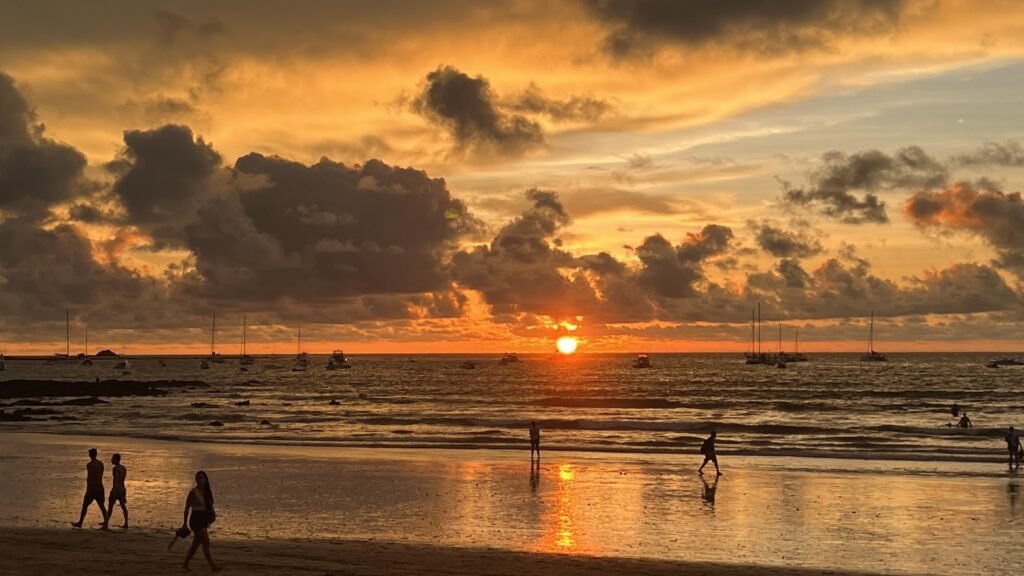
Costa Rica coastlines stretch along two oceans, with the Pacific on the west and the Caribbean Sea on the east. They offer very different experiences within a small country: dry-forest beaches and surf towns in the northwest, a national park beside the sand at Manuel Antonio, whale-watching in the south, and turtle-nesting canals on the Caribbean side.
This guide to Costa Rica coastlines explains the main regions, when each is at its best, and how to stay safe in the water. It is part of our broader Costa Rica travel guide, which covers entry rules, roads and safety.
Costa Rica Coastlines: Where to Start
The Pacific and Caribbean coasts follow different weather patterns. The Pacific has clearly defined dry and green seasons, with the dry season from mid-December to late April, according to the official tourism board. The Caribbean has a longer rainy period and can be a better choice in the fall, when the Pacific is at its wettest.
For a first trip, most travelers choose one Pacific beach stop, such as Manuel Antonio or Guanacaste, and add the Caribbean only if they have extra time. Road times are long, so the coast you choose should fit the rest of your route.
Guanacaste and the North Pacific
Guanacaste is a good place to start exploring Costa Rica coastlines in the dry season. It is the driest part of the country, with long sunny stretches in the dry season. The tourism board lists Tamarindo, Playa Grande, Playa Conchal and Nosara among the region’s best-known beaches. Many of these towns have surf lessons, restaurants and a relaxed beach-town atmosphere.
Tamarindo and Las Baulas
Las Baulas National Marine Park protects the nesting beaches of the leatherback turtle near Tamarindo. According to SINAC, the national park authority, the park is open daily and visitors may stay on the beach until 5:00 p.m. during the nesting season from October to February. Follow the rules for turtle watching, since guided visits are meant to protect the nests and the animals.
Ostional and Olive Ridley Turtles
At Ostional, olive ridley turtles come ashore in mass nesting events known as arribadas, and the tourism board says an arribada can bring as many as 100,000 turtles. Arribadas depend on the season and the moon and cannot be predicted exactly, so book with a local guide and check current rules.
Central Pacific: Manuel Antonio and Quepos
Manuel Antonio National Park sits beside beaches on the central Pacific coast and has some of the easiest wildlife-watching in the country. Park entry is controlled, so book through SINAC’s official online system and check the current opening days and hours. The park is closed one day a week, and SINAC’s sources list different days, so confirm before you plan your visit.
Canadian advice lists Manuel Antonio, Quepos and Dominical among the areas of particular concern for theft. Keep belongings out of parked cars and off the beach, and use secure parking.
South Pacific: Uvita, Marino Ballena and Osa
Marino Ballena National Park near Uvita was the first marine park in Costa Rica and Central America. SINAC says humpback whales visit every year from July to October to breed, and dolphins and other marine life are found in the park’s waters. Its best-known feature is the “whale’s tail,” a rocky and sandy formation that you can only visit at low tide.
The park is open daily from 7 a.m. to 4 p.m. according to SINAC. The Osa Peninsula, with Drake Bay and Corcovado National Park, is wilder, remote and slow to reach by road. Check the park authority’s rules for each sector before booking, since some areas require advance permits and guides.
Caribbean Coast: Tortuguero and the South Caribbean
The Caribbean coast feels different from the Pacific, with Afro-Caribbean culture, humid forest and a slower pace. Tortuguero National Park is reached by boat through a network of rivers and canals, and SINAC describes it as protecting the most important green turtle nesting beach in the Western Hemisphere. Four sea turtle species nest there, and visitors also look for manatees, birds and monkeys from small boats.
The park is very wet, with average rainfall of around 6,000 millimeters a year, according to SINAC. July and December are the wettest months, and March, April and October the driest. Turtle nesting seasons vary by species, and official sources give slightly different dates, so check the current season with your lodge.
Farther south, Cahuita and Puerto Viejo offer beaches, reggae and Caribbean food. Canadian advice flags theft in Cahuita, Puerto Limón and Puerto Viejo, and says violent assaults, though not frequent, have occurred in Puerto Limón and Puerto Viejo, so take extra care after dark and keep valuables out of sight.
Cocos Island
Cocos Island National Park is a UNESCO World Heritage site far out in the Pacific, and it is known for diving. It is reached on multi-day boat trips with specialist operators and is not part of a typical first-time itinerary. Check the operator’s experience and safety record before you book.
Weather and the Best Coast for Your Travel Dates
The best Costa Rica coastlines for your dates depend on the season. For a December to April trip, the Pacific coast and Guanacaste are the safest choices for sunshine. From May to November, expect afternoon rain on the Pacific and consider the Caribbean for more stable weather in the fall, according to the tourism board. Humpback whales are present in the south Pacific from roughly July to October.
Canadian advice says El Niño conditions are present and expected to strengthen into 2027, which may bring droughts, floods and severe storms. Hurricane season runs from mid-May to the end of November in the Pacific and from early June to the end of November on the Atlantic side. Heavy rain from mid-May to late November can cause flooding and landslides, so check the forecast before long transfers.
Swimming, Surfing and Beach Safety
Beach safety matters on all Costa Rica coastlines. Canadian advice says coastal waters can be dangerous, rip currents are common, several drownings occur each year, very few beaches have lifeguards and there are no warning signs of dangerous conditions.
Swim only in areas that locals or lifeguards recommend, never swim alone or after dark, and stay out of the water if you are unsure. Learn how to recognize and escape a rip current, which means swimming parallel to the shore. Surf schools can help beginners choose a safe beach.
Do not camp or sleep on beaches. Car break-ins at beaches are common, so leave nothing in the vehicle and never leave valuables unattended on the sand.
Responsible Coastal Travel
Responsible travel helps protect Costa Rica coastlines for the animals that depend on them. Keep a respectful distance from nesting turtles, avoid flash photography and follow your guide’s instructions. Stay on marked paths, take your trash with you, and avoid touching or feeding wildlife. Choose operators that follow park rules and limit group sizes, and buy park tickets only from the official SINAC system.
Getting to the Coast
Road conditions in Costa Rica are generally poor, and Canadian advice recommends avoiding night driving. Many beach towns are three to five hours or more from San José by road, depending on traffic and weather, so shuttles, private transfers and short domestic flights are common for visitors. Tortuguero is reached by boat, usually as part of a lodge package.
Choosing the Right Costa Rica Coast
- Easy first beach stop: Manuel Antonio or Quepos.
- Dry-season sun and surf: Guanacaste.
- Whales and quiet beaches: Uvita and Marino Ballena.
- Turtles and canals: Tortuguero.
- Caribbean culture: Cahuita and Puerto Viejo.
- Remote rainforest: Osa Peninsula.
Adding the Coast to a Costa Rica Itinerary
If you have 10 days, one Pacific beach stop pairs well with a volcano area and a cloud forest. Our 10 day Costa Rica itinerary ends on the central Pacific coast at Manuel Antonio. If you have 14 days, add Guanacaste or Tortuguero rather than another inland stop.
Experience Costa Rica Beyond the Beach
Costa Rica coastlines are best when you combine the beach with local life: a morning at a turtle-nesting beach, a lunch at a seaside soda, a surf lesson or a boat trip. For food ideas, read our guide to what to eat in Costa Rica, and read about Costa Rica culture and local customs before you go. Check the latest Government of Canada travel advice for Costa Rica before you travel.