
If you are wondering what to eat in Ireland, the short answer is simple, hearty food made from good local ingredients: potatoes, dairy, bread, lamb, and fish and shellfish from the Atlantic coast. This guide covers the dishes worth looking for, the regional specialties that differ from place to place, and practical tips for pubs, restaurants and markets.
Irish cooking has moved well beyond the old stereotypes, but the traditional dishes are still on menus across the country. Tourism Ireland’s guide to traditional Irish food lists stews, potato dishes, seafood and regional breads, and many are easy to find in pubs, cafés and family-run restaurants. For wider trip planning, see our Ireland travel guide.
What to Eat in Ireland: Start with the Basics
The best way to approach what to eat in Ireland is to think in meals rather than famous dishes. Breakfast is large, lunch is often soup, a sandwich or a seafood plate, and dinner may be a pub meal or a restaurant menu built around local fish, lamb or beef. Brown soda bread, butter and tea turn up almost everywhere.
Regional pride matters. Dublin, Cork, Waterford and Northern Ireland each have their own specialties, and coastal towns lean heavily on shellfish. Eating where locals eat, and asking what is local that day, usually works better than hunting for one “national” dish.
Everyday Dishes
The Full Irish Breakfast
The full Irish breakfast is the best-known meal. According to Tourism Ireland, it typically includes sausages, bacon, which is called rashers, eggs, white and black pudding, baked beans, tomatoes, mushrooms, hash browns and soda bread or toast, usually with tea or coffee and orange juice. Diners can often choose which items they want. Vegetarian and vegan versions are widely available.
Regional versions exist. In Northern Ireland, the Ulster fry adds potato farls, a pan-fried potato bread, and the items are usually cooked together in one pan. In Waterford, you may find a blaa, a soft white bread roll said to date back to the 17th century, served with bacon.
Irish Stew
Irish stew is a hearty native dish, typically made with lamb or mutton, potatoes and onions. It is slow-cooked comfort food, easy to find in pubs, and best ordered with brown soda bread to mop up the broth.
Boxty, Colcannon and Champ
Potatoes are central to Irish cooking, and three dishes show how they are used. Boxty is a traditional potato pancake, sometimes served with fillings such as ham and cabbage or seafood. Colcannon is mashed potato mixed with kale or cabbage and onion. Champ is another mashed potato dish, usually mixed with spring onions. Any of them can appear as a side dish or as the base of a main course.
Soda Bread
Soda bread is a staple served with soups and stews and used for open sandwiches with smoked salmon or crab. The cross cut into the top before baking has a folk explanation: it lets the fairies out, according to Tourism Ireland’s food writers. Brown soda bread is the version you will meet most often with soups and stews in restaurants and pubs.
Regional Specialties
Regional specialties are a big part of what to eat in Ireland, because each city and county has its own.
Coddle is a Dublin dish that Tourism Ireland says dates to the 1770s. It is a slow-cooked mix of bacon, sausages, onion and potato, and it suits a cold, wet day.
Drisheen is Cork’s version of black pudding, and food-focused visitors to the south-west may see it on traditional menus. Black and white pudding are part of the full breakfast across the country, so try them there first if you are unsure.
The Waterford blaa, mentioned above, is a soft bread roll that locals usually pair with dry-cured bacon.
In Northern Ireland, the Ulster fry and potato farls are the main regional breakfast, and Belfast’s St George’s Market is a good place to try one. Remember that Northern Ireland uses pounds sterling rather than euros.
Seafood Along the Coast
Ireland’s Atlantic coast supports excellent seafood, and it is one of the best answers to the question of what to eat in Ireland if you are visiting the west or south. Seafood chowder is one of the country’s most popular seafood dishes and is served as a starter or a main course, often with brown bread. Cockles and mussels, oysters, smoked salmon and a simple fish supper are all common.
In Kinsale, Tourism Ireland’s guide describes menus that feature local products such as Gubbeen salami, Oysterhaven oysters and locally caught lobster. Our Ireland coastlines guide explains which coastal towns work well as food stops.
Pubs, Tea and Drinks
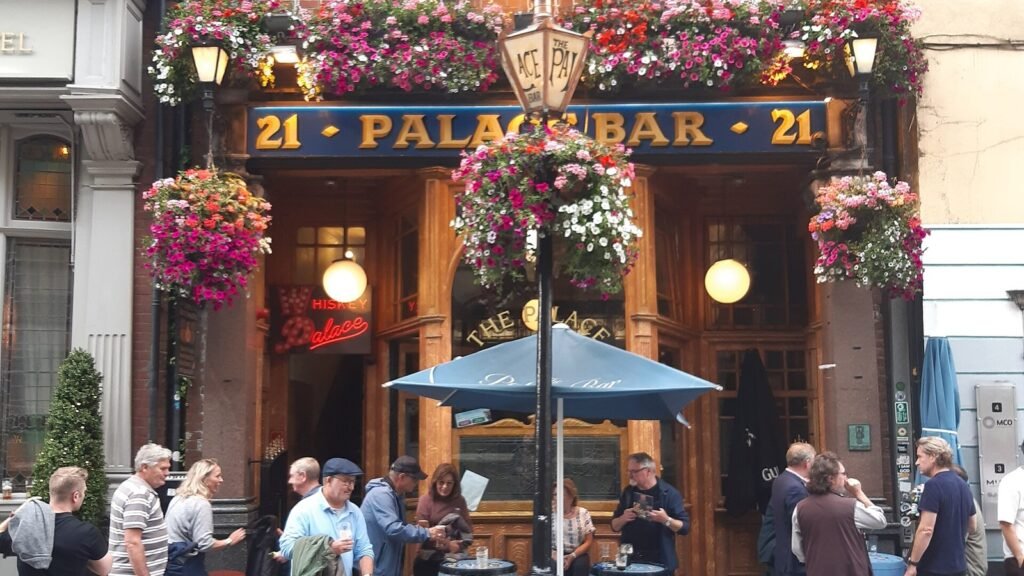
Pubs are part of the food scene, not just the drinks scene. Many serve soup and brown bread, stews and seafood, and Tourism Ireland’s guide to Irish pubs says many pubs serve food and describes live traditional music sessions as a must-do.
Guinness is the best-known Irish drink. The Guinness Storehouse in Dublin ends at the Gravity Bar, where you can have a pint, a Guinness 0.0 or a soft drink. Buy tickets only from the official site, and book a timeslot ahead in busy periods.
Irish whiskey is protected by law. According to the government’s technical file, it must be distilled on the island of Ireland and matured in wooden casks there for at least three years. Many distilleries offer tours, and booking ahead is sensible.
Irish coffee has a clear origin story. Tourism Ireland says it was invented in 1942 at Foynes Port in County Limerick, where flights between Europe and America stopped to refuel, and credits chef Joe Sheridan. The original recipe uses hot black coffee, Irish whiskey, brown sugar and lightly whipped cream floated on top.
Sweet Treats and Halloween Food
Ireland claims Halloween as its own, and some of its food traditions come from the festival. Tourism Ireland says that barmbrack and colcannon traditionally contain symbols said to predict the future. Barmbrack is a fruit loaf you will see in bakeries around 31 October. Our Ireland culture guide covers Samhain and other festivals.
A Typical Day of Eating in Ireland
A day of eating in Ireland can look like this:
- Breakfast: A full Irish breakfast, or a lighter plate of eggs, soda bread and tea.
- Lunch: Soup and brown bread, a seafood chowder, or a sandwich at a café or pub.
- Afternoon: Tea with something baked, or a stop at a food market.
- Dinner: A pub meal of stew, fish or lamb, or a restaurant menu built around local ingredients.
- Evening: A pint, an Irish coffee, or a traditional music session.
In Cork city, the English Market is a good place to browse. Tourism Ireland describes it as one of the world’s oldest food markets.
Practical Dining Tips for Ireland
A few practical habits make it easier to enjoy what to eat in Ireland without stress.
Book Busy Places
Popular restaurants fill quickly in summer, especially in Dublin, Galway and tourist towns on the west coast. Book dinner ahead on weekends and during festivals.
Tipping
Tipping is voluntary. The Irish government’s Citizens Information service separates tips from mandatory charges such as cover or corkage, so check your bill for any service charge before adding a tip.
Water
Public water supplies are monitored, and Uisce Éireann issues local boil water and do-not-consume notices when needed. If your accommodation tells you about a notice, follow its advice.
Allergies
The Food Safety Authority of Ireland says restaurants must provide written information on the 14 major food allergens. Check the menu, and tell your server about any allergy before you order.
Vegetarian and Vegan Travelers
Vegetarian and vegan options are widely available in cities and many towns, and the full breakfast is easy to adapt. In rural areas the choice can be narrower, so check menus ahead.
Pub Etiquette
In a group, drinks are often bought in rounds, with each person taking a turn. If you are not drinking much, it is fine to ask for a half pint or a soft drink. The legal drinking age is 18, according to Citizens Information, and under-18s may only be in a pub with a parent until 9 pm, or 10 pm from May to September.
Experience Ireland Through Its Food
Knowing what to eat in Ireland makes a trip richer, because meals are where conversation happens, whether at a breakfast table, in a pub or at a market stall.
Use this guide as a starting point, then build your own list of dishes to try in each region. For the full picture, read our Ireland travel guide and our 10 day Ireland itinerary.
Explore more food guides on TravelingInformed.