Ireland culture is easy to enjoy and easy to misread. Visitors expect pubs, music and friendly conversation, and they find them, but they also find a country with its own language, its own sports, a long and sometimes painful history and an island divided between two countries. This guide explains the everyday customs, the traditions worth planning around and the etiquette that helps you travel respectfully.
It focuses mainly on the Republic of Ireland and points out where Northern Ireland, which is part of the United Kingdom, works differently. For wider trip planning, see our Ireland travel guide.
Ireland Culture and Local Customs: Understanding the Basics
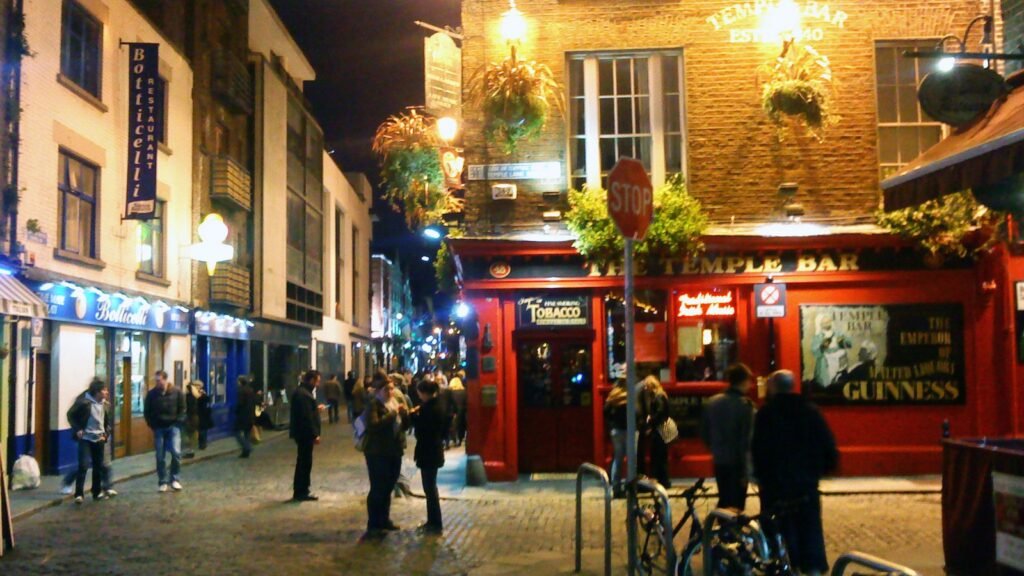
The best way to understand Ireland culture is to start with conversation. Tourism Ireland describes Irish pubs as places all about the chat, the banter and the craic, a word that means fun and good company. Small talk with strangers is normal, humour is dry and self-deprecating, and a friendly question about where you are from is usually just that.
Daily life is relaxed but polite. Say please and thank you, queue properly and avoid raising your voice in public. Weather is a standard topic of conversation, and being prepared for it, with a waterproof jacket and layers, is part of travelling here.
Greetings and Everyday Courtesy
A handshake or a simple hello is enough when meeting someone. In shops, cafés and pubs, a quick greeting is expected, and staff are generally informal. If you are invited into a conversation, it is polite to join in, but you are never obliged to stay.
A Few Useful Irish Expressions
You will hear Irish words in daily life, and a few are easy to learn:
- Sláinte means “cheers” or “good health.”
- Go raibh maith agat means “thank you.”
- Garda means a police officer. The national police service is An Garda Síochána.
- Céad míle fáilte means “a hundred thousand welcomes,” and appears on many welcome signs.
Do not worry about pronunciation. A friendly attempt is appreciated, and everyone you meet will also speak English.
The Irish Language
Irish, also called Gaeilge, is the first official language of the Republic under Article 8 of the Constitution, and English is the second. According to Tourism Ireland’s guide to the languages of Ireland, road signs and place names in the Republic are shown in both Irish and English, and in Gaeltacht areas, where Irish is the main language, only Irish is used.
Tourism Ireland says the Gaeltacht regions include the Aran Islands and parts of Donegal, Galway, Kerry and Mayo. If you drive through one, expect signs in Irish only, so keep a map or navigation app open. Place names often look different from the English versions on your map, and a sign for “An Daingean” will take you to Dingle.
Pubs and Traditional Music
Pubs are social centres, and they are central to Ireland culture. Many serve food, and Tourism Ireland’s pub guide recommends a traditional music session as a must-do. Sessions are informal. Musicians sit together, often near the bar, and play without a stage. Listen quietly, keep conversation low during tunes and applaud between sets.
In a group, drinks are often bought in rounds, with each person taking a turn. If you accept a drink, you are usually expected to buy a round before the group disperses. It is fine to ask for a half pint or a soft drink. The legal drinking age is 18, and under-18s may only be on licensed premises with a parent until 9 pm, or 10 pm from May to September, according to Citizens Information.
Music is also celebrated at the national level. Fleadh Cheoil na hÉireann, run by Comhaltas Ceoltóirí Éireann, is a week-long festival of traditional music that moves to a different host town each year. In 2026 it was held in Belfast from 2 to 9 August.
Gaelic Games
Gaelic football and hurling are Ireland’s native sports, run by the Gaelic Athletic Association. Tourism Ireland’s guide to native games notes that hurling uses a stick, called a hurley, and a ball called a sliotar. The All-Ireland finals fill Croke Park in Dublin, which holds 82,300 people.
Croke Park says tickets must be bought before you arrive because there are no onsite ticket offices, and it recommends pre-booking stadium tours, which include the GAA Museum. Even if you are not there for a match, a tour is a good introduction to Ireland culture.
History You Can Visit
Irish history is visible across the country. Brú na Bóinne in the Boyne Valley, a UNESCO World Heritage property, is described by Heritage Ireland as the country’s richest archaeological landscape, and visits are by guided tour with pre-booking essential. The Rock of Cashel was once the seat of the kings of Munster, and Brian Boru was crowned High King there in 978, according to Heritage Ireland. In the Burren, Tourism Ireland says Poulnabrone Dolmen has stood for between 5,200 and 5,800 years.
Kilmainham Gaol in Dublin is the place to learn about the struggle for independence, including the 1916 Easter Rising. Access is by guided tour only, and the museum says pre-booking online is the only way to guarantee entry. The Great Famine of the 1840s also shaped Ireland culture and the country’s emigration history, and many museums and local heritage centres cover it.
Festivals and Celebrations
St Patrick’s Festival
Dublin’s St Patrick’s Festival centres on 17 March. The official site lists the 2027 festival as running from 13 to 17 March, with the parade on Wednesday 17 March at midday. The parade is free, and accommodation in Dublin is busy, so book early.
Halloween and Samhain
Tourism Ireland says Halloween has Irish roots in the ancient festival of Samhain, celebrated on 31 October to mark the end of the harvest and the start of winter. Jack-o’-lanterns were originally carved from turnips, and barmbrack and colcannon contain symbols said to predict the future. Events include the Púca Festival in Athboy and Trim in County Meath, Derry Halloween in Derry~Londonderry and the Bram Stoker Festival in Dublin each October.
Bloomsday
Bloomsday on 16 June celebrates James Joyce’s novel Ulysses, which is set in Dublin on that date in 1904. Events include readings, walks and costumed celebrations around the city.
Faith and Community
Ireland has a strong Catholic heritage, and churches are still important parts of many communities, although Irish society today is diverse. Dress and behave respectfully in churches, keep your voice low and check whether visitors are welcome during services.
Northern Ireland and Sensitive Topics
Northern Ireland has a complex political history, and its communities have different identities. Many people there identify as British, many as Irish, and some as Northern Irish. Murals and flags can carry political meaning. Treat them with respect, avoid joining political discussions with strangers and follow local advice about areas to avoid after dark. In the Republic, never describe Ireland as part of the United Kingdom or refer to Irish people as British.
Safety, Common Sense and Respectful Travel
Canadian advice for the Republic is to take normal security precautions. Petty crime such as pickpocketing and purse snatching occurs, and tourists are frequently targeted. Keep your belongings secure, especially in crowded places. Demonstrations and strikes occur regularly, and violent demonstrations took place in Dublin in November 2023, so avoid large gatherings. Penalties for drug offences are severe.
If you are a victim of a crime, report it to An Garda Síochána, which can refer you to the Irish Tourist Assistance Service for help with accommodation, transport and contacting your insurer or embassy.
The Countryside and Farmland
Much of the Irish landscape is working farmland, and good manners apply. Keep to marked trails, close gates behind you and give livestock space. In the Burren, the Burrenbeo Trust notes that much of the limestone pavement is privately farmed, so seek permission before crossing farmland. Canadian advice says trails are not always marked and the weather can change rapidly, even in summer, so tell someone your plans and never hike alone in remote areas.
Practical Cultural Etiquette for Travelers
- Say please and thank you, and greet staff when you enter a shop or pub.
- Accept that conversation with strangers is normal, and that humour is often dry.
- Take your turn in a round, or politely opt out with a soft drink.
- Listen quietly during traditional music sessions.
- Check your bill for service charges before tipping, because tipping is voluntary.
- Never drink and drive. Ireland has strict laws against driving under the influence of alcohol or drugs.
- Book timed attractions ahead, and use official booking sites only.
Experience Ireland Culture Beyond the Pubs
Ireland culture is at its best when you give it time: an evening session, a morning in a museum, a conversation with a guide at an ancient site. Pubs and music are part of it, but so are the language, the sports, the history and the festivals that shape the calendar.
Use this guide as a starting point, then adjust your route to match what you want to see. For more planning help, read our Ireland travel guide, our guide to what to eat in Ireland and our 10 day Ireland itinerary.
Explore more culture guides on TravelingInformed.