
Germany rewards visitors who understand a few habits: arrive on time, greet people properly, expect quiet Sundays and treat the country’s history with respect. This guide to Germany culture and local customs explains the everyday etiquette, festivals, heritage and sensitive topics that are most useful to know before a first visit.
German customs vary by region and by generation, so treat this guide as a set of useful defaults rather than strict rules. When in doubt, watch what people around you do and follow their lead.
Germany Culture and Local Customs: Understanding the Basics
Germany is a federal country of 16 states, and its culture is a patchwork of regional traditions. The national tourist board describes everyday life as modern and open-minded, with plenty of occasions to socialize, from Carnival and wine festivals to Oktoberfest and music festivals. It also notes that German is the official language, that standard German is understood throughout the country and that a large share of the population speaks English.
For visitors, the biggest differences from North America are usually small. People are direct, schedules are taken seriously, shops are closed on Sundays and many public rules, from recycling to bike paths, are followed carefully.
Greetings and Everyday Courtesy
The federal government’s guide to German etiquette says Germans are great hand-shakers, both when they arrive and when they leave, and that a person joining a group often shakes hands with each individual. Close friends may kiss both cheeks, but the guide says this is not appropriate in a business setting.
When you enter a shop, especially a small one, it is normal to greet the staff with “Guten Tag” and to say “Auf Wiedersehen” when you leave. The same applies in doctors’ waiting rooms.
Sie and du. The formal “Sie” is the polite default with strangers. The guide says that in private the older person usually suggests “du” to the younger person, and in business the higher-ranking person suggests it. It also says to address people by family name, using titles such as Herr or Frau, and to ask before switching to first names. As a visitor, you can always use “Sie” and let locals suggest otherwise.
A Few Useful German Expressions
- Guten Morgen / Guten Tag / Guten Abend: Good morning, good day, good evening.
- Bitte / Danke: Please (and you’re welcome) / thank you.
- Entschuldigung: Excuse me, or sorry.
- Sprechen Sie Englisch? Do you speak English?
- Ist dieser Platz noch frei? Is this seat free?
- Prost / Zum Wohl: Cheers.
- Guten Appetit: Enjoy your meal.
Time, Sundays and Everyday Rules
Punctuality matters. The etiquette guide says Germans are extremely punctual and that even a few minutes of delay can offend, so be five to 10 minutes early for important appointments and call if you cannot make it on time. That includes tours, restaurant bookings and train departures.
Sunday is a quiet day. The Law Library of Congress explains that Sunday is constitutionally protected as a day of rest and that all 16 states generally prohibit shops from opening on Sundays and public holidays, with exceptions such as train stations and airports. Many Germans spend Sunday with family and friends, at museums, at restaurants or in nature, so plan activities around that. Read the full shop closing laws summary if you need details.
Recycling. Germans separate their trash carefully, and the etiquette guide says that throwing recyclable glass or paper into general garbage can strain relations with neighbors. If you rent an apartment, ask your host how sorting works.
Bikes. Canadian advice says bicycles have right of way on dedicated bike paths, so look before you step onto one.
Meals, Drinks and Tables
Beer and wine are part of a normal dinner, but the etiquette guide says not drinking is completely accepted and that you should not insist if someone declines. It adds that the legal drinking age is 16 for beer and wine and 18 for spirits.
Before drinking, it is common to clink glasses and say “Prost” or “Zum Wohl.” Wait until everyone has been served, and let the host lead. When a restaurant is busy, it is normal to share a table with strangers. Point to the free seat and ask first, wish the others “Guten Appetit” and say goodbye when you leave.
Crossing your knife and fork on the plate means you are not finished. Placing them parallel on the right side signals to the server that the plate can be cleared. Tipping is voluntary, and the city of Berlin says 5 to 10 percent is appropriate in restaurants. Our guide to what to eat in Germany has more on dining.
Music, Theatre and the Arts
Germany takes pride in its arts scene. The tourist board’s facts page counts about 300 theatres, 130 professional orchestras and 630 art museums, and names Bach, Beethoven and Goethe among the figures who shaped the culture.
UNESCO’s Intangible Cultural Heritage list for Germany includes organ craftsmanship and music, modern dance in Germany and falconry, along with crafts such as handmade glass production and indigo resist block printing. A concert in a cathedral or a performance at an opera house is one of the easiest ways to experience the tradition.
Festivals and Celebrations
Festivals show Germany culture at its most regional, since each area has its own traditions and calendar.
Carnival. Carnival in February is especially lively around Cologne and Düsseldorf, and bakeries sell special pastries during the season.
Easter. The tourist board says northern Germany lights large Easter bonfires, people in the Harz blacken their faces with soot and Bavaria has its own traditions, such as altar boys parading with wooden rattles on Good Friday.
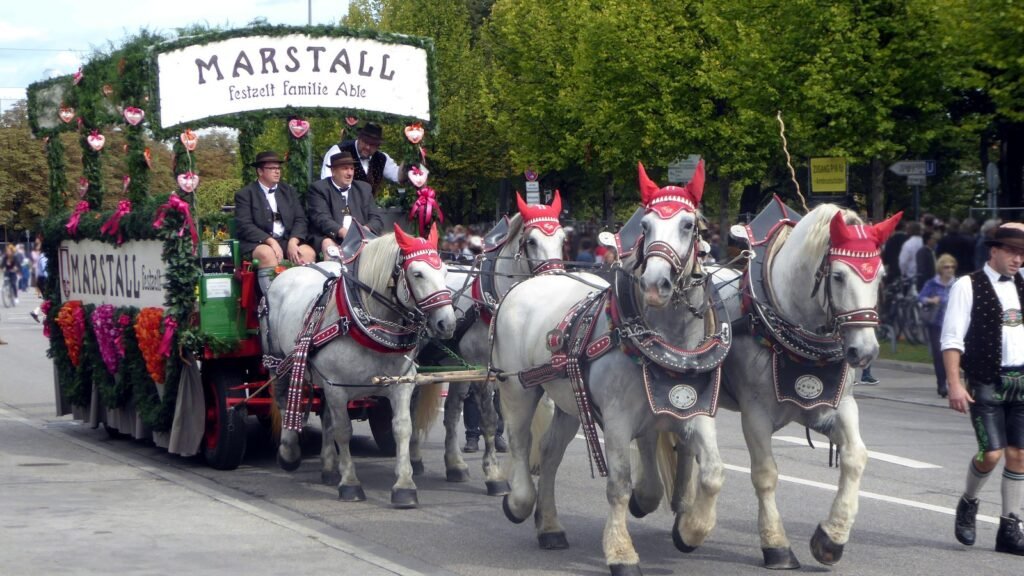
Oktoberfest. The 2027 festival runs from 18 September to 3 October on Munich’s Theresienwiese, according to the city of Munich. Bags are limited in size, and the city says entry to the tents can be temporarily closed on evenings and weekends.
Wine festivals. Late summer brings wine festivals in regions such as Rheinhessen, where the first young wine of the season, Federweißer, appears.
Christmas markets. Advent is the main season for markets, with Stollen, Lebkuchen, bratwurst and mulled wine. Canadian advice names Christmas markets as places where pickpockets are active and as possible terrorism targets, so stay alert in crowds.
Other dates. St. Martin’s Day on 11 November is known for children carrying lanterns and for goose dinners. The Day of German Unity on 3 October is a national holiday.
Heritage Sites
Germany has 55 UNESCO World Heritage properties, and several show different sides of its culture. Cologne Cathedral and Museum Island in Berlin are major city landmarks. Classical Weimar and the Bauhaus sites in Weimar, Dessau and Bernau cover literature and design, and the Luther memorials in Eisleben and Wittenberg cover the Reformation.
Jewish heritage is represented by the ShUM sites of Speyer, Worms and Mainz and the Jewish-medieval heritage of Erfurt. The palaces of King Ludwig II, including Neuschwanstein, were added in 2025, and the Upper Middle Rhine Valley shows how a river shaped trade, vineyards and castles. Our Germany travel guide explains how to fit them into a route.
History and Sensitive Topics
Germany culture today is closely tied to how the country remembers its past. It talks about the Nazi period and the Holocaust openly, and memorials are part of everyday life in many cities. Treat them as places of remembrance rather than photo stops.
In Berlin, the foundation says the Field of Stelae of the Memorial to the Murdered Jews of Europe is free and open around the clock, and the information center is free too, so check the current hours on the foundation’s site. The Berlin Wall Memorial on Bernauer Straße has free outdoor and indoor exhibitions. Near Munich, the town of Dachau says admission to the concentration camp memorial site is free.
Canadian advice says Germany has strict laws against Nazi symbols, greetings and propaganda, including sharing it online, and that offenders can face jail or fines. Never use Nazi-style gestures or greetings, even as a joke.
Laws and Safety
Canadian advice says police may ask for identification at any time, so carry adequate ID and keep a photocopy of your passport. Penalties for illegal drugs are severe. Demonstrations take place regularly and can turn violent, so avoid large gatherings.
Canada also notes that crimes by far-right extremists against ethnic, religious or political minorities occur, and that tourists are not specifically targeted. Violent crime is uncommon, but staying aware of your surroundings is sensible.
Nudity. The etiquette guide says Germany has a more relaxed attitude to public nudity than many countries. Saunas, a minority of swimming pools and some public parks on sunny days are “textile free” at certain times, and it suggests asking first if you would feel uncomfortable.
Practical Cultural Etiquette for Travelers
- Greet people in shops and say goodbye when you leave.
- Use “Sie” and family names until you are invited to use first names.
- Be punctual for tours, bookings and trains.
- Plan Sundays and keep cash or snacks for when shops are closed.
- Sort your trash and watch for bike paths.
- Bring flowers if you are invited to a German home, and remove the paper wrapping before you go in.
- Carry some cash, since the tourist board says paying in cash is still very popular.
- Respect memorials and never display Nazi symbols.
Experience Germany Culture Beyond the Sights
The best way to understand Germany culture is to slow down. Sit in a beer garden, visit a market, take a Sunday walk and read the memorial plaques as well as the museum labels.
For more planning help, see our Germany travel guide, our 10 day Germany itinerary and our guide to Germany coastlines. If you are comparing European destinations, you may also like our guides to France culture and local customs and Spain culture and local customs.