
Understanding Peru culture and local customs makes a trip easier and more rewarding. Peruvians are generally described as polite and welcoming, and a few small habits, such as greeting people and asking before taking photos, go a long way.
Peru culture is also shaped by strong regional identities. The coast, the Andes and the Amazon each have their own traditions, and Quechua, Aymara and many other languages are spoken alongside Spanish. Indigenous heritage is part of everyday life, especially in the highlands, and it shapes festivals, music, textiles and food.
This guide to Peru culture covers greetings, manners, festivals, music, crafts, Indigenous traditions and the cultural sensitivities worth keeping in mind. It works best alongside our Peru travel guide, which covers routes, seasons and entry rules, and our guide to what to eat in Peru.
Peru Culture and Local Customs: Understanding the Basics
The most useful starting point is that Peru culture is regional and layered. Lima has a modern, international feel, the highlands keep strong Inca and Indigenous traditions alongside Spanish colonial heritage, and the Amazon has its own communities and languages.
Spanish is the main language, and English is less widely spoken outside tourism businesses. Even a few polite phrases are appreciated, and effort matters more than perfect grammar.
Greetings and Everyday Courtesy
Greetings matter. When you enter a shop, a small restaurant or a taxi, say “buenos días,” “buenas tardes” or “buenas noches” first, and say goodbye when you leave. Skipping the greeting can seem rude, even if your request is polite.
Handshakes and cheek kisses. Men often shake hands when they meet, while women, and people who already know each other, often greet with a light kiss on the right cheek. Follow the other person’s lead.
A Few Useful Spanish Expressions
Buenos días (good morning), por favor (please), gracias (thank you), con permiso (excuse me), ¿cuánto cuesta? (how much does it cost?), la cuenta, por favor (the bill, please) and no, gracias (no, thank you) cover most everyday situations.
Dress, Time and Social Habits
Dress. Dress modestly in churches and in small villages, and bring layers, because Andean weather changes quickly. Smart-casual clothing is a safe choice for restaurants in Lima and Cusco.
Time. Be on time for flights, trains, tours and timed tickets such as those for Machu Picchu, where entry depends on your slot. In social situations, expect a more relaxed approach to time.
Conversation. Family, food, football, music and your impressions of Peru are welcome topics. Politics, the country’s recent conflicts and terrorism are sensitive, so let local people raise them first.
Photography and Respect for People
Always ask before photographing people, especially in Cusco and in Indigenous communities. At heavily visited places, such as markets and viewpoints, people who pose for photos, sometimes with llamas or children, often expect a small payment, commonly around one sol, and some are paid performers. Be polite if you do not want to pay, and do not take photos without permission.
Faith and Community
Catholic traditions shape many festivals and daily life, and in many Andean communities they blend with older beliefs, including respect for the earth and the mountains. Visit churches quietly, dress modestly, and do not photograph services without asking.
Festivals and Major Celebrations
Festivals are a highlight of Peru culture, and several are recognized by UNESCO. See the UNESCO’s list of Peruvian intangible cultural heritage for the full list, and check dates close to your trip, because they can shift.
Virgen de la Candelaria, Puno
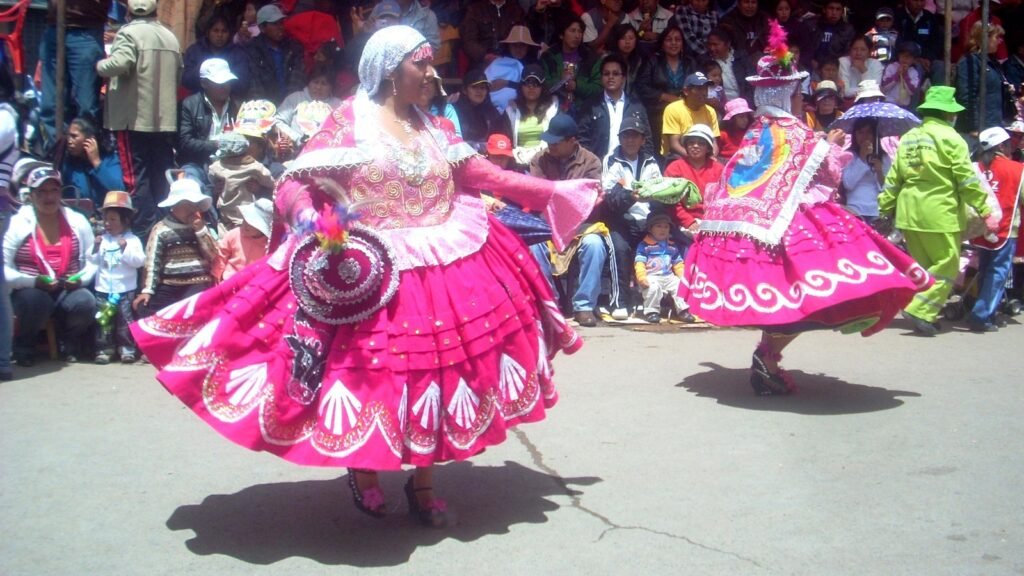
The festivity of the Virgen de la Candelaria in Puno, near Lake Titicaca, is known for its music, dance and costumes and was added to UNESCO’s Representative List in 2014. It is held in the early part of the year, so check the dates if you plan to attend.
Qoyllur Rit’i
The pilgrimage to the sanctuary of the Lord of Qoyllur Rit’i, in the Cusco region, is one of the most important Andean pilgrimages and was recognized by UNESCO in 2011. It takes place at high altitude in cold, demanding conditions and is a pilgrimage first and a tourist attraction second.
Inti Raymi and Other Cusco Celebrations
Inti Raymi, the festival of the sun, is celebrated in Cusco around the June solstice and draws large crowds. Holy Week is also marked with processions in Cusco and other highland towns. Book accommodation well ahead if you plan to be in Cusco for a major festival.
The Q’eswachaka Bridge
Each year, communities in the Cusco region renew the Q’eswachaka bridge, a rope bridge made from woven grass. UNESCO recognized the knowledge, skills and rituals involved in 2013, and it shows how Inca engineering traditions are kept alive.
Music, Dance and Crafts
Peruvian traditions include the scissors dance, recognized by UNESCO in 2010, the wititi dance of the Colca Valley, recognized in 2015, and the Sarawja music and dance of Aymara communities in Moquegua, recognized in 2025. Taquile, an island on Lake Titicaca, is known for its textile art, which UNESCO recognized in 2008.
Markets are good places to see textiles, ceramics and weaving. Buy directly from makers when you can, ask about the materials, and be wary of items sold as antiques, because exporting genuine cultural property can be illegal.
Indigenous Peoples and Responsible Visits
Quechua and Aymara communities are central to the highlands, and many other Indigenous peoples live in the Amazon, including the Awajún, whose pottery tradition UNESCO recognized in 2021. Community visits are not tourist attractions, so go through a reputable operator or a community-run project, follow the community’s rules about photography, and buy crafts directly from makers.
Coca Leaves
Coca leaves are part of Andean tradition, and coca tea is commonly offered in the highlands, where many people use it at altitude. Coca leaf is not the same as cocaine, but laws about bringing coca products across borders are strict, so check your home country’s rules before taking any home.
Safety, Common Sense and Respectful Travel
The Government of Canada travel advice for Peru says to exercise a high degree of caution because of high levels of crime, social conflict and strikes. It warns that protests and strikes can happen with little notice and that foreigners who take part in political activity can face detention or deportation, so keep away from demonstrations.
It also warns about express kidnappings involving taxis, spiked food and drinks, and harassment of women travelling alone, and it advises against ayahuasca and similar ceremonies, which it describes as unregulated and linked to serious illness and deaths. Choose other ways to experience traditional Peru culture.
Markets, Money and Tipping
Cards are common in hotels and larger restaurants, but cash is needed for markets, small shops and many taxis, so carry small notes. Many restaurants add a service charge of about 10 percent, and tipping guides, drivers and porters is customary. Canadian advice warns about counterfeit currency, so use banks and authorized exchange houses.
Practical Cultural Etiquette for Travelers
Greet first. Say hello and goodbye in shops and small businesses. Ask before photographing people, and expect to tip those who pose. Dress modestly in churches and villages. Respect the rules at heritage sites, where bag sizes, food and equipment are restricted. Avoid sensitive topics such as politics and terrorism unless a local person raises them. Check current advice before you travel, because conditions change.
Experience Peru Culture Beyond the Major Attractions
The best way to understand Peru culture is to spend time in local places: a market, a village festival, a family-run restaurant or a weaving workshop. The official Peru tourism site is a good starting point for events and regions, and our Peru travel guide explains how to put these places into a trip.
You can also browse more articles in our Culture category.