
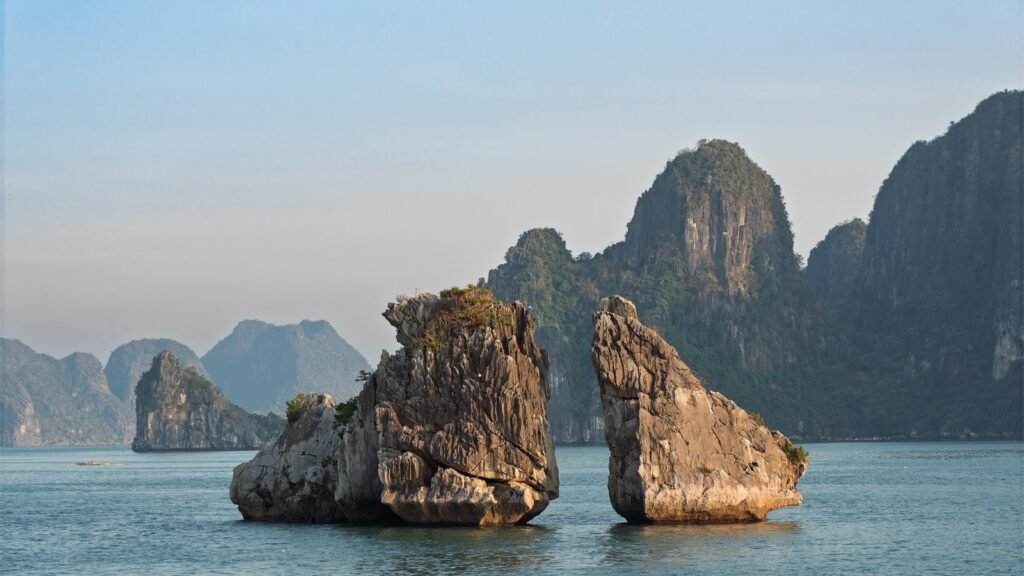
Vietnam coastlines stretch for more than 3,000 kilometres along the South China Sea and the Gulf of Thailand, from the limestone bays of the north to long central beaches, island marine parks and tropical sunsets in the south.
The country’s coast offers very different experiences depending on where you go. Ha Long Bay and Lan Ha Bay are famous for karst islands and overnight cruises, central Vietnam combines beaches with heritage towns, and the south adds islands such as Phu Quoc and Con Dao.
Weather is the key planning factor. Because Vietnam is so long, the best months for the beach in one region can be the rainiest months in another, so choosing the right coast for your travel dates matters more than choosing the most famous name.
Vietnam Coastlines: Where to Start
The simplest way to plan a coastal trip is to divide Vietnam coastlines into three areas: the bays and islands of the north, the central coast around Da Nang and Hoi An, and the beaches and islands of the south.
Each area has a different character. The north is about scenery more than swimming, the centre combines easy beaches with culture, and the south is where you will find the most classic tropical island stays.
Northern Bays and Islands
Ha Long Bay
Ha Long Bay is Vietnam’s most famous coastal landscape, with thousands of limestone islands and pillars rising from the water. It is part of a UNESCO World Heritage site that also includes the Cat Ba archipelago.
Most visitors explore on a day cruise or an overnight cruise from Ha Long city, about two and a half to three hours by road from Hanoi. Overnight trips allow time for kayaking, cave visits and quieter views at sunrise and sunset.
Lan Ha Bay and Cat Ba Island
Lan Ha Bay, south of Ha Long Bay and close to Cat Ba Island, offers similar karst scenery and is often quieter. Cat Ba also has a national park with hiking trails, viewpoints and access to small beaches.
Bai Tu Long Bay
Bai Tu Long Bay, to the northeast, is another option for travelers who want limestone scenery with fewer boats.
Ha Long Bay Cruise Tips
A cruise is the highlight of many trips to northern Vietnam, and a little research makes a big difference.
Choose the Route, Not Just the Boat
Cruises follow different routes. Some stay in the busiest parts of Ha Long Bay, while others head to Lan Ha Bay or Bai Tu Long Bay, which are often quieter. Check the itinerary before comparing prices.
Day Trip or Overnight?
A day cruise is possible from Hanoi, but the long road transfer leaves limited time on the water. An overnight cruise gives you sunset, sunrise, kayaking and cave visits at a more relaxed pace.
Check What Is Included
Compare what each price covers, such as transfers from Hanoi, meals, kayaking, entrance fees and drinks. Very cheap offers may cut corners on comfort or safety.
Expect Weather Changes
Cruises can be rescheduled or cancelled when storms approach, particularly between June and October. Book with a reputable, licensed operator and keep some flexibility in your plans.
The Central Coast
Da Nang
Da Nang combines a modern city with a long sandy coastline, including My Khe Beach. It is easy to reach by air and makes a convenient base for beaches, the Marble Mountains and day trips.
Hoi An Beaches and the Cham Islands
Hoi An’s old town is a short ride from An Bang and Cua Dai beaches. Speedboats also run to the Cham Islands, a marine protected area known for snorkelling, seafood and quiet island life.
Lang Co and the Hai Van Pass
North of Da Nang, the road over the Hai Van Pass offers sweeping coastal views before descending to Lang Co, a scenic stretch of beach and lagoon on the way to Hue.
Quy Nhon
Quy Nhon is a growing beach destination with sandy bays, fishing villages and Cham towers. It feels more relaxed than some of the better-known resort areas.
Nha Trang
Nha Trang is one of Vietnam’s best-known beach cities, with a long urban beach, island excursions and diving and snorkelling in the surrounding bay. It suits travelers who want restaurants, nightlife and easy organized trips.
The South-Central Coast
Mui Ne
Mui Ne, near Phan Thiet, is known for its red and white sand dunes, fishing harbour and steady winds that make it popular for kitesurfing and windsurfing, especially in the drier months.
Ho Tram and Vung Tau
Vung Tau and Ho Tram are coastal getaways within reach of Ho Chi Minh City. They are popular for weekend trips and resort stays rather than for dramatic scenery.
Southern Islands
Phu Quoc
Phu Quoc, Vietnam’s largest island, sits in the Gulf of Thailand. It offers beaches, resorts, night markets, pepper farms, fish sauce producers and boat trips around the An Thoi archipelago. West-facing beaches are known for their sunsets.
Con Dao
The Con Dao islands combine a national park, quiet beaches, coral reefs and nesting sea turtles. The islands also have a difficult history as the site of former prisons, which visitors can learn about respectfully. Con Dao is smaller and calmer than Phu Quoc and is best for nature-focused travelers.
Weather and the Best Coast for Your Travel Dates
Choosing the right part of Vietnam’s coast for your travel dates is one of the most important planning decisions.
- Northern bays: generally most comfortable from about October to April. Winter can be cool and hazy, while summer is hot and storms can occasionally disrupt cruises.
- Central coast (Da Nang, Hoi An, Quy Nhon): generally best from about February to August. Heavy rain, flooding and rough seas are more likely from roughly September to December.
- Nha Trang: often drier for much of the year, with a wetter period in late autumn.
- Southern islands (Phu Quoc, Con Dao): generally best in the dry season, roughly November or December to April.
Typhoon season runs from about June to December, and the Government of Canada notes that typhoons and flooding can affect travel. Check forecasts and local advice before boat trips, island transfers and beach days.
Swimming, Snorkelling and Diving
Vietnam offers good snorkelling and diving around the Cham Islands, Nha Trang, Phu Quoc and Con Dao, especially when seas are calm and visibility is better.
Conditions vary significantly by season. Strong currents and rough surf can occur on exposed beaches, so swim where lifeguards are present, follow warning flags and ask locally before entering the water.
Choose licensed operators for boat trips and diving, check that safety equipment is provided, and avoid touching coral or marine life.
Seafood Along Vietnam Coastlines
Coastal travel in Vietnam is also a food trip. Each stretch of coast has its own seafood specialties:
- Ha Long: fried squid cakes (cha muc) and fresh seafood served near the harbour.
- Da Nang and Hoi An: seafood restaurants along the beach, where you choose from tanks and pay by weight.
- Nha Trang: fish cake noodle soup (bun cha ca) and grilled seafood.
- Phu Quoc: herring salad (goi ca trich), sea urchin and the island’s famous fish sauce.
When eating at seafood restaurants, confirm the price per kilogram and the weight before your order is cooked to avoid surprises. Our guide to what to eat in Vietnam covers more regional dishes.
Responsible Coastal Travel
Vietnam’s marine environments face pressure from tourism, development and plastic waste. A few simple habits help:
- Choose operators that respect marine protected areas, such as the Cham Islands, Nha Trang Bay and Con Dao.
- Do not touch, stand on or collect coral, shells or marine life.
- Use reef-friendly sunscreen and bring a reusable water bottle.
- Follow park rules for turtle watching in Con Dao and keep a respectful distance.
- Avoid buying souvenirs made from coral, turtle shell or other marine wildlife.
Getting to the Coast and Between Islands
Domestic flights connect Hanoi and Ho Chi Minh City with Da Nang, Nha Trang (Cam Ranh), Quy Nhon, Phu Quoc and Con Dao, making it easy to add a coastal stop to a longer trip.
Ha Long Bay and Lan Ha Bay are usually reached by road from Hanoi, often with transfers arranged by cruise operators. Cat Ba Island can also be reached by ferry, and speedboats connect Hoi An with the Cham Islands.
Allow extra time for island connections, which can change or be cancelled in bad weather.
Choosing the Right Vietnam Coast or Island
- For iconic scenery: Ha Long Bay, Lan Ha Bay and Bai Tu Long Bay.
- For beaches combined with culture: Da Nang and Hoi An.
- For a lively beach city: Nha Trang.
- For wind sports: Mui Ne.
- For a classic tropical island stay: Phu Quoc.
- For quieter nature and marine life: Con Dao or the Cham Islands.
- For a short trip from Ho Chi Minh City: Vung Tau or Ho Tram.
Adding the Coast to a Vietnam Itinerary
You do not need a separate beach holiday to enjoy Vietnam coastlines. Coastal stops fit naturally into most first-time routes:
- Northern add-on: spend one or two nights on Ha Long Bay, Lan Ha Bay or Bai Tu Long Bay after a few days in Hanoi.
- Central add-on: combine three or four days in Hoi An and Da Nang with beach time, a Cham Islands trip or a drive over the Hai Van Pass.
- Southern finish: end your trip with three or four days on Phu Quoc or Con Dao to relax before flying home.
If you are visiting during the rainy season in one region, consider shifting your beach time to a coast with drier weather rather than skipping it altogether.
Experience Vietnam Beyond the Beach
The variety of Vietnam coastlines means there is little reason to rush through several regions simply to collect beach names. Choose the coast that works with your travel dates and interests, then give yourself enough time to enjoy its scenery, seafood, communities and slower pace.
Pairing a coastal stay with nearby culture, such as Hoi An’s old town, Hue’s imperial sites or Hanoi before a bay cruise, often creates the most rewarding trip.
For broader trip planning, visit our Vietnam Travel Guide: What to Know Before You Go. You can also read about what to eat in Vietnam and Vietnam culture and local customs.
You can also browse additional seaside destinations through our Coastlines travel guides.