
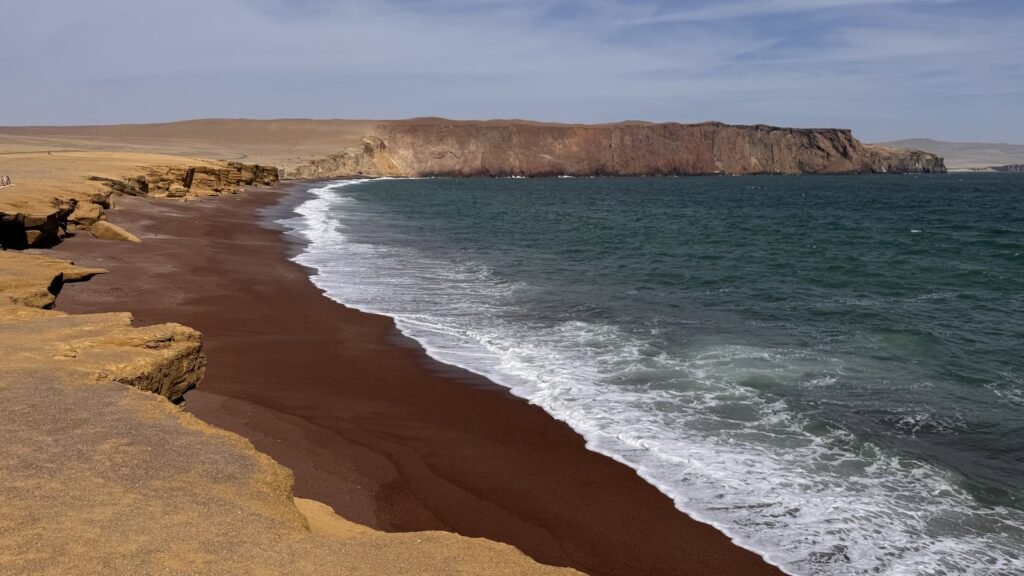
Peru coastlines are one of the country’s less obvious attractions. Peru has a long Pacific coast, much of it desert, with beaches, cliffs, surf breaks and wildlife, and it looks very different from the Andes and the Amazon that most visitors come for.
The coast is not one place. Lima sits on cliffs above the sea, the south coast has a marine reserve and desert dunes, and the far north has warm-water beach towns. Weather, water temperature and access vary a lot, and some stretches need extra safety checks.
This guide explains the main Peru coastlines, how the seasons affect them, and what to know before you go. It works best alongside our Peru travel guide, which covers routes, seasons and entry rules.
Peru Coastlines: Where to Start
For most first-time visitors, Lima is the easiest coast to experience, because its cliff-top parks and beaches are part of the city. The south coast around Paracas suits travelers who want wildlife and desert scenery, and the north around Máncora suits those who want a beach holiday and surfing.
The coast you choose depends on the time of year, how many days you have and whether you want a short add-on or a dedicated beach trip.
Lima and the Central Coast
Lima’s coastline runs along high cliffs, and the districts of Miraflores and Barranco have parks, walking paths and sea views. Surfing is popular along the city’s beaches, and the water is generally cooler than at tropical beaches. Winter months are often grey and damp, so the city’s coast is at its best in the sunnier months of roughly December to March.
Because the beaches are in a large city, take the usual city precautions. Canadian advice says a state of emergency is in effect in Lima and Callao and warns about petty crime, so keep valuables out of sight.
The South Coast: Paracas, the Ballestas Islands and Huacachina
Paracas and the Ballestas Islands
Paracas is a small coastal town and the base for visits to the Ballestas Islands, rocky islands known for seabirds and sea lions. Boat tours are short, with travel sources describing roughly 30 minutes each way and a total excursion of about two hours. The Paracas National Reserve, with its desert and cliffs, can be visited by land.
Sources disagree on fees and tour prices, so confirm them locally, and check the Peru’s protected areas authority (SERNANP) for reserve information. Wear closed shoes with good grip, a hat and sun protection, and bring layers because the sea can be windy.
Huacachina and Ica
Huacachina is a small oasis surrounded by sand dunes near Ica, popular for dune buggy rides and sandboarding. Canadian advice warns that sand buggy accidents and deaths have been reported around Ica and Huacachina, so choose a reputable operator, check the vehicle and use the safety equipment provided.
Nazca Lines Flights
The Nazca Lines are often visited by small plane. Canadian advice says Pisco International Airport is the safest option for these flights and recommends using a certified operator.
The North Coast: Máncora, Punta Sal and Beyond
The far north has warmer water and more reliable sun than the rest of the Peruvian coast. Máncora is the best-known beach town, with surfing, kitesurfing and nightlife, and nearby Punta Sal is described as calmer and better for swimming. Travel sources suggest Lima to Máncora flights take roughly two hours, landing at Talara or Tumbes with about an hour and a half by road to the town.
Beach weather in Máncora is generally best from about December to March. Surf seasons are described differently by different sources, with some pointing to winter and others to the southern summer, so check conditions with local surf schools. Humpback whale watching along the north coast is generally described as running from July to October.
Border areas. Canadian advice says to avoid non-essential travel within 20 kilometers of the Ecuador border, except for the Tumbes crossing and the Pan-American Highway. Check the current advice before you plan travel in the far north.
Huanchaco and Other Surf Towns
Farther south along the north coast, towns such as Huanchaco and Lobitos are known for surfing and have a more relaxed, local atmosphere. Sources give different best seasons, so check conditions and book through a reputable school.
Weather and the Best Coast for Your Travel Dates
The Andes’ dry season of roughly May to October does not match the best beach weather. Lima’s coast is sunniest in the southern summer, and the north’s beaches are warmest from about December to March. If you want to combine Machu Picchu with a beach, travel in the shoulder months, and check the forecast.
Canadian advice says El Niño conditions are present and expected to strengthen during the second half of 2026 and into 2027, which may increase floods and severe storms, so keep your plans flexible and consider travel insurance.
Swimming, Surfing and Beach Safety
Currents can be strong on parts of the Peruvian coast, so swim only at beaches where locals are in the water and lifeguards or schools are present. Take sun protection seriously, drink plenty of water, and do not swim after drinking alcohol.
Peru is seismically active. Canadian advice says that if you are on the coast during a tsunami warning, you should move to high ground, so learn the evacuation routes at your hotel.
Responsible Coastal Travel
Many coastal areas are protected habitats. Keep your distance from sea lions and birds, take your rubbish with you, avoid single-use plastic and follow the rules in protected areas such as the Paracas National Reserve. Choose tour operators that follow wildlife guidelines.
Getting to the Coast
Lima is on the coast and has Peru’s main international airport. Paracas is reached by road from Lima, and tour companies and buses serve the route, so ask your operator for current journey times. For the north, fly from Lima to Talara or Tumbes, or to Piura, and continue by road. Avoid night travel by road, as Canadian advice recommends.
Choosing the Right Peru Coast
Choose Lima for an easy coastal stop on a city trip. Choose Paracas for wildlife and desert scenery. Choose Máncora and Punta Sal for a beach holiday and warm water. Choose Huanchaco or Lobitos for surf and a quieter atmosphere.
Adding the Coast to a Peru Itinerary
A practical first-time route covers Lima, Cusco, the Sacred Valley and Machu Picchu. If you have extra days, add Paracas for a short coastal break, or Máncora for a beach finish. The coast works best as a separate chapter at the end of a trip, so you are not rushing between the mountains and the sea.
Experience Peru Beyond the Beach
Peru’s coasts are only part of the story. Pair beach time with the country’s food and culture: read our guides to what to eat in Peru and Peru culture and local customs, and see the official Peru tourism site for regions and events. Our Peru travel guide explains how to fit these places into a trip.
You can also browse more articles in our Coastlines category.