
Australia coastlines range from the world’s largest coral reef system to city beaches, sand islands, remote coral coasts and long scenic drives, and a good trip depends on matching the right coast to the season.
This guide explains where to start, what makes each coast different, how the seasons change your options and how to stay safe in the water. It works alongside our Australia travel guide, which covers planning, and our 10 day Australia itinerary, which fits a reef trip into a first visit. Conditions change, so check local warnings and the official sources linked below before you swim, snorkel or dive.
Australia Coastlines: Where to Start
For a first trip, three kinds of coast are the easiest to plan. City beaches such as those in Sydney are close to transport and lifesavers. The Great Barrier Reef is reached from gateways such as Cairns and Airlie Beach. The Great Ocean Road is a scenic coastal drive from Melbourne. Remote coasts such as Ningaloo in Western Australia reward travelers with more time and a taste for adventure.
The seasons are the reverse of the Northern Hemisphere, so summer is December to February. Tourism Australia says the north has a wet season and a dry season, and that matters as much as the month when you choose a coast.
The Great Barrier Reef
According to UNESCO, the Great Barrier Reef covers 348,000 square kilometres, with some 2,500 individual reefs and more than 900 islands, and it was inscribed on the World Heritage List in 1981. UNESCO describes more than 1,500 species of fish and about 400 species of coral.
Most visitors take a day trip or a multi-day tour by boat. Tourism Australia lists Cairns, Townsville, Airlie Beach and Hamilton Island among the gateways, and a flight from Sydney to Cairns is about three hours. Choose an operator that is accredited and follows reef rules, and book ahead in busy months.
Tourism Australia says snorkellers and divers must wear full-body wetsuits during stinger season, and that the ocean is free of marine stingers during the dry season. Canadian advice says you must provide a medical declaration for diving or snorkelling, so read the safety information for divers and snorkellers before you book.
The Whitsundays and Queensland’s Islands
UNESCO describes the Whitsunday Islands as a vista of green islands and spectacular sandy beaches spread over azure waters, within the reef region. The usual gateways are Airlie Beach and Hamilton Island, which Tourism Australia lists among the reef’s access points.
Boat trips, sailing and island stays are popular. Check the season, because cyclones can occur along the Queensland coast from November to April, according to Canadian advice. Choose flexible bookings if you travel in that period.
On the Queensland coast further south, K’gari, formerly Fraser Island, is the world’s largest sand island according to UNESCO. The property covers 181,851 hectares, with more than 250 kilometres of beaches, over 40 kilometres of coloured sand cliffs and half of the world’s perched freshwater dune lakes. Follow park rules and the advice on wildlife, including dingoes, from the park authorities.
Sydney and the New South Wales Coast
Sydney is the easiest coast for a short trip. Tourism Australia highlights beaches like Bondi and Manly and ferries from Circular Quay, and says Sydney Kingsford Smith Airport is 9 kilometres from the city. The Sydney Opera House is World Heritage listed.
Swim at patrolled beaches between the red and yellow flags and follow lifeguards’ instructions. Canadian advice says riptides are common and several drownings occur each year, so ask a lifeguard about conditions and avoid unsupervised beaches. Sun protection matters too, because Tourism Australia says UV levels are high all year.
Victoria’s Great Ocean Road
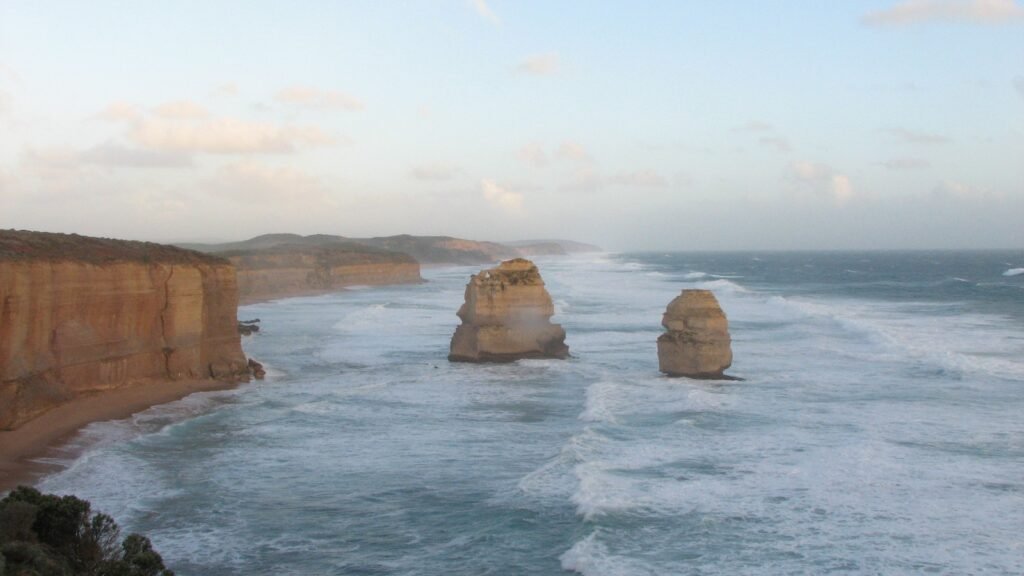
The Great Ocean Road is a coastal drive south-west of Melbourne. Tourism Australia suggests it as a day trip from Melbourne, and it lists the drive from Torquay to Nelson at about six hours. It also says the Melbourne to Adelaide drive takes about 8 hours directly or 13 hours via the Great Ocean Road.
Many travelers join a guided tour from Melbourne, while others hire a car, and Tourism Australia notes that traffic drives on the left. Allow more time than the map suggests for stops, weather and the winding road. Do not drive when tired, and stay on signed paths near cliffs and beaches.
Western Australia’s Coast
Western Australia has long, remote coasts. UNESCO says an estimated 300 to 500 whale sharks aggregate each year along the Ningaloo Coast, coinciding with mass coral spawning, and describes a near-shore reef beside an arid landscape. Tourism Australia warns that Western Australia is big, so allow time for flights and drives.
Shark Bay covers about 2.2 million hectares, around 70 per cent of it marine waters, and UNESCO says it is best known for stromatolites, large seagrass beds and a large population of dugongs. Use licensed operators for wildlife encounters, and keep your distance from animals.
Tasmania’s Coast
UNESCO says the Tasmanian Wilderness includes marine, near-shore, island and coastal environments that provide habitat for significant breeding populations of seabirds. Tasmania’s coast is cooler, so pack layers even in summer. Tourism Australia lists flights of just over an hour from Melbourne and about two hours from Sydney to Hobart.
Weather and the Best Coast for Your Travel Dates
For beaches in the south, summer from December to February is the main season, but it is also the busiest and most expensive time to travel, according to Tourism Australia. Winter averages run from about 11 degrees Celsius in the south to 30 in the north.
For the tropical north, the dry season from about May to October is easier for reef trips, with clear skies and no marine stingers, while the wet season from about November to April is hot and humid, with monsoon rain, possible cyclones and stinger risk. Canadian advice also says bush and forest fires are common between October and April and that El Niño conditions are expected to strengthen into 2027, so check the forecast.
Swimming and Beach Safety
Australia’s beaches are beautiful, but conditions can be dangerous. Follow these steps:
- Swim at patrolled beaches between the red and yellow flags, and obey signs and closures.
- Never swim alone, at night or after drinking, according to Tourism Australia.
- Respect rips. Canadian advice says riptides are common. If you are caught, stay calm and signal for help.
- Know the stingers. Queensland’s government says marine stingers are present in tropical waters all year and the risk is higher from November to May. If stung, call 000, pour vinegar on the sting and seek medical help, because Irukandji symptoms can take 20 to 40 minutes to appear.
- Respect crocodile warnings. In northern Queensland, swim only in designated safe areas, because there may be crocodiles even where there is no sign.
- Watch for sharks. Swim between the flags, avoid dawn and dusk and follow lifeguards’ directions.
Surf Life Saving Queensland gives first-aid advice for each type of stinger. Our safety and insurance guide explains why insurance matters for water activities.
Reef and Wildlife Etiquette
Do not feed or disturb wildlife, and follow advisory signs, according to Tourism Australia. Keep your distance from turtles, whales and other marine animals, and do not stand on coral.
Tourism Australia recommends a water-resistant, reef-friendly sunscreen of SPF30 or higher. Cover up with a rash vest or wetsuit as well, which also helps against stingers.
Getting to the Coast
Most coastal trips need at least one domestic flight. Sydney and Melbourne are the main gateways, and Tourism Australia says flying is the best way to cover large distances. Cairns is the usual base for the reef, and the Whitsundays use Airlie Beach and Hamilton Island.
If you plan a road trip, remember that traffic drives on the left and distances are long. Carry water and fuel, and avoid night driving in rural areas because of animals. Our flights and transportation guide covers booking basics.
Choosing the Right Australia Coast
- First trip, short on time: Sydney’s beaches and harbour.
- Reef and rainforest: Cairns and the Great Barrier Reef in the dry season.
- Scenic drive: the Great Ocean Road from Melbourne.
- Wildlife and remote coast: Ningaloo or Shark Bay in Western Australia, with extra days.
- Cooler, wilder scenery: Tasmania.
Australia coastlines suit different budgets and styles, so choose the one that matches your dates and comfort in the water.
Adding the Coast to an Australia Itinerary
If you have 10 days, a reef stop fits easily between Sydney and Melbourne, which is how our 10 day Australia itinerary is built. With two weeks, add K’gari, the Whitsundays or Western Australia. With a week, pick one coast and stay put.
Experience Australia Beyond the Coast
The coast is only part of Australia. When you are ready to look inland, read our guides to Australia culture and local customs and what to eat in Australia, and plan the whole trip with our Australia travel guide.