
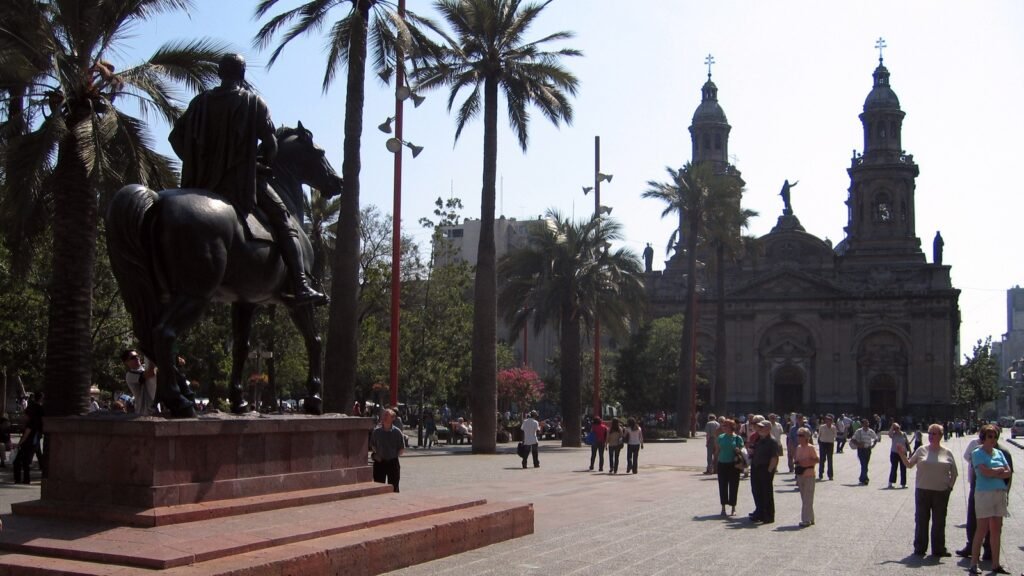
Chile culture and local customs are shaped by Indigenous traditions, Spanish colonial history, later European influences and a long, narrow geography that gives each region its own character. Chile Travel describes a rich cultural heritage that reflects the mix of Indigenous and European traditions.
You do not need to memorize a long list of rules before visiting. Courtesy, a few Spanish greetings, patience with a relaxed social pace and respect for Indigenous heritage and protected places will take you a long way. This guide is one part of our Chile travel guide.
Chile Culture and Local Customs: Understanding the Basics
Cultural Atlas, an Australian cultural education resource, says many Chileans see their society as fairly homogeneous, shaped by the Chilean Spanish language, Catholicism and Chile’s relative isolation, while noting that some people feel this emphasis overlooks the country’s multi-ethnic character. It also says family remains the bedrock of society even as attitudes have relaxed.
Regional differences are real. Chile Travel’s guide to Chilean cuisine describes Andean Aymara and Atacameña influences in the north, a Creole tradition in the central valley, Mapuche influence and a long coast in the south, and Polynesian heritage on Rapa Nui. Customs also vary by age, setting and community, so treat the points below as a starting point rather than a rulebook.
Greetings and Everyday Courtesy
Cultural Atlas says greetings matter because they show that a person is acknowledged. People typically shake hands with those of the same gender in formal settings or on a first meeting, and friends and family often greet with an abrazo, a handshake with a hug. Among less close family and friends a kiss on the right cheek is common. Men often wait for a woman to offer her hand first. Direct eye contact is important.
Use “buenos días,” “buenas tardes” or “buenas noches” and, if you do not know someone’s title, “señor” or “señora” with the surname until you are invited to use a first name. The same source says it is rude to talk loudly in public places and restaurants, and to remove your hat and sunglasses when entering a church.
Chilean Spanish and Useful Phrases
Spanish is the official language, and Cultural Atlas says nearly all Chileans speak it. Chilean Spanish has absorbed many words from Mapuche and plenty of local slang, so it can sound different from the Spanish you learned. In our view, learning greetings, “por favor” and “gracias” is enough to be polite, and locals tend to appreciate the effort.
A few Chilean terms are useful: a SIM card is called a “chip,” a traditional local restaurant is a “picada,” a “completo” is the local version of the hot dog, “palta” is avocado and “once” is the afternoon tea meal described below. On Rapa Nui, the island’s official park site welcomes visitors with “Iorana,” the Rapa Nui greeting.
Mapuche and Other Indigenous Cultures
Chile’s 2017 census, reported by the national statistics institute, counted 2,185,792 people who identified with an Indigenous people, about 12.8 percent of the population counted. Of them, 79.8 percent identified as Mapuche. The next largest groups were the Aymara, Diaguita, Quechua and Lickanantay (Atacameño) peoples.
Indigenous cultures are living cultures, not only history. In the north, Chile Travel says the El Tatio geysers are important to Indigenous peoples, and that “Tatio” means “the grandfather who cries” in Kunza, the Atacameño language. In Chiloé, Chile Travel describes the island’s wooden churches as a mix of European Christian tradition and Huilliche heritage.
The best way to learn is through Indigenous-led experiences, museums and cultural centres, where communities decide how their traditions are shared. Parts of the Araucanía and Biobío regions have seen politically motivated violence, and Canadian advice urges caution there, so check current advice before planning to travel in those areas.
Visiting Rapa Nui Respectfully
The official Rapa Nui National Park site calls the park sacred land of the Rapa Nui people and says it is a UNESCO World Heritage site protected by law. The Ma’u Henua Indigenous community administers it. The site says you must buy a ticket and hire a guide accredited by Ma’u Henua to enter, and that Rano Raraku and ‘Ōroŋo can each be visited once per ticket.
Its rules ask visitors to view the moai and ahu from the permitted distance without touching them or leaning on them, not to remove stones or objects, to stay on marked trails, not to write graffiti, not to light fires or camp, not to bring pets and not to use drones without authorization. Canadian advice adds that Easter Island stays are limited to 30 consecutive days and that you must complete the Rapa Nui Entry Form.
Mealtimes, Once and Dining Etiquette
Cultural Atlas says Chileans typically eat four times a day, with lunch the largest meal, and that dining etiquette can be quite formal depending on the company. At a home, the host shows guests their seats and people begin when the host invites them. Keeping both hands above the table, finishing what you serve yourself and not leaving straight after eating are all seen as polite. A drink offered to you is usually best accepted, and a toast ends with “salud.”
Once is Chile’s traditional tea-time meal. Marca Chile describes tea or coffee with bread, spreads such as butter, avocado and cheese, and something sweet. Cultural Atlas says it is usually taken between 4 pm and 8 pm. If you are invited to someone’s home, it suggests bringing chocolate or wine, and avoiding sharp gifts such as knives or scissors, which can suggest cutting ties. Our guide to what to eat in Chile has more.
Tipping and Paying
In restaurants, bars and cafés served by waiters, the bill suggests a tip of at least 10 percent, which the customer pays unless they say otherwise, according to the Dirección del Trabajo, Chile’s labor directorate. It is a suggestion, so check the bill and tip what you think is right.
Canadian advice says some small restaurants and stores outside Santiago may not accept credit cards, so carry some pesos. Cultural Atlas says punctuality is relaxed at social gatherings, where arriving 30 minutes to an hour late is common, but you should be on time for business and for tours, flights and park entry.
Festivals and Public Holidays
Chile’s national holidays around 18 September, known as Fiestas Patrias, are a major celebration, so book travel early and confirm opening hours with the official holiday calendar. Chilean Cuisine Day, 15 April, was set by presidential decree in 2009, according to Chile Travel. Chile Travel also says the Viña del Mar International Song Festival fills the Quinta Vergara amphitheater each February.
Canadian advice recommends extra vigilance during religious holidays, public celebrations and major political events. It also lists dates that often bring large demonstrations: 29 March, 1 May, 11 September and 18 October. Dates and closures change each year, so check official sources.
Poetry, Art and Heritage Sites
Pablo Neruda is Chile’s best-known poet, and Chile Travel says La Sebastiana in Valparaíso, which he bought in 1959, is one of three Neruda house museums in the country. UNESCO lists seven World Heritage properties in Chile: Rapa Nui National Park, the Churches of Chiloé, the historic quarter of Valparaíso, the Humberstone and Santa Laura Saltpeter Works, Sewell Mining Town, the Qhapaq Ñan Andean Road System and the Chinchorro culture settlements in Arica and Parinacota.
Canadian advice says Chilean law protects heritage areas, that penalties for violations range from fines to imprisonment and that authorities may stop you leaving the country while an investigation continues. Do not alter landmarks in any way, and learn the rules at each site before you go.
History, Politics and Sensitive Topics
Canadian advice says 11 September, the anniversary of the 1973 military coup, and 18 October, the anniversary of the 2019 civil unrest, are dates of national significance. The Museo de la Memoria y los Derechos Humanos in Santiago says it is a space to give visibility to the human rights violations committed by the Chilean state between 1973 and 1990, to dignify the victims and their families and to encourage reflection, and it is worth a visit for context.
Chilean law prohibits political activities by foreigners, and Canadian advice says taking part in demonstrations or promoting dissent, including on social media, may lead to detention or deportation. In conversation, listen first and avoid assuming views about politics or history. The same advice says Chilean law does not prohibit sexual acts between people of the same sex and that homosexuality is generally tolerated, but that society remains fairly conservative and 2SLGBTQI+ travelers could face discrimination.
Photography and Respectful Travel
Ask before photographing people at close range, particularly at Indigenous cultural events, religious ceremonies and private gatherings. Follow signs and guides at heritage sites, do not climb on or touch archaeological remains and do not fly a drone without permission. In national parks, remember the fire rules: Canadian advice says open fires are strictly forbidden outside permitted camping areas, with severe penalties.
Practical Cultural Etiquette for Travelers
- Greet people with a handshake or “buenos días” and use “señor” or “señora” until invited to use first names.
- Keep your voice down in restaurants and public places, and remove your hat in churches.
- Expect a relaxed social pace, but be on time for tours, flights and park entry.
- Accept a drink or a seat when a host offers one, and finish what you serve yourself.
- Treat a 10 percent tip as a suggestion on restaurant bills, and check the bill first.
- Follow Rapa Nui National Park rules and use an accredited guide.
- Ask before taking close photographs of people.
- Stay away from demonstrations and avoid political activity as a foreigner.
- Follow national park and heritage site rules, especially the ban on open fires.
Chile Culture FAQ
What local customs should I know about in Chile?
Greet people with a handshake or “buenos días” and use “señor” or “señora” until you are invited to use a first name. Cultural Atlas says friends and family often greet with an abrazo or a kiss on the right cheek, that Chileans typically eat four times a day with lunch the largest meal, and that arriving 30 minutes to an hour late to a social gathering is common. Canadian advice adds that foreigners may not take part in political activities and that national park and heritage rules are strictly enforced.
How much should you tip in Chile?
In restaurants, bars and cafés served by waiters, the bill suggests a tip of at least 10 percent, which the customer pays unless they say otherwise, according to the Dirección del Trabajo. It is a suggestion, so check the bill and tip what you think is right. Canadian advice says some small restaurants and stores outside Santiago may not accept credit cards, so carry some pesos.
What is once in Chile?
Once is Chile’s traditional tea-time meal. Marca Chile describes tea or coffee with bread such as marraqueta, hallulla or pan amasado, spreads such as butter, cheese, ham, avocado or tomato, and something sweet such as kuchen. Cultural Atlas says it is usually taken between 4 pm and 8 pm, and that guests invited to a home often bring chocolate or wine.
How should visitors behave on Rapa Nui?
The Rapa Nui National Park site calls the park sacred land of the Rapa Nui people. You must buy a ticket and hire a guide accredited by the Ma’u Henua community, view the moai and ahu from the permitted distance without touching them, stay on marked trails, avoid fires and camping and not use drones without authorization. Canadian advice says Easter Island stays are limited to 30 consecutive days and that you must complete the Rapa Nui Entry Form.
Experience Chile Culture Beyond the Sights
Understanding Chile culture before you arrive makes everyday interactions easier and helps you see how much the country changes from the desert to Patagonia. Join a once with a family, ride a funicular in Valparaíso, visit a wooden church in Chiloé and learn about Indigenous communities from the people who live there.
For broader trip planning, see our Chile travel guide and what to eat in Chile. You can also explore more destinations through our Culture travel guides.