
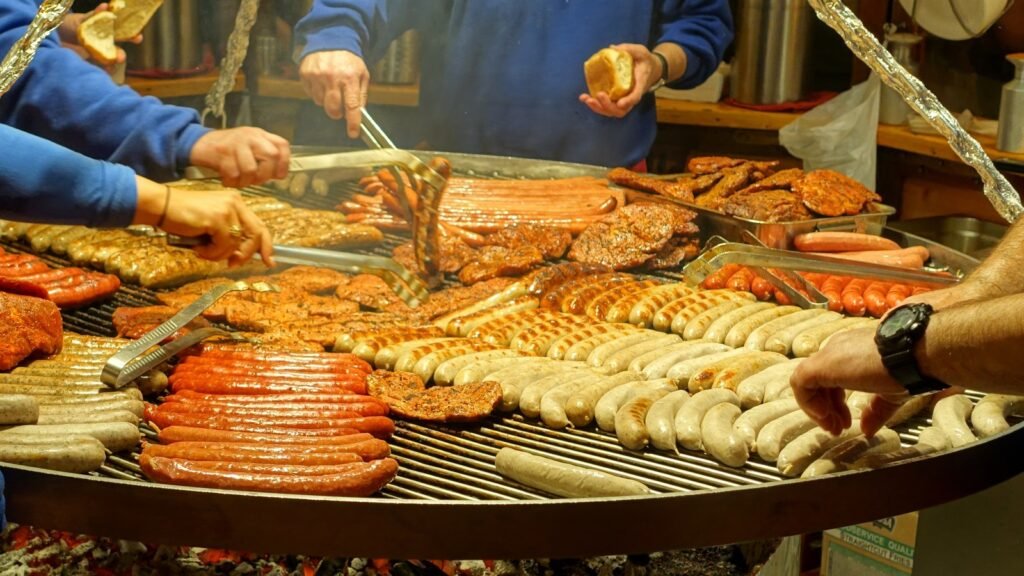
German food is more varied than its reputation for sausages and sauerkraut suggests. Bread, beer, regional specialties, seasonal markets and a strong café and baking culture all shape what ends up on the table. This guide to what to eat in Germany explains the dishes you are most likely to meet, the regional foods worth looking for and the practical details that make dining easier.
It focuses on food a first-time visitor will find in Berlin, Munich, the Rhine region and the main tourist routes. Menus, opening hours and seasons vary, so use this guide as a starting point and ask staff if you are unsure about an ingredient.
What to Eat in Germany: Start with the Basics
The German National Tourist Board says regional cooking was traditionally shaped by local produce such as potatoes, root vegetables, meat, fish and bread, and that many restaurants are returning to regional and seasonal ingredients. It also says modern German cooking has international influences and that Italian food is especially popular, so you will find pizza and pasta as easily as local dishes.
A good first checklist is a bakery breakfast, a regional sausage, a beer-garden or market meal, a slice of local cake and a local drink. Meals tend to be casual and well priced in markets and beer gardens, and more formal in sit-down restaurants.
Bread, Brotzeit and Bakeries
Bread is central to German eating. According to the German Bread Institute, quoted by the tourist board, more than 3,000 types of bread and baked goods are sold in Germany every day, and the board says German bread culture has been recognized as part of the country’s own intangible cultural heritage since 2014. It is not on UNESCO’s international list, which includes other German traditions such as organ craftsmanship and falconry.
Brotzeit, or Abendbrot, means a simple meal of bread with cold cuts, cheese, pickles and radishes. The tourist board says it is a tradition across the country. Look for soft pretzels, rye and wholemeal loaves, pumpernickel and local pastries such as Hamburg’s franzbrötchen or Berlin’s jam-filled doughnuts.
Sausages and Everyday Dishes
Sausage is a staple, but it varies by region, so what to eat in Germany depends heavily on where you are. The tourist board’s cuisine guide is a good map of what to try.
Bavaria and the South
Weißwurst, bratwurst, pork knuckle (Schweinshaxe) with sauerkraut and warm Leberkäse are the dishes most visitors associate with Bavaria, partly because of Oktoberfest. Obazda, a cheese spread, and pretzels are common beer-garden snacks around Munich.
Swabia and Baden
Württemberg is known for Maultaschen, a type of filled pasta, and Spätzle. Baden shows French and Swiss influence, with dishes such as tarte flambée, snail soup and Ofenschlupfer, a baked bread pudding.
The Rhineland, Hesse and the Palatinate
In the western middle of the country, the tourist board lists Himmel un Ääd (mashed potatoes and apple sauce with fried sausage or black pudding), Rhenish sauerbraten and Halve Hahn, which is a rye roll with cheese. Frankfurt has green sauce with egg and Handkäs mit Musik, often paired with Äppelwoi in a ribbed glass. The Palatinate is known for a rich trio of liver dumplings, bratwurst and Saumagen on sauerkraut.
Saxony and Thuringia
Thuringian Rostbratwurst is a regional favorite, and the tourist board says Erfurt’s market is the place to try Thuringian grilled sausages. Saxony has a sweet tooth, with Dresdner Eierschecke and Leipziger Lerchen.
The North Coast
Fish and seafood are staples in the northern states, and the tourist board says more fish is eaten in Hamburg and Mecklenburg-Western Pomerania than anywhere else in Germany. Fish sandwiches are sold at market stalls in Hamburg and make an easy lunch by the harbor.
Sweets and Baking
Cakes and pastries are part of the daily rhythm. The tourist board lists Dresdner Eierschecke, Leipziger Lerchen and Black Forest cake among the specialties, and says Dresden Christmas Stollen is loved around the world. Stollen has a long tradition and was considered a fasting pastry in the Middle Ages.
Nuremberg’s Lebkuchen is a spiced gingerbread said to go back to Franciscan monks in the 14th century. You can buy both at Christmas markets in December. At Carnival in February, the tourist board says Berliners filled with jam and Rhineland almond pastries called Muuzenmändelche appear in bakeries.
Beer, Wine and Cider
Beer is the best-known drink. The tourist board says Germany has about 1,500 breweries and some 5,000 types of beer, with more than half of the breweries in Bavaria. The German Purity Law of 1516 limits ingredients to water, malt, hops and yeast, and Pils is the most widely drunk style.
Regional styles are worth trying. Altbier is popular in western Germany and especially Düsseldorf, Bavarians favor wheat beer (Weizenbier) in tall glasses, and Cologne is known for its Kölsch pubs. At Oktoberfest the standard serving is a Maß, which is one liter.
Wine comes from 13 wine-growing regions, according to the tourist board. In Hesse, look for Äppelwoi, a cider served in a ribbed glass, and in Mainz look for the Weck, Worscht und Woi tradition of rolls, sausage and wine at the Saturday market from April to November.
Eating by Season
If you are deciding what to eat in Germany by season, the culinary calendar on the tourist board’s site is a useful guide to timing.
Winter. Kale and smoked sausage season starts the year, with the Oldenburg region known for its kale tours. Christmas markets in December sell Stollen, Lebkuchen, bratwurst and mulled wine, and goose with red cabbage and dumplings is the traditional dish on St. Martin’s Day, 11 November.
Spring. White asparagus is at its peak from about April to June, and the town of Beelitz near Berlin holds an asparagus festival. In the Swabian Alb, wild garlic appears in Spätzle, Maultaschen and soups.
Summer. Beer gardens and street-food markets are in full swing. The tourist board says street-food festivals serve everything from potato pancakes to currywurst.
Late summer and autumn. From late summer, fresh Federweißer, a young partly fermented wine, appears in wine regions such as Rheinhessen, often with onion cake. Pumpkin, mushrooms and game dishes follow in the autumn.
Markets and Beer Gardens
Markets are an easy way to taste several things at once. The tourist board’s weekly markets guide lists Munich’s Viktualienmarkt, with more than 140 permanent stalls and a beer garden under chestnut trees, and Hamburg’s Isemarkt, held on Tuesdays and Fridays with more than 200 vendors. It also mentions Frankfurt’s Konstablerwache farmers’ market, Berlin’s organic market at Kollwitzplatz on Thursdays and Erfurt’s market, which is closed on Sundays.
In traditional Bavarian beer gardens, the tourist board says guests are allowed to bring their own food and buy a drink there. Check each beer garden’s rules before you unpack a picnic.
Practical Dining Tips for Germany
These tips apply wherever you decide what to eat in Germany, from a market stall to a sit-down restaurant.
Tipping
Tipping is voluntary. The city of Berlin says service is usually not included in restaurant bills and that 5 to 10 percent is an appropriate tip, with 10 percent for good service in a nice restaurant. It advises telling the server the total you want to pay, including the tip, instead of leaving money on the table. If you pay by card, a cash tip is preferred where possible. See the Berlin tipping guide.
Sundays and Cash
Most shops are closed on Sundays and public holidays, according to the Law Library of Congress, with exceptions such as train stations and airports, so plan picnic supplies on Saturday. The tourist board says cash is still very popular, although most shops accept cards, so carry some cash for markets and small bakeries.
Food Safety
For health, the CDC advises choosing safe food and drinks and washing your hands often. Bring any allergy information written in German, and ask staff about ingredients when you are unsure.
Vegetarian and Special Diets
Traditional dishes lean on meat, but the tourist board says restaurants are also drawing on regional vegetables and international ideas, which can make choices easier in larger cities. Ask staff to confirm what is in a dish, as sausage and broth appear in many classic recipes.
Experience Germany Through Its Food
The best way to approach what to eat in Germany is to follow the seasons and the region you are in. Try a local bakery in the morning, a market lunch and a beer garden or regional restaurant in the evening.
Food also pairs well with the rest of your trip. Our Germany travel guide explains where to go, our Germany culture and local customs guide covers etiquette and our 10 day Germany itinerary puts it into a day-by-day plan. If you enjoy comparing European food, you may also like our guides to what to eat in France and what to eat in Italy.