
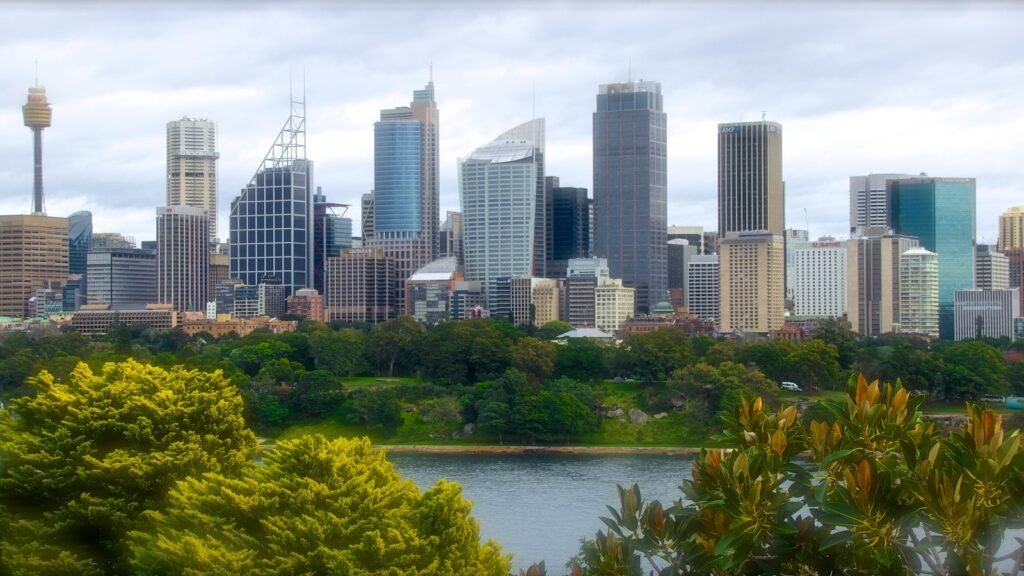
This Australia travel guide is designed to help you decide where to go, when to visit and how to plan a realistic first trip to a country that is much bigger than most visitors expect.
Australia is a continent-sized country, and a first trip is usually about choosing two or three bases and flying between them. Visitors come for Sydney’s harbour and beaches, Melbourne’s laneways and coffee, the Great Barrier Reef, the red desert of Uluru and cultures that Tourism Australia describes as the oldest living cultures on Earth. UNESCO lists 21 World Heritage properties in Australia: five cultural, twelve natural and four mixed.
The main planning issues are distance, season and paperwork. The seasons are the reverse of the Northern Hemisphere, the tropical north has wet and dry seasons of its own, and many visitors, including Canadians, need an electronic travel authority before they fly. Australia also has strict biosecurity rules. With a few bases, early bookings and some preparation, most visitors have a smooth trip. The sections below explain the details.
Is Australia Right for Your Trip?
This Australia travel guide is a good fit if you want a first trip built around coastlines, cities, wildlife and big landscapes at a relaxed pace. Tourism Australia describes Australians as laid-back, friendly and outdoorsy, and the country suits travelers who enjoy beaches and reef trips, wildlife, hiking, wine regions, road trips and city food and coffee.
Australia may not be the right fit if you only have a few days, dislike long flights or hope to see the whole country in one trip. Tourism Australia notes that it is a long way between cities, and its own table lists a flight from Sydney to Perth at just over four hours. Reaching Australia from North America or Europe also means a long flight, and flying across the Pacific crosses the International Date Line, so the calendar jumps ahead and you land a day or more after you leave.
Best Time to Visit Australia
Australia’s seasons are the reverse of the Northern Hemisphere’s. Tourism Australia gives summer as December to February, autumn as March to May, winter as June to August and spring as September to November.
Summer. Tourism Australia’s best-time page calls December to February sunny, hot and busy, and the most expensive time to travel, so book early. Canadian advice warns that heat can be severe from mid to late summer and that bush and forest fires are common between October and April.
Autumn and spring. The same page describes March to May and September to November as some of the best times to travel, with milder weather and cheaper flights than in summer, while the tropical north is in its dry season.
Winter. June to August is the quieter season in the south, with fewer visitors and better accommodation deals, although Tourism Australia says it is peak season around Cairns and the Great Barrier Reef.
The tropical north. Tourism Australia describes a wet season from about November to April, with hot, humid days, monsoon rain and possible cyclones, and a dry season from about May to October with clear skies. Queensland’s government says marine stingers are present in tropical waters all year, with higher risk from November to May.
The Red Centre. Tourism Australia points to April and May for sunny days and warm nights around Uluru.
Canadian advice also notes that El Niño conditions are expected to strengthen into 2027, which may increase the likelihood of droughts, floods and severe storms. Check the forecast and the Bureau of Meteorology before you commit to dates.
Where to Go in Australia
Most first trips choose from a handful of regions.
Sydney and New South Wales. Tourism Australia highlights the Sydney Opera House, the Harbour Bridge, ferries from Circular Quay and beaches such as Bondi and Manly. The Sydney Opera House is World Heritage listed, and the Greater Blue Mountains Area just inland covers 1.03 million hectares with cliffs of up to 300 metres, slot canyons and waterfalls.
Melbourne and Victoria. Melbourne is known for street-art laneways such as Hosier Lane, coffee and the National Gallery of Victoria. Tourism Australia suggests day trips to the Great Ocean Road and the Yarra Valley.
Queensland and the Great Barrier Reef. The Great Barrier Reef covers 348,000 square kilometres, with about 2,500 individual reefs and more than 900 islands, according to UNESCO. Tourism Australia lists Cairns, Townsville, Airlie Beach and Hamilton Island among the gateways. The Wet Tropics of Queensland rainforest runs for roughly 450 kilometres along the northeast coast.
The Red Centre. Uluṟu-Kata Tjuṯa National Park is dual-listed by UNESCO for its natural and cultural values and is the traditional land of the Aṉangu. Tourism Australia lists direct flights from Sydney or Melbourne of three to three and a half hours.
Tasmania. The Tasmanian Wilderness covers more than 1.58 million hectares, almost a quarter of the island. Tourism Australia lists flights of just over an hour from Melbourne and about two hours from Sydney to Hobart.
Western Australia. Perth is the gateway to a very large state. Tourism Australia warns that Western Australia is big, and the Ningaloo Coast and Shark Bay are both World Heritage listed.
The Northern Territory. Kakadu National Park has been home to Aboriginal people for more than 50,000 years and is known for its rock art. Canadian advice says permits are required when travelling on Aboriginal land.
How Many Days Do You Need?
For a first visit, 10 days is a workable length if you keep to three bases. Tourism Australia says six to 10 days is often enough to get a good taste, and suggests choosing the east coast or the west coast rather than both.
With a week or less, focus on one or two cities and a nearby natural landmark. With two weeks or more, Tourism Australia suggests two, three or four cities and a natural wonder such as the Great Barrier Reef, Uluru or the Great Ocean Road. Its planning rule of thumb is three or four days in each destination, which is why our 10 day Australia itinerary uses three bases.
Getting Around Australia
Distances shape every plan in this Australia travel guide, so decide early how you will cover them.
Flights. Tourism Australia says flying is the best way to cover large distances and lists Qantas, Virgin Australia, Jetstar and Rex among the domestic airlines. Its city-to-city table gives about 1.5 hours between Sydney and Melbourne or Brisbane, about three hours from Sydney to Cairns and just over four hours from Sydney to Perth. Canada does not assess foreign domestic airlines against international safety standards. Our flights and transportation guide covers booking basics.
Trains and coaches. Tourism Australia highlights The Ghan, between Adelaide and Darwin, and the Indian Pacific, between Sydney and Perth, as rail journeys, and names Greyhound as the national coach operator. They are experiences in their own right rather than quick transfers.
Driving. Traffic drives on the left. Tourism Australia says you can drive on a foreign licence for up to three months if it is in English, and otherwise need an International Driving Permit. Canadian advice says the names on your licence must match your passport and recommends carrying an International Driving Permit. If you are not used to driving on the left, Tourism Australia suggests hiring an automatic car.
Outback and rural roads. Canadian advice warns of drivers going at excessive speeds, roaming animals and road trains. Tourism Australia advises not driving at night in the outback because kangaroos are hard to see. Carry water, fuel and food, tell someone your route and check conditions before you set off.
Time zones. The mainland has three standard time zones, according to Tourism Australia: UTC+10 for Queensland, New South Wales, Victoria, Tasmania and the ACT, UTC+9:30 for South Australia and the Northern Territory, and UTC+8 for Western Australia. New South Wales, Victoria, South Australia, Tasmania and the ACT use daylight saving from the first Sunday in October to the first Sunday in April. Queensland, the Northern Territory and Western Australia do not, so the time difference between cities changes with the season.
Costs and Budgeting
The currency is the Australian dollar (AUD). We do not quote fixed prices here because fares, tours and hotel rates change with the season, so check current prices on the operators’ own sites before you build a budget. Our money and budgeting guide covers how to plan costs.
Tourism Australia says hotels and restaurants do not add service charges, and that tipping is your choice. It adds that at upmarket restaurants it is common to tip about 10 per cent for good service. Prices include a goods and services tax, and some visitors can claim part of it back through the Tourist Refund Scheme at the airport on departure. Check the current conditions before you shop.
Food and Dining
Australian eating is relaxed and varied. Tourism Australia points visitors to brunch culture, with avocado on toast and a flat white coffee, to a pub meal in an outback town, to barbecues and to bush foods such as Kakadu plum and mud crab, which Indigenous Australians have eaten for more than 60,000 years.
Seafood is easy to find on the coast, and wine regions such as the Barossa Valley, McLaren Vale, Margaret River and the Hunter Valley are popular for day trips. Our what to eat in Australia guide covers the dishes, drinks and dining habits in more detail.
What to Know Before You Go
These are the practical points that most often affect a first trip.
Entry. Canadian advice says Canadians do not need a tourist visa for stays of up to 90 days but do need an electronic travel authority (ETA) to visit Australia, and that you should travel with the same passport you used to apply. The Australian government says the ETA is requested through the Australian ETA app, and a service charge applies. Tourism Australia says an ETA allows multiple visits for up to a year, with stays of up to three months each time.
Your passport must be valid on the day of entry, but airlines can be stricter, so check with yours. Other passports have different rules, so see our visa requirements guide and check the Department of Home Affairs before you book.
Biosecurity and customs. Every arriving passenger completes an Incoming Passenger Card. Tourism Australia says you must declare items such as meat, fish, eggs, dairy, fruit and vegetables, plants, animal products and soil, and that undeclared items can be seized and lead to fines or even imprisonment. Canadian advice describes very strict rules on food and animal products. If you are unsure, declare it. Large amounts of cash must also be declared.
Health and insurance. Canadian advice says health care is excellent, but payment is expected at the time of service, and it recommends insurance that covers medical evacuation and hospital stays. Tourism Australia says travel insurance is not mandatory but is highly recommended. Read our safety and insurance guide and speak to a travel health provider about routine vaccines, the Southern Hemisphere flu season of April to October and mosquito-borne illnesses such as dengue. The CDC publishes a destination page for Australia.
Sun and heat. Tourism Australia says the sun is strong even on cloudy days, that UV levels are high all year, and that you should use water-resistant, reef-friendly sunscreen of SPF30 or higher, a hat and sunglasses, with extra care between 10 am and 3 pm. Canadian advice warns that dehydration and heatstroke can be fatal.
Water and wildlife. Canadian advice says riptides are common and several people drown each year, and that sharks, crocodiles and jellyfish pose a risk in some areas. Swim at patrolled beaches between the red and yellow flags, follow lifeguards’ instructions and never swim alone, at night or after drinking. In northern Queensland, obey crocodile warning signs even where none is posted. Do not feed or disturb wildlife.
Safety and emergencies. Canadian advice is to take normal security precautions. Violent crime is low, but pickpocketing and bag snatching occur mostly in larger cities and vehicle break-ins are common, so keep valuables out of parked cars. There is a threat of terrorism. Dial 000 for emergency services. Read the full Government of Canada travel advice for Australia before you book.
Power and plugs. Tourism Australia gives the supply as 220 to 240 volts, 50 Hz, and says you need an adapter for the Type I Australian plug, so Canadian plugs need an adapter.
Suggested First-Time Australia Itinerary
If you have 10 days, a workable first-time route is Sydney, Cairns and the Great Barrier Reef, and Melbourne. It uses three bases and two domestic flights.
Days 1 to 3: Sydney. See the harbour and Opera House, take a ferry, spend time at a beach and add a day in the Blue Mountains if you can.
Days 4 to 6: Cairns and the reef. Fly north, take a reef trip and spend a day in the rainforest.
Days 7 to 9: Melbourne. Explore the laneways and galleries and take a day trip, such as the Great Ocean Road.
Day 10: Depart. Allow time for the airport and, if you shopped, the Tourist Refund Scheme.
With 14 days, add Uluru or Tasmania rather than more stops on the east coast. With a week, choose two bases. Our full 10 day Australia itinerary has the day-by-day plan.
Australia Travel FAQ
Do I need a visa to visit Australia?
Canadian travel advice says Canadians do not need a tourist visa but must get an electronic travel authority (ETA) before they travel, and should use the same passport they applied with. The Australian government says an ETA is requested through the Australian ETA app and a service charge applies, and Tourism Australia says it allows multiple visits for up to a year with stays of up to three months each time. Your passport must be valid on the day of entry, but airlines can be stricter. Every arriving passenger completes an Incoming Passenger Card. Other nationalities have different rules, so confirm them with the Department of Home Affairs.
What is the best time to visit Australia?
It depends on the region, and the seasons are the reverse of the Northern Hemisphere. Tourism Australia calls March to May and September to November some of the best times to travel, with summer from December to February the busiest and most expensive. The tropical north has a wet season from about November to April and a dry season from about May to October, and Queensland’s government says marine stingers are a higher risk from November to May. Canadian advice also warns of bush fires between October and April and says El Niño conditions are expected to strengthen into 2027.
How many days do you need in Australia?
Ten days works for a first trip that combines Sydney, the Great Barrier Reef and Melbourne without rushing. Tourism Australia says six to 10 days is often enough to get a good taste of one coast, suggests about three or four days in each destination, and says two weeks or more lets you add places such as Uluru or the Great Ocean Road. Distances are long, so avoid adding too many bases.
Is Australia safe for tourists?
Canadian advice is to take normal security precautions. Violent crime is low, but pickpocketing and bag snatching occur mostly in larger cities and vehicle break-ins are common. The bigger risks for visitors are often natural: strong sun and heat, riptides, sharks, crocodiles and marine stingers in some waters, bush fires and long remote roads. Swim at patrolled beaches between the red and yellow flags, protect yourself from the sun and read the current advice before you go.
Do I need travel insurance for Australia?
Yes, you should buy it. Canadian advice says health care is excellent but payment is expected at the time of service, and it recommends insurance that covers medical evacuation and hospital stays. Tourism Australia says travel insurance is not mandatory but is highly recommended. Choose a policy that covers medical care, hospital stays and evacuation, and adventure activities such as diving if you plan them.
Final Thoughts on This Australia Travel Guide
Australia rewards travelers who plan around distance. A first trip works best as an introduction rather than an attempt to see everything.
For a first visit, choose two or three bases, apply for your ETA before you fly, declare food and plant items, buy travel insurance, protect yourself from the sun and swim between the flags. Tasmania, Western Australia and the Red Centre can fill a longer trip.
Use this Australia travel guide as a starting point, then adjust the route to match your time, interests and comfort level with planning. For more help, see how to plan a better trip.
If you’re comparing destinations in Asia and the Pacific, you may also want to read our Japan travel guide, Indonesia travel guide and Vietnam travel guide.
Explore more destination guides on TravelingInformed.