
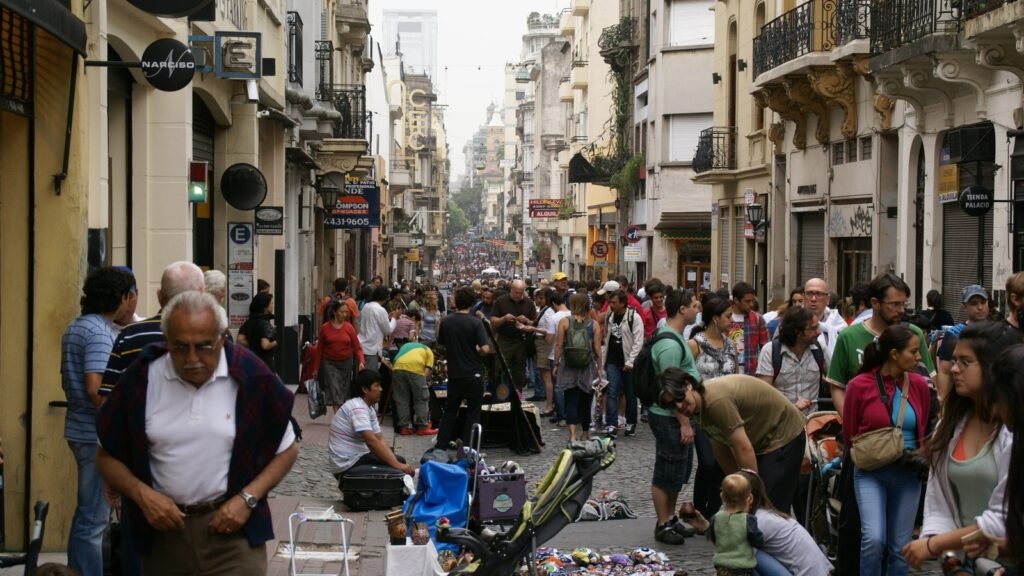
Argentina culture is warm, social and expressive. Friends gather for long meals, football and mate, and Buenos Aires is a city of theatres, cafés and tango halls. This guide to Argentina culture and local customs explains the habits and traditions travelers meet most often, from greetings and mate etiquette to tango, gaucho traditions, festivals and sensitive topics.
It is a starting point rather than a rulebook. Customs vary between Buenos Aires, the northern provinces and Patagonia, and most Argentines are happy to explain their traditions to curious visitors who ask politely.
Argentina Culture and Local Customs: Understanding the Basics
Argentina’s national tourism site describes a culture built on friendship, passionate opinions, football, mate and long late dinners. Spanish is the national language, and everyday speech has its own local flavor. Argentines often use “vos” instead of “tú”, and the tourism site lists slang such as “che”, an all-purpose way to get someone’s attention.
Argentine culture also reflects its history of immigration. Buenos Aires’ official tourism site says Italian influence is strong in the city’s food, and you will see European-style architecture in neighborhoods such as Recoleta. The north has Indigenous and Andean traditions, Patagonia has its own history, and the countryside has a gaucho heritage. A first trip is richer if you leave time to see more than one of these sides.
Greetings and Everyday Courtesy
The usual greeting is a kiss on the cheek. The national tourism site lists it among Argentine customs and says it is the usual greeting for family, friends and people met for the first time. If you are unsure, follow the other person’s lead.
Argentines enjoy conversation, and the tourism site says they give passionate opinions on subjects from football to politics, with expressive hand gestures, and that discussions rarely turn hostile. Listen first and avoid joking about topics you do not know well.
A Few Useful Spanish Expressions
- Buen día / Buenas tardes: good morning / good afternoon.
- Por favor / Gracias: please / thank you.
- Disculpe: excuse me.
- ¿Cuánto sale?: how much is it?
- La cuenta, por favor: the bill, please.
- Propina: tip.
Slang can be friendly between friends and rude with strangers, so listen first and avoid copying words whose meaning you are not sure of.
Mate: A Shared Ritual
Mate is an infusion of yerba mate, drunk from a gourd through a metal straw called a bombilla. The tourism site describes it as a sign of kindness and friendship, drunk at any time of day, and says everyone at a gathering shares the same mate.
If you are offered mate, the basic etiquette described by tourism sites is simple. One person, the cebador, pours and serves the group. When the gourd reaches you, drink and hand it back to the cebador, avoid moving the bombilla, and say “gracias” when you do not want any more, because saying it tells the cebador you are finished. Practices vary between groups, so watch what others do. If you are not comfortable sharing a straw, you can politely decline.
Meals, Time and Conversation
Meals are late and social. Buenos Aires’ tourism site says dinner runs from about 8 pm until after midnight, with prime time from 9:30 pm, and the national site lists late-night dinners around 10 pm among Argentine customs. Restaurants usually close between lunch and dinner, and cafés serve merienda, a late-afternoon snack of coffee and cake.
The asado is the best-known social meal. The tourism site describes Sunday as the favorite day for it, and the time spent at the table after eating, the sobremesa, is for conversation, stories and card games. Plan to stay and talk rather than rush. Our guide to what to eat in Argentina explains the dishes.
Tango, Folklore and Music
UNESCO’s Representative List of the Intangible Cultural Heritage of Humanity includes four Argentine traditions: tango (2009), filete porteño, a traditional painting technique in Buenos Aires (2015), chamamé (2020) and cuarteto, the music, dance and lyrics of the city of Córdoba (2025).
Tango has been played since the 19th century according to the tourism site. Buenos Aires’ official site says you can find classes and milongas, the traditional social dance events, in neighborhoods such as San Telmo and Constitución in the south and Palermo and Villa Crespo further north, and that Calle Zelaya is dedicated to Carlos Gardel and other tango greats. A staged show is an easy introduction. Milongas have their own codes, so watch for a while before you dance and ask the host if you are unsure.
Folklore is a large part of the country’s music. The Cosquín festival in Córdoba runs for nine evenings in late January and early February (the 2025 edition ran from 25 January to 2 February), and its program features zamba, chacarera, vidala, cueca, baguala and carnavalito. In Salta, the tourism site says folk clubs called peñas on Balcarce Street are a place to hear zambas and chacareras.
Theatre and reading. Buenos Aires has the Teatro Colón, a dense theatre scene along Avenida Corrientes and dozens of historic cafés recognized as bares notables, with Café Tortoni described as the oldest café in the city.
Gaucho Traditions
Gauchos are the horsemen of the plains. The tourism site describes the first gauchos as expert riders and independent, nomadic countrymen who worked the land of the Buenos Aires plains. Typical clothing includes loose pants, a poncho, boots, a beret and a neck scarf, and everyday rituals include mate and a slowly grilled asado.
Día de la Tradición on 10 November honors José Hernández, born in 1834 and author of the epic poem Martín Fierro. The Tradition Festival in San Antonio de Areco in Buenos Aires province celebrates gaucho and regional culture, and Córdoba hosts the Festival Nacional de Doma y Folklore, a twelve-day event. If you want to experience gaucho life, look for a day at a ranch with riding and an asado.
Festivals and Celebrations
Carnival is celebrated in the weeks before Lent. The tourism site calls the Gualeguaychú Carnival in Entre Ríos one of the country’s most iconic celebrations, with parades at the Corsódromo. In Jujuy, the Carnaval de Humahuaca mixes Spanish and Indigenous traditions, and the tourism site says it opens with the “unearthing of the devil”, linked to Pachamama, or Mother Earth.
Patriotic holidays follow the calendar. National holidays that do not move include 24 March (Day of Memory for Truth and Justice), 2 April (Day of Veterans and the Fallen of the Malvinas War), 25 May (Revolution of May), 20 June and 9 July (Independence Day) under Law 27.399. Pastelitos are traditionally eaten on 25 May and locro is a holiday stew. Shops and attractions may close or change hours on holidays, and some public events draw large crowds.
Football is close to a religion. The tourism site describes Sundays as football days, and neighborhood matches, called picaditos, are common. La Bombonera in La Boca is a football landmark. Canadian advice warns that soccer matches can be rowdy and violent, so ask your hotel before attending a match.
Heritage Sites
UNESCO lists twelve World Heritage properties in Argentina. The cultural ones show the country’s deep history:
- Cueva de las Manos, a cave with stencilled hand outlines and animal paintings made between 13,000 and 9,500 years ago.
- Quebrada de Humahuaca, a valley that UNESCO says has been a major trade route for about 10,000 years, with traces of Inca and independence-era history.
- The Jesuit Block and Estancias of Córdoba, which UNESCO says illustrate a religious, social and economic experiment carried out for more than 150 years in the 17th and 18th centuries, and the Jesuit Missions of the Guaranis, shared with Brazil.
- Qhapaq Ñan, the Andean road system, shared with other countries.
- The Architectural Work of Le Corbusier, a serial property that includes a building in Argentina.
- The ESMA Museum and Site of Memory, inscribed in 2023.
History and Sensitive Topics
Argentina has a recent history that many people feel strongly about. The ESMA Museum and Site of Memory in Buenos Aires was the Navy’s principal secret detention center during the civil-military dictatorship of 1976 to 1983, according to UNESCO. Treat it as a place of remembrance, follow the visitor guidance and avoid casual comments about the period.
Argentina also claims sovereignty over the islands that are known internationally as the Falkland Islands, which it calls the Islas Malvinas, and 2 April is a national day of remembrance. The topic is sensitive, so listen first and avoid debating it with strangers.
Laws and Safety
Penalties for drug offences are severe, with jail time and heavy fines according to Canadian advice. Canadian advice also says 2SLGBTQI+ travelers may face discrimination and that solo women hikers have been assaulted, so take sensible precautions. Demonstrations and strikes are frequent and can turn violent, and Canada advises never to cross blockades.
For crime, Canadian advice says to take normal security precautions across the country, with extra caution in Greater Buenos Aires and Rosario. Pickpocketing and bag snatching are common, so keep your phone and bag close, particularly in tourist areas. If you are robbed, hand over valuables without resistance. Our Argentina travel guide covers safety, health and entry rules.
Practical Cultural Etiquette for Travelers
- Greet people. A “buen día” when you enter a shop, café or taxi is polite, and a kiss on the cheek is normal among friends.
- Be patient with late meals. Plan an afternoon snack if you cannot wait for dinner at 9:30 pm.
- Tip 10%. The tourism site says tipping is not required by law but is a deeply rooted custom.
- Share mate with care. Learn the basics, and decline politely if you prefer.
- Respect memory sites. Dress simply and keep your voice down.
- Ask before photographing people, including performers and vendors.
- Avoid sensitive topics. Listen before you share opinions on politics or the Malvinas.
Experience Argentina Culture Beyond the Sights
The best way to understand Argentina culture is to slow down. Sit in a historic café, share a mate with a guide, listen to a folklore night in Salta, or watch a milonga in Buenos Aires.
For wider planning, read our Argentina travel guide, see how culture fits into our 10 day Argentina itinerary, and compare traditions with our guides to Peru culture and local customs and Brazil culture and local customs.