
Indonesia is a country of many islands, languages and traditions, and its culture is easier to enjoy when you know a few basics. This guide to Indonesia culture and local customs explains the courtesies, ceremonies, performing arts and rules that help a first-time visitor travel respectfully.
It focuses on what travelers are most likely to meet in Bali, Java and the main tourist areas. Customs vary between islands and communities, so treat this guide as a starting point and follow local advice.
Indonesia Culture and Local Customs: Understanding the Basics
Indonesia’s culture is shaped by hundreds of local traditions spread across thousands of islands. Most Indonesians are Muslim, while Bali is known for its own form of Hinduism, so what is normal in Yogyakarta may differ from what is normal in Ubud. UNESCO’s Intangible Cultural Heritage list shows how wide the range is, with 16 Indonesian entries that include batik, gamelan, wayang puppet theatre, pencak silat, the kebaya and the Balinese dance genres.
The most useful rule is to be observant. Dress a little more conservatively than you would at a beach resort, watch what locals do at temples and mosques, and ask if you are unsure. Smartraveller advises visitors to respect local religion, places of worship, traditional ceremonies and religious offerings, and Canadian advice asks travelers to dress conservatively and respect local traditions.
Greetings and Everyday Courtesy
Indonesians are generally polite and indirect. A smile and a calm tone go a long way, and losing your temper in public tends to make a situation worse. Bali’s official Do and Don’t list asks visitors to respect locals and other tourists, learn basic Indonesian and not haggle too aggressively.
A Few Useful Indonesian Expressions
- Selamat pagi means good morning.
- Terima kasih means thank you.
- Permisi is a polite way to say excuse me.
- Maaf means sorry.
- Tolong means please, when asking for help.
Even a few words are appreciated, and English is most common in tourism businesses.
Religion and Places of Worship
Mosques, temples and shrines are active places of worship, not only sights. Dress modestly, cover your shoulders and knees, and follow the signs and any staff guidance. Take your shoes off when asked.
Canadian advice notes that Ramadan in 2027 is expected to begin around 7 February and asks visitors to be discreet about eating, drinking and smoking in public between sunrise and sunset. The official tourism site also says smoking is prohibited in places of worship, and that drinking is prohibited in most public places such as places of worship.
Bali: Ceremonies and Offerings
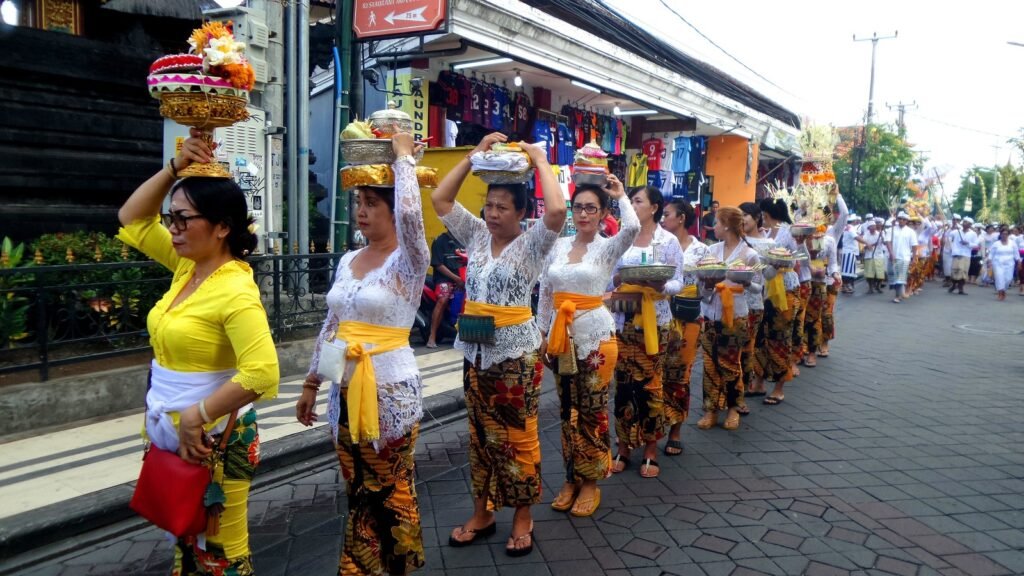
Bali’s daily life includes small offerings, ceremonies and processions. Bali’s official Do and Don’t list asks visitors to experience Balinese ceremonies respectfully, avoid walking on offerings and not take or post disrespectful photographs at religious sites. Offerings are placed on the ground, at doorways and at shrines, so watch where you step.
If you are invited to a ceremony, dress modestly, follow your host’s lead and do not enter inner temple areas unless you are invited. Smartraveller adds that visitors should not climb sacred trees.
Nyepi, the Day of Silence
Nyepi is Bali’s Day of Silence and falls on the Balinese new year. The date changes every year with the Balinese calendar. News reports say Ngurah Rai airport suspends all flights for 24 hours during Nyepi, so check the date before you book flights or plan a transfer.
Performing Arts
Performing arts are one of the most visible parts of Indonesia culture, and several traditions are on UNESCO’s lists:
- Gamelan. UNESCO inscribed gamelan in 2021. The ensemble is built mainly from ornate, percussive instruments made of hand-forged metal.
- Wayang. UNESCO describes wayang puppet theatre as an ancient storytelling form from Java, with flat leather shadow puppets and three-dimensional wooden puppets, and a master puppeteer called the dalang.
- Balinese dance. UNESCO’s entry for three genres of traditional dance in Bali describes sacred, semi-sacred and recreational dances accompanied by gamelan, learned by children informally from an early age.
- Other elements. UNESCO also lists the angklung (2010), Saman dance (2011), Reog Ponorogo (2024) and pencak silat (2019).
Sit through at least one performance and ask your hotel about schedules. Dress modestly, stay quiet during the show and ask before taking photos, especially at temple performances.
Textiles, Crafts and Traditions
Indonesia’s craft traditions are a large part of its identity. UNESCO inscribed Indonesian batik in 2009 and the kris in 2008, and its list also includes the noken bag of Papua, the kebaya (2024), pinisi boatbuilding in South Sulawesi (2017) and the pantun poetic form (2025).
Shop at reputable stores and workshops, ask how items are made, and avoid buying anything that appears to be a protected or sacred object. Bali’s official Do and Don’t list also advises using official money changers.
Heritage Sites
Indonesia culture is easiest to see at its heritage sites, which tell several parts of the country’s story. UNESCO lists ten properties in Indonesia, including Borobudur and Prambanan, Bali’s subak landscape and the Cosmological Axis of Yogyakarta. Temples and palaces are active cultural places, so follow signs, dress modestly and treat the sites with respect.
Laws and Sensitive Topics
Some local rules are stricter than visitors expect, and knowing them is part of understanding Indonesia culture:
- Drugs. Penalties are severe, and the death penalty exists for some drug offences, according to Smartraveller. The official tourism site says possession can bring four to twelve years in prison.
- Relationships. Smartraveller notes that Indonesia’s revised criminal code includes penalties for cohabitation, adultery and sex outside marriage between a man and a woman. Authorities can act on a complaint from a spouse, or from a parent or child if you are unmarried.
- LGBTQ+ travelers. Canadian advice says national law does not criminalize same-sex relations, but some provinces do, and in Aceh same-sex acts between Muslims are punished by caning. Read the current advice.
- Aceh. Aceh upholds aspects of Sharia law, which may sometimes apply to non-Muslims.
- Gambling. Gambling is illegal for locals and foreigners.
- Work and content. Smartraveller says it is illegal to work or volunteer on a tourist visa, and that creating content for commercial purposes may be treated as a breach of visa conditions.
- Demonstrations. Canadian advice says demonstrations can turn violent quickly, so avoid them.
Safety, Common Sense and Respectful Travel
Many visitors travel without problems, but common sense matters. Canadian advice describes a threat of terrorism, regular armed robberies in some areas, pickpocketing in tourist areas such as Bali and Lombok, and a high rate of card fraud. Never leave drinks unattended, avoid homemade alcohol and be careful with strangers who ask for money. Our Indonesia travel guide covers safety, entry rules and health in detail.
Dress, behavior and photography matter. Avoid taking or posting photographs that could offend at religious or cultural sites, and be thoughtful about what you share on social media.
Practical Cultural Etiquette for Travelers
- Dress. Wear modest clothing in towns, villages and religious sites. Carry a light scarf or sarong for temples if you want an easy way to cover up.
- Photos. Ask before photographing people, ceremonies or temples.
- Offerings. Do not step on offerings, and do not touch or move them.
- Temples and mosques. Follow the signs, take your shoes off when asked, and avoid entering restricted areas.
- Bargaining. Bargain politely in markets and stay calm. Bali’s official list asks visitors not to haggle too aggressively.
- Littering. Do not litter. It is on Bali’s official list of things not to do.
- Carry ID. Carry your passport or a copy. Smartraveller says immigration officers have carried out random ID spot checks in tourist areas.
Experience Indonesia Culture Beyond the Sights
Culture is not only temples and museums. It is the shared meal, the daily offering, the market and the evening performance. Spend time in one place, learn a few words and ask questions, and you will see far more than a checklist of sights.
Use this guide to Indonesia culture as a starting point, then add the food, the places and the travel logistics. For more, read our guide to what to eat in Indonesia and our 10 day Indonesia itinerary.
If you’re comparing cultural destinations in Asia, you may also want to read our guides to Thai culture and local customs and Vietnam culture and local customs.