
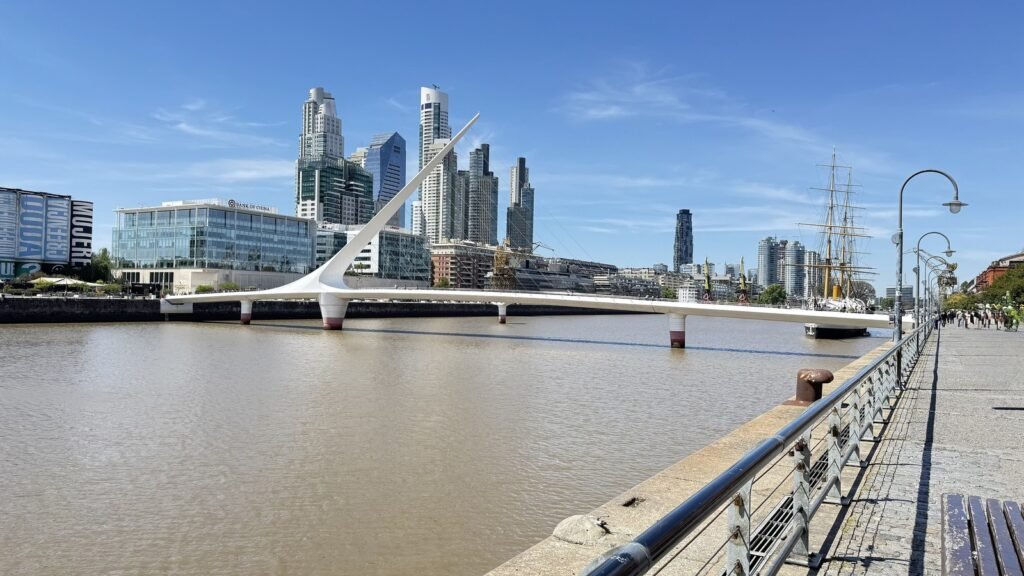
This Argentina travel guide is designed to help you decide where to go, when to visit, and how to build a realistic first-time itinerary.
Argentina runs from subtropical rainforest in the north to the island of Tierra del Fuego in the far south, so a first trip is really about choosing a few regions and traveling between them well. Visitors come for the cafés, theatres and tango of Buenos Aires, the waterfalls of Iguazú, the glaciers of Patagonia, whales and penguins on the Atlantic coast, Andean wine country, the colorful valleys of the north and an asado that many travelers plan a whole evening around. UNESCO lists twelve World Heritage properties in Argentina, seven cultural and five natural, and its Intangible Cultural Heritage list includes tango, filete porteño, chamamé and cuarteto.
The main planning challenges are distance, paperwork and money. Domestic flights eat up time, Argentine law now includes health insurance provisions that visitors should understand, and cash and card rules can be awkward for foreign visitors. With a few bases, a relaxed pace and some preparation, most visitors have a smooth trip. The sections below explain the details.
Is Argentina Right for Your Trip?
This Argentina travel guide is a good fit if you want a first trip built around city life, food and wine, big landscapes and wildlife rather than a single beach resort. Argentina suits travelers who enjoy late dinners, long meals, theatre and music, hiking and boat trips, wine tasting and wide-open scenery, and who are comfortable with a few long travel days.
Buenos Aires is the usual first stop, a large capital with distinct neighborhoods, historic cafés and a busy cultural calendar. Iguazú Falls on the border with Brazil is the classic rainforest add-on. UNESCO describes the Iguazú National Park as a semicircular waterfall roughly 80 meters high and 2,700 meters across. Patagonia adds glaciers, lakes and trekking, and UNESCO’s description of Los Glaciares National Park mentions Lake Argentino, which is 160 kilometers long. The Atlantic coast of Patagonia is a wildlife destination, and Península Valdés is a UNESCO site of global importance for marine mammals.
Argentina may not be the right fit if you want to cover the whole country in one short trip, avoid internal flights, or expect payments to be simple. Patagonia alone spans about 2,500 kilometers from north to south according to the official tourism site, medical care is limited outside Buenos Aires, and government advice changes, so read the current notices before you book.
Best Time to Visit Argentina
Argentina is in the Southern Hemisphere, so the seasons are reversed compared with Canada and the United States, and the country is so long that the best time depends on the region.
Patagonia. The official tourism site calls November to March the ideal period for outdoor activities, glaciers, mountains and beaches. Around El Calafate it says spring and summer, from September to March, is best for the Perito Moreno Glacier, that it snows from May to August, and that winds are strong in November and December. Ski season runs from June to August.
Iguazú. The tourism site recommends the dry season from May to October for less rain and easier trails, while the rainy season from November to April brings more water over the falls.
The north. For Salta and Jujuy the tourism site says autumn (April to June) and spring (September to November) have ideal temperatures and clear skies.
Mendoza. The harvest festival takes place in February and March, and summer days can be hot.
Buenos Aires. The tourism site describes the climate around the capital as mild and humid, with warm summers and cool winters, so it works as a stop in any season.
Wildlife. Southern right whales arrive at Península Valdés from late May and stay until December, and Magellanic penguins can be seen from about September to March. Our Argentina coastlines guide has the details.
Canadian advice also says El Niño conditions are expected to strengthen through the second half of 2026 and into 2027, which can raise the risk of drought, floods and severe storms, so check forecasts close to your dates.
Where to Go in Argentina
The places worth visiting in this Argentina travel guide fall into a few clear regions.
Buenos Aires is the capital and the entry point for most trips. The city’s official tourism site lists about 160 museums, the Teatro Colón, a theatre street on Avenida Corrientes and dozens of historic cafés and bars recognized as “bares notables”. San Telmo is one of the oldest neighborhoods, with cobbled streets and a Sunday antiques fair in Plaza Dorrego. Recoleta is known for its French-style architecture and its cemetery, and Palermo is the largest neighborhood, with big parks, museums and many restaurants and bars.
Iguazú Falls is reached by air from Buenos Aires. The Argentine side has walkways, a Lower Circuit that takes you near the base of the falls, an Upper Circuit with panoramic views and the Devil’s Throat. The tourism site suggests two days for the park.
El Calafate and Perito Moreno. El Calafate is the gateway to Los Glaciares National Park. The Perito Moreno Glacier is about 80 kilometers away, and the tourism site suggests three to five days around El Calafate. El Chaltén, about 200 kilometers away, is known as the trekking capital of Argentina.
Ushuaia and Tierra del Fuego are the southern end of the trip. The official site calls Ushuaia the southernmost city in the world, with Beagle Channel boat trips and Tierra del Fuego National Park nearby.
Península Valdés and Puerto Madryn are the base for whales, sea lions and elephant seals.
Mendoza is Argentina’s best-known wine region. The tourism site names Luján de Cuyo, Maipú and the Uco Valley as the main zones and says more than 300 wineries welcome visitors.
Salta and Jujuy offer a different Argentina. UNESCO describes the Quebrada de Humahuaca as a valley that has been a major trade route for some 10,000 years, with villages such as Purmamarca and Tilcara along it. Some of the northern routes are high, so ask about altitude before you go.
Bariloche and the Lake District and Córdoba, home to the UNESCO-listed Jesuit Block and Estancias, fill a longer trip.
How Many Days Do You Need?
For a first visit, 10 days is a workable length. It lets you combine Buenos Aires with Iguazú and El Calafate, with two or three flights and time to enjoy each stop.
With 7 days, choose Buenos Aires with one other region. With 14 days, add Mendoza, Salta and Jujuy or the Atlantic coast and Península Valdés, rather than more bases in the same area. The official tourism site suggests seven days to cover El Calafate, El Chaltén and Ushuaia, and 14 to 21 days if you want to add places such as Bariloche and Puerto Madryn. Domestic flights are rarely as quick as the map suggests, so build in buffer days.
Getting Around Argentina
Getting around is the part of any Argentina travel guide that needs the most planning.
Flights. Argentina has two main airports for Buenos Aires: Ministro Pistarini (Ezeiza) handles international flights, and Aeroparque Jorge Newbery is used for many domestic routes. The official site lists daily flights from Buenos Aires to Iguazú and flights to El Calafate with Aerolíneas Argentinas, Flybondi and JetSMART, so compare baggage rules before you book. Canada notes that it does not assess foreign domestic airlines against international safety standards.
Long-distance buses serve many cities. Canadian advice lists the area around the Retiro bus station as a crime hotspot in Buenos Aires, so keep your bags close and travel in daylight where you can.
City transport. A SUBE card is required for the subway, buses and trains in Buenos Aires. Canadian advice says to use official taxis and a taxi app, never to share taxis, and to use only the marked taxi stand in the arrivals area at Ezeiza.
Driving. Canadian advice describes a high rate of traffic accidents and says you should carry an International Driving Permit. Theft from parked cars, especially rental cars, is common, so never leave valuables inside the car, including in the trunk.
Borders. Land crossings into Chile and Bolivia often close in winter, from June to September, because of weather.
Costs and Budgeting
We have deliberately left out a fixed “Argentina costs $X per day” figure. Prices vary too much between regions, seasons and styles of travel, and exact numbers age quickly. Domestic flights, Patagonia excursions and park fees can take a large share of the budget.
The currency is the Argentine peso (ARS). Canadian advice says foreign cards are accepted in the main cities, but cash withdrawals from foreign accounts have low per-transaction and daily limits and can carry substantial service charges, so check with your bank before you leave. The official tourism site also advises carrying cash at Iguazú, because not every place accepts cards. Use ATMs indoors, in banks or shopping centers, avoid them after dark, and use official exchange bureaus, because Canadian advice says criminals may follow people after cash withdrawals or currency exchanges.
Tipping is not required by law, but the official tourism site says it is a deeply rooted custom, usually 10% of the bill, in restaurants, bars and cafés. You can leave cash on the table, add it to a card payment when asked, or send it by bank transfer to the venue’s alias. Some restaurants also add a small table charge called a cubierto, so check your bill.
Food and Dining
Argentine food is built around beef, bread, cheese, pasta, pastries and sweets, with regional dishes in the north and Patagonia. The official site describes the asado as a social ritual rather than just a meal, usually starting with a snack platter and choripán, then sausages and offal and finally cuts such as vacío, entraña and bife de chorizo. Empanadas vary by province, mate is shared everywhere, and dulce de leche appears in most desserts. Our guide to what to eat in Argentina covers the main dishes.
Dinner is late. Buenos Aires’ official tourism site says restaurants serve dinner from about 8 pm until after midnight, with prime time from 9:30 pm, so you may be the only diners before 9 pm. Book ahead at popular places, especially on weekends. For health, the CDC advises choosing safe food and drinks, washing your hands often and treating water when needed, so ask where you are staying whether tap water is considered safe.
What to Know Before You Go
This section of the Argentina travel guide covers the practical details that most first-time visitors ask about.
Entry. Canadian advice says tourists do not need a visa, your passport must be valid for your full expected stay and airlines may apply stricter rules. Smartraveller says Australians can stay up to 90 days as tourists, and that you need a return or onward ticket, a valid passport and a clear purpose for your trip. Officials may ask for proof of funds. Canadian advice says all travelers have fingerprints and a photo taken on entry and exit, and that checks at borders have been tightened, with delays or refusals possible. Other nationalities have different rules, so check with the nearest Argentine embassy or consulate.
Health insurance. Argentina changed its migration law in 2025. Decree 366/2025 says people seeking admission must submit a sworn statement of the purpose of their entry and that they hold health insurance, and that this requirement can be enforced once it has been regulated. We could not confirm from official sources how this is applied at the border today, so ask the Argentine consulate or your airline before you fly.
Hospital care. The government announced on 11 August 2026 that national hospitals will provide routine care to people who are not permanent residents only against valid health insurance or advance payment, while emergency care cannot be denied. Buy travel insurance that covers medical care, hospital stays and evacuation, plus helicopter rescue if you plan adventure activities.
Safety. Canadian advice says to take normal security precautions across the country, with a high degree of caution in Greater Buenos Aires and in Rosario. Pickpocketing and bag snatching are common, including by thieves on motorcycles, and armed robberies happen. If you are held up, hand over valuables without resistance.
Hotspots and protests. Canadian advice lists Congreso, Constitución, Florida Street, La Boca, the Recoleta Cemetery area and the Retiro bus station among the Buenos Aires hotspots, and advises staying on Caminito street in La Boca and avoiding informal settlements. Demonstrations and strikes are frequent and can turn violent, and Canada advises never to cross blockades. Argentina has also raised its national security level, so expect increased security at public places and borders.
Natural hazards. Canadian advice lists San Juan, Mendoza, Salta, Jujuy and Tucumán as earthquake zones, and says Andean volcanoes can disrupt flights and cause flash floods. Seasonal flooding affects the northern provinces, and heat-driven wildfires can affect transport and air quality.
Health. The CDC recommends that travelers be up to date on routine vaccines, including measles, and recommends hepatitis A and hepatitis B vaccination. It says to consider typhoid vaccination in some situations. Speak to a travel clinic about six weeks before you leave. Canadian advice says medical care is good in Buenos Aires but limited elsewhere and that hospitals often expect immediate payment.
Yellow fever and mosquitoes. The CDC recommends yellow fever vaccination for travelers aged nine months and older going to Corrientes and Misiones provinces, which includes the Iguazú area. It says Argentina does not require the vaccine for entry. Dengue, Zika and chikungunya are present, and Smartraveller says insect-borne diseases are common in the north and as far south as Buenos Aires, so use repellent. Smartraveller also says hantavirus continues to be a risk, including around Buenos Aires and northern Patagonia, so avoid rodents and their droppings.
Laws and customs. Penalties for drug offences are severe, with jail time and heavy fines. Argentines greet with a kiss on the cheek, and our guide to Argentina culture and local customs explains etiquette in more detail.
Practical details. Argentina uses 220 volt, 50 hertz power. The official tourism site says type I is the standard plug and some places also have type C, so North American plugs need an adapter, and devices rated only for 110 volts need a converter. Argentina is on UTC−3 all year. Emergency numbers are 911 or 101 for police, 107 for an ambulance in Buenos Aires or 911 elsewhere, and 100 or 911 for fire.
Suggested First-Time Argentina Itinerary
For travelers with around 10 days, Buenos Aires, Iguazú and El Calafate create a practical first-time route. For a full day-by-day plan, see our 10 day Argentina itinerary.
Days 1–3: Buenos Aires. Arrive, adjust to the late dinners and spend two full days on neighborhoods, cafés, museums and a tango evening.
Days 4–5: Iguazú. Fly to Iguazú and spend a full day on the Argentine side of the falls.
Days 6–8: El Calafate. Fly south for the Perito Moreno Glacier and a boat trip on Lake Argentino.
Days 9–10: Return and depart. Fly back to Buenos Aires and connect home, or add a night to keep a buffer.
If you have 14 days, add Mendoza or the Atlantic wildlife coast rather than more bases in the same area. With only 7 days, focus on Buenos Aires and one region.
The best Argentina itinerary is not the one that covers the most ground. It is the one that leaves enough time for the long dinners, the flights and the moments between the sights.
Argentina Travel FAQ
Do I need a visa to visit Argentina?
Canadian travel advice says tourists do not need a visa. Your passport must be valid for your full expected stay, and officials may ask for a return or onward ticket and proof of funds. Travelers have fingerprints and a photo taken on entry and exit. Argentine law also provides for a sworn statement of the purpose of your entry and of your health insurance, which can be enforced once it has been regulated, so ask the Argentine consulate or your airline how it applies to you. Other nationalities have different rules, so confirm them with Argentine immigration.
What is the best time to visit Argentina?
It depends on the region. The official tourism site calls November to March ideal for Patagonia, recommends May to October for Iguazú when it is drier, and says April to June and September to November suit Salta and Jujuy. The Mendoza harvest festival is in February and March, and southern right whales are at Peninsula Valdes from about June to December. Canadian advice also warns that El Niño conditions are expected to strengthen into 2027.
How many days do you need in Argentina?
Ten days works for a first trip that combines Buenos Aires, Iguazu Falls and El Calafate without rushing. Seven days is enough for Buenos Aires with one other region, and fourteen days lets you add Mendoza, Salta and Jujuy, Ushuaia or Peninsula Valdes. Domestic flights take time, so avoid adding too many bases.
Is Argentina safe for tourists?
Canadian advice is to take normal security precautions across the country, with a high degree of caution in Greater Buenos Aires and Rosario. Pickpocketing and bag snatching are common, including by thieves on motorcycles, and armed robberies happen, so hand over valuables without resistance. Demonstrations and strikes are frequent and can turn violent. Most visitors have a smooth trip, but read the current advice and take sensible precautions.
Do I need travel insurance for Argentina?
Yes, you should buy it. Canadian advice says hospitals often expect immediate payment, and the Argentine government announced in August 2026 that national hospitals will give routine care to people who are not permanent residents only against valid health insurance or advance payment, while emergency care cannot be denied. Argentine law also provides for a health insurance declaration on entry once it is regulated. Choose a policy that covers medical care, hospital stays and evacuation, and adventure activities if you plan them.
Final Thoughts on This Argentina Travel Guide
Argentina offers enough variety that a first trip should be treated as an introduction rather than an attempt to see the whole country.
For a first visit, choose two or three bases, look into the insurance and entry rules before you fly, carry some cash, keep valuables out of sight and read the current government advice before you go. Mendoza, the north, Ushuaia and the Atlantic coast can fill a longer trip.
Use this Argentina travel guide as a starting point, then adjust the route to match your time, interests and comfort level with planning.
If you’re comparing destinations in South America, you may also want to read our Brazil travel guide, Peru travel guide and Colombia travel guide.
Explore more destination guides on TravelingInformed.