
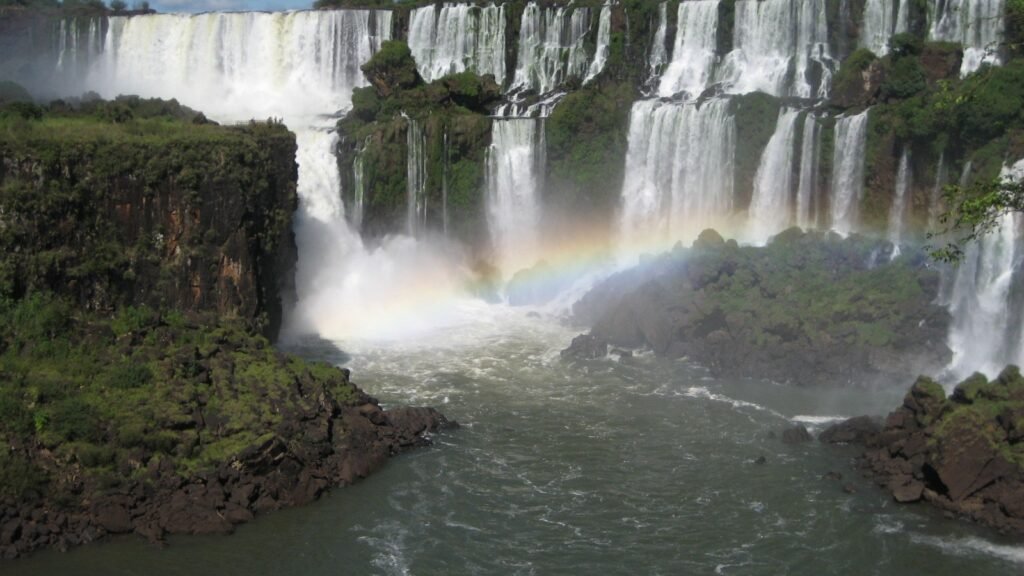
Argentina rewards travelers who build a trip around a few well-chosen bases. The country is huge, so the best first trip links a few contrasting places rather than trying to cover everything. This 10 day Argentina itinerary spends three nights in Buenos Aires, two at Iguazú Falls and three in El Calafate for the Perito Moreno Glacier, with a final night back in Buenos Aires before you fly home.
You’ll find a day-by-day plan, realistic transfer notes, booking advice and notes on where to stay. It follows the first-time route suggested in our Argentina travel guide, with the detail you need to plan it. Flight schedules, park rules, ticket prices and government travel advice change, so confirm anything important with the official sources linked below.
10 Day Argentina Itinerary at a Glance
- Day 1: Arrive in Buenos Aires. Transfer, rest and a late dinner.
- Day 2: Central Buenos Aires. Plaza de Mayo, a historic café, the Teatro Colón area and San Telmo.
- Day 3: Recoleta and Palermo. The cemetery, museums, parks and a tango evening.
- Day 4: Fly to Iguazú. The Upper and Lower circuits.
- Day 5: Iguazú. The Devil’s Throat and a boat ride.
- Day 6: Fly to El Calafate. A travel day.
- Day 7: Perito Moreno Glacier. Walkways and the ice.
- Day 8: Lago Argentino. A boat trip or a flexible day.
- Day 9: Fly to Buenos Aires. A final evening in the capital.
- Day 10: Departure.
Each stop in this 10 day Argentina itinerary has a different pace. Buenos Aires is cafés, theatre and walking, Iguazú is rainforest and walkways, and El Calafate is cold air, wind and ice. You take three domestic flights, so treat transfer days as part of the plan. If you want to add Mendoza, Salta, Ushuaia or Península Valdés, you would need extra days.
Before You Go: Entry Rules and Safety
Before you follow this 10 day Argentina itinerary, check your entry requirements. Canadian travel advice says tourists do not need a visa and that your passport must be valid for your full expected stay, and Smartraveller says Australians can stay up to 90 days as tourists with a return or onward ticket. Officials may ask for proof of funds, and all travelers have fingerprints and a photo taken on entry and exit. Other nationalities have different rules.
Argentina’s migration law also includes a provision for a sworn statement of purpose and health insurance on entry, which Decree 366/2025 says can be enforced once it is regulated. We could not confirm how it is applied today, so ask the Argentine consulate or your airline before you fly, and buy travel insurance with medical evacuation. Read the full Government of Canada travel advice for Argentina before booking. It currently says to take normal security precautions across the country, with a high degree of caution in Greater Buenos Aires.
The CDC recommends yellow fever vaccination for travelers going to Misiones province, where Iguazú is located, so speak to a travel clinic about six weeks before you leave.
Book the Key Sights First
To keep this 10 day Argentina itinerary on schedule, book these first:
- Domestic flights. You need three: Buenos Aires to Iguazú on day 4, Iguazú to El Calafate on day 6 and El Calafate back to Buenos Aires on day 9. The official site lists flights from Buenos Aires to both destinations with several airlines. There may be no direct flight between Iguazú and El Calafate, so check connections and allow most of the day.
- Iguazú. The official site says park tickets can be bought online or at the park’s ticket offices, and it advises booking ahead for the Full Moon Walk because places are limited.
- Perito Moreno tours. Book boat trips and ice walks ahead in the busy season, and check opening times.
- Insurance and paperwork. Arrange travel insurance and check entry rules before you fly.
- Hotels. Book El Calafate early for summer.
Day 1: Arrival in Buenos Aires
Fly into Ministro Pistarini International Airport, known as Ezeiza, collect your bags and go to your hotel. A pre-arranged transfer is the simplest option after a long flight. Canadian advice says to use only the marked taxi stand in the arrivals area, and to use a taxi app in the city. Rest, then take a short walk to get your bearings. Dinner is late in Buenos Aires, with prime time from 9:30 pm according to the city’s tourism site. Keep your phone and bag close, because Canadian advice says pickpocketing and bag snatching are common, including by thieves on motorcycles.
Day 2: Central Buenos Aires
Start at Plaza de Mayo, the historic center of the city. Buenos Aires’ tourism site describes the Teatro Colón as noted for its architecture and acoustics, and Avenida Corrientes as the main theatre street. Stop at a historic café, since the city has dozens of recognized bares notables and Café Tortoni is described as the oldest café in the city.
In the afternoon go to San Telmo, one of the city’s oldest neighborhoods. Its cobbled streets, antiques shops and market are a good way to spend the afternoon, and on Sundays Plaza Dorrego hosts an antiques fair with tango dancers. Keep valuables out of sight, because Smartraveller lists the Obelisk and Plaza de Mayo areas among the Buenos Aires theft hotspots.
Day 3: Recoleta and Palermo
Spend the morning in Recoleta, known for its French-style architecture. The Recoleta Cemetery is famous for its mausoleums and the tomb of Eva Perón, and nearby are the Fine Arts Museum and the Floralis Genérica sculpture. The Ateneo Grand Splendid is a former theatre turned bookshop. Canadian advice lists the Recoleta Cemetery area among the places to take extra care, so keep your bag secure.
In the afternoon, head to Palermo, the city’s largest neighborhood, with big parks, museums such as MALBA and many restaurants. In the evening, see a tango show or visit a milonga, a traditional social dance event. The city’s tourism site says you can find them in neighborhoods such as San Telmo, Constitución, Palermo and Villa Crespo. If you visit La Boca, Canadian advice says to stay on Caminito street.
Day 4: Fly to Iguazú
Take a morning flight to Iguazú and transfer to your hotel. The national park is on the Argentine side of the border with Brazil. In the afternoon, walk the park’s circuits. The official site says the Lower Circuit takes you near the base of the falls and the Upper Circuit gives a panoramic view. Bring comfortable, quick-drying clothes, sturdy shoes, a light raincoat, insect repellent, sunscreen, water and some cash, since not all places accept cards.
Day 5: Iguazú
Today is for the Devil’s Throat, which the official site describes as one of the most impressive waterfalls, and the boat ride it calls the Great Adventure. It lasts about 30 minutes and takes you to the base of the falls, so bring a waterproof bag and extra clothes. Check whether the Devil’s Throat walkway is open, because it has been closed for restoration in the past.
If you have energy left, the 7-kilometer Macuco Trail through the forest takes about three hours and ends at the Arrechea Falls. UNESCO describes the surrounding rainforest as home to tapirs, giant anteaters, howler monkeys, ocelots, jaguars and caymans, so keep your eyes open. If you want to see the falls from Brazil, check Brazil’s entry rules first, and Canadian advice says to cross the tri-border area before nightfall.
Day 6: Fly to El Calafate
This is mostly a travel day. Fly to El Calafate, which the official site calls the gateway to Los Glaciares National Park, and settle in. Bring warm layers, a waterproof jacket, gloves and sunglasses, because conditions are very different from Iguazú. Take a short walk, have an early dinner and rest before the glacier.
Day 7: Perito Moreno Glacier
The Perito Moreno Glacier is about 80 kilometers from El Calafate, roughly an hour and a half by car, according to the official site. UNESCO describes Los Glaciares as an area of exceptional natural beauty with towering mountains and glacial lakes, and the glacier is one of the park’s best-known sights. Wide walkways at several heights give views of the ice, and the walkways are accessible for people with reduced mobility. You may see and hear blocks of ice fall into the water. The site says winds can be strong in November and December. You can also take a catamaran or a walk on the ice, which must be booked with a tour operator.
Day 8: Lago Argentino
Choose a boat trip on Lago Argentino to see glaciers such as Upsala and Spegazzini, which the tourism site says depart from Puerto Bandera, about 50 minutes from town, or the one-hour Brazo Rico boat trip that gets close to the ice walls at Perito Moreno. If the weather turns, use the day to rest or walk near town. The trekking town of El Chaltén is about 200 kilometers away, so treat it as an extension that needs extra days.
Day 9: Fly to Buenos Aires
Fly back to Buenos Aires. Domestic flights often use Aeroparque Jorge Newbery, while international flights leave from Ezeiza, so allow time to cross the city. Plan a last dinner, and use the evening for souvenirs. A night in the capital gives you a buffer in case Patagonian weather delays your flight. Canadian advice says to use official taxis or a taxi app and never to share taxis.
Day 10: Departure
Allow plenty of time for the airport, because Canadian advice says airlines may apply stricter passport rules and officials take fingerprints and photos on exit. Confirm your passport validity and your travel insurance papers before you leave.
Argentina Travel Tips
- Cash. Carry some pesos for tips and smaller places, and use indoor ATMs.
- Tipping. Tipping is not required by law, but about 10% is customary in restaurants.
- Layers. Pack for summer in Buenos Aires and cold wind in El Calafate.
- Power. Argentina uses 220 volt power, and type I plugs, so bring an adapter.
- Health. Use insect repellent, and ask a travel clinic about yellow fever vaccination.
- Safety. Keep your phone and bag close and avoid demonstrations.
Where to Stay on This Itinerary
Buenos Aires
Recoleta, Palermo and San Telmo are the neighborhoods most visitors choose. Recoleta is known for its French-style architecture, Palermo for its parks and restaurants and San Telmo for its historic streets.
Iguazú
Most visitors stay in Puerto Iguazú, which the official site says has an international airport with taxis and buses to the national park.
El Calafate
El Calafate is the gateway to Los Glaciares National Park. Stay in town and book tours through your accommodation or a reputable operator.
Best Time for This 10 Day Argentina Itinerary
The official tourism site calls November to March the ideal period for outdoor activities in Patagonia, and says spring and summer, from September to March, are best for the Perito Moreno Glacier. It recommends the dry season from May to October for Iguazú, when there is less rain and trails are easier to use, while the rainy months from November to April bring more water over the falls. That means late spring and summer suit most of this itinerary, and travelers who prefer drier weather in Iguazú might choose October or March.
Is 10 Days Enough for Argentina?
Ten days is enough for a first look at three regions, but not for the whole country. With 7 days, choose Buenos Aires plus Iguazú or El Calafate. With 14 days, add Mendoza for wine, Salta and Jujuy for the north, Ushuaia for the far south, or Península Valdés for whales and penguins. Domestic flights are rarely as quick as the map suggests, so build in time.
Final Thoughts on This 10 Day Argentina Itinerary
This 10 day Argentina itinerary is designed as an introduction rather than a complete tour of the country. It gives you a big city, a rainforest waterfall and a glacier with time to enjoy each.
Book the flights and glacier tours early, look into the insurance and entry rules before you fly, keep your valuables close and leave a buffer before your flight home. For more detail, read our Argentina travel guide, then explore what to eat in Argentina, Argentina culture and local customs and the Argentina coastlines guide.
If you’re comparing trips in South America, you may also want to read our 10 day Brazil itinerary and 10 day Peru itinerary.