
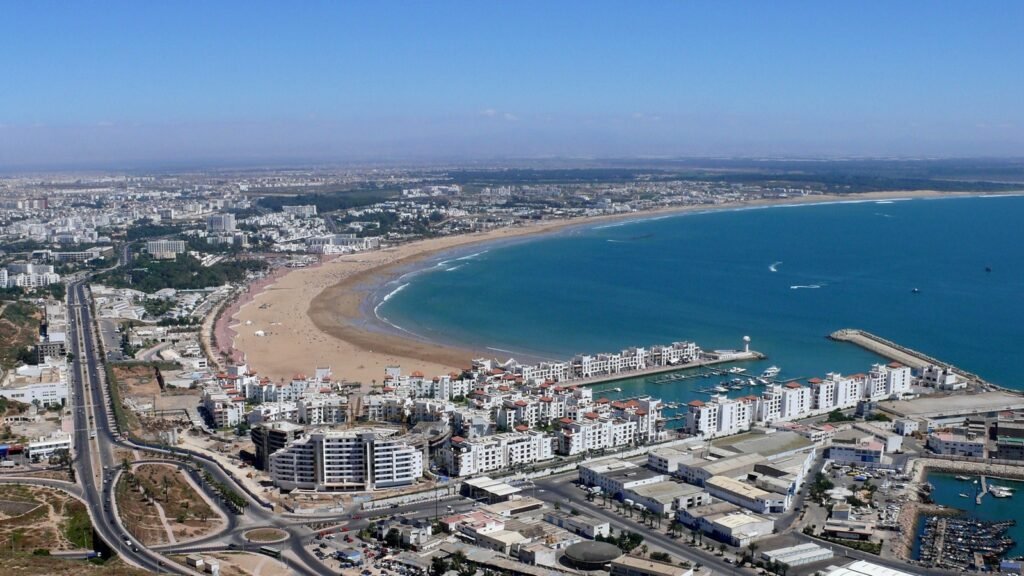
Morocco has two coasts, the Atlantic to the west and the Mediterranean to the north, and Morocco coastlines are as different from each other as from the interior. The Atlantic side has walled port towns, surf beaches and resort towns, while the Mediterranean side has smaller coves and a mix of Spanish and Arab influence. This guide covers the main coastal areas, the real conditions on the beaches and the safety rules, using official sources where we found them.
The Moroccan National Tourist Office says the coastal regions are popular with the sun, and describes Agadir, on the Atlantic, as the country’s main seaside resort with about 300 days of sunshine a year, mild temperatures and light trade winds. Beach descriptions below are general, and conditions change with the season.
Morocco Coastlines: Where to Start
For a first trip, most travelers pair one coastal town with the imperial cities. Essaouira is the easiest to combine with Marrakech. Agadir and Taghazout suit a beach stay. Tangier and the Mediterranean towns fit a trip that starts or ends in the north. Our 10 day Morocco itinerary ends in the north, and our Morocco travel guide explains the safety advice that applies across the country.
The Atlantic Coast
Essaouira. UNESCO inscribed the Medina of Essaouira (formerly Mogador) in 2001. The tourist board lists Essaouira-Mogador among its medina and beach destinations, and it is known for its ramparts, its fishing harbor and its steady wind. It is a popular day trip or overnight stop from Marrakech.
Agadir and Taghazout. The tourist board describes Agadir as the main seaside resort and names Taghazout, Mogador and Mazagan as places worth the detour. Agadir has a long beach and a resort feel, and Taghazout, to the north, is known among surfers, although we did not find an official source for that point.
El Jadida. UNESCO inscribed the Portuguese City of Mazagan (El Jadida) in 2004. It makes an easy stop between Casablanca and Essaouira for travelers interested in history.
Casablanca and Rabat. Both are on the Atlantic and are big cities first. Canadian advice says public beaches in major cities are often polluted and unfit for swimming, so treat them as places to walk, not swim.
Farther south. The tourist board also lists Safi and Dakhla among its beach and leisure destinations. Dakhla lies in Western Sahara, an area where Canada advises avoiding non-essential travel, so we do not cover it in this guide. Read the current advisories before you consider it.
The Mediterranean Coast
Tangier. The tourist board groups Tangier with Tetouan and other medina and beach destinations. Tangier is the northern gateway and a high-speed rail terminus, which makes it a practical arrival or departure point, and its ferry port links Morocco with Spain.
Tetouan. UNESCO inscribed the Medina of Tetouan (formerly Titawin) in 1997, and the tourist board says its culture mixes Arab and Spanish traditions. Beaches lie a short drive away.
Al Hoceima and Saidia. The tourist board lists Al Hoceima and Oujda-Saidia among its beach destinations. These are the quieter Mediterranean options, and Saidia is close to the Algerian border, so read the next section carefully if you plan to be on the water.
Chefchaouen. The mountain town of Chefchaouen is inland, but many travelers combine it with the Mediterranean coast. We cover it in the guide and the itinerary.
What the Beaches Are Really Like
Beaches vary a lot. Many Atlantic beaches are long, wide and windy, with strong waves, and are better for walking, surfing and watching the sunset than for casual swimming. Mediterranean beaches are usually calmer. Resort beaches in Agadir and similar towns have umbrellas, cafes and organized water sports, while public beaches in cities can be crowded and dirty.
The FCDO says many beaches in Morocco have limited or no lifeguard cover and may have minimal safety signage. Canadian advice says swimming conditions in tourist areas are generally safe and problem-free, but swimming at some Atlantic beaches is dangerous because of strong currents and tides. In our view, check with your hotel before swimming, and choose a beach that has lifeguards and a flag system.
Swimming Safety and Beach Etiquette
Both the Canadian and British governments give specific beach advice.
- Designated beaches. Canada advises swimming only at designated beaches and exercising caution. It points to a list from the Fondation Mohammed VI pour la protection de l’environnement of beaches that meet international standards, so ask your hotel which beaches are on it.
- Currents and waves. The FCDO says strong currents and unexpected waves can occur, so take care when entering the water and avoid swimming in isolated areas.
- Rivers and dams. The FCDO says swimming in open water, including dams and rivers, can be dangerous because deep mud and steep underwater slopes can trap people.
- Dress and harassment. Canada says women and girls can be harassed when wearing swimsuits, and advises choosing tourist beaches over public ones. Many visitors wear a cover-up away from the beach and swim at hotel or resort beaches.
- Valuables. Canada and the FCDO warn about theft on beaches, so avoid leaving bags unattended and keep valuables out of sight.
Seasons and Sea Conditions
The tourist board says the coast enjoys sun throughout the year. In our view, late spring, summer and early autumn are the best times for swimming, and the Atlantic is cooler than the Mediterranean. Summer brings crowds at resort beaches, and wind can make some Atlantic beaches uncomfortable. Winter is mild on the coast but brings rain, and Canada says the rainy season usually runs from November to March, when flash floods occur.
Wildfires can happen in summer, according to the FCDO, so follow local authority instructions if you are in a wooded area near the coast. Check the forecast before boat trips.
Surf, Kite and Water Sports
The tourist board lists nautical sports among the activities it promotes. The FCDO says providers of recreational and adventure tourism may not meet UK safety standards, advises checking safety standards with the operator and making sure you are insured for activities such as water sports and boat tours, and says some insurance policies will not cover them. It also says quad bike accidents involving British nationals frequently occur in resort areas, so wear a helmet and book through reputable agents or your hotel.
Boats and the Algerian Border
If you plan to use a boat or a jet ski, note what the FCDO and Canada say about the border. The land and sea border between Morocco and Algeria is closed. The FCDO says to know where the border is, stay within Moroccan waters and have enough fuel to return to shore, since people entering Algerian waters illegally are likely to be intercepted and investigated. Canada says to avoid boating close to the maritime border. If you enter Morocco by private boat, both governments say you must use a recognized port of entry.
Heritage on the Water
Much of Morocco’s World Heritage sits on or near the coast, so a beach stay doubles as a history trip. UNESCO lists the Medina of Essaouira, the Portuguese City of Mazagan (El Jadida), the Medina of Tetouan and Rabat, Modern Capital and Historic City. These are living towns, so dress modestly, ask before photographing people and keep to the rules on alcohol and public behavior, which our guide to Morocco culture and local customs explains.
Planning a Beach Day
A little planning makes a beach day easy. Go in the morning for space and cooler sun, bring a hat, sun protection and water, and wear a cover-up away from the sand. Check the wind and wave conditions, because Atlantic beaches can be windy. Choose a resort or hotel beach if you want lifeguards, loungers and a cafe, and ask which beaches are staffed.
If you travel with children, choose a calm, supervised beach, and stay close to shore. Our packing guide covers the basics, and our travel insurance and safety guide explains what to check in a policy.
Getting Between Coastal Bases
The tourist board says the high-speed train serves Tangier, Kenitra, Rabat and Casablanca, and lists Tangier to Casablanca at 2 hours 10 minutes. The conventional ONCF network serves most main cities but not Agadir, so for Agadir and Essaouira you will usually use a coach, a private transfer or a flight. Check current schedules, because we did not verify timetables.
Canadian advice says road conditions vary and accidents causing fatalities are common, and advises avoiding driving at night. If you rent a car, read the driving advice in our guide, and consider a private driver for long coastal transfers. Our flights and transportation guide explains how to plan transfers.
Choosing Your Coast
Choose Essaouira for a walled port town you can reach from Marrakech. Choose Agadir and Taghazout for a beach stay with services. Choose Tangier and Tetouan for a northern trip that links the coast to the medinas. A first trip rarely needs more than one coastal base, and many visitors prefer to keep the beach for the end of the trip.
Experience Morocco Beyond the Beach
The best Morocco coastlines combine swimming with history and food. Walk a harbor wall in the morning, swim in the afternoon at a lifeguarded beach and eat grilled fish in the evening. Our guides to what to eat in Morocco and Morocco culture and local customs help you plan the rest.