
This Philippines travel guide is designed to help you decide whether, where and when to go, and to put the official safety advice in front of you early, because the Philippines is a country where the risks are concentrated in specific regions and are worth understanding before you book.
The Philippines is an archipelago in Southeast Asia made up of more than 7,000 islands, grouped into Luzon in the north, the Visayas in the middle and Mindanao in the south. Most first-time visitors spend their time in three areas: Manila and northern Luzon, the central islands of the Visayas such as Cebu and Bohol, and Palawan. The Department of Tourism describes limestone lagoons, historic walled cities, surf beaches, marine parks and island food. UNESCO lists six World Heritage properties in the Philippines, from the Ifugao rice terraces to the Tubbataha Reefs.
The main planning issues are safety in the south, typhoon season, getting between islands and paperwork. Canadian, British, Australian and American advice all single out parts of Mindanao, and none of them name Luzon, the central Visayas or Palawan for the same kind of warning. The sections below set out what each government says, dated, so you can make your own decision.
Is the Philippines Right for Your Trip?
This Philippines travel guide suits travelers who want island scenery, snorkeling and diving, colonial-era heritage and food, and who are comfortable planning around flights, ferries and weather. The Department of Tourism points to Palawan’s lagoons, Bohol’s Chocolate Hills, Cebu’s festivals and canyoneering, Boracay’s White Beach, Siargao’s surf and the heritage streets of Vigan and Manila’s Intramuros.
The Philippines may not be the right fit if you want smooth, predictable transport, if you cannot travel flexibly when a typhoon is forecast, or if your insurer will not cover the areas you plan to visit. In our view, a first trip works best when it stays within the well-served parts of Luzon, the Visayas and Palawan and leaves time for weather delays.
Philippines Safety: What Official Advisories Say
As of mid-November 2026, the four advisories we read in full agree on the broad picture. Advisories change, so read the current versions of the Canadian, British, Australian and American pages before you book.
Canada (updated 15 October 2026). The Government of Canada says to exercise a high degree of caution in the Philippines because of crime, terrorism and kidnapping. It advises against all travel to 14 provinces of western Mindanao, including Basilan, Sulu, Tawi-Tawi, Maguindanao, Lanao del Sur and the three Zamboanga provinces. It advises against non-essential travel to 11 provinces of central and eastern Mindanao, including the Davao provinces (excluding Davao City) and Surigao del Norte (excluding Siargao Island). It names no regional advisory for Luzon, the Visayas or Palawan.
United Kingdom (public update 15 July 2026). The FCDO advises against all travel to western and central Mindanao and the Sulu archipelago, and against all but essential travel to the rest of Mindanao except Camiguin, Dinagat and Siargao islands. It also says your travel insurance could be invalidated if you travel against FCDO advice, so check your policy against the areas you plan to visit.
Australia (updated 12 November 2026). Smartraveller says to exercise a high degree of caution overall because of the threat of terrorism and violent crime. It says not to travel to central and western Mindanao, the Sulu Archipelago and the southern Sulu Sea, and to reconsider your need to travel to eastern Mindanao, excluding Camiguin, Dinagat and Siargao.
United States (issued 1 September 2026). The State Department lists the Philippines at Level 2, “Exercise increased caution,” with some areas at higher levels. It says not to travel to the Sulu Archipelago, including the southern Sulu Sea, or to Marawi City, and to reconsider travel to certain other areas of Mindanao. It also advises increased caution in rural and remote parts of Leyte, Mindoro, Negros and Samar because of insurgent activity.
Crime and scams. Canadian advice says crime is a serious concern, that petty crime such as pickpocketing and bag snatching happens in urban areas, that some travelers alone have been drugged and robbed, and that card and ATM fraud is frequent. Smartraveller adds that drink spiking can occur in areas frequented by foreigners in Metro Manila. Both governments recommend using ATMs inside banks or other secure places.
Demonstrations and laws. Canadian and Australian advice both say foreigners are barred from political activity, and joining a demonstration can lead to detention or deportation. Penalties for drug offenses are severe, and cannabis is illegal in any quantity. Authorities may ask for identification at any time, so carry a copy of your passport.
Best Time to Visit the Philippines
The national weather agency, PAGASA, divides the year into two main seasons: a rainy season from June to November and a dry season from December to May. It splits the dry season in two, with a cool dry period from December to February and a hot dry period from March to May. It also says typhoons have a great influence on the weather, which is why the Philippines gets heavy rain and cloud in the second half of the year.
Canadian advice says the rainy season runs from May to November, that the Philippines sees around 20 typhoons a year, mostly between June and November, and that storms can occur at any time. The FCDO gives the same typhoon pattern. Canadian advice also says El Niño conditions are present and expected to strengthen during the second half of 2026 and into 2027, which may raise the likelihood of droughts, floods and severe storms, so check the forecast for your dates.
In our view, December to May is the simplest window for a first beach and island trip, and February to April is a good balance for travelers who want sun and still-manageable heat. If you go during the rainy season, plan for delays, keep your first and last days flexible, and read the typhoon and ferry notes later in this guide.
Where to Go in the Philippines
Most first trips combine two or three of these areas. Always check the safety section above against your route.
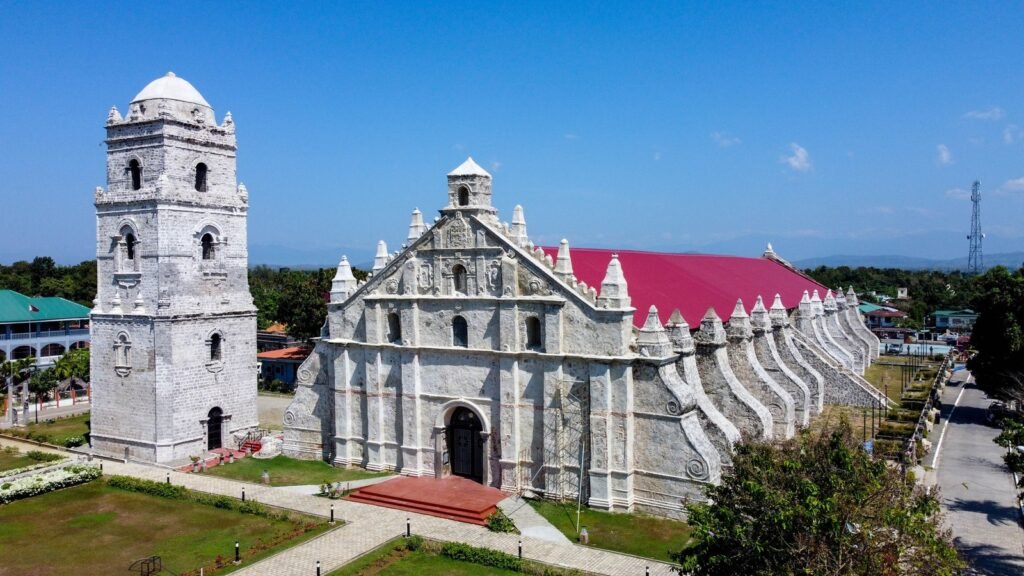
Manila and the capital region. Manila is the main gateway. The Department of Tourism describes Intramuros, the Walled City built in the Spanish colonial period, with Fort Santiago, churches and museums. UNESCO lists the Baroque Churches of the Philippines, a group of four churches built between the 16th and 18th centuries, including San Agustin Church in Intramuros. Canadian advice says pickpocketing and armed robberies are frequent on public buses in large cities such as Manila, so keep valuables out of sight.
Northern Luzon. UNESCO describes Vigan as the most intact example in Asia of a planned Spanish colonial town, with a mix of Spanish, Chinese and Filipino architecture. The Department of Tourism points to Calle Crisologo, horse-drawn carriages and Vigan longganisa. UNESCO also lists the Rice Terraces of the Philippine Cordilleras, built by the Ifugao people, including the Banaue and Batad clusters. The terraces lie in remote mountains, so this part of Luzon suits travelers with extra days.
Palawan. The Department of Tourism calls Palawan the Philippines’ “Last Ecological Frontier” and notes it is the home of Tubbataha Reefs Natural Park. It lists Bacuit Bay near El Nido, with the Small and Big Lagoons, and Coron, with Kayangan Lake, Barracuda Lake and World War II wrecks for divers. UNESCO describes Puerto-Princesa Subterranean River National Park, with an 8.2 km underground river that flows directly into the sea, about 76 km northwest of Puerto Princesa.
Cebu. The Department of Tourism describes Cebu as a mix of heritage, festivals and marine life, with Malapascua, one of the few places where divers regularly see thresher sharks, diving and snorkeling at Moalboal, and canyoneering at Kawasan Falls in Badian. Sinulog, in January, is the province’s biggest festival.
Bohol. The Department of Tourism calls Bohol the first and only UNESCO Global Geopark island in the Philippines. Its Chocolate Hills have 1,776 mounds, reached by a 200-step climb to a viewing deck, and the tarsier sanctuary shows one of the world’s smallest primates. Pamilacan Island is known for dolphin and whale watching.
Boracay, Siargao and Siquijor. Boracay’s White Beach is the best-known beach in the country, with rules covered in our Philippines coastlines guide. Siargao, famous for surfing at Cloud 9, is the one place in Mindanao that Canada, the UK and Australia exclude from their warnings, but check each advisory before you go. Siquijor, which the Department of Tourism calls the “Healing Island,” has Cambugahay Falls.
Mindanao. This guide does not recommend a route through Mindanao beyond Siargao, Camiguin and Dinagat. Read the advisories above before considering anywhere else on the island.
How Many Days Do You Need?
In our view, a week suits Manila plus one region, such as Palawan or Cebu and Bohol. Ten days allows Manila, Palawan and the central Visayas if you accept several flights, and two weeks lets you add northern Luzon or a surf stop in Siargao.
Our 10 day Philippines itinerary shows one route that stays out of every area named in the advisories. If you are weighing several Asian countries, you may also want to read our Thailand travel guide, Vietnam travel guide and Indonesia travel guide.
Getting Around the Philippines
Island hopping is the main planning challenge. Distances look short on a map but involve flights, ferries and road transfers, so allow more time than you expect and avoid tight same-day connections.
Flights and ferries. Domestic flights link the main hubs, and ferries connect nearby islands. Canadian advice says ferry accidents occur, that some vessels are poorly maintained and overcrowded, and that authorities can suspend ferry service on short notice when a storm signal is raised, even if the weather is clear. It advises using a reliable company, not boarding vessels that appear overloaded or unseaworthy, checking that a life jacket is available, and leaving extra time during the rainy season.
City transport. Canadian advice says the safety and reliability of public transportation are poor, that jeepneys and large buses are often old and overcrowded, and that pickpocketing is frequent. Smartraveller recommends accredited rideshare providers or hotel hire cars, especially at airports, and says to check that a provider is approved on the website of the Land Transportation Franchising and Regulatory Board.
Tricycles and motorbikes. Canadian advice says tricycles are rather safe because they do not drive fast, but you should agree on a fare before you set off and avoid them at night on country roads. It says habal-habal, motorcycles carrying several passengers, are illegal and dangerous, and that fatal scooter accidents involving tourists are common.
Driving. Canadian advice says road conditions vary, traffic is very heavy in Metro Manila, many drivers do not respect traffic laws and accidents causing deaths are common. In our view, most visitors are better off with a driver or booked transfers.
Costs and Money
Canadian advice says the currency is the peso (PHP), that ATMs are available in larger cities but may be scarce in rural areas, and that you should have local cash if you travel outside big urban centres. It also says you may enter with up to PHP 50,000 or up to US$10,000 in other currency, and need written authorization from the local authorities for greater amounts.
We did not find an official source for typical prices, so this guide does not quote daily budgets. Costs vary widely between Manila, popular islands and remote areas, so check current prices on the booking sites you plan to use.
Canadian advice says credit card and ATM fraud occurs frequently, that illegal devices are sometimes attached to card readers, and that you should use ATMs in well-lit public places or inside a bank, cover the keypad and check your statements. It also advises against carrying large sums of money. Carry some cash for small purchases, because remote islands may not accept cards.
Entry Rules and Documents
The rules below apply to Canadian and British passport holders. Other passports differ, so check with the Philippine embassy or consulate, and use our visa requirements guides for each passport as they are added.
- Visa: Canadian and British advice both say a tourist visa is not required for stays of up to 30 days. Australian advice says the same. To stay longer, you must get authorization from the local authorities before the 30 days end.
- eTravel: All travelers must register in the eTravel system within 72 hours before travel, which is free. You receive a QR code that airlines may check before you board, and Smartraveller says you need it for arrival and departure.
- Passport: Canadian advice says your passport must be valid at least six months beyond the date you expect to leave. The FCDO says the expiry date must be at least six months after arrival.
- Onward travel: The FCDO says most British visitors are also expected to have proof of return or onward travel, which immigration officials and airlines may ask for.
- Longer stays: Canadian advice says foreign nationals staying more than 59 days must register with the local authorities and give biometrics.
- Children and Boracay: Canadian advice says children under 15 traveling alone need a Waiver for Exclusion Ground, and that Boracay restricts visitors, so you may need proof of accommodation in an accredited hotel to be allowed entry.
Entry rules can change at short notice. Check the Philippine embassy or consulate in your country and your airline’s requirements before you fly.
Health and Natural Hazards
Canadian advice recommends hepatitis A and hepatitis B vaccination for travelers, and the CDC lists hepatitis A and typhoid as recommended for most travelers. The CDC also says travelers going to certain areas should consider malaria medicine, so ask a travel clinic about your route, preferably six weeks before you go.
Dengue is a risk, and the FCDO says mosquito-borne disease is a risk all year, with a higher dengue risk from June to October. The CDC notes more leptospirosis cases after heavy rain and flooding, so avoid wading in floodwater. Smartraveller says drink only boiled or bottled water and avoid raw or undercooked food.
Natural hazards are part of life in the Philippines. Canadian advice says the country sits on the Pacific Ring of Fire, with regular earthquakes, tsunami risk and active volcanoes. The Philippine Institute of Volcanology and Seismology (PHIVOLCS) sets danger zones around several volcanoes, including the whole volcanic island of Taal, which is closed to entry. Medical care is generally adequate in major cities but limited elsewhere, and Canadian advice says to buy insurance with medical evacuation cover.
Practical Details
The emergency number is 911 for police, fire and ambulance, according to the FCDO. The time zone is Philippine Standard Time, UTC+8, with no daylight saving. Smartraveller warns that air pollution can reach unhealthy levels, particularly in Manila.
Buy travel insurance before you go, and check that it covers any diving, water sports or scooter use you plan, because many policies exclude them. Our safety and insurance guide explains what to look for, and our packing guide covers what to bring.
Suggested First-Time Itinerary
In our view, the simplest first route is Manila for two nights, Palawan for four, then Cebu and Bohol for three, with a buffer day. It stays out of every area named in the advisories and puts the weather-sensitive island legs in the middle, where a delay can be absorbed. The 10 day Philippines itinerary sets out each day and a backup for flights and ferries.
If you prefer culture over beaches, our itinerary notes suggest swapping Palawan for northern Luzon, with Vigan and the rice terraces, but that adds long road transfers.
Philippines Travel FAQ
Do I need a visa to visit the Philippines?
Canadian travel advice says a tourist visa is not required for stays of up to 30 days, and GOV.UK and Smartraveller say the same for British and Australian citizens. Canadian advice says your passport must be valid for at least six months beyond the date you expect to leave, and the FCDO says most British visitors are expected to show proof of return or onward travel. All travelers must register for free on the eTravel system within 72 hours before travel and keep the QR code, which Smartraveller says you need for arrival and departure. To stay longer than 30 days you must get authorization from the local authorities before the period ends. Other nationalities have different rules, so confirm them with the Philippine embassy or consulate.
What is the best time to visit the Philippines?
The national weather agency PAGASA divides the year into a rainy season from June to November and a dry season from December to May, with a cooler stretch from December to February and a hotter one from March to May. Canadian advice says the Philippines sees about 20 typhoons a year, mostly between June and November, and that El Niño conditions are expected to strengthen into 2027, which may increase droughts, floods and severe storms. In our view, December to May is the simplest window for a first beach and island trip. Check forecasts before you commit to dates.
How many days do you need in the Philippines?
Ten days works for a first trip that links Manila, Palawan and the central Visayas, but it involves several flights and transfers. A week suits Manila plus one region, and two weeks lets you add northern Luzon or a surf stop in Siargao. Because ferries can be suspended on short notice when a storm signal is raised, leave spare time around every island transfer.
Is the Philippines safe for tourists?
The Government of Canada says to exercise a high degree of caution because of crime, terrorism and kidnapping, and advises against all travel to western Mindanao and against non-essential travel to other parts of Mindanao. The UK, Australia and the United States also name parts of Mindanao and the Sulu Archipelago. None of the four governments names Luzon, the central Visayas or Palawan for regional warnings, although all describe crime, scams and natural hazards. Foreigners may not take part in demonstrations. Read the current advice before you go.
Do I need travel insurance for the Philippines?
Yes, you should buy it. The UK government says your travel insurance could be invalidated if you travel against its advice, so check your policy against the areas you plan to visit. Canadian advice warns that medical care outside major cities can be limited and says to get coverage for medical evacuation and hospital stays. Check that your policy covers diving, water sports and scooters if you plan to use them.
Final Thoughts on This Philippines Travel Guide
The Philippines rewards travelers who plan around weather and distances. The official advisories single out parts of Mindanao, and most visitors choose Luzon, the Visayas and Palawan, which the governments we read do not name for regional warnings. Stay flexible, buy insurance, register with eTravel and re-read the advisories before you fly.
For more on food, customs and beaches, read our guides to what to eat in the Philippines, Philippines culture and local customs and Philippines coastlines.