
If you are wondering what to eat in the Philippines, the short answer is: a lot, and mostly shared. Filipino food is built around rice, vinegar, garlic, soy sauce, citrus and fresh seafood, with a balance of sour, salty and sweet that surprises many first-time visitors. The Department of Tourism invites visitors to taste everything “from street food to seaside feasts,” and its regional pages point to local specialties such as Vigan longganisa and Bohol’s artisanal sea salt.
We did not find an official government food guide, so the dish descriptions below are general descriptions of well-known Filipino dishes, while the official sources are used for places, festivals and food safety. Menus, spellings and recipes vary from island to island, so treat this as a starting list rather than a rulebook.
What to Eat in the Philippines: Start with the Basics
Rice is the center of most meals, and dishes are usually served in the middle of the table to share. Many dishes pair a rich or salty main with plain rice and a sour or fresh side. You will often see calamansi, a small local citrus, served with seafood or used in dips and drinks.
Two eating styles are worth knowing. A carinderia is a small, casual eatery where you point at dishes displayed in trays, which makes ordering easy even with little Filipino. A restaurant menu may list the same dishes at higher prices with more English. In our view, trying both gives the fullest picture of the cuisine.
Everyday Classics to Try First
Adobo. Often described as the dish most closely tied to Filipino home cooking, adobo is meat, usually chicken or pork, simmered in vinegar, soy sauce and garlic. Every family has its own version, from salty and dark to sour and light.
Sinigang. This is a sour soup, commonly made with tamarind, vegetables and pork, shrimp or fish. It suits hot weather and is usually eaten with rice.
Kare-kare. A thick stew in a peanut-based sauce, traditionally made with oxtail and vegetables and served with a salty shrimp paste on the side.
Sisig. Chopped, grilled pork, often served on a sizzling plate with onion and chili. It is associated with Pampanga province north of Manila and is a popular bar snack.
Pancit. A family of stir-fried noodle dishes, usually with vegetables and meat or seafood, often served at birthdays and celebrations. Local names change by region, so ask what a particular version includes.
Lechon and Celebration Food
Lechon, a whole roasted pig with crackling skin, is the centerpiece of fiestas, weddings and family reunions. Cebu is widely known for its lechon, and many restaurants sell it by the kilo or in smaller portions for visitors who cannot eat a whole pig.
Festivals tie closely to food. The Tourism Promotions Board calendar lists the Sinulog in Cebu and the Ati-Atihan in Kalibo in January, among dozens of other festivals around the country, and local fiestas are often the best time to find regional dishes. Check the official festival calendar for dates, which can change from year to year.
Harvest and Thanksgiving Festivals
Food is often at the center of local festivals. The Tourism Promotions Board lists the Pagdiwata on December 8 in Palawan as the Tagbanua feast of thanksgiving for a bountiful rice harvest, with food offerings to deities and departed relatives, and the Pista y Dayat on May 1 in Pangasinan as a seaside festival in which local fishermen give thanks for a bountiful year. It also lists the Kadayawan in Davao as a five-day thanksgiving festival and tribute to Indigenous peoples.
These are community occasions rather than tourist shows, so go as a respectful guest. Dates can change, and Canadian advice names surrounding Davao provinces, though not Davao City itself, among those to avoid for non-essential travel, so check the current advice and the official calendar before planning around any of them.
Seafood and Kinilaw
With thousands of islands, seafood is central to Filipino food. The Department of Tourism’s pages for El Nido, Coron and Boracay each mention fresh seafood at waterfront restaurants. Typical dishes include grilled fish, shrimp in garlic, squid and shellfish in coconut milk.
Kinilaw is raw fish or seafood “cooked” in vinegar and citrus, often with ginger, onion and chili. It is often compared to ceviche. Government advice is cautious about raw food: Smartraveller says to avoid raw or undercooked food, and the CDC recommends hepatitis A and typhoid vaccination for most travelers. In our view, kinilaw is best eaten at busy, reputable places, and skipped if your stomach is sensitive.
Street Food and Markets
Street food ranges from grilled skewers to fried snacks, fruit and sweet rice cakes. Common examples include isaw (grilled chicken intestines), fish balls with sweet or spicy sauce, and banana fritters. Balut, a boiled duck egg with a partly developed embryo, is a well-known street snack that many visitors try once for the experience.
Markets are the best way to see the range of local produce and snacks. In Vigan, the Department of Tourism recommends trying the city’s longganisa, a garlicky local sausage, and its empanada, a crisp pastry filled with vegetables, egg and sausage. In Bohol, the Department of Tourism highlights Asin Tibuok, an artisanal sea salt formed into a ball using a centuries-old method.
Shopping in a Public Market
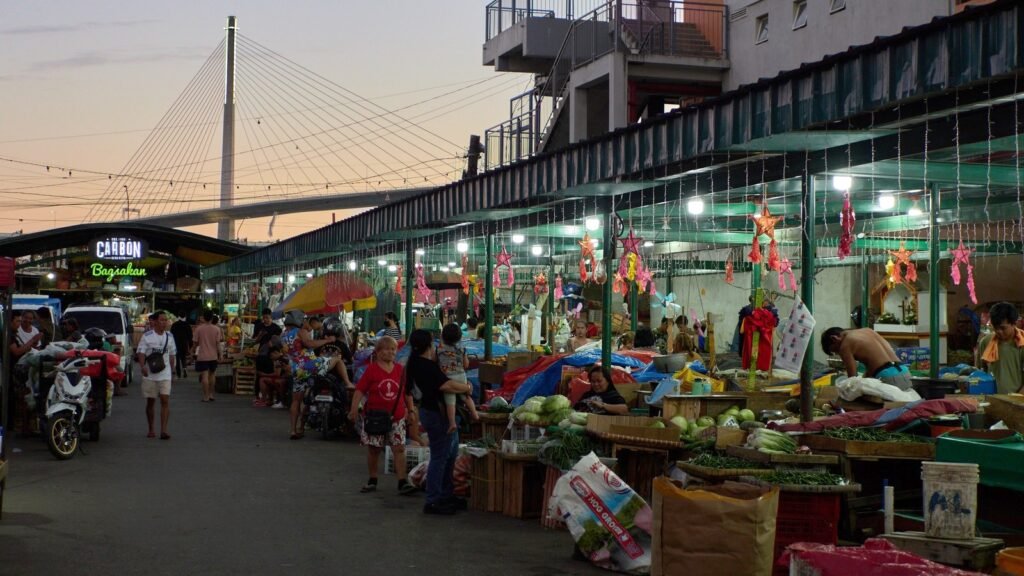
The public market, often called a palengke, is where many Filipinos buy fruit, vegetables, fish and meat each day, and it is one of the most vivid places to see the cuisine up close. Stalls are usually arranged by product, with scales on the counters, and vendors will often tell you what is in season. The photo at the top of this article shows Carbon Market in Cebu City at dusk, when the lanes fill with people buying the evening meal.
Markets are also crowded places, and government advice is practical. Canadian advice says petty crime such as pickpocketing and bag snatching occurs, especially in urban areas, and recommends being careful in crowded public places, avoiding large sums of money and keeping valuables in a safe place. In our view, a small amount of cash in a front pocket, a bag you can keep in front of you and a quick smile before taking a photo of a stall or a person are the simplest habits.
Sweets, Halo-Halo and Ube
Halo-halo, which means “mix-mix,” is the best-known dessert: shaved ice layered with sweet beans, fruit, jelly, leche flan and often a scoop of ice cream or ube. It is popular in hot weather, and stirring the layers together is part of the fun.
Ube, a purple yam, appears in cakes, ice cream, jam and pastries, and gives many desserts their vivid color. Other sweets include leche flan, a dense caramel custard, and bibingka and puto bumbong, rice cakes associated with the Christmas season. Mangoes, bananas, pineapple and coconut are widely available, and ripe mangoes in season are a highlight for many travelers.
Regional Specialties Worth Knowing
Food changes as you travel. Ilocos in the north is linked with Vigan longganisa and empanada, and Pampanga with sisig. Cebu is known for lechon, and the Visayas generally for grilled seafood. Palawan restaurants often serve fresh-caught fish near the beaches.
If your itinerary includes the places in our Philippines travel guide, ask hotel staff or guides which local dish is worth seeking out in each town. Official tourism pages rarely list restaurants, so we do not recommend specific places.
Fruit, Drinks and Coffee
Tropical fruit is one of the easiest ways to eat well. Mangoes, bananas, pineapple, papaya and coconut are widely sold at markets and roadside stands, often cut to order. Calamansi juice, similar to a sweet-sour lemonade, and fresh coconut water are common cold drinks, and many cafes now serve local coffee alongside international styles.
Water needs care. Smartraveller advises drinking only boiled or bottled water, so ask for sealed bottles, check that seals are intact and think twice about ice in places you do not know. Fresh juices and shakes are best from busy, well-run stalls and restaurants. Alcohol is part of social life, and Canadian advice warns about drink spiking and about accepting drinks from strangers, so keep your glass in sight.
A Sample Day of Eating
A typical day might start with a Filipino breakfast of garlic fried rice, a fried egg and a cured or sweet meat, often sold as a combination plate at casual eateries. Mid-morning or mid-afternoon, many people stop for a snack, called merienda, such as noodles, a rice cake or a banana fritter.
Lunch and dinner are the main meals, with a shared main such as adobo or sinigang, plain rice and a vegetable dish. Dessert might be halo-halo in the afternoon heat or leche flan after dinner. In our view, planning one local meal a day and leaving the other meals flexible is the easiest way to enjoy the cuisine without overeating.
Eating Safely
Food-borne illness is a real consideration. Smartraveller says foodborne, waterborne and other infectious diseases include cholera, typhoid and hepatitis, and advises drinking only boiled or bottled water and avoiding raw or undercooked food. Canadian advice recommends hepatitis A vaccination for travelers to areas where the disease is present, and advises that you practice safe food and water precautions and wash your hands often.
Simple habits help. Choose busy stalls where food is cooked in front of you, avoid ice if you are unsure of the water, and carry hand sanitizer. Canadian advice also warns against accepting snacks, drinks, gum or cigarettes from new acquaintances, because criminals have used them to drug and rob travelers, and says to never leave food or drinks unattended.
Canadian advice adds that travelers’ diarrhea is the most common illness affecting travelers and that it spreads through contaminated food or water, and that making careful food and drink choices and washing your hands often reduce the risk. If you do become ill, it says the most important thing is to stay hydrated by drinking plenty of fluids. It also describes a low risk of typhoid for most travelers, higher in places with poor sanitation or unsafe food preparation.
The CDC lists hepatitis A and typhoid vaccination as recommended for most travelers and says cholera is rare in travelers, with safe food and water habits and handwashing as the main protection. Talk to a travel health clinic about your own risk, ideally several weeks before you go.
Mealtimes and Tipping
We could not find an official source on mealtimes or tipping in the Philippines. In our view, the safest approach is to check your bill for a service charge before adding anything, and to carry small bills and coins for smaller purchases. Restaurants in tourist areas often follow the same practices as other international destinations.
Travelers with allergies should be careful, because shrimp paste, peanuts and shellfish are common ingredients. Carry a note in English explaining your allergy and ask staff to confirm ingredients.
Experience the Philippines Through Its Food
The best answer to what to eat in the Philippines is to eat widely, share dishes and let local hosts guide you. Start with adobo, sinigang and halo-halo, add one regional specialty in each place you visit, and keep the safety basics in mind.
For more planning, read our 10 day Philippines itinerary, our guide to Philippines culture and local customs and our general food and dining guide.