
If you are wondering what to eat in South Africa, start with the fire. Meals revolve around the braai, the South African barbecue, but the country’s food is much wider than grilled meat, with Cape Malay curries, Indian-influenced street food in Durban, Dutch-influenced baking, fresh seafood on the coasts and some of the best-known wine regions in the Southern Hemisphere. We did not find an official national food guide, so the descriptions below are general descriptions of well-known dishes, and recipes vary from family to family.
The tourism and safety information in this guide comes from the governments we read. Canada, Australia and the United States advise caution in South Africa mainly because of crime, and food and drink safety has its own points, which we cover in the section on eating and drinking safely. Our South Africa travel guide has the full safety summary.
What to Eat in South Africa: Start with the Basics
South African cooking draws on Indigenous, Dutch, Malay, Indian, British and other traditions, and the mix changes by region. A typical meal might include grilled or slow-cooked meat, a starch such as pap (a maize porridge), rice or bread, and a sauce or relish on the side. In our view, the easiest way to try a lot is to eat the local specialty in each region instead of looking for one national dish.
Portions can be generous, and many restaurants share plates for the table. The braai is as much a social event as a meal, and being invited to one is a good way to meet people. If you are invited, bring a drink or a side to share.
Meat and the Braai
Braai. A braai is an outdoor fire for grilling meat, and it is a core part of weekend and holiday life. Common foods include boerewors (a coiled spiced sausage), lamb chops, chicken and steak, often served with pap, salads and sauces. Many lodges and guest houses offer a braai evening, and in our view it is one of the easiest ways to eat well on a safari.
Boerewors. This coarse, spiced sausage is sold in butcheries and markets, and is also served on a roll in casual places. Vegetarian travelers can find vegetable and plant-based versions in the larger cities.
Biltong. Biltong is cured, air-dried meat, usually beef, sold in thin slices or sticks. It is a travel snack, and it is widely sold at airports and shops. Check your own country’s rules before bringing meat products home, because customs authorities often restrict them.
Potjiekos. This is a slow-cooked stew made in a three-legged cast-iron pot over a fire, often served at lodges and in the countryside.
Cape Malay and Cape Dishes
The Cape Malay community in Cape Town, centred historically on the Bo-Kaap area, is known for fragrant, mildly spiced dishes.
Bobotie. Often described as South Africa’s national dish, bobotie is spiced minced meat baked with a savory egg custard topping, typically served with yellow rice, chutney and sambals. In our view, it is a good first dish for travelers who do not like heat.
Bredie and curries. A bredie is a slow-cooked meat and vegetable stew, and Cape Malay curries are aromatic rather than very hot.
Sweets. Koeksisters (a sticky, syrup-soaked twisted dough) and the Cape Malay version, which is spiced and coated in coconut, are common sweet treats. Malva pudding is a warm sponge dessert with a caramelised sauce, usually served with custard or cream.
Seafood. The Cape coast is known for line-caught fish, calamari and, in season, rock lobster. Ask restaurants about local seafood rules, since some species are protected and sustainability labels are common.
Durban and Indian-South African Food
Durban has a large community with South Asian roots, and its food reflects that.
Bunny chow. A hollowed-out loaf of bread filled with curry, bunny chow is a Durban specialty, eaten with the hands. Mild and hot versions exist, so ask before you order.
Curries and samosas. Look for fragrant mutton, chicken and bean curries, and snacks such as samosas. In our view, local markets and family-run restaurants are the best places to try them, but ask your hotel for current recommendations.
Street Food and Snacks
Pap and chakalaka. Pap is a stiff maize porridge, and chakalaka is a spiced vegetable relish. Together they are a staple at braais and in township restaurants.
Vetkoek. These are deep-fried dough balls, often filled with mince or jam.
Gatsby. A Cape Town sandwich, usually a long roll stuffed with chips and fillings, is built to be shared.
Shisa nyama. This is a casual meat barbecue where you pick raw meat from a butcher and have it grilled on the spot. It is a social meal, and Canada and the FCDO advise visiting townships only with a reputable tour company or an experienced local organisation, so try it through a tour or a local host in the first instance.
Regional Cheat Sheet
- Cape Town and the Western Cape: seafood, Cape Malay food, wine, fynbos-influenced desserts.
- Garden Route: fresh fish and oysters at coastal towns, farm stalls and local cafes.
- Durban and KwaZulu-Natal: bunny chow and curries.
- Johannesburg and Gauteng: a mix of every cuisine, with strong restaurant scenes, markets and rooftop braais.
- Safari lodges: braai nights, hearty breakfasts, bush dinners and boma meals.
Breakfast, Bread and Baking
Breakfast at lodges and guesthouses is often a cooked meal, with eggs, bacon, boerewors, tomatoes, toast and fruit. Rusks, a hard, dry biscuit made for dunking in tea or coffee, are a traditional snack, and farm stalls and bakeries sell pies, milk tart (melktert) and other baked goods. In our view, a roadside farm stall is one of the nicest places to eat when you are travelling between regions, although we advise stopping only at established places in daylight, as Canada says to avoid stopping in isolated areas.
Vegetarian and Special Diets
South Africa is a meat-loving country, but vegetarians can eat well in cities, in the Winelands and at most lodges. Ask for vegetable curries, salads, pap with chakalaka, grilled vegetables and fresh fruit, and tell your lodge about dietary needs in advance, particularly if you are staying somewhere remote. Larger cities have vegan and plant-based restaurants, and in our view, it is easier to eat vegetarian on the Cape than in a rural area.
What to Eat in South Africa on a Safari
Lodges usually include meals, often with three courses, a braai and a bush dinner, and many serve game meat such as springbok or kudu. Ask for the menu in advance if you have dietary needs. Keep food out of your vehicle and tent where you can, because Canada warns that baboons and other monkeys may aggressively confront sightseers in search of food.
Wine and Drinks
South Africa’s wine regions, including Stellenbosch, Franschhoek and Paarl, lie close to Cape Town and are popular for tastings and long lunches. Do not drive after tastings, and use a driver or organised tour. Canada notes that drinking and driving is common on South African roads, so a designated driver or a pre-booked transfer is wise.
Rooibos, a caffeine-free herbal tea from the Western Cape, is widely served hot or iced. Look for local craft beer, gin and rooibos-based drinks in cities.
Smartraveller warns about drink spiking and methanol poisoning through consuming alcoholic drinks, and Canada says there have been incidents of food or drink being drugged and tourists robbed. Buy drinks from reputable venues, keep your drink in sight, and do not accept drinks or snacks from new acquaintances.
Markets and Food Experiences
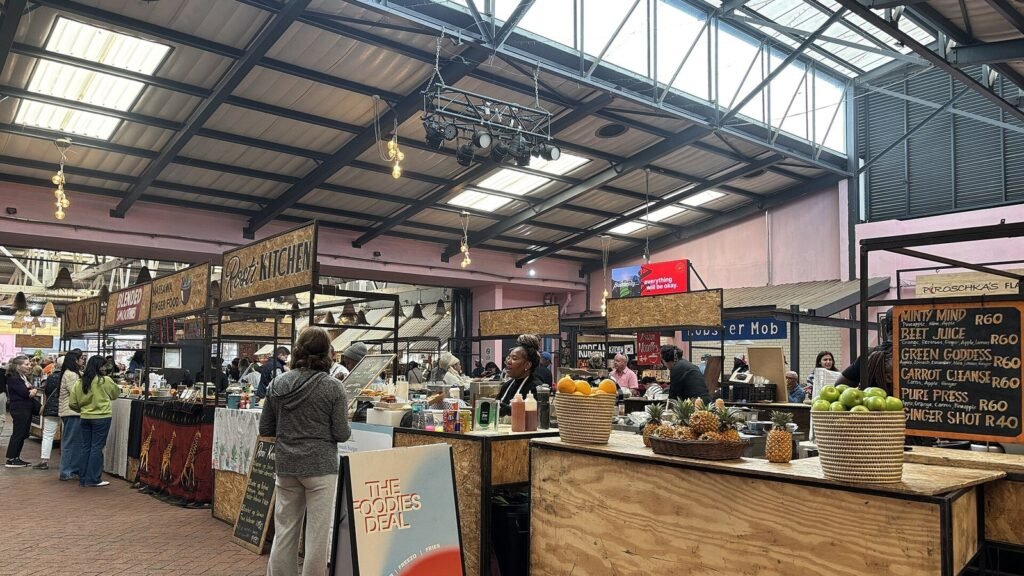
Markets and food halls in Cape Town, Johannesburg and Durban are a good way to try dishes in a single place. Canada notes that petty crime is frequent at public markets, so keep valuables out of sight and leave bags closed. Food tours that include townships are best booked through a reputable company, and Canada and the FCDO advise avoiding townships if you are unfamiliar with them, except through organised tours or experienced local organisations.
Eating and Drinking Safely
Smartraveller advises drinking only boiled or bottled water, and says waterborne and foodborne diseases are widespread. The Canadian advice recommends the usual precautions: boil it, cook it, peel it or leave it. We did not find an official statement on tap water in individual cities, so ask your accommodation, particularly in rural areas or during water restrictions.
Canada says to avoid swimming in lakes, rivers and ponds because of the risk of schistosomiasis, and Smartraveller advises not to swim in lakes and rivers because of wildlife and disease. Wash your hands often, and be careful with raw seafood and unpasteurised dairy, which Canada links to Rift Valley fever.
Tipping. We did not find an official source on tipping, so this is our view. Service charges are not always included, and it is common to tip restaurant staff, guides and safari rangers. Ask your lodge what they suggest.
Experience South Africa Through Its Food
The best way to understand what to eat in South Africa is to eat across regions, sharing dishes and asking locals what is in season. Start with a braai and bobotie, add bunny chow in Durban and seafood on the coast, and finish with a wine tasting in a safe, planned way.
For more planning, read our South Africa travel guide, our guide to South Africa culture and local customs and our guide to South Africa coastlines. Our travel insurance and safety guide explains medical cover, which matters if a meal disagrees with you.