
Croatia’s long Adriatic shore is the reason most people visit. Croatia coastlines run from the Istrian peninsula in the north to Dubrovnik in the south, with more than a thousand islands offshore, according to the Croatian National Tourist Board. The water is clear, the old towns sit right on the sea and ferries link the main islands.
This guide compares the main coastal areas, explains what the beaches are really like, and covers ferries, seasons and sea safety. We use official sources for safety and heritage facts. Descriptions of beaches and islands are general, and conditions change with the season.
Croatia Coastlines: Where to Start
The coast divides into four parts. Istria and the Kvarner Gulf lie in the north. Northern Dalmatia centers on Zadar and Šibenik. Central Dalmatia centers on Split and its islands. Southern Dalmatia runs to Dubrovnik.
For a first trip, Split and Dubrovnik with one island between them cover the classic sights. All four governments we read rate Croatia at their lowest advisory level, as our Croatia travel guide explains.
Dubrovnik and the South
Dubrovnik’s walled old town, on the UNESCO list since 1979, stands directly above the sea. Small beaches and bathing platforms sit just outside the walls, and boats run to the nearby island of Lokrum and to the Elafiti Islands for quieter swimming.
North of the city, the Pelješac peninsula has vineyards and the oyster beds of Ston, and ferries cross to the island of Korčula, known for its own small walled town. Dubrovnik is the busiest place on the coast in summer, so swim early or late and visit the walls at opening time.
Split, Trogir and the Central Islands
Split is the main ferry port of Dalmatia, built around Diocletian’s Palace, a UNESCO property since 1979. The town beach at Bačvice is sandy and shallow, which is unusual for Croatia. Trogir, another UNESCO town, is a short trip west.
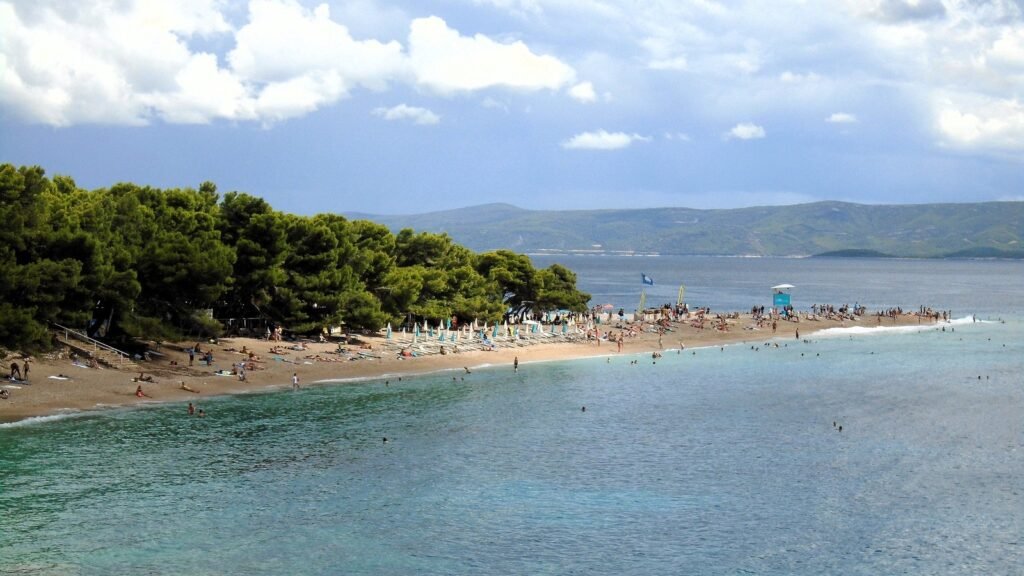
Brač. The closest large island to Split. Zlatni Rat, near the town of Bol, is a pebble spit that changes shape with the wind and current, and one of the most photographed beaches in the country.
Hvar. Known for Hvar Town’s harbor and nightlife, lavender fields and the UNESCO-listed Stari Grad Plain. The small Pakleni Islands offshore have clear coves reached by taxi boat.
Vis. Farther out and quieter, with fishing villages and coves. It suits travelers who want fewer crowds and do not mind a longer ferry.
Korčula. Reached from Split or from the Pelješac peninsula, with a compact old town and beaches on the eastern end near Lumbarda.
Zadar, Šibenik and the National Parks
Northern Dalmatia is less crowded than the south. Zadar has Roman and Venetian remains on a small peninsula and a waterfront known for sunsets. Šibenik has the UNESCO-listed Cathedral of St James. UNESCO’s Venetian Works of Defence listing includes fortifications in both cities.
The area is a base for two national parks. Krka is known for its river waterfalls, and the Kornati archipelago is a scatter of bare islands visited by boat. The FCDO lists areas around Zadar County among those where unexploded mines remain outside tourist resorts, so keep to marked paths inland.
Istria and Kvarner
Istria feels closer to Italy. Rovinj is a fishing town on a small peninsula, Pula has a large Roman amphitheater, and Poreč has the UNESCO-listed Euphrasian Basilica. Beaches here are mostly rock shelves and pebble coves, with pine shade.
The Kvarner Gulf, between Istria and Dalmatia, has the islands of Krk, Cres and Rab, and the resort town of Opatija. Krk is joined to the mainland by a bridge. The north suits road trips, families and travelers arriving overland from Italy or Slovenia.
What the Beaches Are Really Like
Most Croatian beaches are pebble, rock or concrete bathing platforms, not sand. That keeps the water very clear, but it means water shoes are useful, both for comfort and because sea urchins live on rocky bottoms.
Sandy beaches exist, for example at Bačvice in Split, on Rab and near Lumbarda on Korčula, but they are the exception. Many beaches have little natural shade. In our view, a pair of water shoes, a hat and a beach mat matter more here than in most beach destinations. Our packing guide covers the basics.
Ferries and Island Hopping
Canadian advice says ferry services operate between the mainland and several islands of the Adriatic coast, particularly during summer. Split is the main hub for Brač, Hvar, Vis and Korčula, and coastal catamarans link Split and Dubrovnik in season.
Car ferries and passenger catamarans are different services with different ports and timetables, so check which one you are booking. Catamaran seats can sell out in July and August, and schedules are much thinner from October to April. Plan island nights around confirmed sailings, and avoid a ferry on the same day as an international flight.
Seasons and Sea Conditions
In our view, June and September are the best months for the coast: warm sea, long days and fewer crowds than in July and August. May and October can be pleasant for sightseeing, with cooler water and reduced ferry schedules.
Strong winds affect the Adriatic. The bura is a cold, gusty wind from the land that can close bridges and stop ferries, mainly in the cooler months, and summer storms can arrive quickly. Check the forecast from the Croatian weather service before boat trips. Canadian advice also says forest fires may occur, and smoke can affect air quality nearby.
Sea Safety
The Adriatic is calm compared with ocean coasts, but take the usual care. Swim inside marked areas, since boats and jet skis use the same bays. Do not dive from rocks or walls without checking the depth, and remember that climbing on monuments can bring a fine.
If you rent a boat, Canadian advice says that anyone entering Croatia by sea on their own or a rented boat must clear immigration at a port open to international traffic and obtain a vignette from the Harbour Master’s Office. Check that your travel insurance covers boat trips and water sports. The emergency number is 112.
Rules on the Coast
The FCDO says that in some town centers, including Split and Dubrovnik, walking through town shirtless or in swimwear and drinking alcohol in public spaces can bring on-the-spot fines. Cover up when you leave the beach.
Respect local rules in national and nature parks, where swimming is allowed only in marked areas or not at all. Take litter with you, and do not remove shells, stones or sea life.
Heritage on the Water
Much of Croatia’s World Heritage sits right on the shore, so a beach trip easily doubles as a history trip. UNESCO lists the Old City of Dubrovnik, the Historical Complex of Split with the Palace of Diocletian, the Historic City of Trogir, the Cathedral of St James in Šibenik, the Euphrasian Basilica in Poreč and the Stari Grad Plain on Hvar. Its Venetian Works of Defence listing covers fortifications in Zadar and Šibenik.
These are living towns with narrow lanes, so visit early or late in the day in summer, wear shoes with grip for polished stone and carry water. Dubrovnik’s walls and Split’s palace cellars charge entry, and we did not verify current prices, so check the official sites before you go.
Planning a Beach Day
A little planning makes pebble beaches comfortable. Go in the morning for space and shade, since pine trees shelter only the back of most beaches. Bring water shoes, a mat or thin mattress, sun protection and drinking water, because small coves often have no services.
Many town beaches have showers, changing cabins and a cafe, and some rent sunbeds and umbrellas for a daily fee. Taxi boats from harbors such as Hvar Town reach quieter coves and small islands for a few hours. In our view, one long swim stop a day is plenty on a sightseeing trip, and the best ones are often the unnamed coves you find on a walk out of town.
Getting Between Coastal Bases
The coast road and the motorway link the main cities, and buses run frequently between Zadar, Šibenik, Split and Dubrovnik. Canadian advice says coastal roads can be congested, narrow and slippery when wet, and that many lack guard rails, so allow extra time if you drive.
In season, catamarans connect Split with Hvar, Korčula and Dubrovnik, which turns a transfer day into part of the trip. There is no railway along the southern coast. If you combine Croatia with Italy, seasonal ferries cross the Adriatic from several ports, and our Italy travel guide covers the other side.
Choosing Your Coast
Choose Dubrovnik and the south for the most dramatic old town. Choose Split and the central islands for the widest choice of ferries and beaches. Choose Zadar and Šibenik for fewer crowds and national parks, and Istria for food, hill towns and road trips. A first trip rarely needs more than two coastal bases and one island.
Our 10 day Croatia itinerary links Split and Dubrovnik with a day on the islands.
Experience Croatia Beyond the Beach
The best Croatia coastlines combine swimming with history and food. Walk a town’s walls in the morning, swim in the afternoon and eat grilled fish by the harbor at night. Our guides to what to eat in Croatia and Croatia culture and local customs help you plan the rest.