
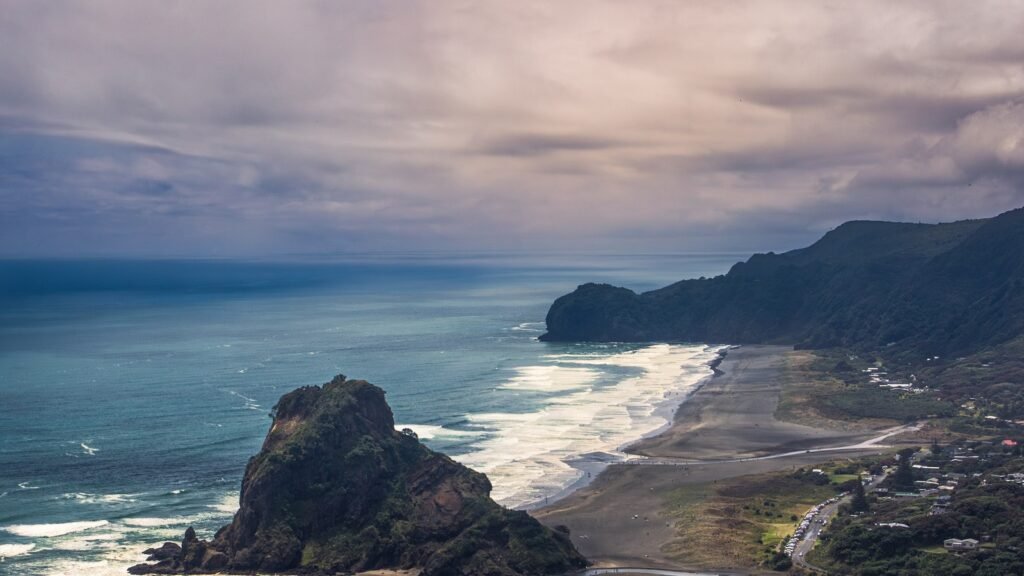
New Zealand coastlines stretch for more than 14,000 kilometres, according to Tourism New Zealand, and they range from subtropical bays and golden beaches to black-sand surf beaches and flooded glacial fiords. This guide explains where to go, which coast suits which season, and how to stay safe in and around the water. It is part of our New Zealand travel guide.
New Zealand Coastlines: Where to Start
Most first trips combine one or two coastal stops with a city and an inland region. In the North Island, the Bay of Islands, the Coromandel and Auckland’s beaches are the easiest to reach. In the South Island, Abel Tasman, Kaikōura and Fiordland are the classic coastal stops.
Drive times matter more than distance, so check them before you commit. The times below come from Tourism New Zealand’s regional pages, and roads can be slower than expected. For a route that fits a coast into a first trip, see our 10 day New Zealand itinerary.
The Bay of Islands and Northland
The Bay of Islands is a subtropical area with 144 islands between Cape Brett and the Purerua Peninsula, and the towns of Paihia, Russell, Opua and Kerikeri. It is about a four-hour drive from Auckland, or a short flight.
Cruises, sea kayaks and charter boats visit the islands, including Cape Brett and the “Hole in the Rock” on Piercy Island. Tourism New Zealand says the waters hold penguins, dolphins, whales and many other animals. A passenger ferry links Paihia and Russell, and a vehicle ferry links Opua and Russell. The Department of Conservation manages a campground on Urupukapuka Island. The Waitangi Treaty Grounds are a cultural stop on the same coast.
The Coromandel Peninsula and the Bay of Plenty
The Coromandel is about two hours 40 minutes from Auckland and has more than 400 kilometres of white-sand beaches, forests and walks. At Hot Water Beach you can dig your own hot pool two hours either side of low tide, so check the tide times.
Cathedral Cove is the best-known sight. The Department of Conservation says the Mautohe Cathedral Cove track has walking access again after storm damage but is naturally unstable and can close at short notice, including during severe weather warnings. Check the latest updates before you go. The Bay of Plenty, east of the Coromandel, is one of the sunniest places in the country, according to Tourism New Zealand.
Auckland and Wellington Beaches
Auckland has a surprising number of beaches near the city. Tourism New Zealand lists black-sand surf beaches on the west coast, including Karekare, Piha, Te Henga (Bethells) and Muriwai, and golden sand at Tāwharanui and Pakiri to the north. Mission Bay, Kohimarama and St Heliers are about 15 minutes from downtown and have promenades, kayaks and fish and chips. The Hauraki Gulf islands, including Waiheke, Rangitoto and Tiritiri Matangi, are reached by ferry.
In Wellington, Oriental Bay is the golden-sand inner-city beach, and the Southern Walkway leads to the rugged south coast. The ferry to the South Island passes through the Marlborough Sounds on the way to Picton.
Abel Tasman, Nelson and the Marlborough Sounds
Abel Tasman National Park is small and easy to reach, with golden beaches and clear water. Tourism New Zealand says it is in one of the sunniest regions, with mild winters. The 60-kilometre Abel Tasman Coast Track is a Great Walk, typically walked in three to five days, and booking is required. Water taxis and kayaks make day trips easy, and the main access points, Mārahau and Kaiteriteri, are about an hour from Nelson.
The Department of Conservation’s track page says the Awaroa Inlet can only be crossed from about an hour and a half before to two hours after low tide, in daylight, so plan the day around the tide tables. Huts and campsites must be booked in advance.
Kaikōura and the East Coast of the South Island
Kaikōura is about two hours 20 minutes north of Christchurch and sits between the mountains and the Pacific. Whales, fur seals and dolphins live in the coastal waters, and Tourism New Zealand lists whale watching by boat or air at any time of year, dolphin encounters, coastal walks and crayfish.
Tourism New Zealand says Kaikōura remains in recovery after flooding in July 2026 and advises visitors to watch for landslides and check the district council’s updates before visiting, so confirm road and tour conditions first.
Otago, the Catlins and the Southern Coast
The southern coast is wild and quiet. The Department of Conservation says Curio Bay and Porpoise Bay in the Catlins are places to see Hector’s dolphins, fur seals, sea lions, yellow-eyed penguins and the fossilised remains of an ancient forest, with short, easy walks to viewing platforms. Distances are long and weather can be cold, so allow extra time.
Fiordland: Milford Sound and Doubtful Sound
Fiordland National Park has 14 fiords, flooded valleys carved by glaciers. Milford Sound is the only one you can reach by road, and Doubtful Sound is the deepest, at 421 metres, with bottlenose dolphins, fur seals and penguins. Cruises, scenic flights and overnight cruises show the fiords from the water.
The Milford Road is one of the country’s most scenic drives, and the Department of Conservation says the area is among the wettest in New Zealand, with up to seven metres of rain a year. The road can close for weather, rock falls or avalanches, mainly in winter, so check the NZ Transport Agency before you set off. Allow at least two hours from Te Anau for a cruise day and time for parking, the department said in a 2026 release. Sandflies are legendary, so carry insect repellent.
Weather and the Best Coast for Your Travel Dates
The best of New Zealand’s coastlines depends on your dates. Summer from December to February is the best season for beach days, and Tourism New Zealand says swims often continue into March and April in some places. The climate page says the north can be subtropical in summer, while the south is cooler and the weather changes quickly.
In general, choose the Bay of Islands, the Coromandel and Auckland for summer beach time, Abel Tasman for sunshine in spring and autumn, Kaikōura for marine wildlife in most months and Fiordland when you are prepared for rain. Strong UV is a risk from September to April, so use sun protection even on cloudy days.
Swimming and Beach Safety
Canadian advice says coastal waters can be dangerous, riptides are common, several drownings occur each year, and sharks, seals and other wildlife pose a risk in certain areas. It advises avoiding unsupervised beaches and following lifeguards’ instructions and the flag system.
Tourism New Zealand’s safety page adds simple rules: if in doubt, stay out, never swim alone or when cold or tired, swim between the red and yellow flags, watch children at all times, learn to recognise rip currents and heed warning signs. Use Safeswim to find lifeguarded beaches and check water quality, and read advice from Surf Life Saving New Zealand.
Wildlife Etiquette
Keep your distance and never feed wildlife. The Department of Conservation says to stay at least 20 metres from fur seals and keep dogs and children away. At Curio Bay, its guide says to keep at least 10 metres from penguins and not to block their path, and that moulting birds are especially vulnerable to disturbance between February and April. Distances vary by site, so follow signs and rangers.
Getting to the Coast
Most coastal places need a car or a tour. Auckland to the Bay of Islands is about four hours, Auckland to the Coromandel about two hours 40 minutes, Christchurch to Kaikōura about two hours 20 minutes and Queenstown to Te Anau about two hours 10 minutes, according to Tourism New Zealand. Water taxis serve Abel Tasman, and the Cook Strait ferry links Wellington and Picton in about three and a half hours.
Choosing the Right New Zealand Coast
If you only have time for one of New Zealand’s coastlines, choose by interest. The Bay of Islands suits beaches, sailing and history. The Coromandel suits white sand and easy walks. Abel Tasman suits kayaking and sunshine. Kaikōura suits wildlife and seafood. Fiordland suits dramatic scenery, even in rain.
Experience New Zealand Beyond the Coast
The coast is one part of New Zealand. Pair it with the geothermal sights and Māori culture of Rotorua, a city stay and a mountain region, and eat what the coast offers: see our guide to what to eat in New Zealand and our culture and customs guide.
For safety and insurance advice, read our safety and insurance guide. If you are also planning a trip across the Tasman, see Australia coastlines.