This Chile travel guide is designed to help you decide where to go, when to visit and how to plan a realistic first trip to a country that is far longer than most visitors expect and more varied than any single trip can cover.
Chile runs between the Pacific Ocean and the Andes, from the Atacama Desert in the north to Patagonia and Antarctica in the south. Chile Travel, the country’s official tourism site, describes an unparalleled diversity of landscapes. Visitors come for desert skies, volcanoes, lakes, glaciers and granite peaks, the colorful hill city of Valparaíso, wine valleys, seafood and the island culture of Rapa Nui (Easter Island). UNESCO lists seven World Heritage properties in Chile, all of them cultural, including Rapa Nui National Park, the Churches of Chiloé and the historic quarter of Valparaíso.
The main planning issues are distance, season, safety and paperwork. Chile asks for more everyday caution than some first-time destinations, and natural hazards are part of life here: Canadian and Australian advice both say to exercise a high degree of caution because of civil unrest and crime, and earthquakes, floods and volcanoes are real considerations. None of that rules out a rewarding trip, and most of the risks respond to ordinary preparation. The sections below explain the details.
Is Chile Right for Your Trip?
This Chile travel guide is a good fit if you want a first trip built around landscapes (desert, volcanoes, lakes, fjords and mountains) with city culture, wine and food alongside. Chile Travel describes the country’s cuisine as a reflection of its geography, with seafood, fish, meats and wines, and calls Chileans a friendly people.
Chile may not be the right fit if you only have a few days, dislike long transfers or want a destination where crime, protests and earthquakes are not on your mind at all. Distances are large. Chile Travel says a modern network of airports connects the extremes of the country in just hours, and its guide to reaching Torres del Paine gives about 3 hours 17 minutes by air from Santiago to Puerto Natales, roughly 2,000 kilometres. In our view, a few words of Spanish help, especially outside Santiago and the main tourist areas.
Best Time to Visit Chile
Chile’s seasons are the reverse of the Northern Hemisphere’s, and the climate changes sharply from north to south. Chile Travel’s climate guide describes it by zone.
The north. The climate is arid and sunny, with warm deserts and cool nights. Chile Travel says daytime temperatures often exceed 20°C and can fall below 0°C at night, especially on the altiplano (the high plateau). Rain is scarce and sporadic.
Central Chile. The central valley has a Mediterranean climate, with warm, dry summers from December to March and cool, rainy winters from June to August. Santiago, Valparaíso and most of the wine valleys sit in this zone.
The south. The climate is temperate and rainy, with mild summers and a high probability of rain throughout the year, even in summer. Chile Travel recommends checking the forecasts from Meteorología Chile before you travel.
Timing also depends on hazards. Canadian advice says wildfires are common from December to March, mostly between the Valparaíso and Araucanía regions, that flooding is frequent in the fall and winter, especially from May to August, and that Santiago’s smog is worst from May to October. It also says El Niño conditions are present and expected to strengthen during the second half of 2026 and into 2027, which may raise the risk of floods, droughts and severe storms. In our view, anyone planning Patagonian hikes should lean toward the warmer months, because Torres del Paine publishes separate recommendations for winter conditions.
Where to Go in Chile
Most first trips combine two or three of these regions. Travel times come from Chile Travel unless noted.
Santiago. The capital is the main gateway. Chile Travel’s two-day Santiago route links La Moneda Palace, the Plaza de Armas, the National Museum of Fine Arts and Barrio Lastarria on the first day, then Cerro San Cristóbal by funicular and cable car, the Sky Costanera viewpoint and Barrio Italia on the second. Stay in daylight in the central parks and plazas, as the safety section explains.
Valparaíso and Viña del Mar. These sister cities are just over an hour from Santiago. Parts of Valparaíso are a UNESCO World Heritage site, and the city is known for its hills, murals and more than 15 funiculars. Viña del Mar is the garden city on the coast, with Quinta Vergara, the Flower Clock and Wulff Castle.
Wine valleys. Chile Travel highlights five wine valleys: Maipo, known for Cabernet Sauvignon; Casablanca, the benchmark for white wines, between Santiago and Valparaíso; Colchagua, about 150 kilometres south of Santiago and famous for Carmenere; Elqui, the cradle of pisco in the north; and Itata, known for heritage grapes such as Cinsault and País.
The Atacama Desert. San Pedro de Atacama is the usual base. The Los Flamencos National Reserve includes the Valley of the Moon, 15 kilometres from town, plus salt flats and high Andean lagoons. The El Tatio geysers sit at 4,320 metres. Most visitors fly from Santiago to Calama, then travel about 100 kilometres to San Pedro, which takes one and a half to two hours.
Lakes, volcanoes and Chiloé. In the south-central part of the country Chile Travel describes forests, lakes and volcanoes. Chiloé, an island archipelago, has 16 wooden churches on the UNESCO list, and Chile Travel suggests three to four days to see the route. Canadian advice names Villarrica, Osorno, Llaima, Calbuco and the Descabezados group among the volcanoes that authorities watch closely.
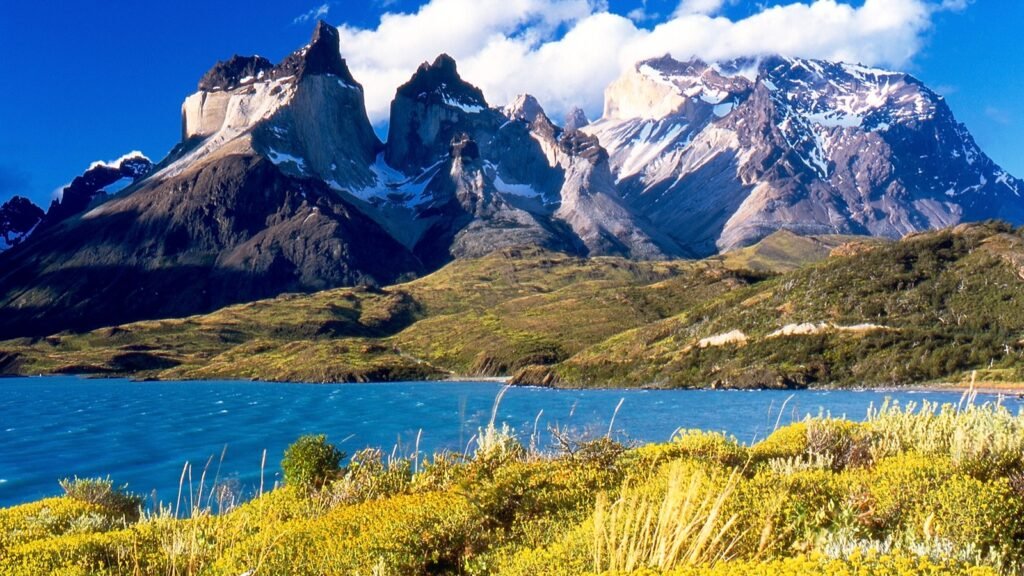
Patagonia. Torres del Paine National Park in the Magallanes Region is the main draw, reached through Puerto Natales or Punta Arenas. The park lists routes from the one-day Base Torres hike and the viewpoints along the park road to the W route (three to five days) and the “O” circuit around the massif (eight to ten days).
Rapa Nui and Juan Fernández. Rapa Nui (Easter Island) lies far out in the Pacific and has its own entry rules, described below.
How Many Days Do You Need?
Chile Travel publishes sample routes of different lengths, including 8 days from Santiago to the Atacama Desert and a 12-day route through Santiago, the desert and Patagonia. In our view, a week suits Santiago, Valparaíso and one other region, and ten days works for three bases if you accept several domestic flights. Two weeks lets you add the Lakes and Chiloé, or Rapa Nui.
Our 10 day Chile itinerary shows one realistic route. If you want to combine Chile with Argentina, read our Argentina travel guide, because Patagonia spans both countries.
Getting Around Chile
Flights. Chile Travel names LATAM, SKY and JetSMART as the major airlines and advises using only official and authorized transport at airports and bus terminals. At Arturo Merino Benítez International Airport in Santiago, the official transport counters are at the exit of Terminal 2, right after baggage claim. Smartraveller says taxi scams are common, particularly at Santiago Airport, and that official taxis can be hired at the booths before you leave the building.
Santiago and intercity travel. Chile Travel calls the Metro the best way to travel around Santiago. You need a Bip! card for the Metro and RED buses, or you can pay by QR code with the RED Movilidad app. Intercity buses and a growing train service connect other places. Canadian advice says tourists on intercity buses, especially from Calama to Antofagasta, San Pedro de Atacama or Santiago, have been robbed while sleeping, so keep your valuables and identification with you.
Driving. Canadian advice says you can drive with a valid Canadian licence for up to 90 days and should still carry an international driving permit. Chile has a zero-tolerance policy on drinking and driving, right turns on red are prohibited unless posted, and some rental companies do not allow international trips. Some insurers exclude pickup trucks or damage on unpaved roads, and there is no car insurance on Easter Island. The same advice says thieves in Valparaíso and Santiago target rental cars, sometimes by puncturing a tire so the occupants step out to check it.
Distances. Chile Travel gives about 3 hours 27 minutes for the flight from Santiago to Punta Arenas (about 4 hours 45 minutes with a stopover in Puerto Montt) and just over three hours by road from Punta Arenas to Puerto Natales, about 250 kilometres. The Puerto Natales airfield has scheduled closures from 1 January to 31 March 2027, so many travelers will fly to Punta Arenas instead. Land borders with Argentina can close in severe weather, so check the official status before you cross.
Costs and Budgeting
The currency is the Chilean peso (CLP). Chile Travel’s currency page lists banknotes of 1,000 to 20,000 pesos and coins of 10, 50, 100 and 500, and points to the Central Bank of Chile for reference exchange rates, noting that the rate at exchange offices and shops may differ. Canadian advice says some small restaurants and stores outside Santiago may not accept credit cards, that US dollars are easily exchanged at banks and official exchange offices, and that purchases in US dollars are possible only in certain Santiago stores.
Chile Travel notes that Rapa Nui costs more than the mainland because of the island’s logistics. Prices change, so this guide does not quote them. Check current prices with operators and parks, and see our travel budgeting guide. In restaurants, bars and cafés served by waiters, the bill suggests a tip of at least 10 percent, which the customer pays unless they say otherwise, according to the Dirección del Trabajo.
Food and Dining
Chile’s food follows its geography. Chile Travel describes desert and altiplano dishes such as chairo and calapurca in the north, empanadas de pino, pastel de choclo and seafood in the center, and curanto and lamb in the south. Our guide to what to eat in Chile explains the dishes, drinks and markets, and our food and dining guide has general tips for eating well while traveling. The health section below covers seafood and water safety.
Entry Rules and Documents
Visas and passports. Canadian advice says Canadians do not need a tourist visa and that a regular Canadian passport must be valid for the duration of the stay. GOV.UK says British citizens can visit for up to 90 days without a visa and that the passport’s expiry date should be after the day you plan to leave. Chile Travel says citizens of South America, the European Union, the United States, Canada and Australia do not need a visa to enter as tourists. Airline passport rules can be stricter than Chile’s, so check with your airline. Other passports have different rules, so see our visa requirements guide.
Tourist card and proof of funds. Canadian and UK advice say you receive a tourist card on arrival, valid for up to 90 days, which you must keep and hand to immigration when you leave. Canadian advice says you can replace a lost card online and can extend a stay by up to 90 days online, for a fee, before the card expires. Chile Travel and Canadian advice say officials may ask for proof that you have at least US$46 for each day of your stay, and Chile Travel suggests carrying your accommodation reservation.
Agricultural declaration. Chile Travel says all animal or plant products must be declared on the Agricultural and Livestock Service (SAG) form, that failing to declare is a serious offence with possible confiscation and very high fines, and that when in doubt you should declare. The SAG says the digital declaration is free and can also be completed at ingresoachile.cl.
Children. Canadian advice says children traveling with one parent, a guardian or alone need a notarized, apostilled and translated authorization from the other parent or a court, plus an apostilled long-form birth certificate. GOV.UK says parents traveling with children for tourism have had difficulty leaving when only one parent was present. Contact the nearest Chilean embassy before you travel.
Rapa Nui. Canadian advice says stays on Easter Island are limited to 30 consecutive days, and you must show a round-trip ticket, a passport valid for the stay and proof of accommodation authorized by local authorities, and complete the Rapa Nui Entry Form. GOV.UK says the reservation should be registered with SERNATUR, the national tourism service, or you need an invitation letter.
Safety in Chile
As of early November 2026, the Government of Canada (updated 19 October) and Smartraveller (updated 22 October) both advise a high degree of caution in Chile because of civil unrest and crime. The US State Department’s advisory (issued 19 August 2026) is Level 2, exercise increased caution, citing crime, unrest and health. Advisories change, so read the current versions of the Canadian, Australian and US pages before you book.
Theft. Canadian advice says pickpocketing, bag snatching and theft from vehicles can happen anywhere, especially in larger cities such as Santiago, Valparaíso and Viña del Mar, Calama, Concepción, Villarrica and Iquique, and in tourist areas, bus and train stations, airports, the Santiago subway and hotel lobbies. Thieves often work in pairs or groups and use distraction.
Violent crime. The same advice says armed assaults and robberies have increased in recent years and that tourists have been attacked, even in daylight. It says to avoid walking after dark around Cerro Alegre and other hills in Valparaíso, in the parks of Bellavista and Barrio Lastarria and around Cerro Santa Lucía in Santiago, and in common tourist areas such as the Plaza de Armas and Mercado Central. If you are threatened, hand over your valuables without resistance.
Taxis and express kidnapping. Canadian advice says express kidnappings, where victims are forced to withdraw cash, occur occasionally, sometimes involving taxi drivers. It recommends reputable taxi companies or ride-sharing apps, no street taxis and no rides from strangers. Smartraveller also reports taxi scams, drink spiking and express kidnapping.
Demonstrations. Canadian advice says demonstrations and strikes occur frequently in Santiago, including at Plaza Italia, and in Valparaíso and Concepción, and can bring roadblocks, transit disruption and tear gas. Large demonstrations often fall on 29 March, 1 May, 11 September and 18 October. Chilean law prohibits political activities by foreigners, so avoid demonstrations.
Regions and women travelers. Canadian advice says politically motivated violence has occurred in parts of the Araucanía and Biobío regions, where a state of emergency declared in 2022 is reviewed every 30 days, and urges caution there. It also says women traveling alone may face harassment and that food and drinks can be spiked, so never leave drinks unattended.
Emergency numbers. Chile Travel lists 133 for the national police (Carabineros), 134 for the Investigative Police (PDI) and 137 for maritime emergencies, and Canadian advice adds 131 for medical help, 132 for firefighters and 1455 for a helpline for women victims of violence.
In our view, the practical steps are simple: use official airport transport or a ride app, keep your phone and cash out of sight, carry only what you need, keep your passport copy and cards separate, stay in busy areas after dark and use hotel safes.
Natural Hazards, Weather and Altitude
Earthquakes and tsunamis. Canadian advice says Chile sits in a very active seismic zone, that a tsunami can follow a nearby earthquake within minutes and that the risk can last for hours. If you stay on the coast, learn the local evacuation plan. Chile Travel points visitors to Visor Chile Preparado for risk maps and evacuation routes, to SENAPRED, the national disaster agency, for alerts, and says to obey sirens and emergency alerts on your phone.
Volcanoes. Canadian advice says Chile has about 500 active volcanoes and that ash can disrupt flights. Check official alerts before touring near active volcanoes and be ready to change plans.
Floods and wildfires. Canadian advice says severe flash floods hit the Santiago region on 8 and 13 October 2026, with injuries and evacuations, and that heavy rain was expected to continue in central regions for weeks. It recommends avoiding riverside accommodation in central and southern Chile and says wildfire smoke can affect air quality from December to March.
Coastal swells. Canadian advice says large waves can arrive without warning, even in clear weather, and says not to enter the ocean while swell warnings are in force.
Altitude, cold and sun. Canadian advice says to know the symptoms of acute altitude sickness and notes that the ozone layer is thin over parts of Chile. Chile Travel’s El Tatio advice says tours start at 4 or 5 am, temperatures sit around 0°C and operators should be registered with Sernatur. It adds that pregnant women and people over 70 are not admitted, so check with your operator.
National park rules. Open fires are strictly forbidden in national parks outside permitted camping areas. Canadian advice says authorities may revoke your tourist card, order you to leave within 72 hours or start deportation proceedings, and Torres del Paine’s own rules ban any heat source and smoking.
Health, Insurance and Practical Details
Health. The CDC recommends routine vaccines, hepatitis A, hepatitis B for travelers under 60 and measles protection, and says yellow fever vaccination is neither required nor recommended. Canadian advice says to see a travel health provider about six weeks before departure, notes that rabies may be present in wildlife such as bats, and says hantavirus can spread when people contact areas contaminated by animal droppings. The US advisory mentions a CDC notice about Andes virus (hantavirus) and says the risk for most travelers is extremely low.
Food and water. Chile Travel says tap water in major cities is potable and safe but hard, which can cause temporary stomach upset, and recommends bottled or boiled water in rural and remote areas. It warns that lemon juice does not kill marine bacteria and that red tide toxins in shellfish can be dangerous, so buy seafood from established, authorized businesses.
Insurance. Canadian advice recommends travel insurance that covers helicopter rescue and medical evacuation for outdoor activities, and a registered tour or expedition company. Read our safety and insurance guide and check that your policy covers hiking, high altitude and any adventure activities you plan.
Phones and power. Chile Travel says mobile coverage is excellent in cities but intermittent in remote areas, national parks and Patagonia, so download maps first. You can buy a prepaid SIM, called a “chip,” with your passport, including at Santiago Airport. Chile uses 220 volts at 50 Hz, with Type C and L plugs, so North American plugs need an adapter and devices must be rated for 220 volts.
Suggested First-Time Chile Itinerary
If you have 10 days, a workable first-time route is Santiago, Valparaíso, San Pedro de Atacama and Torres del Paine. It uses four bases, three domestic flights and one long road transfer, so it is fast-paced.
Days 1 and 2: Santiago. Settle in, then see the historic center and one of the city’s hills in daylight.
Day 3: Valparaíso and Viña del Mar. Take a day trip, or stay one night, to ride the funiculars and see the murals.
Days 4 to 6: San Pedro de Atacama. Fly to Calama, then see the Valley of the Moon, the lagoons and the El Tatio geysers at dawn.
Days 7 to 9: Puerto Natales and Torres del Paine. Fly south through Santiago, take the bus to Puerto Natales and keep a day in reserve for Patagonian weather.
Day 10: Departure. Travel back to Santiago and leave a buffer before your international flight.
With 14 days, add the Lakes and Chiloé or Rapa Nui rather than more stops. With a week, choose Santiago, Valparaíso and one region. Our full 10 day Chile itinerary has the day-by-day plan.
Chile Travel FAQ
Do I need a visa to visit Chile?
Canadian travel advice says Canadians do not need a tourist visa for Chile and that a regular Canadian passport must be valid for the duration of the stay. You receive a tourist card on arrival, valid for up to 90 days, and must keep it and hand it over when you leave. GOV.UK gives British citizens the same 90 days without a visa and says the passport’s expiry date should be after the day you plan to leave, and Chile Travel says citizens of the United States, Canada, Australia, the European Union and South America do not need a visa as tourists. Officials may ask for proof that you have at least US$46 for each day of your stay, and you must declare any animal or plant products on the SAG form. Other nationalities have different rules, so confirm them with the Chilean authorities.
What is the best time to visit Chile?
Chile’s seasons are the reverse of the Northern Hemisphere’s, and the best time depends on where you go. Chile Travel says central Chile has warm, dry summers from December to March and cool, rainy winters from June to August, the north is arid and sunny with cold nights, and the south is rainy all year, even in summer. Canadian advice adds that wildfires are common from December to March, that flooding is frequent from May to August and that El Niño conditions are expected to strengthen into 2027. Check forecasts from Meteorología Chile before you commit to dates.
How many days do you need in Chile?
Ten days works for a first trip that links Santiago, Valparaíso, the Atacama Desert and Torres del Paine, but it is fast-paced, with three domestic flights and a long road transfer. A week suits Santiago, Valparaíso and one other region, and two weeks lets you add the Lakes and Chiloé or Rapa Nui. Chile Travel gives about 3 hours 27 minutes by air from Santiago to Punta Arenas and just over three hours by road from there to Puerto Natales, so avoid adding too many bases.
Is Chile safe for tourists?
The Government of Canada and Smartraveller advise a high degree of caution in Chile because of civil unrest and crime, and the US State Department is at Level 2, exercise increased caution. Canadian advice lists pickpocketing, bag snatching, armed robbery, express kidnappings, taxi scams, drink spiking and frequent demonstrations, and warns of earthquakes, tsunamis, volcanoes, floods and wildfires. In our view, most of these risks can be reduced with ordinary precautions: official airport transport or ride apps, no walking after dark in the areas the advice names, and travel insurance. Read the current advice before you go.
Do I need travel insurance for Chile?
Yes, you should buy it. Canadian advice recommends insurance that covers medical evacuation and helicopter rescue for outdoor activities such as hiking, volcano tours and desert expeditions, and recommends using a registered tour or expedition company. Check that your policy covers high altitude and any adventure activities you plan, and carry your insurer’s emergency number.
Final Thoughts on This Chile Travel Guide
Chile rewards travelers who plan around distance, weather and safety. A first trip works best as an introduction rather than an attempt to see everything.
For a first visit, choose three or four bases, check each government’s current advice, complete the agricultural declaration honestly, keep your tourist card, use official transport and buy travel insurance that covers outdoor activities. Know the tsunami evacuation routes if you stay on the coast, and respect the land, the parks and the cultures you visit.
Use this Chile travel guide as a starting point, then adjust the route to match your time, interests and comfort level with planning. For more help, see how to plan a better trip.
If you are thinking of combining Chile with a neighboring country, see our Argentina travel guide and 10 day Argentina itinerary. You may also want to read our Peru travel guide, Colombia travel guide and Brazil travel guide.
Explore more destination guides on TravelingInformed.